Chinese shadow play
Dublin Core
Title
Chinese shadow play
Subject
Intangible Heritage
Description
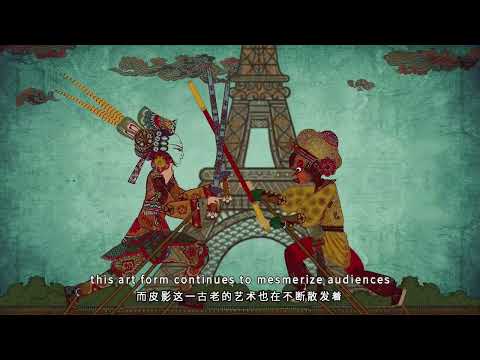
Chinese shadow puppetry, formerly known as "shadow puppetry" or "lantern play", is a folk drama in which silhouettes of people made of animal skins or cardboard are illuminated by light sources such as candles or burning alcohol to perform stories. It involves a number of steps such as selecting the skin, making the skin, drawing, over-drafting, engraving, applying colour, ironing and embellishing. Shadow puppetry is used for entertainment, educational, historical and religious purposes and is associated with the promotion of positive moral values. For its contribution to the development of the world's performing arts, shadow puppetry was recognised by UNESCO as an intangible cultural heritage of humanity in 2011.
Creator
Working People of China
Source
is51102023
Date
Thirteenth Century Yuan Dynasty
Contributor
yl279
Language
English
Type
Intangible
Identifier
603
Date Submitted
03/04/2023
Date Modified
20/04/2023
References
https://en.wikipedia.org/wiki/Shadow_play
Medium
wps.org
Spatial Coverage
current,34.70549341022547,108.89648437500001;
Europeana
Object
https://www.youtube.com/watch?v=9JRVu9AOhng
Europeana Type
TEXT
Intangible Item Type Metadata
History
The shadow play has a history of more than 2000 years since it was written down. The Emperor Wu's beloved concubine Li died of an illness, and the Emperor was in a trance because he missed her. Minister Li Shaoweng went out one day and met a child playing with a cloth doll, the shadow reflected in the ground vividly. Li Shaoweng was moved to use cotton and silk to cut into the image of Mrs. Li, painted with colors, and installed in the hands and feet of the wooden pole. At night, he invited the emperor to sit in the tent and watch it. Emperor Wu was so pleased with it that he couldn't let go of it. This love story, recorded in the Book of Han, is considered to be the earliest source of shadow puppetry.
The art of Chinese shadow play was introduced to Persia (Iran), Arabia, Turkey, Siam (Thailand), Burma, Malay Archipelago, Japan and other Asian and European countries such as England, France, Germany, Italy, Russia, etc. from the 13th century Yuan Dynasty with military expeditions and land and sea exchanges.
In 1508, the Ming Emperor Wuzong held a 100-play festival in Beijing, and shadow puppets participated in the performance. It is also said that from the middle of Ming Dynasty, the shadow play was first introduced to Zhuozhou in Hebei Province from Lanzhou and Huating, and then to the rural areas in the western and northern suburbs of Beijing, and then to the city and formed two schools in the eastern and western cities.
From the Qing Dynasty to the late Qing Dynasty, the art of Chinese shadow puppetry developed to its heyday. At that time, many official and royal families, the gentry and the gentry, were proud to hire famous masters to carve shadow people, store and set up sophisticated shadow boxes, and raise shadow classes privately. In the folk countryside towns, large and small shadow theater classes abound, a township a city has 20 to 30 shadow class is not surprising. Whether it is the New Year's Eve, harvest celebrations, prayers to the gods, marriages and banquets, and birthday celebrations, it is not uncommon to set up a stage to sing shadows. Even this play (serial) has to be performed overnight or for more than ten days and a half months, and a temple fair can have several shadow classes singing shadow on the stage, which is very lively and lively, and the situation can be imagined.
In the Qing Dynasty, Beijing shadow play was very popular. In addition to being popular with farmers and citizens, it also entered the palace. In the Kangxi period, the Prince of Rites had eight officials with fifth-ranking salaries in charge of shadow puppets. In the Jiaqing period, the shadow puppet class was sent into the house to perform on festive days such as New Year's Eve. At that time, the Beijing shadow puppet troupe performed puppets in the daytime and sang shadow puppets at night in the hall, and many Beijing opera actors also participated in the shadow puppet troupe.
In the late Qing Dynasty, some local officials were afraid that the shadow play would cause trouble in the dark places, so they banned the performance of shadow play and even arrested the shadow artists. The shadow artists were also implicated in the White Lotus uprising at the end of the Qing Dynasty and were censored on the charge of being "Xuanlangshi bandits". Before and after the Japanese invasion, due to social unrest and years of war, the people were unable to live, resulting in the heyday of the shadow industry withered and fell apart.
After 1949, the surviving shadow puppet classes and artists around the country began to be active again, and from 1955 onwards, national, provincial and municipal shadow puppet shows were organized, and missions were sent abroad repeatedly to perform and conduct cultural and artistic exchanges, which were quite fruitful. However, during the Cultural Revolution, the art of shadow puppet was once again subjected to the bad luck of "breaking the Four Olds" and has been greatly injured ever since.
Prim Media
1140
Citation
Working People of China , “Chinese shadow play,” STAGE, accessed October 16, 2026, https://stage.openvirtualworlds.org/omeka/items/show/1159.
Embed
Copy the code below into your web page