St Andrews, St Salvator's College - 1559
Dublin Core
Title
St Andrews, St Salvator's College - 1559
Subject
Intangible Heritage
Description
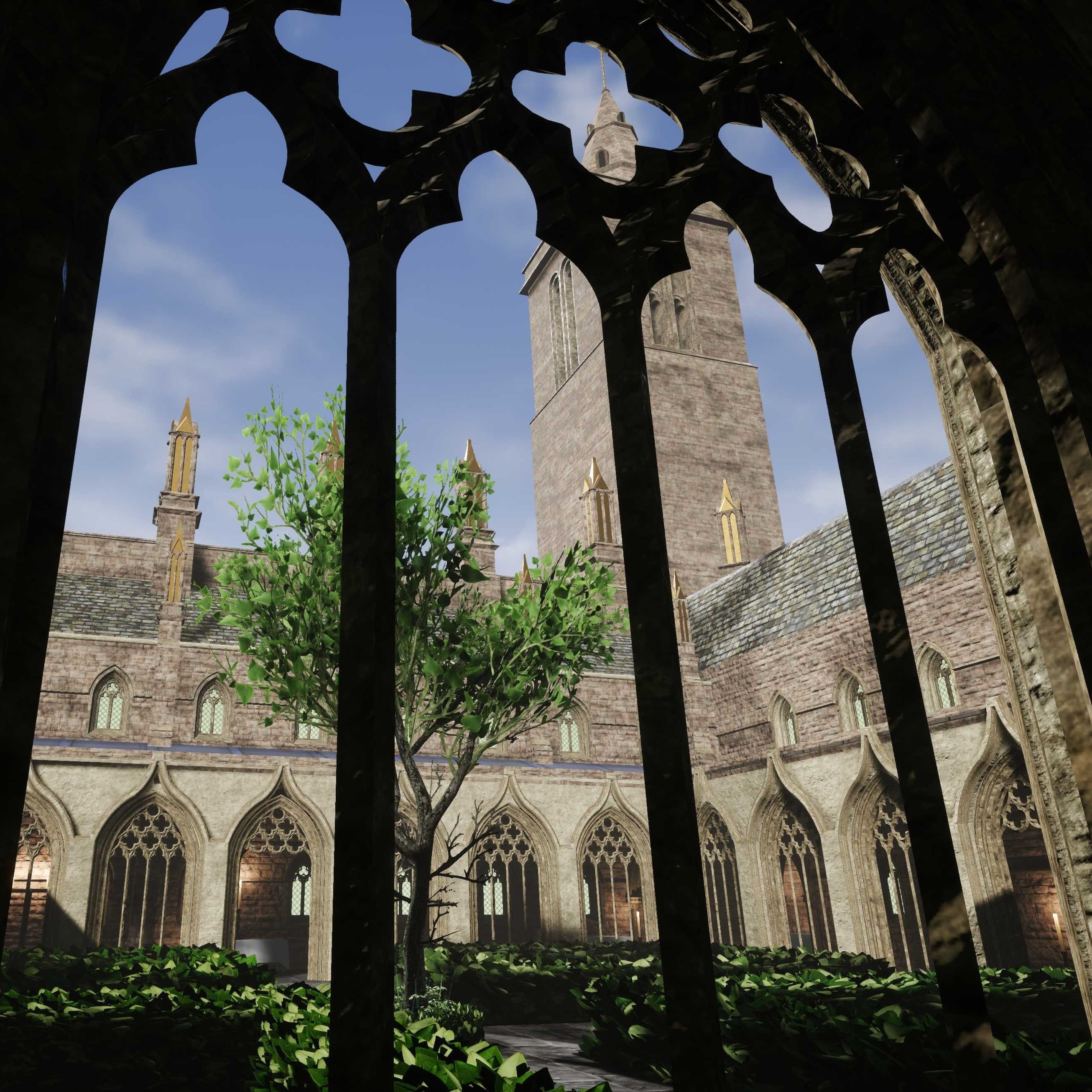
St Salvator's Quad is one of the best known landmarks in St Andrews. For more than five centuries the tall tower of St Salvator's has dominated the local skyline. Yet much of the rest of the design of St Salvator's Quad has been completely transformed in the years since Bishop James Kennedy established a College dedicated to Christ the Saviour in 1450.
Now researchers from the University of St Andrews and Smart History take a first look at creating a new 3D digital reconstruction of St Salvator's College as it may have appeared in its medieval heyday.
This reconstruction of St Salvator's is the first phase in a wider project to digitally reconstruct the appearance of the whole burgh of St Andrews just before the upheavals of the Protestant Reformation permanently changed the townscape of Scotland's religious capital.
Digital Reconstruction and video - Sarah Kennedy - Head of Virtual Visualisations - Smart History
Historical Research - Dr Bess Rhodes - - Head of Historical Research - Smart History
This phase of the project has been funded by St Andrews University Research Impact. impact.wp.st-andrews.ac.uk/
Source
reconstructions
Date
2017
Format
image/jpeg
Type
Reconstruction
Identifier
213
License
In Copyright (InC)
Spatial Coverage
current,56.34179107074705,-2.794143532105464;
Europeana
Is Shown At
https://www.openvirtualworlds.org/st-salvators-college-1559/
Object
https://player.vimeo.com/video/240629953
Europeana Rights
Open Virtual Worlds Team University of St Andrews
Europeana Type
TEXT
Reconstruction Item Type Metadata
Canmore
https://canmore.org.uk/site/34288
How
Firstly, a digital landscape was created using survey data and height maps.
Following extensive historical research and collaboration with specialists, 3D models are created and imported into UNREAL Engine (a cross-platform game engine for creating virtual worlds). Models are textured, scaled, oriented and assembled. Scenes are created and populated with appropriate objects, including furniture and artefacts. Landscapes populated with flora and fauna. Weather settings and atmospheric lighting.
Where applicable, models of characters, animals or 3D digitised artefacts were imported and animated.
Evidence
Daniel Defoe – Description of St Salvator’s from his Tour Through the Whole Island of Great Britain (published 1720s). Source: http://www.visionofbritain.org.uk/travellers/Defoe
The city is not large, nor is it contemptibly small; there are some very good buildings in it, and the remains of many more: The colleges are handsome buildings, and well supply'd with men of learning in all sciences, and who govern the youth they instruct with reputation; the students wear gowns here of a scarlet-like colour, but not in grain, and are very numerous: The university is very ancient as well as the city; the foundation was settled, and the publick buildings appointed in the beginning of the fifteenth century by King James I. 'Tis true, they tell us here were private schools set up many ages before that, even as far back as 937; but I see no evidence of the fact, and so do not propose it for your belief, though 'tis very likely there was some beginnings made before the king came to encourage them, so far as to form an university.
There are three colleges in all; the most antient, and which, they say, was the publick school so long before, is call'd St. Salvadore. How it was made to speak Portuguese, I know not, unless it might be that some Portuguese clergymen came over hither as the first professors or teachers; in English it is St. Saviour's, in Spanish it would be call'd Nostra Seigniora, or Our Lord; and so St. Mary's would be call'd Nostra Dame de St. Andrew, or Our Lady of St. Andrew's. This college of St. Mary's is call'd the New College, and the middle-most (for age) is call'd St. Leonard's College.
The old college, as I have said, though it was a school, as they affirm, above 200 years before, was turn'd into a college, or founded as such by James Kennedy, the son of the Lord Kennedy by Mary, daughter of King Robert III. This James Kennedy was a clergyman of great fame in those days, and rose by the reputation of his wisdom, prudence, and beneficence to all mankind, to the highest posts of honour in the state and dignity in the Church; for he was Lord Chancellor of Scotland under James II. and archbishop of this See of St. Andrew's. He was a great lover of learning, and of learned men; and was the first who encourag'd men of learning from abroad, to come there and take upon them the governing and instructing the youth in the great school, which, as I say above, had been there so long, as that it was then call'd the antient school of St. Andrew. These learned men put him upon founding and endowing a college, or rather turning the school into a college or academy, which he did.
The building is antient, but appears to have been very magnificent considering the times it was erected in, which was 1456. The gate is large, and has a handsome spire over it all of stone. In the first court, on the right side as you go in, is the chapel of the college, not extraordinary large, but sufficient. There is an antient monument of the archbishop the founder, who lyes buried in the church of his own building. Beyond the chapel is the cloister, after the antient manner, not unlike that in Canterbury, but not so large. Opposite to this are offices, and proper buildings for the necessary use of the colleges. In the second court are the schools of the college, on the same spot where stood the antient grammar school, mention'd above, if that part is to be depended upon. Over these schools is a very large hall for the publick exercises, as is usual in other universities; but this is a most spacious building, and far larger than there is any occasion for.
In the same court are the apartments for the masters, professors, and regents, which (as our fellows) are in sallary, and are tutors and governors to the several students; were this college supported by additional bounties and donations, as has been the case in England; and were sufficient funds appointed to repair and keep up the buildings, there would few colleges in England go beyond it for magnificence: But want of this, and other encouragements, causes the whole building to seem as if it was in its declining state, and looking into its grave: The truth is, the college wants nothing but a good fund to be honestly apply'd for the repair of the building, finishing the first design, and encouraging the scholars. Dr. Skeen, principal of this college, shew'd the way to posterity to do this, and laid out great sums in repairs, especially of the churches, and founded a library for the use of the house.
They tell you a story here of nine maces found under the archbishop's tomb, after the restoration of King Charles II. But to me the story does not tell well at all. First, it does not appear of what use, or to what purpose so many maces were made and kept there, the like not being known to be us'd in any cathedral or college in other
countries: And in the next place how came they to rummage the good founder's grave, and that in King Charles the IId's time too; if it had been in Oliver Cromwell's domination, it would have seem'd rational to expect it; but after the Restoration to ravage the monuments of the dead, is something extraordinary: But be that as it will, there are three maces kept in the college; whether they were found in the king's tomb or not, that I leave to tradition, as I find it. One of these maces is of very fine workmanship, all of silver, gilt, and very heavy, of fine imagery, and curious workmanship, made at Paris by the archbishop's special directions, as appears by an inscription on a plate, fasten'd to the mace by a little chain, and preserv'd with it.
The story of St. Andrew and of his bones being buried here; of the first stone of the cathedral church being laid upon one of St. Andrew's legs or thigh-bone, and of those bones being brought from Patras in the Morea, near the Gulph of Lepanto; these things are too antient, and sound too much of the legend for me to meddle with.
Advisers
Bess Rhodes (University of St Andrews)
Prof Richard Fawcett (University of St Andrews)
Date Represented
1559
Collection
Citation
“St Andrews, St Salvator's College - 1559,” STAGE, accessed October 17, 2026, https://stage.openvirtualworlds.org/omeka/items/show/132.
Embed
Copy the code below into your web page