St Andrews - Market Street c1565
Dublin Core
Title
St Andrews - Market Street c1565
Description
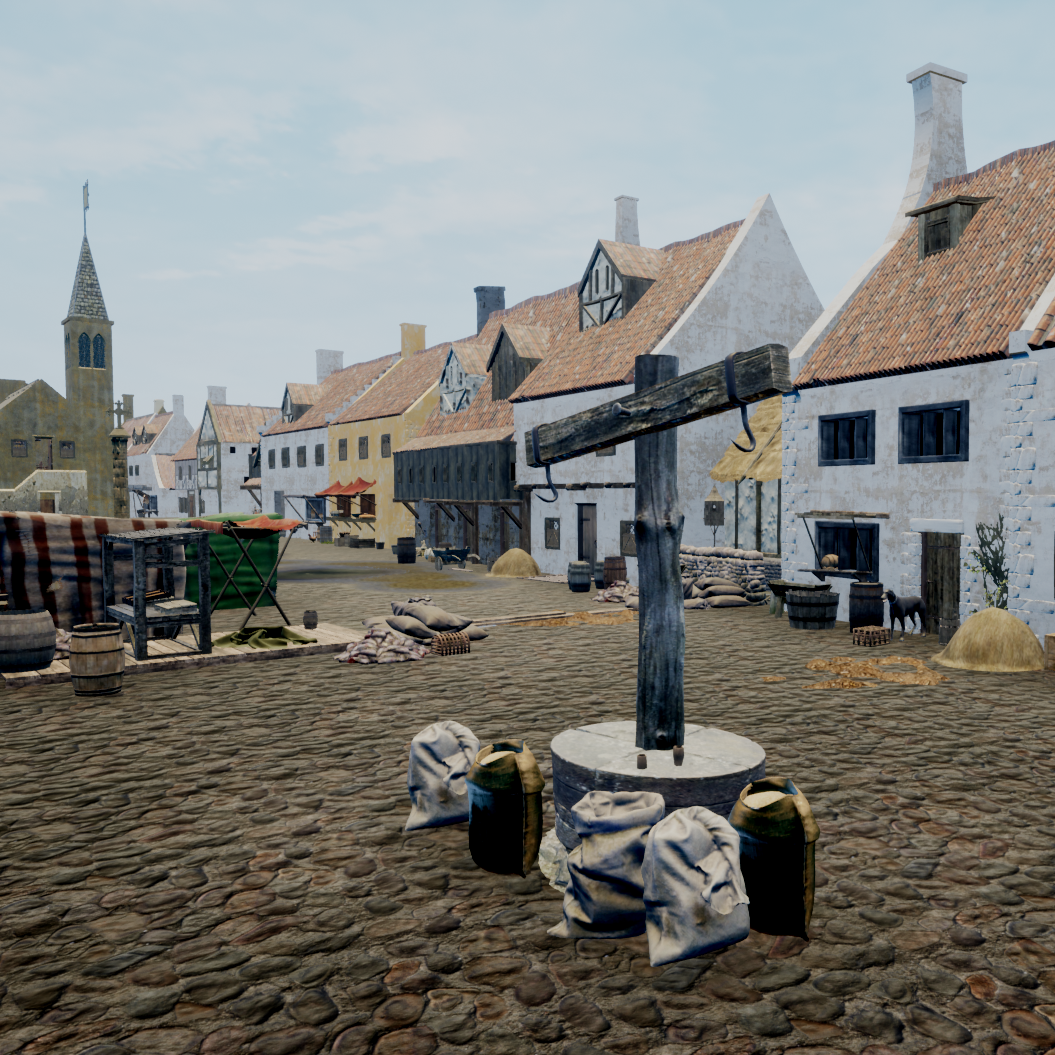
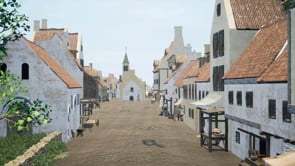
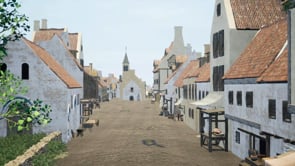
For over 800 years, Market Street has been the commercial heart of the burgh of St Andrews. This reconstruction shows Market Street during the middle of the sixteenth century – a time when St Andrews was a significant trading centre and the religious capital of Scotland.
The reconstruction was created by Smart History and the Open Virtual Worlds Team at the University of St Andrews. It is part of an ongoing project to represent digitally the burgh of St Andrews at the time of the Scottish Reformation.
During the Middle Ages, Market Street was a place where residents met to exchange goods, gossip, and watch the punishment of wrongdoers.
Funding for the Market Street reconstruction was provided by the St Andrews Community Trust and the University of St Andrews’ Covid-19 Restarting Research Funding Scheme.
This work was funded as part of 'Enabling Heritage Response to COVID-19 through Virtual Reality Exhibits, Virtual Museum Infrastructure and Capacity Building'.
Source
reconstructions
Date
2020
Format
image/png
Type
Reconstruction
Identifier
198
License
In Copyright (InC)
Spatial Coverage
current,56.340278,-2.796389;
Europeana
Is Shown At
https://www.openvirtualworlds.org/market-street-1565/
Object
https://player.vimeo.com/video/488090403
Europeana Rights
Smart History/Open Virtual Worlds Team University of St Andrews
Europeana Type
TEXT
Reconstruction Item Type Metadata
Canmore
http://canmore.org.uk/site/94528
How
A digital landscape was created using survey data and height map. Models were created in 3D modelling programs and imported into UNREAL (a cross-platform game engine for creating virtual worlds). The models were then scaled, orientated and assembled. The landscapes were populated with flora and fauna. Where applicable, models of characters and animals were imported and animated.
Evidence
During the sixteenth century, St Andrews was not only an important religious centre, but it was also a hub for trade both within Fife and across the North Sea. The wide section of Market Street (near to where the fountain now stands) was at the heart of this thriving economic activity, with traders regularly gathering around the now-demolished Mercat Cross.
The new digital representation of Market Street was inspired by a combination of evidence from the remarkable sixteenth-century Geddy Map (now held in the National Library of Scotland) and information from early property records (held in the University of St Andrews Library’s Special Collections). Original historical research by Dr Bess Rhodes, Dr Chelsea Reutcke and Peryn Westerhof Nyman was compared with findings from archaeological work undertaken by Fife Council during the 2011 resurfacing of Market Street. The extensive task of digitally modelling the numerous buildings which lined the historic street was undertaken by Sarah Kennedy.
The Market Street reconstruction forms part of the Open Virtual Worlds Team’s response to the COVID-19 pandemic, and is part of a wider effort to develop digital representations of heritage and support for virtual museums. Dr Alan Miller from Smart History and the University’s School of Computer Science said that: “Creating digital reconstructions, and making them available as exhibits in virtual museums, offers new ways of exploring the past that are immersive, engaging and interactive. Live events offer... virtual time travel in the company of experts from the fields of history and archaeology. What better way to discover the story of Market Street?” - Dr Bess Rhodes.
Advisers
Bess Rhodes (University of St Andrews), Peryn Westerhof Nyman (University of St Andrews), Chelsea Reutcke (University of St Andrews)
Date Represented
1565
Collection
Citation
“St Andrews - Market Street c1565,” STAGE, accessed October 17, 2026, https://stage.openvirtualworlds.org/omeka/items/show/136.
Embed
Copy the code below into your web page