Perth - 1440
Dublin Core
Title
Perth - 1440
Subject
Intangible Heritage
Description
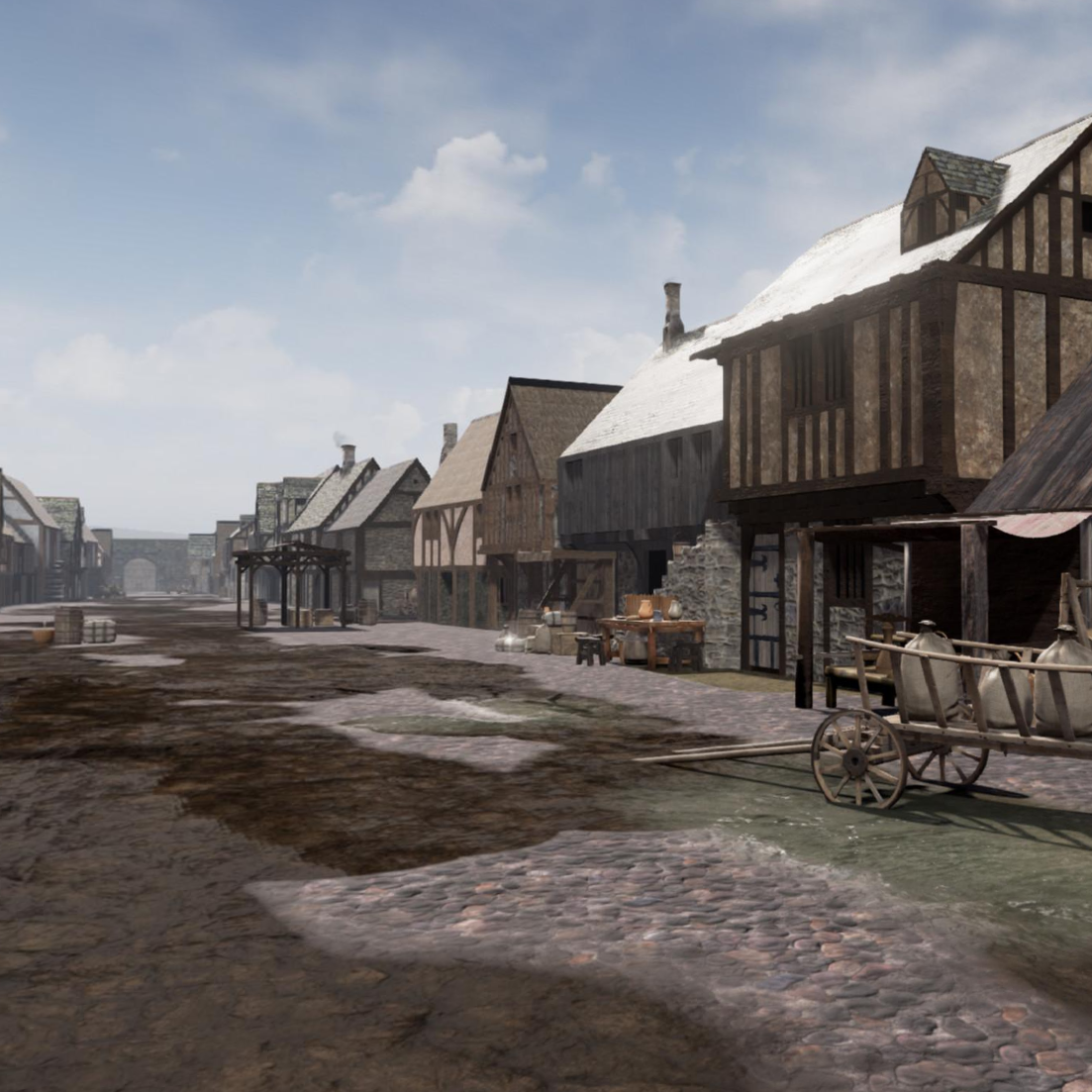
This reconstruction was created as part of the Tayside Landscape Partnership in collaboration with Perth and Kinross Heritage Trust.
It was part of a project to enable people to discover medieval Perth in the year 1440 through 360° virtual images and fascinating facts. Using leaflets, interpretation panels and QR codes to discover more online about Perth's story. All are located within easy walking distance of each other in the city centre.
Perth was one of Scotland's most important medieval royal burghs. Many trade routes met here, and ships arrived on high tides from England and the continent. Perth's craftsmen were rich, skilled and influential, and the markets flourished. While little of medieval Perth survives above ground, there is still evidence of this important past throughout the city centre.
Source
reconstructions,tours,apps
Date
2018
Format
image/png
Type
Reconstruction
Identifier
202
License
In Copyright (InC)
Spatial Coverage
current,56.397418413087415,-3.4307766843287166;
Europeana
Is Shown At
https://www.openvirtualworlds.org/perth-1440/
Object
https://player.vimeo.com/video/404534264
Europeana Rights
Smart History/Open Virtual Worlds Team University of St Andrews
Europeana Type
TEXT
Reconstruction Item Type Metadata
Canmore
http://canmore.org.uk/site/28254
How
A digital landscape was created using survey data and a height map. Models were created in 3D modelling programs and imported into UNREAL (a cross-platform game engine for creating virtual worlds). The models were then scaled, oriented and assembled. The landscapes were populated with flora and fauna. Where applicable, models of characters and animals were imported and animated.
Evidence
Perth is the perfect place to live in Medieval times. It’s a rich and influential city. It sits at an important crossroads for trade in Scotland. The River Tay is still deep enough for ships to arrive, it is the lowest possible crossing point without much danger, and it is easy to reach by road from the West, the South and the North.
Perth was built on commerce, royal patronage and the hard work of its citizens, manufacturing high-value goods out of material from the land around. Leather was used to create the finest gloves, wool and flax to make linen and clothing, and salmon was exported wide and far. What luxury the citizens needed was imported by ship and road from across Scotland, Scandinavia, England, the Baltic states, France and the Low Countries bordering the North Sea. Life was good with wine from France, timber from the Baltic, pottery from Holland and France, and other goods from across Europe.
Perth was one of the five wealthiest cities in Scotland and prestigious enough for the kings to hold parliament here 14 times in the 15th century. The citizens took pride in what they had achieved. Life was good in town – if it wasn’t for the repeated times of flooding, washing away houses and bridges, water being contaminated by cess pits, or lives being threatened by epidemics (plagues, water-borne diseases) running through the densely built up settlement. The ground was soggy, and when houses were demolished, they built new ones on top. Buried material is still found today and is in very good condition, telling us a lot about life in Medieval Perth.
Advisers
David Strachan (Perth and Kinross Heritage Trust), Mark Hall (Perth Museum), David Bowler (Alder Archaeology), Catherine Smith (Alder Archaeology), Derek Hall (University of Stirling), Bess Rhodes (University of St Andrews)
Date Represented
1440
Collection
Citation
“Perth - 1440,” STAGE, accessed October 17, 2026, https://stage.openvirtualworlds.org/omeka/items/show/146.
Embed
Copy the code below into your web page