Cottown Clay House - 1850
Dublin Core
Title
Cottown Clay House - 1850
Subject
Culture
Description
Earth houses have a long history in the British Isles. Today many people still admire the picturesque mudwall or ‘cob’ cottages of Devon and Somerset. However, earth was also a popular building material in parts of Scotland, with mudwall dwellings once being common in Dumfriesshire, Angus, and the Carse of Gowrie (beside the River Tay).
In the Carse of Gowrie local clays were used for building from pre-historic times through to the nineteenth century. Today about forty clay buildings survive in the Carse of Gowrie. The former school house at Cottown is a particularly fine example of the type of clay building that was once common in the Carse.
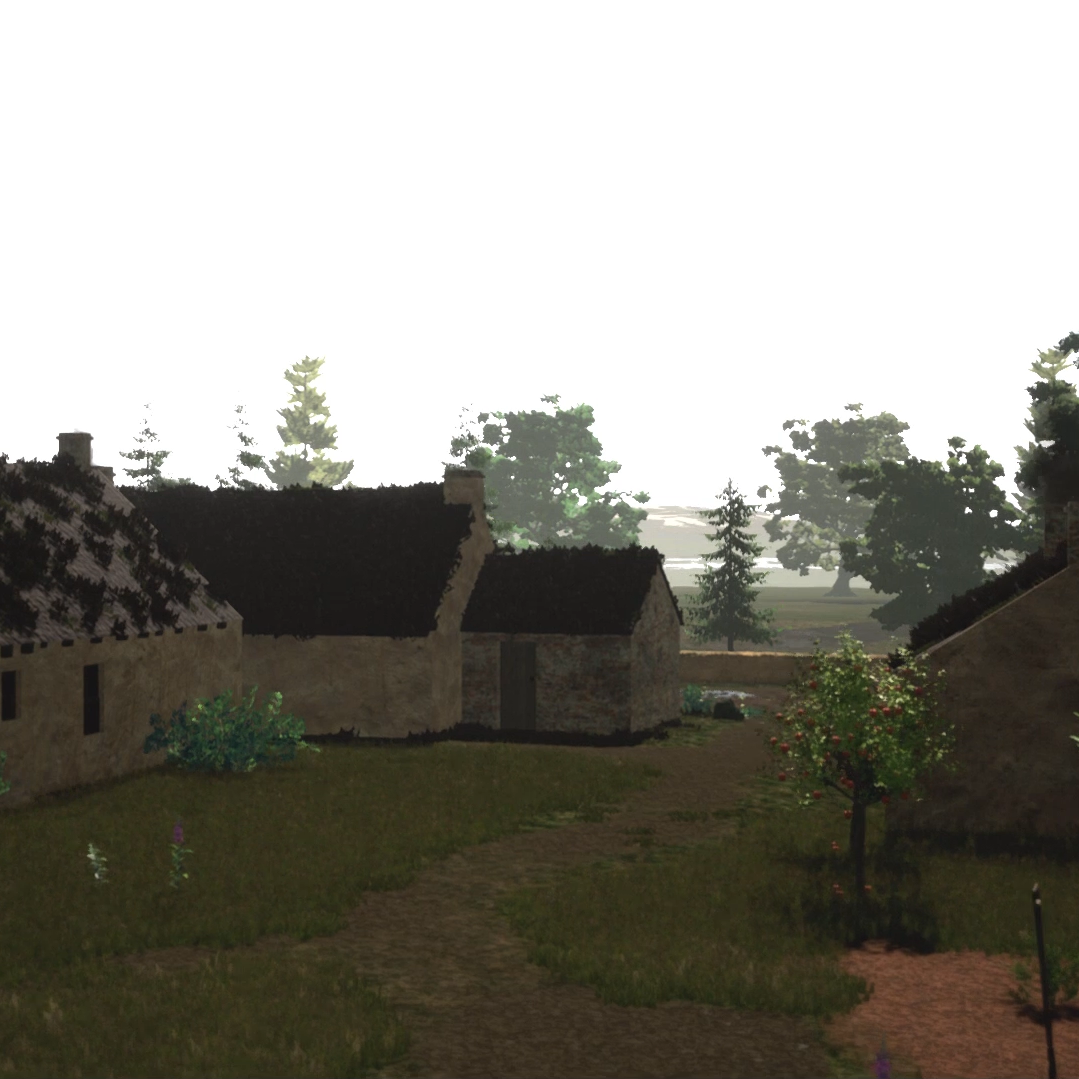
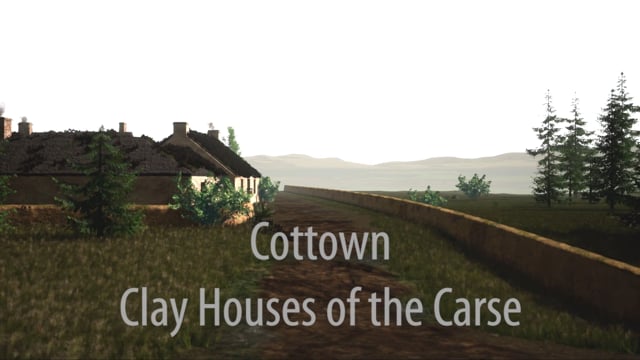
The Cottown School House was begun in the mid-eighteenth century. However, like many vernacular buildings its form evolved over time. The University of St Andrews’ Open Virtual Worlds team and Smart History collaborated with the Tay Landscape Partnership and Perth and Kinross Heritage Trust on a representation of the buildings at Cottown as they may have appeared in the nineteenth century.
The Cottown School House is now cared for by the National Trust for Scotland.
Source
reconstructions
Date
2016
Format
image/png
Type
Reconstruction
Identifier
181
License
In Copyright (InC)
Spatial Coverage
current,56.37969448055998,-3.2812423723176334;
Europeana
Is Shown At
https://www.openvirtualworlds.org/cottown-clay-house-1850/
Object
https://player.vimeo.com/video/244992357
Europeana Rights
Smart History/Open Virtual Worlds Team University of St Andrews
Europeana Type
TEXT
Reconstruction Item Type Metadata
Canmore
https://canmore.org.uk/site/82580
How
A digital landscape was created using survey data and height map. Models were created in 3D modelling programs and imported into UNREAL (a cross-platform game engine for creating virtual worlds). The models were then scaled, orientated and assembled. The landscapes were populated with flora and fauna. Where applicable, models of characters and animals were imported and animated.
Evidence
The reconstruction was informed by knowledge from excavations and renovation work undertaken at Cottown during the 1990s.
Buildings that were “made out of the ground upon which they stood” were once the most common vernacular structures in parts of Scotland. In the Carse of Gowrie, a substantial number of significant historical structures survive that demonstrate the local tradition of mass clay walls or mud walls. Some of these buildings are 200 years old. This construction method is virtually unrecognised, poorly recorded and not properly appreciated, protected or celebrated either locally or nationally. The buildings do not respond well to repairs in modern materials and fail rapidly, sometimes catastrophically, if not maintained appropriately. The project looks to secure the future of this now very rare construction method via repairs, training, awareness raising and education. Find out about the area’s nationally important collection of clay buildings – many of which still stand on the ground they were created from. - https://taylp.openvirtualworlds.org/wordpress/clay-building-heritage/
Advisers
David Strachan (Perth and Kinross Heritage Trust), Bess Rhodes (University of St Andrews)
Date Represented
1850
Collection
Citation
“Cottown Clay House - 1850,” STAGE, accessed October 20, 2026, https://stage.openvirtualworlds.org/omeka/items/show/152.
Embed
Copy the code below into your web page