Dun an Sticer
Dublin Core
Title
Dun an Sticer
Description
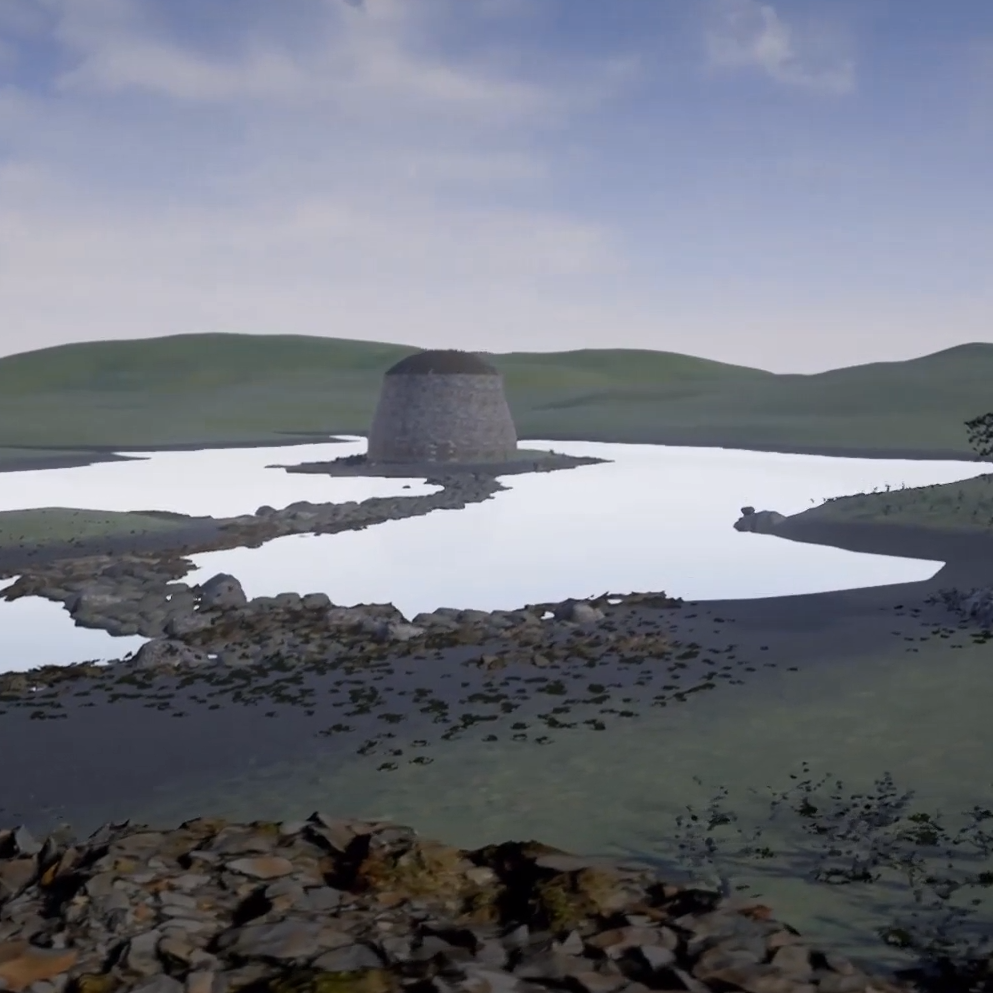
Dun an Sticir is an example of how in mediaeval times the original Iron Age 'brochs', hollow walled windowless fortifications often built on islands and reached by a tricky causeway, were later adapted for more domestic purposes. The building of brochs for defensive purposes seems to date from 500 BC. Over the previous thousand years cooler climactic changes had encouraged layers of peat to gradually move downhill, overgrazing had taken its toll, and land for cultivation had become scarcer, forcing people to migrate to the lower ground. Duns comprised a single outer rounded wall, forming a tall tower often rising to 40 feet, mirrored internally by a second curving wall enclosing an inner chamber. This was a relatively straightforward fortification to build in order to protect your land. Erskine Beveridge also found evidence at Dun an Sticir of a gallery six feet above ground level. Remains of two huts where livestock could have been protected could also be seen. The rectangular stone structure built within the walls using the stone available, with its door and window, dates from the mediaeval period. A second island, Eilean na Mi-Chomhairle (the Island of Bad Council), is linked to Dun an Sticir (the Dun of the Skulker) by a causeway. Both Gaelic names suggest a darker and less peaceful era.
Source
reconstructions
Contributor
eulac3d
Type
Site
Identifier
156
Date Submitted
29/12/2020
Extent
cm x cm x cm
Spatial Coverage
current,57.6814928,-7.2077841;
Europeana
Europeana Data Provider
Dun an Sticer
Europeana Type
TEXT
Site Item Type Metadata
Wiki
https://stage.openvirtualworlds.org/wiki/index.php/Dun_an_Sticer
Institutional nature
Building
Prim Media
184
Condition
1
Citation
“Dun an Sticer,” STAGE, accessed October 17, 2026, https://stage.openvirtualworlds.org/omeka/items/show/185.
Embed
Copy the code below into your web page