Brora Salt Pans - 16th and 18th century
Dublin Core
Title
Brora Salt Pans - 16th and 18th century
Subject
Intangible Heritage
Description
The Virtual Histories Project was a collaboration between four museums (Eyemouth Museum, Shetland Museum, Taigh Chearsabhagh and Timespan) and the University of St Andrews School of Computer Science, the School of History and the SCAPE Trust.
In 2009, a community excavation of the site took place. The Brora saltpans community archaeology project: a partnership between the Clyne Heritage Society and the SCAPE Trust. The project documents a significant archaeological site in the town of Brora in Sutherland, Scotland.
Producing salt was a very important industry in Scotland and the sixteenth and seventeenth centuries. Using coal from the most northerly outcrop in the UK, the Sutherland Estate constructed industrial buildings to house saltpans, large metal trays used to evaporate seawater.
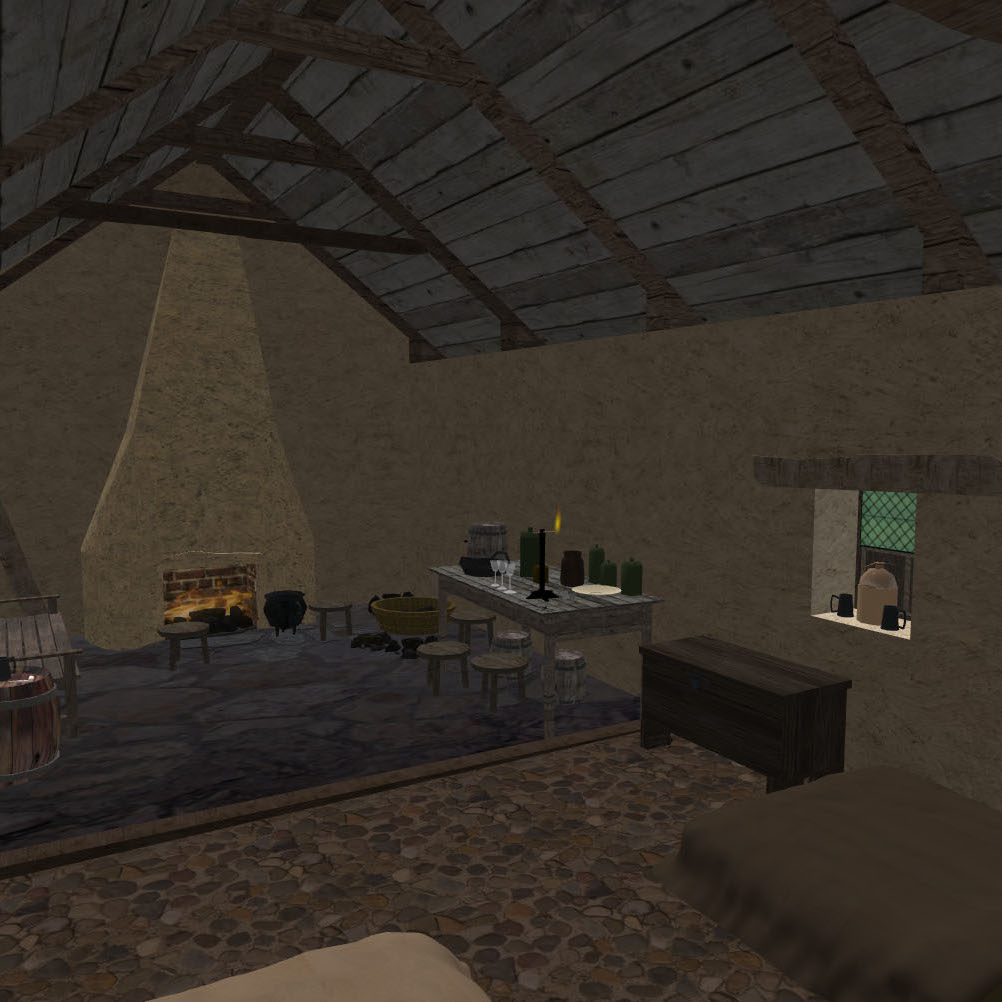
Using laser scan data, together with supporting information from the excavation, we have created a virtual reconstruction of the Salt Pans as they would have stood in the 16th and 18th centuries.
The site at the time of the dig and scan was under dire threat from coastal erosion; now, sadly, after some particularly bad storms in 2012 and 2013, the site has all but been washed away. This highlights the importance of recording and learning from these coastal erosion sites that are in danger before they are lost.
The Brora Salt Pans project was a collaboration between Clyne Heritage Society, the SCAPE Trust, Timespan Museum and Arts Centre, and the University of St Andrews.
Source
reconstructions
Date
2013
Format
image/jpeg
Type
Reconstruction
Identifier
178
License
In Copyright (InC)
Spatial Coverage
current,58.002675076676425,-3.8662648200988774;
Europeana
Is Shown At
https://www.openvirtualworlds.org/salt-pans/
Europeana Rights
Open Virtual Worlds Team University of St Andrews
Europeana Type
TEXT
Reconstruction Item Type Metadata
Canmore
https://canmore.org.uk/site/294450
How
A digital landscape was created using survey data and a height map. Models were created in 3D modelling programs and imported into OpenSim (an online, open-source, cross-platform, 3D multi-user virtual environment). The models were then scaled, oriented and assembled. The landscapes were populated with flora and fauna.
Evidence
The SCAPE Trust and the Clyne Heritage Society carried out a fifth season of excavation of salt pans at the Back Beach in Brora, East Sutherland. The excavation was funded by Historic Scotland, and their support is gratefully acknowledged. The site was excavated by volunteers who, once again, made the most significant contribution to the success and the outcomes of this important project. This year’s excavation saw the completion of the excavation of the building in Trench 9 on the site of the ‘Old Salt House’, marked on John Farey’s 1813 Mineral Map of the Coal Field at and near Brora. The eastern half of this building was fully excavated in 2010. The remainder of the building was actively eroding. Deposits on the south (beach) side of the building had already been largely destroyed before the excavation. -
Back Beach, Brora, Sutherland
report by
Joanna Hambly
The SCAPE Trust
For the FULL Report, please interact with the Gallery above.
Advisers
Joanna Hambly, Tom Dawson (University of St Andrews, the SCAPE Trust) Jacquie Aitken (Timespan)
Date Represented
16th and 18th century (1590 and 1750)
Collection
Citation
“Brora Salt Pans - 16th and 18th century,” STAGE, accessed October 17, 2026, https://stage.openvirtualworlds.org/omeka/items/show/208.
Embed
Copy the code below into your web page