Sundarbans National Park
Dublin Core
Title
Sundarbans National Park
Description
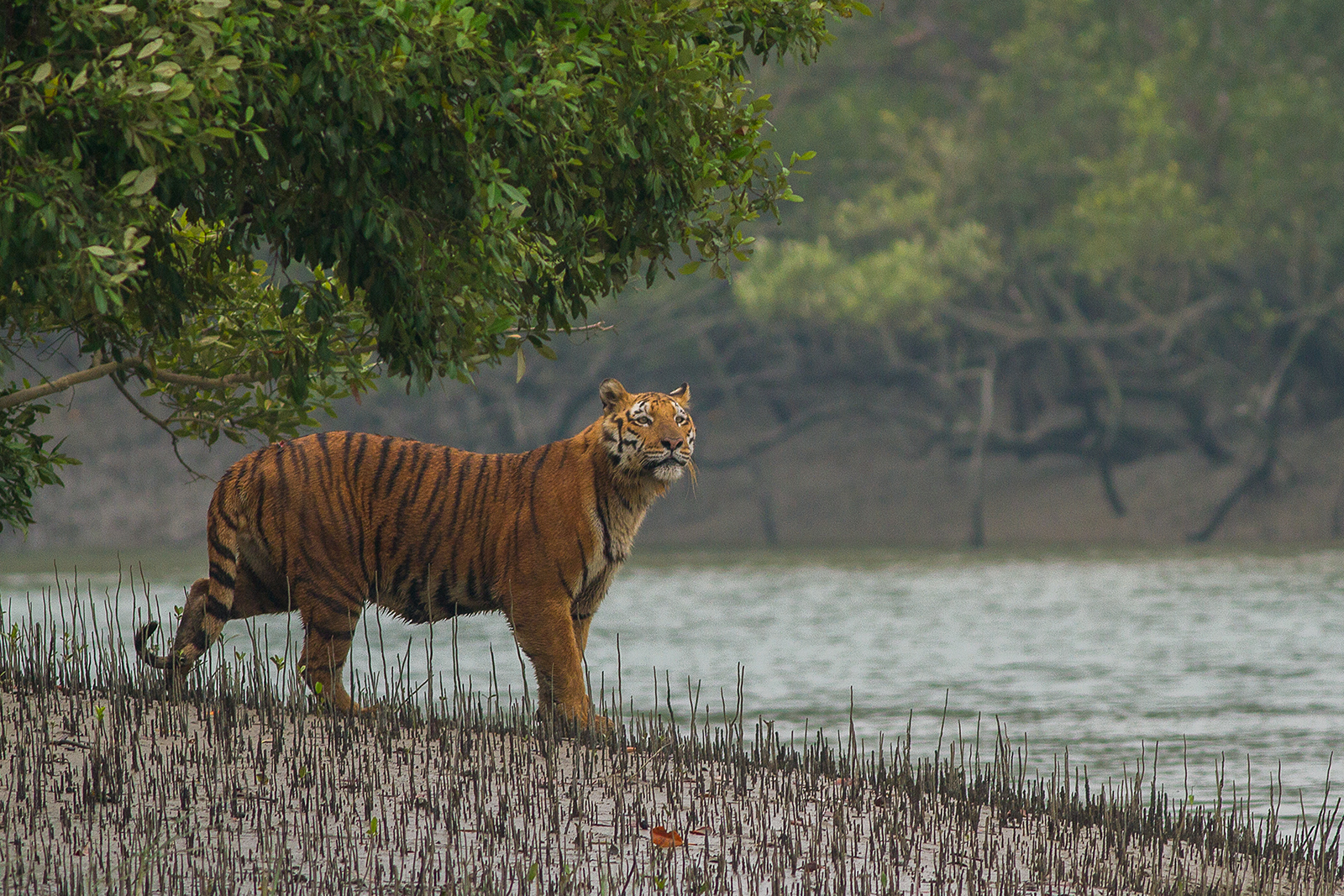
Sundarbans National Park, located at the delta of the Ganges, Brahmaputra, and Meghna rivers on the Bay of Bengal, is a UNESCO World Heritage site celebrated for its exceptional biodiversity and unique ecosystem. This extensive network of tidal waterways, mudflats, and small islands of salt-tolerant mangrove forests is home to a wide variety of species, including the iconic Bengal tiger, which is specially adapted to the aquatic and challenging environment of the mangroves.
The park plays a crucial role in protecting the region from natural disasters such as cyclones and tsunamis, showcasing its significant ecological services. However, it faces serious challenges from climate change, including rising sea levels and increased salinity, which threaten its delicate ecosystems and the species that depend on them. The conservation strategies implemented in Sundarbans are in alignment with several Sustainable Development Goals (SDGs), such as SDG 13 (Climate Action) by addressing the impacts of climate change, SDG 14 (Life Below Water) and SDG 15 (Life on Land) by preserving its rich biodiversity, and SDG 17 (Partnerships for the Goals) through cooperative international efforts for sustainable management.
Source
is51102024
Date
2017:08:30 20:24:33
Contributor
sg361
Type
Site
Identifier
1058
Date Submitted
02/05/2024
Date Modified
05/02/2024 10:28:25 pm
Extent
cm x cm x cm
Spatial Coverage
current,21.838,88.8852;
Provenance
India
Europeana
Europeana Data Provider
Sundarbans National Park
Object
https://www.sunderbannationalpark.in/
Europeana Type
TEXT
Site Item Type Metadata
Institutional nature
Place Name
Stewardship
India
Contact
sg361@st-andrews.ac.uk
Citation
“Sundarbans National Park,” STAGE, accessed October 16, 2026, https://stage.openvirtualworlds.org/omeka/items/show/2202.
Embed
Copy the code below into your web page