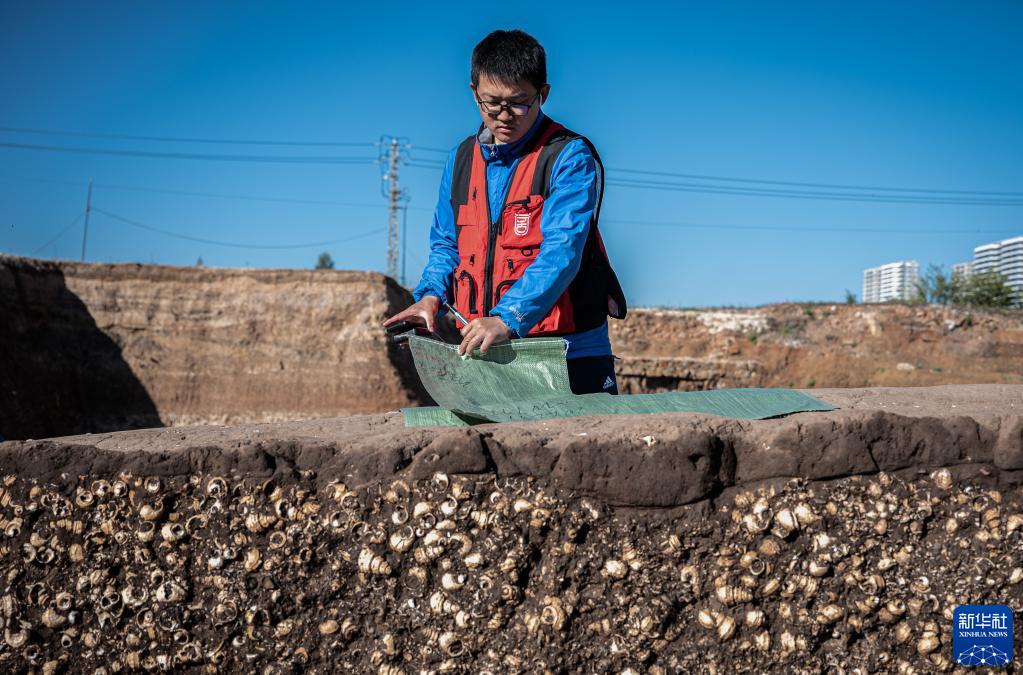
Image of Shell ring site of Jinning
Dublin Core
Title
Image of Shell ring site of Jinning
Subject
Immovable Culture Heritage
Description
Shell ring site are a type of ancient human settlement site. The cultural accumulation at such sites is dominated by shellfish. Shell ring site of the ancient city of Jinning in Yunnan is the most complete known annular shell mound site of the Pre-Dian period in Yunnan Province, China. The core area of the site reaches 42,000 square meters, and the shell mound accumulation thickness is nearly 6.5 meters. There are a large number of snail shells stacked alternately with layers of lime soil in the site. After the ancients ate the snail meat, they discarded the snail shells as food waste, and gradually accumulated them over the years, forming the shell mounds we see today. Protecting shell midden sites can help people understand past ways of life, promote tourism and local economic development, and promote the United Nations Sustainable Development Goal SDG 4 quality education and SDG 11 Sustainable Cities and Communities.
Source
is51102024
Contributor
Sixian
Format
image/jpeg
Type
Still Image
Date Submitted
05/05/2024 12:32:07 pm
License
In Copyright (InC)
Spatial Coverage
current,24.756667 ,102.677778;
Europeana
Is Shown At
http://www.news.cn/politics/2023-02/15/c_1129366902.htm
Object
http://www.news.cn/politics/2023-02/15/1129366902_16764468425591n.jpg
Europeana Rights
Guansen Wang
Europeana Type
IMAGE
Still Image Item Type Metadata
DescriptionEN
Shell ring site are a type of ancient human settlement site. The cultural accumulation at such sites is dominated by shellfish. Shell ring site of the ancient city of Jinning in Yunnan is the most complete known annular shell mound site of the Pre-Dian period in Yunnan Province, China. The core area of the site reaches 42,000 square meters, and the shell mound accumulation thickness is nearly 6.5 meters. There are a large number of snail shells stacked alternately with layers of lime soil in the site. After the ancients ate the snail meat, they discarded the snail shells as food waste, and gradually accumulated them over the years, forming the shell mounds we see today. Protecting shell midden sites can help people understand past ways of life, promote tourism and local economic development, and promote the United Nations Sustainable Development Goal SDG 4 quality education and SDG 11 Sustainable Cities and Communities.
Citation
“Image of Shell ring site of Jinning,” STAGE, accessed October 24, 2026, https://stage.openvirtualworlds.org/omeka/items/show/2511.
Embed
Copy the code below into your web page