Protective Town of San Miguel and the Sanctuary of Jesús Nazareno de Atotonilco
Dublin Core
Title
Protective Town of San Miguel and the Sanctuary of Jesús Nazareno de Atotonilco
Description
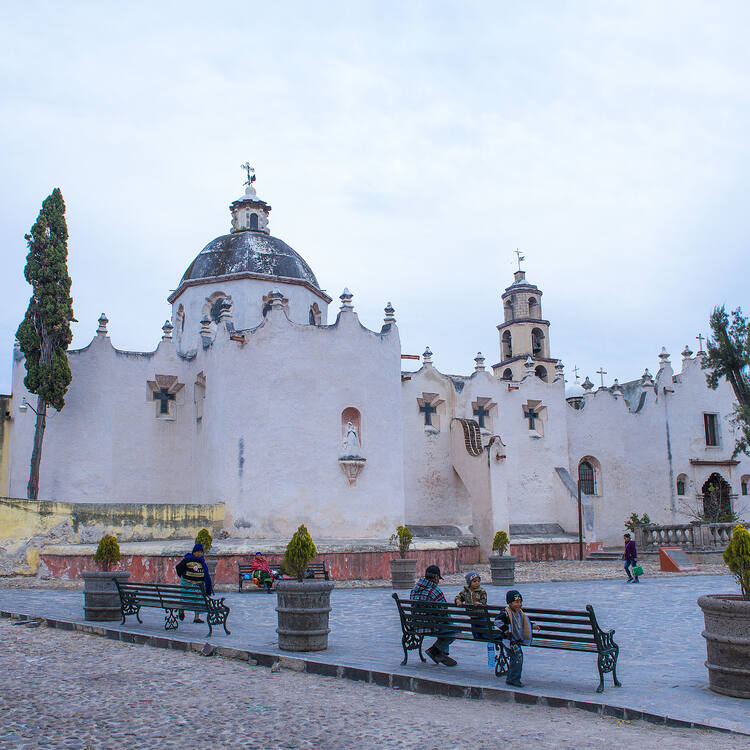
The Protective Town of San Miguel de Allende and the Sanctuary of Jesús Nazareno de Atotonilco represent exceptional examples of 18th-century Mexican Baroque architecture and cultural fusion. Established in the 16th century along the Royal Route, San Miguel reached its zenith in the 18th century when its distinctive religious and civic buildings were constructed. Located 14 kilometers from the town, the Jesuit sanctuary of Atotonilco showcases remarkable Baroque art including oil paintings by Rodriguez Juárez and murals by Miguel Antonio Martínez de Pocasangre. The site embodies the cultural exchange between European and Latin American traditions, particularly reflecting the influence of Saint Ignacio de Loyola's doctrine. The architectural ensemble demonstrates the transition from Baroque to neoclassical styles while preserving the colonial urban layout. Today, this UNESCO World Heritage Site continues to serve as a living example of Spanish colonial influence and Mexican cultural identity.
Source
is51102025
Contributor
cx27@st-andrews.ac.uk
Format
image/jpeg
Type
Still Image
Date Submitted
03/24/2025 04:40:57 pm
License
In Copyright (InC)
Spatial Coverage
current,20.9152° N,100.7452° W;
Europeana
Object
whc.unesco.org/en/documents/136554
Europeana Type
IMAGE
Still Image Item Type Metadata
DescriptionEN
The Protective Town of San Miguel de Allende and the Sanctuary of Jesús Nazareno de Atotonilco represent exceptional examples of 18th-century Mexican Baroque architecture and cultural fusion. Established in the 16th century along the Royal Route, San Miguel reached its zenith in the 18th century when its distinctive religious and civic buildings were constructed. Located 14 kilometers from the town, the Jesuit sanctuary of Atotonilco showcases remarkable Baroque art including oil paintings by Rodriguez Juárez and murals by Miguel Antonio Martínez de Pocasangre. The site embodies the cultural exchange between European and Latin American traditions, particularly reflecting the influence of Saint Ignacio de Loyola's doctrine. The architectural ensemble demonstrates the transition from Baroque to neoclassical styles while preserving the colonial urban layout. Today, this UNESCO World Heritage Site continues to serve as a living example of Spanish colonial influence and Mexican cultural identity.
Citation
“Protective Town of San Miguel and the Sanctuary of Jesús Nazareno de Atotonilco,” STAGE, accessed October 18, 2026, https://stage.openvirtualworlds.org/omeka/items/show/3122.
Embed
Copy the code below into your web page