Jiuzhaigou Valley
Dublin Core
Title
Jiuzhaigou Valley
Subject
Immovable Culture Heritage
Description
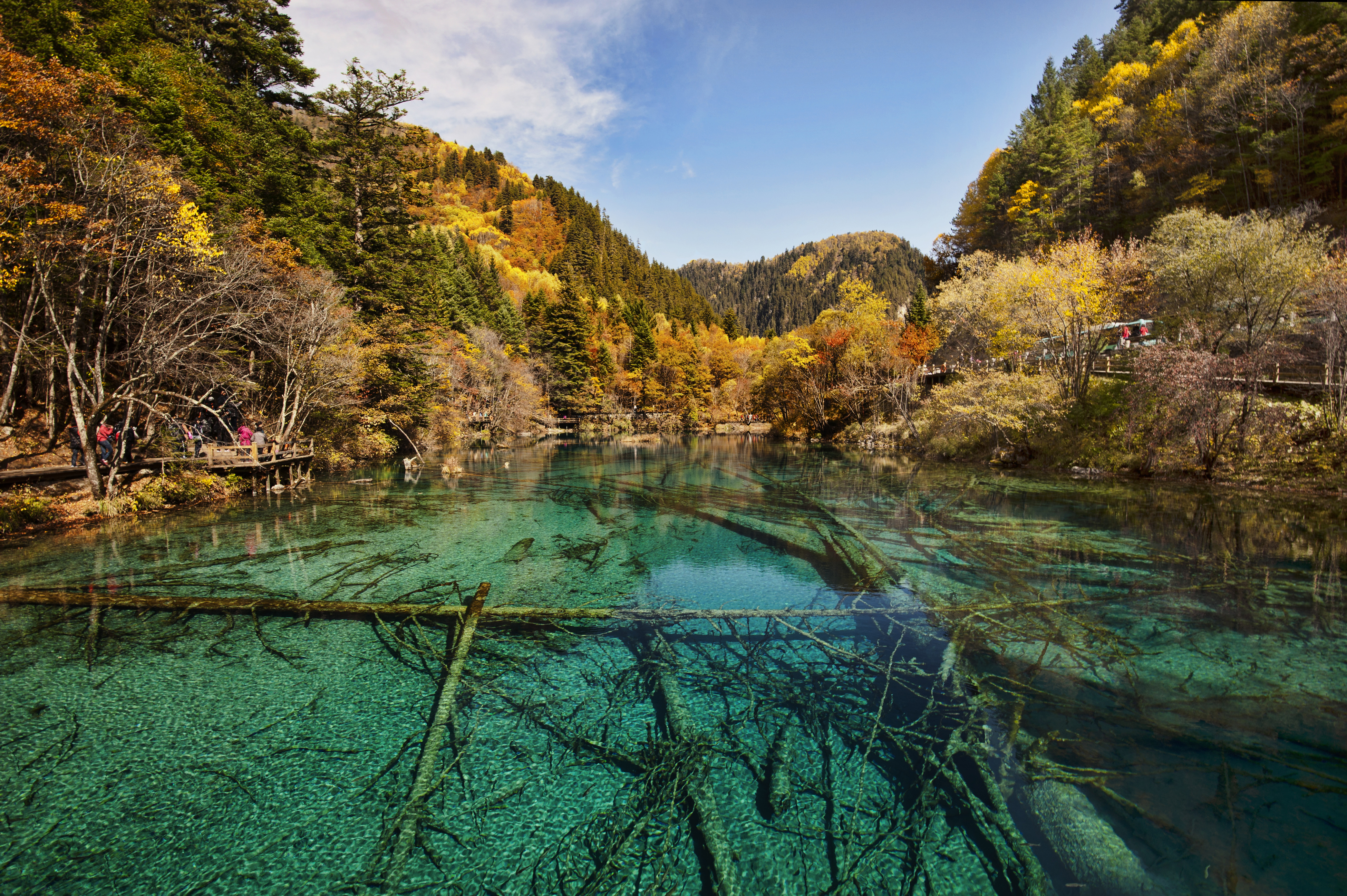
Jiuzhaigou is located within Sichuan Province, China, and has gained a widespread reputation for its unparalleled natural scenery. Here, there are colorful lakes, multi-layered waterfalls with a well-arranged layout, and unique limestone terraces. Its distinctive karst landform and rich biodiversity led to its inclusion in the World Heritage List by UNESCO in 1992. As a habitat for endangered species such as giant pandas and takins, Jiuzhaigou is also a vital nature reserve. In addition, the Qiang and Tibetan ethnic groups live in this valley, and their inherited cultural traditions have added profound historical significance to this area.
In order to rationally develop and properly protect the natural and cultural resources of Jiuzhaigou and promote the steady development of tourism, Jiuzhaigou National Park has specially established an official website. Through digital forms such as pictures and videos, it promotes Jiuzhaigou, helping people from all over the world to recognize and understand Jiuzhaigou. By popularizing the unique natural landscapes and cultural customs of Jiuzhaigou, tourists can have a deeper understanding of the local history and respect the local customs, thus enhancing the harmonious relationship between tourists and local residents and strongly promoting the sustainable development of tourism. These measures are highly consistent with the requirements of Sustainable Development Goal 15 (focusing on the sustainable use of terrestrial ecosystems), SDG 12 (advocating responsible consumption and production patterns), and SDG 11 (emphasizing the protection of the world's cultural and natural heritage).
Source
is51102025
Date
2011:10:26 20:44:57
Contributor
zl203@st-andrews.ac.uk
Format
image/jpeg
Type
Still Image
Date Submitted
03/24/2025 10:31:49 pm
License
Creative Commons Attribution-ShareAlike License
Medium
Wikipedia
Spatial Coverage
current,33°12′N,103°54′E;
Europeana
Is Shown At
https://en.wikipedia.org/wiki/Jiuzhaigou
Object
https://en.wikipedia.org/wiki/Jiuzhaigou#/media/File:1_jiuzhaigou_valley_wu_hua_hai_2011b.jpg
Europeana Provider
https://en.wikipedia.org/wiki/User:Chensiyuan
Europeana Rights
Chensiyuan
Europeana Type
IMAGE
Still Image Item Type Metadata
DescriptionEN
Jiuzhaigou is located within Sichuan Province, China, and has gained a widespread reputation for its unparalleled natural scenery. Here, there are colorful lakes, multi-layered waterfalls with a well-arranged layout, and unique limestone terraces. Its distinctive karst landform and rich biodiversity led to its inclusion in the World Heritage List by UNESCO in 1992. As a habitat for endangered species such as giant pandas and takins, Jiuzhaigou is also a vital nature reserve. In addition, the Qiang and Tibetan ethnic groups live in this valley, and their inherited cultural traditions have added profound historical significance to this area.
In order to rationally develop and properly protect the natural and cultural resources of Jiuzhaigou and promote the steady development of tourism, Jiuzhaigou National Park has specially established an official website. Through digital forms such as pictures and videos, it promotes Jiuzhaigou, helping people from all over the world to recognize and understand Jiuzhaigou. By popularizing the unique natural landscapes and cultural customs of Jiuzhaigou, tourists can have a deeper understanding of the local history and respect the local customs, thus enhancing the harmonious relationship between tourists and local residents and strongly promoting the sustainable development of tourism. These measures are highly consistent with the requirements of Sustainable Development Goal 15 (focusing on the sustainable use of terrestrial ecosystems), SDG 12 (advocating responsible consumption and production patterns), and SDG 11 (emphasizing the protection of the world's cultural and natural heritage).
Collection
Citation
“Jiuzhaigou Valley,” STAGE, accessed October 21, 2026, https://stage.openvirtualworlds.org/omeka/items/show/3245.
Embed
Copy the code below into your web page