Leshan_Giant_Buddha
Dublin Core
Title
Leshan_Giant_Buddha
Subject
Immovable Culture Heritage
Description
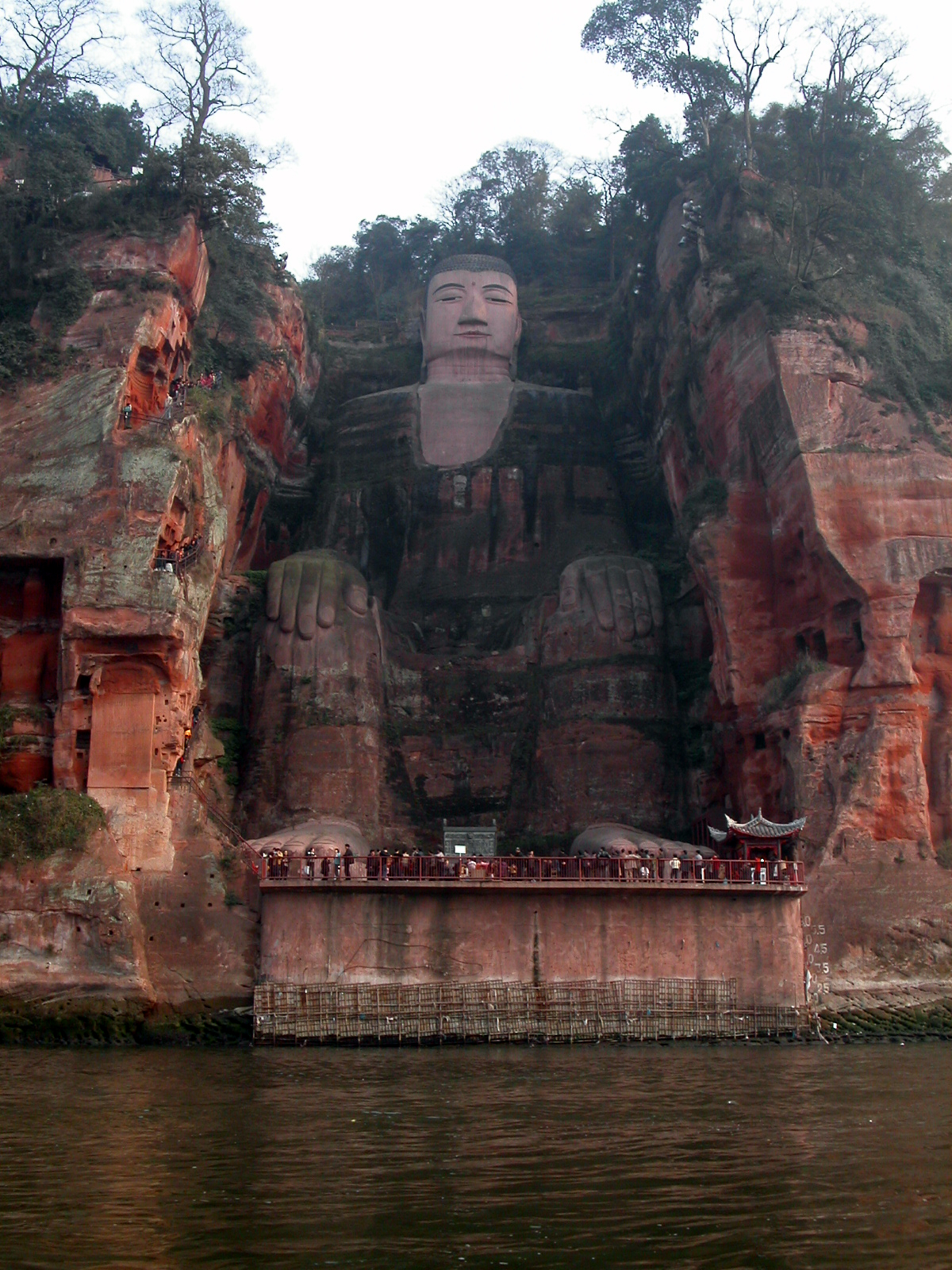
The Leshan Giant Buddha, located in Sichuan Province, China, is the world’s largest stone Buddha statue, standing 71 meters tall. It was carved into a cliff at the meeting point of three rivers — the Min, Dadu, and Qingyi — during the Tang Dynasty, from 713 to 803 AD. Initiated by the monk Haitong, it was built both as a religious symbol and to calm dangerous waters for passing boats. Next to the Buddha, Mount Emei is a vital site for ecological research and conservation. In 1996, UNESCO listed both the Leshan Giant Buddha and Mount Emei as a World Heritage Site, recognizing their combined cultural and natural value.
Over time, the Buddha has suffered from erosion and human activity. To protect it, authorities now use 3D scanning and AI to detect cracks and biological damage. These advanced technologies help create precise restoration plans, ensuring the long-term preservation of this cultural treasure, in line with UN Sustainable Development Goal 11.
Source
is51102025
Date
2003:01:02
Contributor
zl203@st-andrews.ac.uk
Format
image/jpeg
Type
Still Image
Date Submitted
03/25/2025 02:02:44 am
License
Creative Commons Attribution-ShareAlike License
Medium
Wikipedia
Spatial Coverage
origin,29.544722,103.773333;
Europeana
Is Shown At
https://en.wikipedia.org/wiki/Leshan_Giant_Buddha
Object
https://en.wikipedia.org/wiki/Leshan_Giant_Buddha#/media/File:Leshan_giant_buddha.jpg
Europeana Rights
Munford
Europeana Type
IMAGE
Still Image Item Type Metadata
DescriptionEN
The Leshan Giant Buddha, located in Sichuan Province, China, is the world’s largest stone Buddha statue, standing 71 meters tall. It was carved into a cliff at the meeting point of three rivers — the Min, Dadu, and Qingyi — during the Tang Dynasty, from 713 to 803 AD. Initiated by the monk Haitong, it was built both as a religious symbol and to calm dangerous waters for passing boats. Next to the Buddha, Mount Emei is a vital site for ecological research and conservation. In 1996, UNESCO listed both the Leshan Giant Buddha and Mount Emei as a World Heritage Site, recognizing their combined cultural and natural value.
Over time, the Buddha has suffered from erosion and human activity. To protect it, authorities now use 3D scanning and AI to detect cracks and biological damage. These advanced technologies help create precise restoration plans, ensuring the long-term preservation of this cultural treasure, in line with UN Sustainable Development Goal 11.
Citation
“Leshan_Giant_Buddha,” STAGE, accessed October 19, 2026, https://stage.openvirtualworlds.org/omeka/items/show/3272.
Embed
Copy the code below into your web page