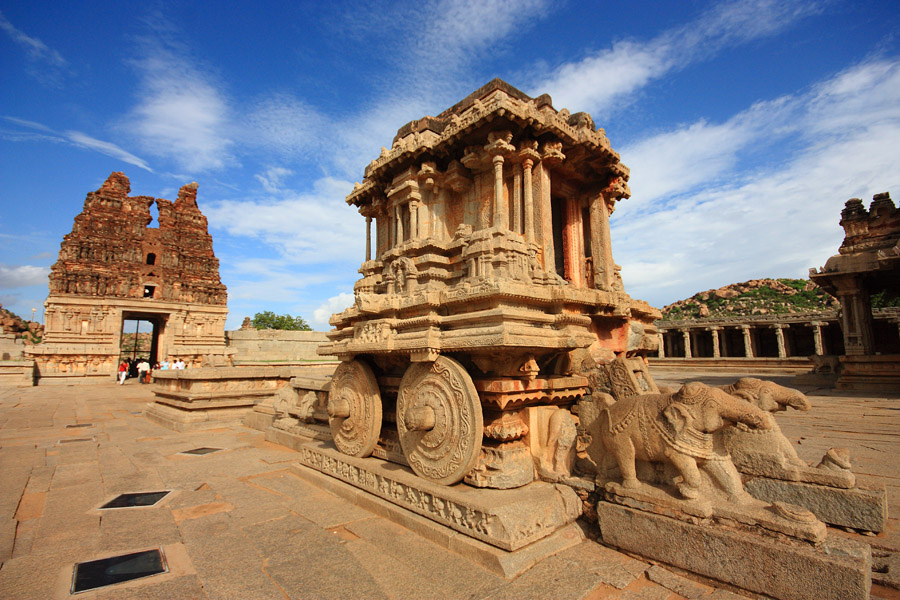
Historical City, Hampi, India
Dublin Core
Title
Historical City, Hampi, India
Subject
Immovable Culture Heritage,Movable Cultural Heritage
Description
Hampi, situated in Karnataka, India, is a rich repository of India's historical and cultural heritage, recognised as a UNESCO World Heritage Site for its extraordinary significance. Once a vibrant thriving capital of the Vijayanagar Empire between the 14th and 16th centuries CE, it stands as testament to the grandeur and sophistication of one the India's most powerful medieval kingdoms. Traversing an expansive 4,100 hectares, this archaeological wonder showcases a diverse collection of is structures that represents the pinnacle of architectural work and artistic excellence of the era.
The site is well known for its monumental architecture, contains intricately designed temples dedicated to various gods/deities, sprawling royal complexes that once house of royal family and nobles, and civic buildings which supported the daily life of its citizens. These edifices are adorned by exquisite stone carvings and sculptures that emphasise the supremacy of Dravidian art. Beyond its artistic accomplishments, Hampi also exhibits advanced engineering through its advanced water management systems. These include meticulously constructed canals, tanks, and step wells that ensured efficient water supply and storage in a semi-arid landscape.
Source
is51102025
Date
14th Century
Contributor
Ravish Kumar
Type
Site
Identifier
1405
Date Submitted
26/03/2025
Extent
cm x cm x cm
Medium
Wikipedia
Spatial Coverage
current,15.3350°,76.4600°;
Europeana
Europeana Data Provider
Historical City, Hampi, India
Object
https://artsandculture.google.com/story/hampi-the-saga-of-a-lost-city-incredibleindia/PwVB2aUlJBbNLA?hl=en
Europeana Type
TEXT
Site Item Type Metadata
Institutional nature
Archaeological
Prim Media
3595
End Date
Till Now
Status
public
Condition
1
Contact
rk210@st-andrews.ac.uk
Citation
“Historical City, Hampi, India,” STAGE, accessed October 17, 2026, https://stage.openvirtualworlds.org/omeka/items/show/3692.
Embed
Copy the code below into your web page