Mountain Huangshan
Dublin Core
Title
Mountain Huangshan
Description
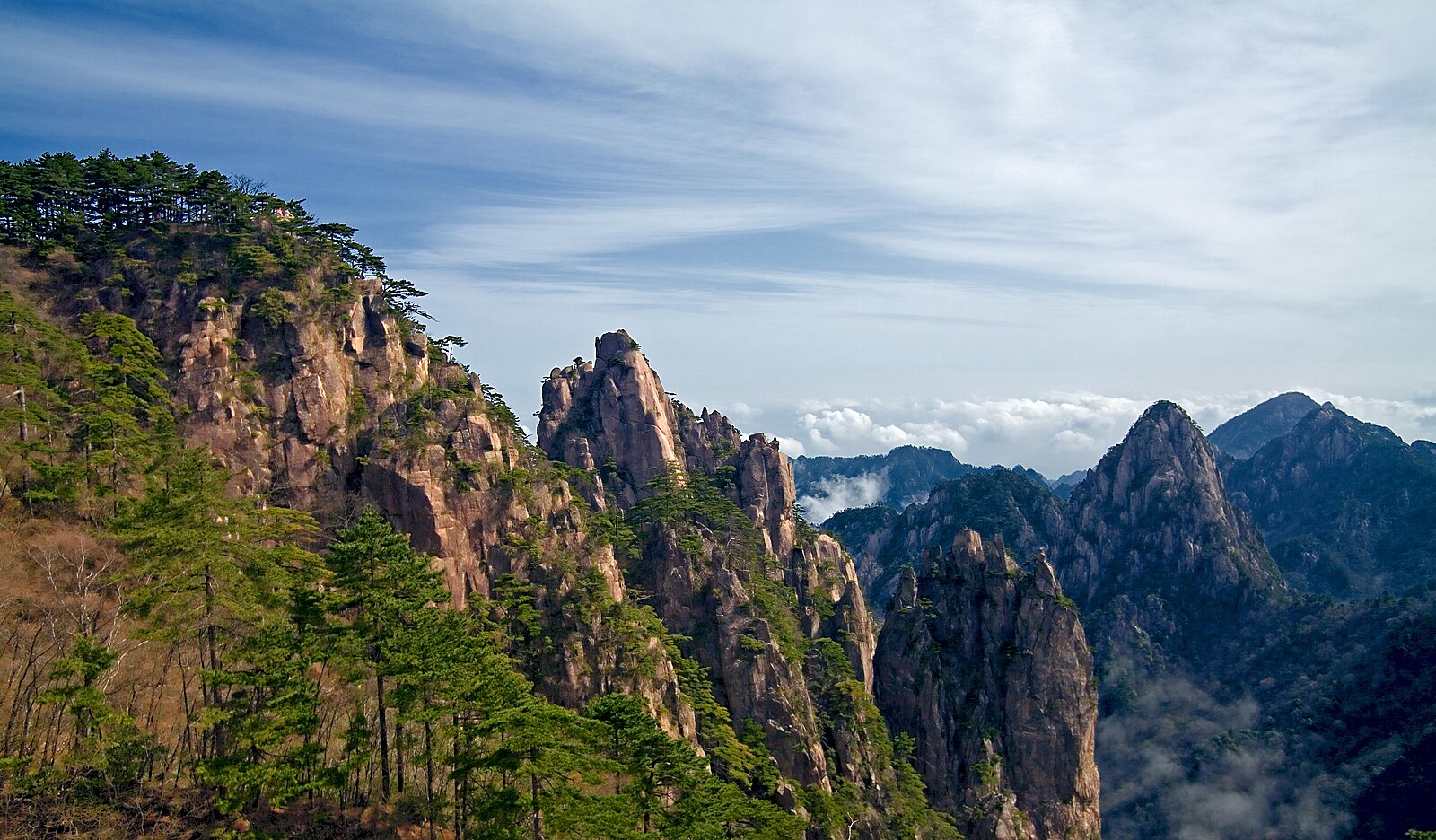
Mount Huangshan, also known as Yellow Mountain, is one of China’s most iconic and culturally resonant natural landmarks. Recognised as a UNESCO World Heritage Site for both its natural and cultural significance, Huangshan has inspired generations of poets, painters, and philosophers, and continues to hold a prominent place in Chinese cultural identity. As a mixed heritage site, it is home to 37 nationally protected higher plant species, alongside a rich diversity of flora and fauna uniquely adapted to its mountainous ecosystem.
Beyond its ecological and cultural value, Mount Huangshan plays a critical role in the regional economy, drawing millions of domestic and international tourists each year. This high level of visitation supports local livelihoods but also places considerable pressure on the mountain’s fragile environment. Natural erosion, exacerbated by heavy foot traffic and extreme weather events, poses ongoing risks to biodiversity, heritage features, and visitor safety.
In response to these challenges, targeted interventions aligned with the United Nations Sustainable Development Goals (SDGs) can support the long-term preservation of the site. Notably, SDG 4: Quality Education presents an opportunity to develop immersive, digital educational resources such as interactive virtual tours, augmented reality experiences, or gamified learning platforms to engage younger audiences. These tools could enhance awareness of the mountain’s historical, ecological, and cultural value while fostering environmental stewardship among future generations.
Source
is51102025
Contributor
zyyyyyyyyy
Format
image/jpeg
Type
Still Image
Date Submitted
03/27/2025 06:51:28 pm
License
Creative Commons Public Domain (no conditions)
Medium
Wikipedia
Europeana
Europeana Provider
https://en.wikipedia.org/wiki/Huangshan
Europeana Rights
Wikipedia
Europeana Type
IMAGE
Still Image Item Type Metadata
DescriptionEN
Mount Huangshan, also known as Yellow Mountain, is one of China’s most iconic and culturally resonant natural landmarks. Recognised as a UNESCO World Heritage Site for both its natural and cultural significance, Huangshan has inspired generations of poets, painters, and philosophers, and continues to hold a prominent place in Chinese cultural identity. As a mixed heritage site, it is home to 37 nationally protected higher plant species, alongside a rich diversity of flora and fauna uniquely adapted to its mountainous ecosystem.
Beyond its ecological and cultural value, Mount Huangshan plays a critical role in the regional economy, drawing millions of domestic and international tourists each year. This high level of visitation supports local livelihoods but also places considerable pressure on the mountain’s fragile environment. Natural erosion, exacerbated by heavy foot traffic and extreme weather events, poses ongoing risks to biodiversity, heritage features, and visitor safety.
In response to these challenges, targeted interventions aligned with the United Nations Sustainable Development Goals (SDGs) can support the long-term preservation of the site. Notably, SDG 4: Quality Education presents an opportunity to develop immersive, digital educational resources such as interactive virtual tours, augmented reality experiences, or gamified learning platforms to engage younger audiences. These tools could enhance awareness of the mountain’s historical, ecological, and cultural value while fostering environmental stewardship among future generations.
Citation
“Mountain Huangshan,” STAGE, accessed October 17, 2026, https://stage.openvirtualworlds.org/omeka/items/show/3810.
Embed
Copy the code below into your web page