Tulou-17.png
Dublin Core
Title
Tulou-17.png
Description
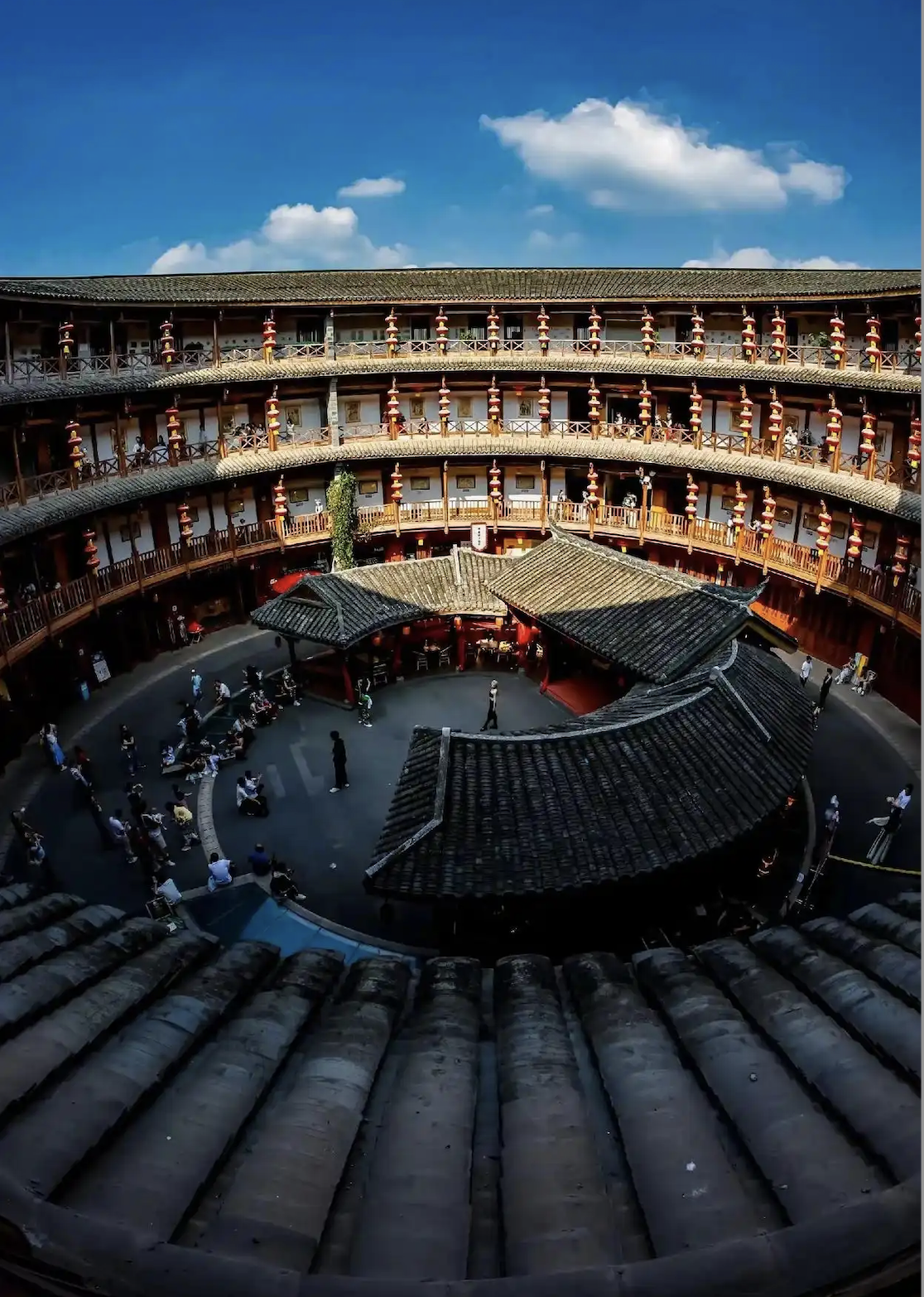
Fujian Tulou, a remarkable example of rammed-earth architecture, is predominantly found in China’s Fujian province, with origins tracing back to the 10th century. Constructed on solid stone foundations, these massive, fortress-like dwellings are built from compacted raw earth, reinforced with bamboo and wood. Their ingenious design ensures durability, providing warmth in winter and coolness in summer, while also offering exceptional defensive capabilities—perfectly suited for the mountainous terrain they inhabit. As a testament to traditional Chinese village culture, Tulou reflects the harmony between human settlement and nature, with its layout, site selection, and material use embodying the sustainability and ingenuity of past societies. Recognizing its cultural and historical significance, UNESCO inscribed Fujian Tulou as a World Heritage Site in 2008.
To safeguard this architectural legacy and promote sustainable tourism in line with SDG 11 (Sustainable Cities and Communities), 3D scanning and virtual tourism become invaluable tools. High-resolution 3D models enable precise documentation and aid in restoration efforts, while VR experiences allow global audiences to explore Tulou remotely, minimizing the environmental impact of mass tourism. These digital innovations not only enhance heritage conservation but also foster local engagement, ensuring the enduring legacy of Fujian Tulou for future generations.
Source
is51102025
Contributor
yx72@st-andrews.ac.uk
Format
image/png
Type
Still Image
Date Submitted
03/28/2025 10:11:35 pm
License
In Copyright (InC)
Medium
Baidu
Spatial Coverage
current,25.123 ,117.419;
Europeana
Europeana Provider
https://baijiahao.baidu.com/s?id=1797094706997332771&wfr=spider&for=pc
Europeana Rights
Sanliao Jiqing Hall Culture
Europeana Type
IMAGE
Still Image Item Type Metadata
DescriptionEN
Fujian Tulou, a remarkable example of rammed-earth architecture, is predominantly found in China’s Fujian province, with origins tracing back to the 10th century. Constructed on solid stone foundations, these massive, fortress-like dwellings are built from compacted raw earth, reinforced with bamboo and wood. Their ingenious design ensures durability, providing warmth in winter and coolness in summer, while also offering exceptional defensive capabilities—perfectly suited for the mountainous terrain they inhabit. As a testament to traditional Chinese village culture, Tulou reflects the harmony between human settlement and nature, with its layout, site selection, and material use embodying the sustainability and ingenuity of past societies. Recognizing its cultural and historical significance, UNESCO inscribed Fujian Tulou as a World Heritage Site in 2008.
To safeguard this architectural legacy and promote sustainable tourism in line with SDG 11 (Sustainable Cities and Communities), 3D scanning and virtual tourism become invaluable tools. High-resolution 3D models enable precise documentation and aid in restoration efforts, while VR experiences allow global audiences to explore Tulou remotely, minimizing the environmental impact of mass tourism. These digital innovations not only enhance heritage conservation but also foster local engagement, ensuring the enduring legacy of Fujian Tulou for future generations.
Citation
“Tulou-17.png,” STAGE, accessed October 19, 2026, https://stage.openvirtualworlds.org/omeka/items/show/3844.
Embed
Copy the code below into your web page