Mogao Cave
Dublin Core
Title
Mogao Cave
Description
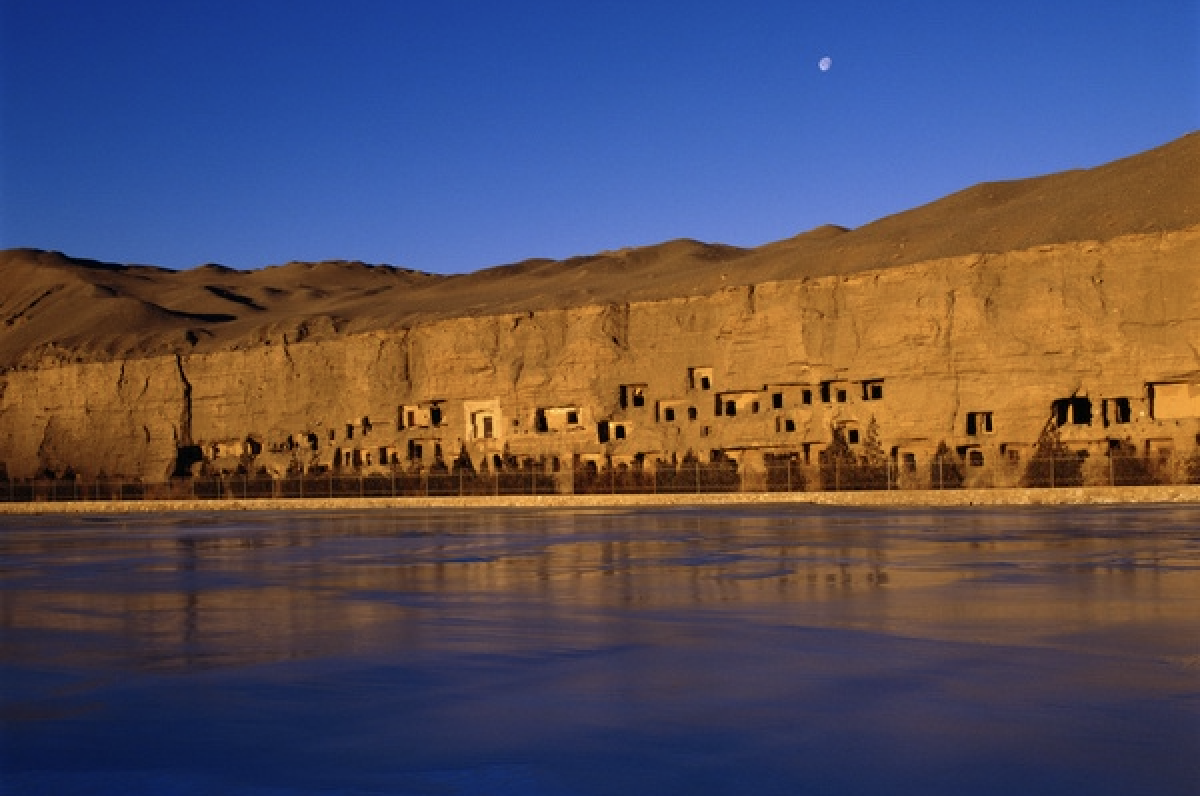
Located in Dunhuang, China, the Mogao Cave are one of the world’s largest and most diverse collections of Buddhist cave art. Dating back to the 4th century AD, the site includes 735 caves, 45,000 square meters of murals, and over 2,000 polychrome sculptures, showcasing centuries of cultural exchange along the Silk Road. In 1900, the discovery of the hidden Library Cave revealed a vast collection of over 60,000 manuscripts, scriptures, and silk paintings, dating from the 4th to the 11th century. These invaluable documents, written in multiple languages, provide crucial insights into the history, religion, and cultures of China and Silk Road civilizations. In 1987, the Mogao Cave were inscribed on the UNESCO World Heritage List.
Aligned with SDG 9: Industry, Innovation, and Infrastructure, the Digital Dunhuang project uses advanced technologies like high-precision scanning, LiDAR, and 4K rendering to digitally preserve the Library Cave and its manuscripts, ensuring long-term conservation. Big data and AI help detect mural damage, improving restoration accuracy. Additionally, the project creates a globally accessible cultural heritage database via cloud computing, enabling sustainable resource sharing and fostering innovation in preservation and global access to cultural resources.
Source
is51102025
Contributor
yx72@st-andrews.ac.uk
Type
Site
Identifier
1444
Date Submitted
29/03/2025
Extent
cm x cm x cm
Spatial Coverage
current,40.04606 ,94.82378;
Europeana
Europeana Data Provider
Mogao Cave
Europeana Type
TEXT
Site Item Type Metadata
Institutional nature
cave
Place
Mogao Caves, Dunhuang, Gansu Province, China
Status
public
Condition
1
Contact
yx72@st-andrews.ac.uk
Citation
“Mogao Cave,” STAGE, accessed October 21, 2026, https://stage.openvirtualworlds.org/omeka/items/show/3862.
Embed
Copy the code below into your web page