Hamilton Palace
Dublin Core
Title
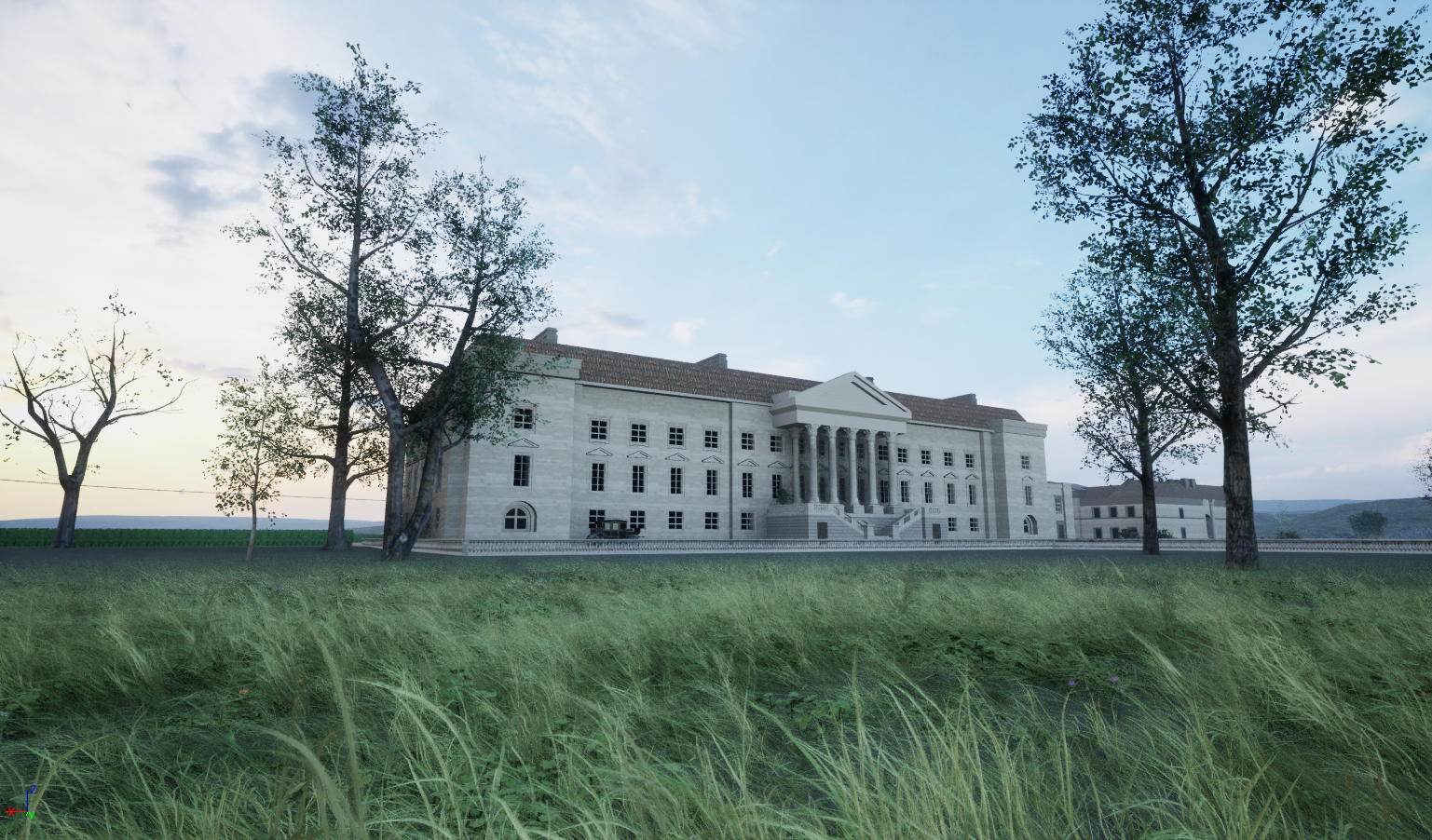
Hamilton Palace
Subject
Intangible Heritage
Description
Hamilton Palace in South Lanarkshire was once the grandest stately home in Scotland. It was developed over several centuries by the Hamilton family, eventually becoming a Palladian mansion which rivalled (and arguably surpassed) many royal residences. The demolition of the palace in the 1920s was a major loss to Scotland’s architectural heritage. Meanwhile, the sale of its furnishings and art collection brought about the dispersal of the country’s ‘biggest treasure trove’ (National Museum of Scotland 2016). Today, many are unaware of the scale and splendour of this vanished great house – a place that shortly before its destruction was praised as representing ‘the best that the seventeenth, eighteenth and nineteenth centuries produced’ (Country Life 1919). Hamilton Palace was demolished, after coal works beneath the house were discovered to threaten its structural integrity. "It is a thousand pities" wrote that doyen of departed country houses H. Avery Tipping in a preface to one of the 1919 Hamilton Palace sale catalogues, "that so great and historic a house should disappear. .. Within and without the Palace offers us of the best that the seventeenth, eighteenth and nineteenth centuries produced, and the present dispersal yields a very unusual opportunity of acquiring sumptuous examples of all three periods in the finest possible state of preservation."
Date
2022
Format
image/jpeg
Type
Reconstruction
Identifier
1540
License
In Copyright (InC)
Spatial Coverage
current,55.784633780098325,-4.037861824035645;
Europeana
Europeana Rights
Open Virtual Worlds Team University of St Andrews
Europeana Type
TEXT
Reconstruction Item Type Metadata
How
Firstly, a digital landscape was created using survey data and height maps. Following extensive historical research and collaboration with specialists, 3D models are created and imported into UNREAL Engine (a cross-platform game engine for creating virtual worlds). Models are textured, scaled, oriented and assembled. Scenes are created and populated with appropriate objects, including furniture and artefacts. Landscapes populated with flora and fauna. Weather settings and atmospheric lighting. Clothing and characters researched, created, imported and animated.
Evidence
Fortunately, a range of textual and visual sources (including inventories, plans, and photographs) have survived regarding the palace. Recent research (in particular by Godfrey Evans and the National Museum of Scotland) has enhanced scholarly understanding of the design and development of the palace. Yet public awareness of this lost monument remains limited. This is despite the fact that the modern geography of the town of Hamilton is shaped by the palace’s designed landscape and several associated monuments (such as the Hamilton Mausoleum) still survive. A digital reconstruction of the historic appearance of the palace and it setting could help communities in Hamilton and further afield better understand this remarkable site and enhance appreciation of the fragmentary heritage which has survived. The demolition of Hamilton Palace, then the principal residence of Scotland's premier Dukedom of Hamilton and Brandon, took place during the 1920s. Its contents, arguably the most magnificent ever assembled in this country, the Royal collections excepted, were dispersed through a series of sales beginning in the 1880s and culminating in 1919. There were, of course, good and particular reasons for the demolition of this great house and from today's vantage point we can also set the abandonment of such establishments more clearly in the context of changing economic, political and social conditions. Still, its destruction and the dispersal of its contents remain and will continue to be regarded as one of the greatest losses to national heritage ever to have happened in this country.
Advisers
Niven Simpson (Lennox Love, Hamiltom Palace Collection)
Date Represented
1920/30
Citation
“Hamilton Palace,” STAGE, accessed October 16, 2026, https://stage.openvirtualworlds.org/omeka/items/show/4162.
Embed
Copy the code below into your web page