Venetian Beads (33)
Dublin Core
Title
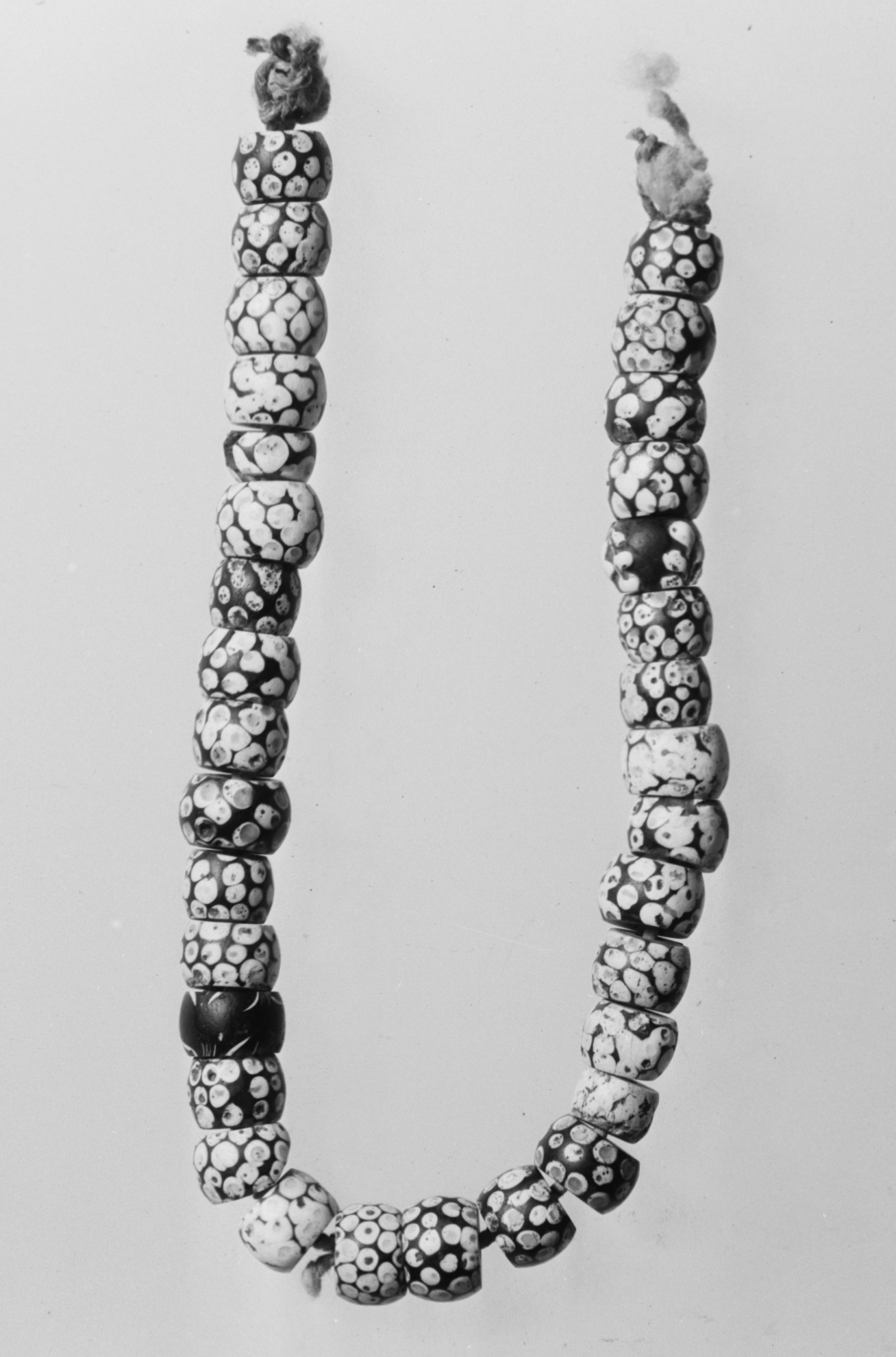
Venetian Beads (33)
Subject
Movable Cultural Heritage
Description
Venetian production dates back to the fourteenth century. It is a representation of mastery of a material, glass, and element the fire. It endures specific knowledge and shared skills, indicates the use of specific traditional tools and procedures. Skilled artisans melt, blow, shape the coloured glass to obtained the shapes. Venice, the true European capital of glass, glass beads were produced in Murano and in all the Venetian territory. Since it was such a valuable product for trading, the center of production moved from Venice to island Murano to avoid the great risk of fire in keeping the kilns. The production represents a traditional knowledge handed down from generation to generation for more than 700 years. After the first World War of dissolution of colonialism, the beads lost their original function of as trading commodity. It become more of art, jewels and personal ornaments
The process generally involves three preparatory positions, the ‘perlai’ (craftsmen of glass beads), ‘molatore’ and ‘impiraressa’, a women who inserts the beads through precise movements and creates various artefacts, and the glassmaker. The art of glass beads became part of the List of Intangible Cultural Heritaage since 2020.
Source
wordlheritage2022
Date
6 June 2017
Contributor
yuqi2022
Format
image/jpeg
Type
Still Image
Date Submitted
04/16/2022 08:01:59 pm
License
Creative Commons Zero
Medium
Metropolitan Museum of Art
Spatial Coverage
current,45.4408° N,12.3155° E;
Europeana
Europeana Provider
https://www.metmuseum.org/art/collection/search/185991
Europeana Rights
Metropolitan Museum of Art
Europeana Type
IMAGE
Still Image Item Type Metadata
DescriptionEN
Venetian production dates back to the fourteenth century. It is a representation of mastery of a material, glass, and element the fire. It endures specific knowledge and shared skills, indicates the use of specific traditional tools and procedures. Skilled artisans melt, blow, shape the coloured glass to obtained the shapes. Venice, the true European capital of glass, glass beads were produced in Murano and in all the Venetian territory. Since it was such a valuable product for trading, the center of production moved from Venice to island Murano to avoid the great risk of fire in keeping the kilns. The production represents a traditional knowledge handed down from generation to generation for more than 700 years. After the first World War of dissolution of colonialism, the beads lost their original function of as trading commodity. It become more of art, jewels and personal ornaments
The process generally involves three preparatory positions, the ‘perlai’ (craftsmen of glass beads), ‘molatore’ and ‘impiraressa’, a women who inserts the beads through precise movements and creates various artefacts, and the glassmaker. The art of glass beads became part of the List of Intangible Cultural Heritaage since 2020.
Citation
“Venetian Beads (33),” STAGE, accessed October 16, 2026, https://stage.openvirtualworlds.org/omeka/items/show/648.
Embed
Copy the code below into your web page