Deep Dive: A VR Coral Restoration Experience
This project involves the development of a VR Coral Restoration Experience, utilising highly-immersive technology as a resource that can help educate current and prospective divers of the practical aspects of this process. This process can be complicated, and due to the requirement for divers to attain numerous qualifications and certificates, it can be a long time before they can ‘dive’ into the action itself. Moreover, when they eventually do, they may feel unprepared, as their theoretical knowledge hasn’t prepared them for the real thing. This prototype therefore exists to bridge the gap between practitioners’ theoretical and practical knowledge by providing them with experiences that can better prepare them for the true, hands-on, experience. This page shall illustrate what the proposed exhibit will look like, how it will function, while also delving into how it can be a vital accessory for helping to heal and plant coral reefs, ultimately addressing the climate change crisis.
The Value of the Great Barrier Reef, and the Impact of Climate Change
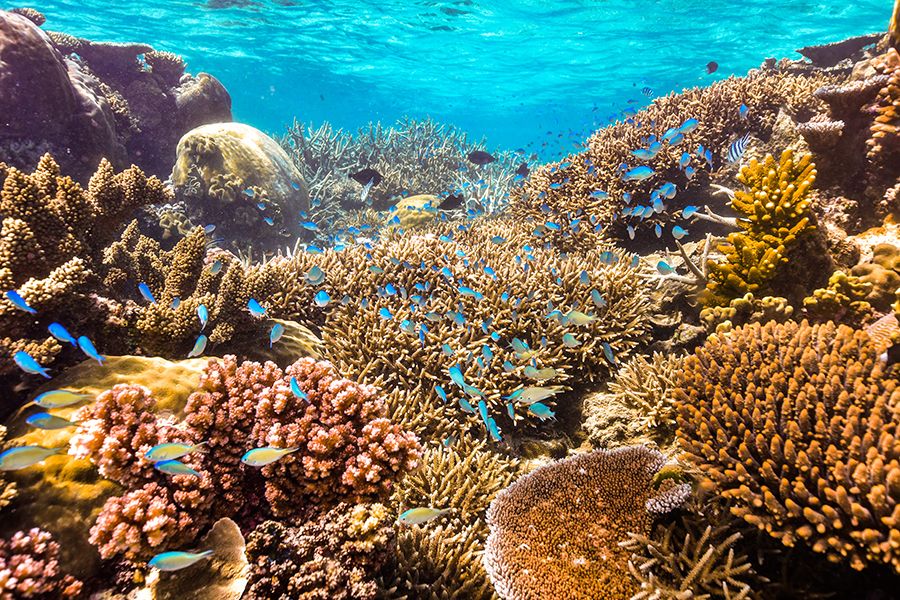
The Great Barrier Reef is the largest coral reef system in the world, possessing one of the most diverse ecosystems with a mindblowing variety of reefs, fish species, molluscs, and islands. This biodiversity means that it is one of the most complex ecosystems that exists, with all of these species relying on the existence of one another. This means that in order to maintain the health of the ecosystem, significant care must be taken to ensure that each of these unique species continue to thrive; if not, it could have significant consequences throughout the ecosystem. Moreover, it has tremendous benefits for tourism and is vital for surrounding indigenous communities, as the existence of the fish in the Reef is essential for their culture and livelihoods. The revenue that it generates as a tourism attraction, as well as its importance for the health and well-being of local and coastal communities, speaks to its status as one of the UNESCO World Heritage Sites, which is indicative of its value around the world. The health of the Reef has, however, declined significantly in recent years, losing half of its coral cover since 1985…
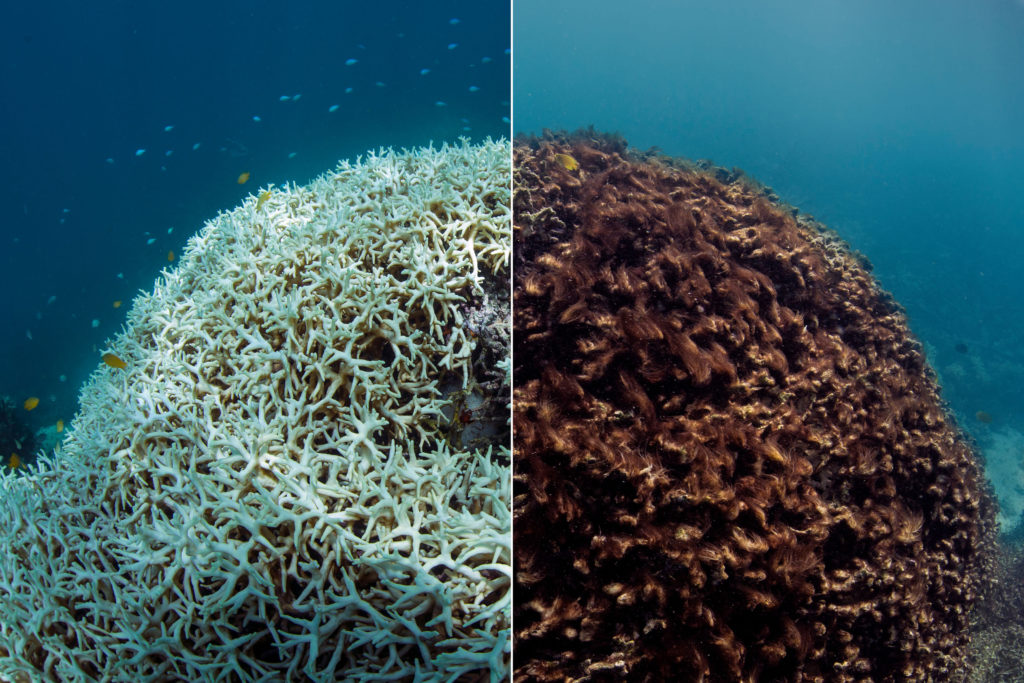
Factors such as rising sea levels, coral bleaching, ocean acidification, and rising ocean temperatures, have lead to a reduction in the corals’ ability to grow and recover, which has resulted in the deterioration of the ecosystem as a whole. Importantly, coral bleaching is the most noticeable symptom of climate change, and can be perceived as an essential indicator of the level of success that conservation efforts and sustainable practices are having during their implementation.
The VR Experience: How Will it Help?
This prototype exhibit concerns the overarching goal of coral reef farming and restoration: the propagation of coral colonies. This refers to the process of cultivating corals in controlled environments with the final aim of restoring or enhancing the ecosystems in which they reside. This involves a number of important steps:
- Collecting coral fragments, containing individual polyps, from healthy colonies.
- Nurturing the fragments in controlled environments, providing them with conditions optimal for their growth.
- Transplanting the coral fragments onto damaged reef sites to restore their health and resilience, a process which requires meticulous care and preparation.
- Monitoring the corals’ adaption to their new environments, dealing with any emerging challenges appropriately and effectively.
As expected, this process requires advanced knowledge and intricate techniques which can only be acquired through persistent pre-requisite education. For example, the diver must be able to successfully identify the correct coral species from their examination of their physical characteristics, such as their structure and pigmentation, in order to ensure that they are ecologically compatible to their new environments. A video below by Insider (2023) will illustrate, in more detail, the complex process and the factors to consider. Furthermore, to develop the necessary intricate techniques needed to acquire and transplant the corals, significant hands-on training is a necessity. Alongside this training, a SCUBA diving qualification is also needed to ensure that the divers are capable of completing the dive(s) as safely and effectively as possible.
The motivation behind this prototype exhibit is to provide divers with this ‘hands-on’ experience before they are equipped, certification-wise and/or skill-wise, to begin the true hands-on experience. The VR Experience, therefore, provides its users with an immersive ‘practical’ experience to guide and instruct them through the process, helping to ensure that their theoretical knowledge matches their physical knowledge; bridging this gap that often exists.
Required Resources
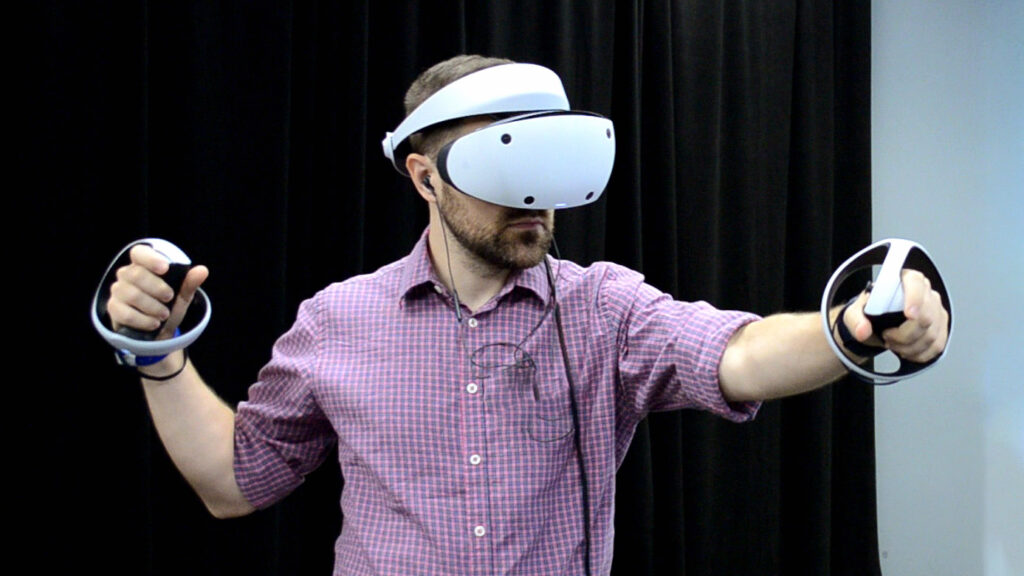
A number of resources and some manpower is necessary for development of this prototype. This includes VR hardware. This includes (1) a VR headset with built-in eye-tracking and earphones, that incorporate the natural sounds of the ocean to deliver an immersive and realistic depiction of the experience, while also being integrated with motion sensors which track the users’ head movements allowing them to interact with – and inspect – their surrounding virtual environment; (2) 360-degree cameras shall also be utilised in order to capture a full view of the users’ virtual and real-life environments to allow free, minimally restricted movements; finally (3) motion controllers containing built-in haptic feedback capabilities shall also be incorporate as they provide vibratory sensations upon users’ ‘physical’ interactions with their environment. Due to the nature of the coral restoration process, it is essential to incorporate hardware that allows users to feel as immersed as possible while also carrying out the meticulous aspects of the process.
The type of hardware, while not decidedly finalised yet, shall therefore be comparable to the PlayStation Virtual Reality 2 (PSVR2) experience, which delivers one of the most immersive and quality VR experiences in the current market while utilising the very similar hardware to this prototype.
The PSVR2 in action; showing the headset, earphones, and motion controllers with all the built-in features described. For more detail about the system, see the link below.
A Walk-through of the VR Experience
The software allows the user to experience three different scenarios which can be individually completed. This allows the user to adaptively focus on aspects of the coral reef restoration process that are most essential to their training development at any given moment in time. These include (1) a Coral Identification Scenario, (2) a Coral Transplantation Scenario, and (3) a Coral Monitoring Scenario. These shall be explained in more detail below:
Coral Identification
Coral Transplantation
Coral Monitoring
The user must identify a particular species of coral after being placed in a virtual under-water environment surrounding by numerous species. The user is tasked with navigating their environment, examining the coral and – based on their structure, pigmentation, or any range of factors – identify their ‘target’ coral. Once the user feels they have identified the correct coral species, they must interact with it and find whether they are correct.
The user must, using the motion controllers, transplant the individual coral polyps onto substrates of the damaged reef while ensuring that the natural structure of the surrounding reef environment is imitated and adequately stable to promote healthy and safe growth. Next, based on a text-description of the users’ environment, they must determine whether it is necessary to use protective measures to increase the corals’ chance of survival; e.g. utilising a cage to protect the coral from invasive species.
The user is placed in an underwater environment surrounding by reef areas that are either damaged for reasons such as bleaching, physical stress, or disease. Based on the users’ analysis of the coral, they must identify the damaged coral and choose, from a drop-down menu selection, the reason(s) which indicate that the coral is damaged; e.g. if a coral is bleached, the user would select ‘bleaching‘ as the indicator.
Societal Value
This digital development will help meet a number of the United Nation’s Sustainable Development Goals (SDG). Primarily, it will influence SDG4 (Quality Education), and SDG14 (Life Below Water). The Conservation groups who will be utilising this product shall be provided with a valuable resource that supplements their efforts to achieve both of these goals; improving the knowledge of their workers and subsequently improving the quality of life below water. Moreover, there are no limitations as to who can use this resource; practitioners who are looking to improve their knowledge by using it can also do so.
SDG14 is, in particular, known to be one of the most synergistic Sustainable Development Goals; in other words, through trying to achieve this goal, we also work towards achieving other goals and vice-versa. A paper from the International Council for Science includes a guide to understanding how this goal synergistically interacts with the other goals (Griggs et al. 2017, p. 15). For example, improving the quality of ecosystems’ health below water has links to SDG1 (No Poverty) and SDG2 (Zero Hunger). Thriving coral reefs provide their ecosystems with valuable nutrition, which is necessary for their survival. In turn, many coastal communities rely on oceans for sources of food and nutrition, and their own health would suffer as a direct result of under-water ecosystems’ degradation. This indicates that the implementation of this digital resource has significant societal value, holding synergistic implications towards the United Nation’s SDGs.