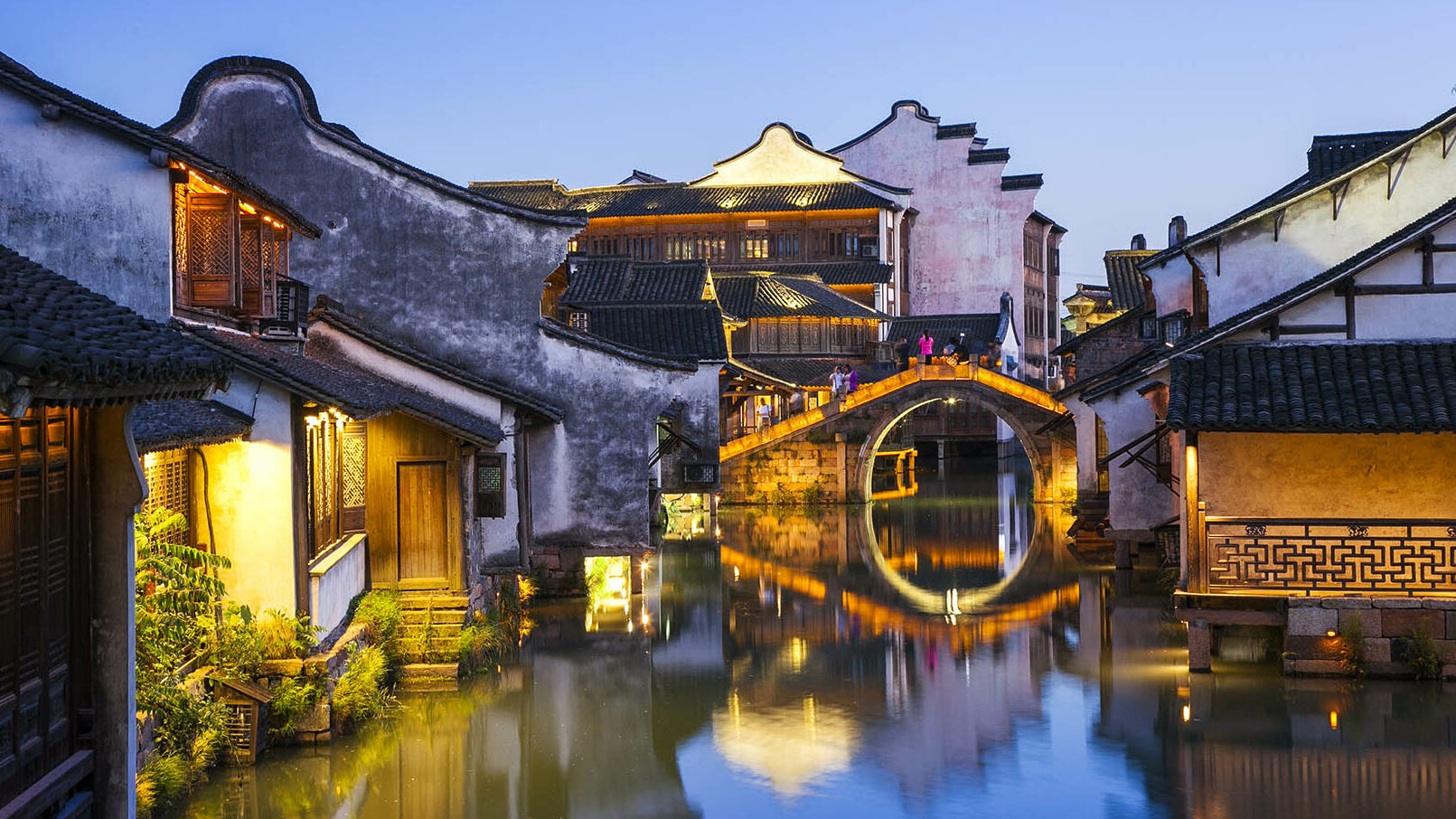
Wuzhen, as one of China’s first batch of ten historical and cultural towns and one of the top ten charming towns in China, holds a special place in the country’s cultural landscape. Renowned as the “last ancient water village in China,” Wuzhen boasts a rich history spanning over 1300 years, situated in the picturesque Jiangnan region.
In recent years, Wuzhen has garnered numerous accolades for its commitment to heritage preservation and sustainable tourism development such as secured a spot in the “Preferred Projects List for the Integration of Intangible Cultural Heritage and Tourism Development Nationwide” in 2022.
By integrating historical, cultural, natural, and environmental elements seamlessly, Wuzhen has transformed into a multifaceted destination offering sightseeing, leisure, vacationing, and business activities.
Gallery
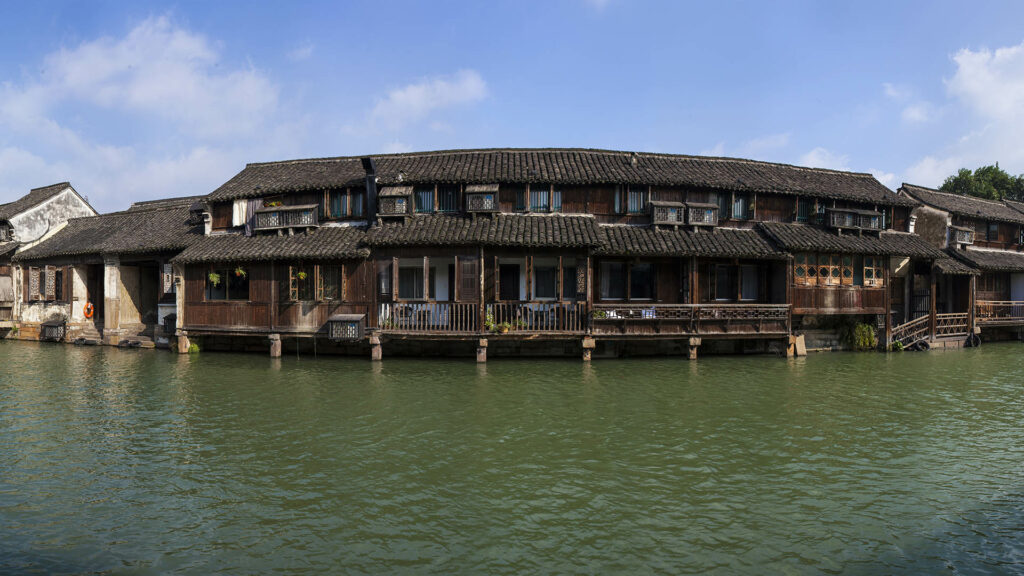
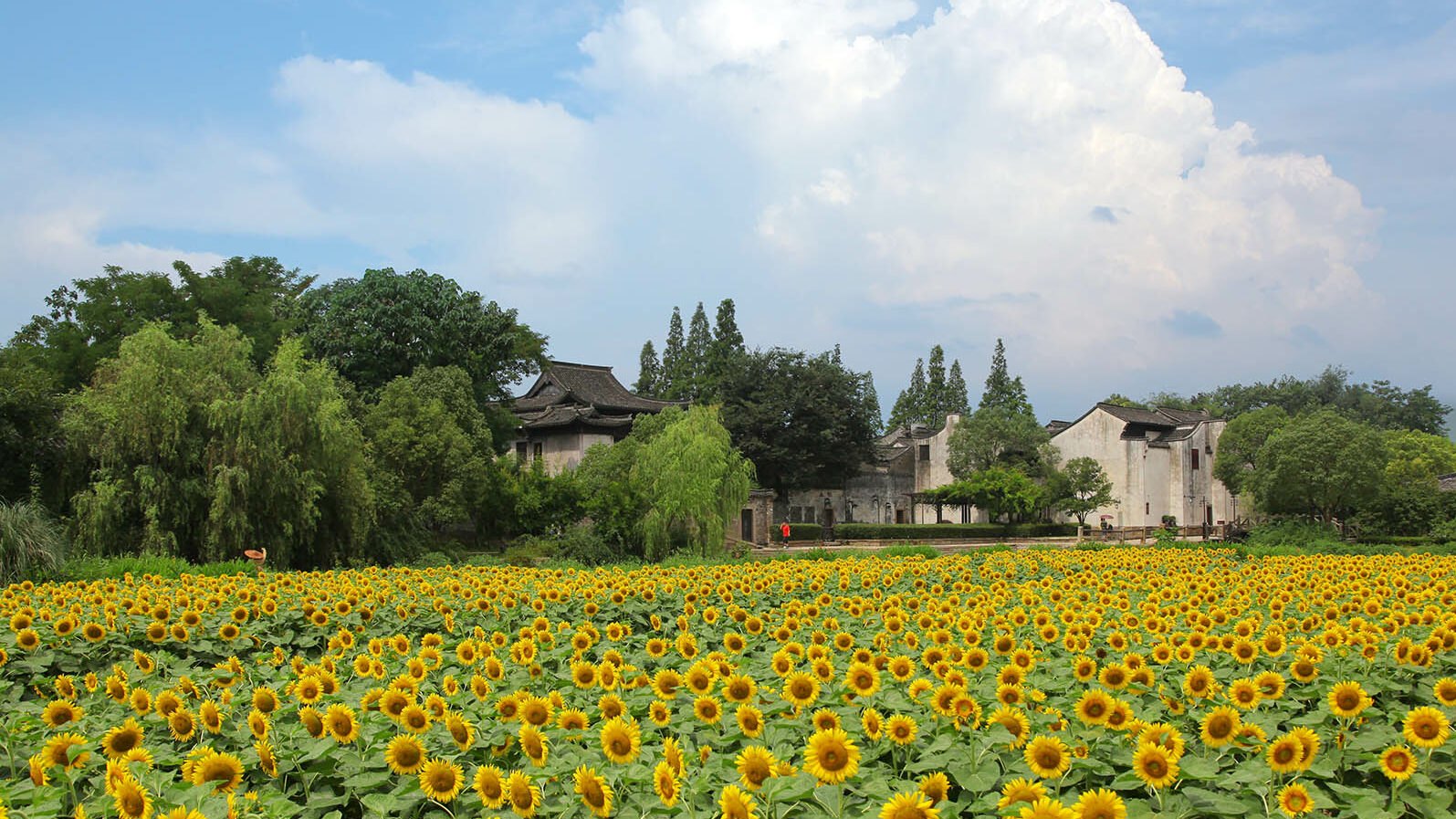
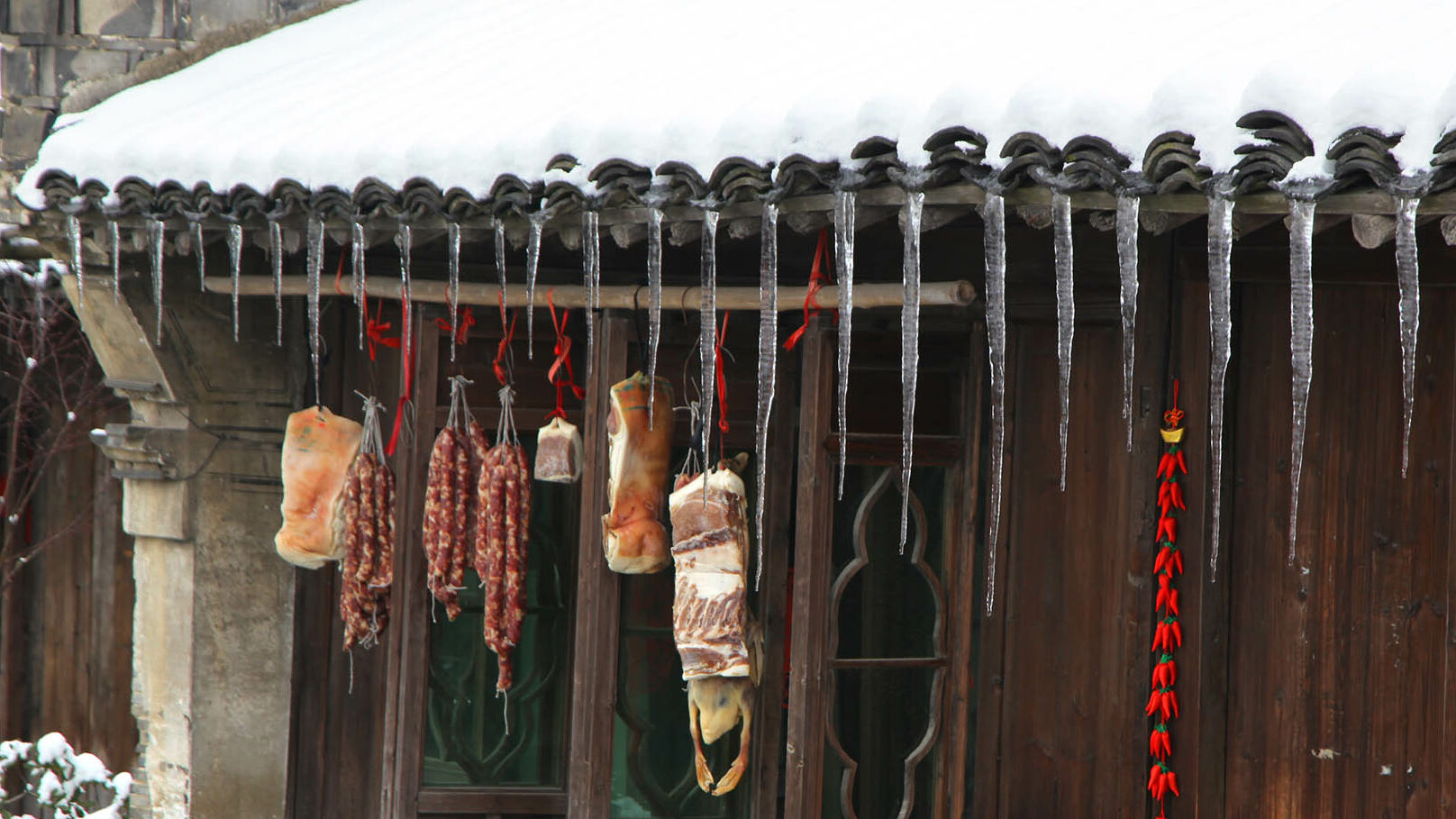
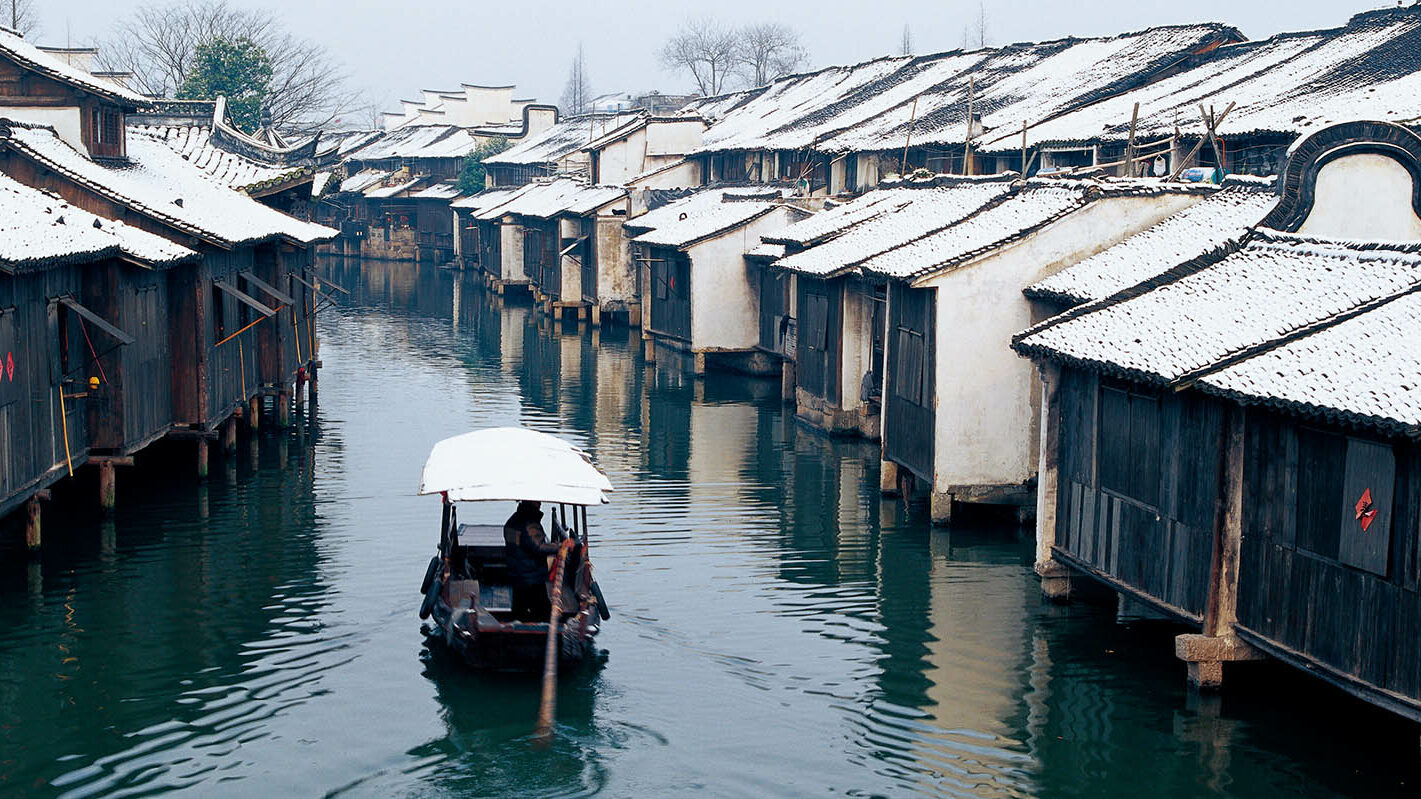

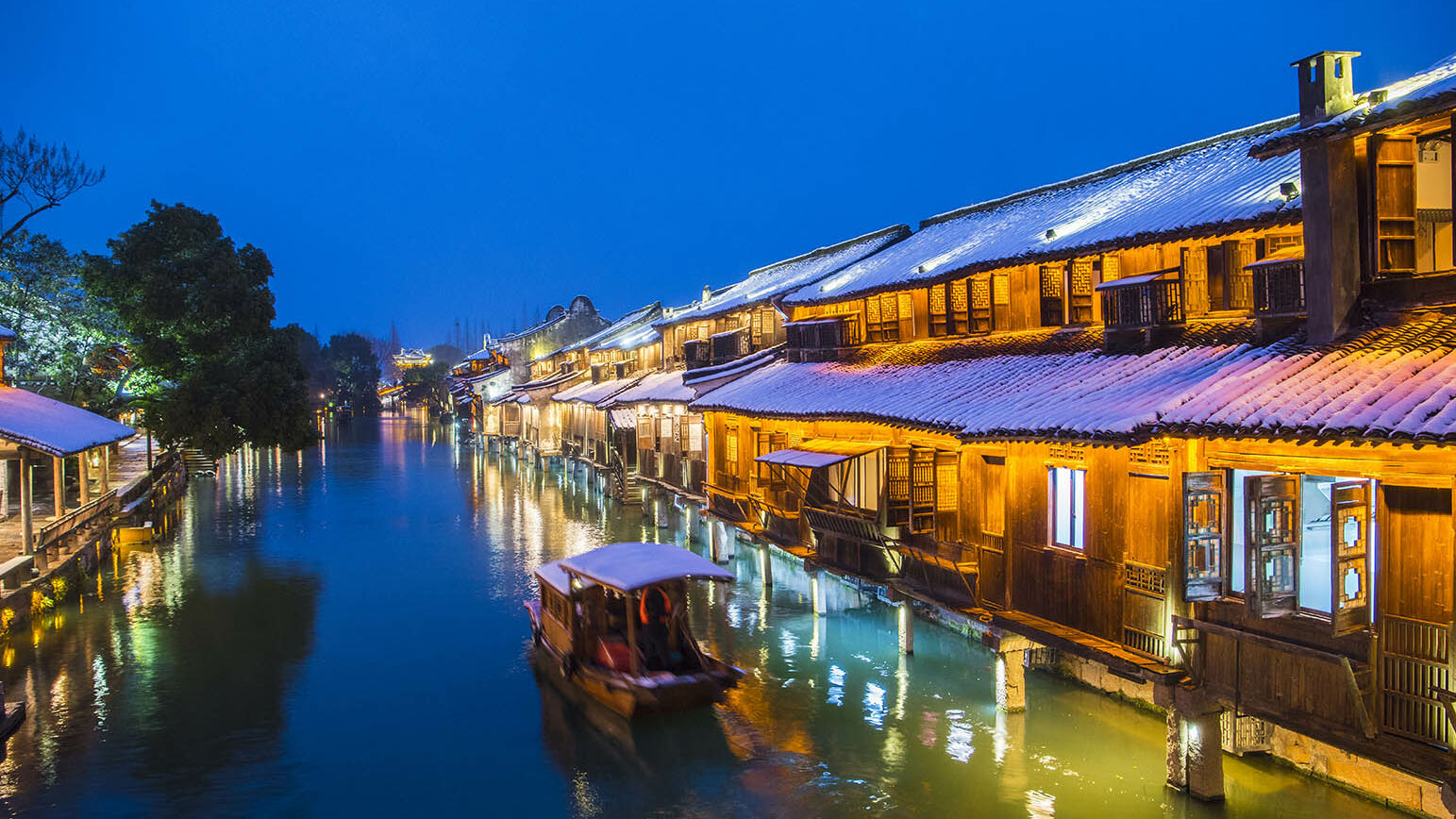
Historical
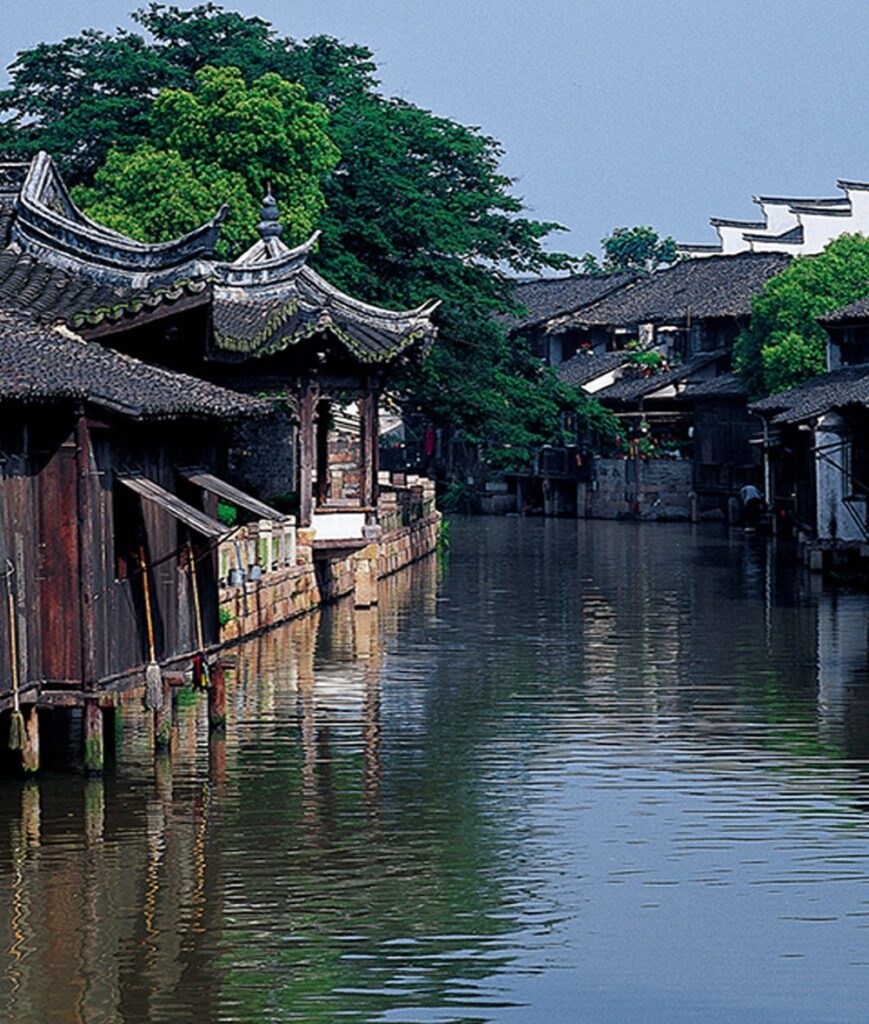
- According to research at the Tanjiawan ancient cultural site on the outskirts of Wuzhen, Wuzhen’s ancestors thrived in this area about 7,000 years ago. That period belonged to the Majiabang Culture of the Neolithic Age.
- During the Spring and Autumn Period, Wuzhen was the border between Wu and Yue. The state of Wu stationed troops here to defend against the state of Yue. It was called “Wuzhen” in history.
- In the Qin Dynasty, Wuzhen belonged to Kuaiji County, with Chexi (now Shihe) as the boundary, Wudun in the west, which belonged to Wucheng County, and Qingdun in the east, which belonged to Youquan County, and Wuzhen was divided and governed. Later, Wuzhen was either under the jurisdiction of Huzhou and Jiaxing in Zhejiang Province, or under the jurisdiction of Suzhou in Jiangsu Province.
- In the Tang Dynasty, Wuzhen was subordinate to Suzhou Prefecture. Houliang, whose affiliation remains unchanged, is the territory of Wuyue. In the fifth year of Tianfu in the Later Jin Dynasty (940), Xiuzhou was established, and Qingdun was affiliated to Jiaxing County and Xiuzhou.
- In the third year of Chunhua of Song Dynasty (992), Wuzhen belonged to Wucheng and Huzhou. In the 10th year of Xining (1077), five townships including Wutong, Yongxin and Qingfeng in the western border of Jiaxing County were returned to Chongde County. Qingzhen was in Qingfeng Township and belonged to Xiuzhou under the jurisdiction of Chongde. In the early years of Yuanfeng, there were records that it was divided into Wudun Town and Qingdun Town. Later, it was renamed Wuzhen and Qingzhen to avoid the name of the clan. During the Jiading period, Jiaxing was promoted to the army, and Qingzhen was subordinated to Chongde and affiliated with the Jiaxing army.

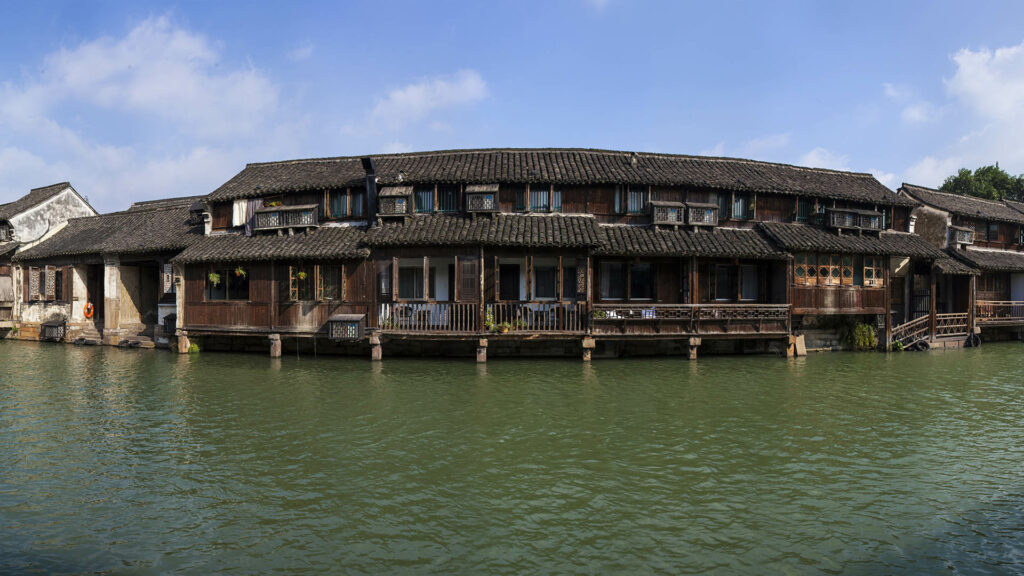
- In the 14th year of Yuan Dynasty (1277), Wuzhen was the land of Wucheng County on Huzhou Road, and Qingzhen was the land of Chongde County on Jiaxing Road. Set up patrols in towns and cities.
- In the fifth year of Xuande’s reign in the Ming Dynasty (1430), the six townships of Chongde County, including Xiuhua, Qianjin, Baoning, Qingfeng, Yongxing and Wutong, were merged into Tongxiang County. Qingzhen belonged to it and was under the jurisdiction of Jiaxing Prefecture; Wuzhen still belonged to Wucheng and was under the jurisdiction of Huzhou Prefecture. This affiliation remained unchanged until the Qing Dynasty.
- In the first year of the Republic of China (1912), Wu and Qing towns were still divided. In May 1950, Wuzhen and Qingzhen were finally merged and called Wuzhen, which belongs to Tongxiang County and Jiaxing, until today.
Wuzhen Geography
Geographical location
Wuzhen is located at the northern end of Tongxiang City, Zhejiang Province, in the center of the fertile Hangjiahu Plain. Historically, it was a land of two provinces (Zhejiang, Jiangsu), three prefectures (Jiaxing, Huzhou, Suzhou), and seven counties (Tongxiang, Shimen, Xiushui, Wucheng, Gui’an, Wujiang, Zhenze). For land transportation, the county-level highway Yao-Zhen Line runs through the town. Through the Yao-Zhen Highway, it can be connected with the provincial Salt Lake Highway, National Highway 320, 318 Highway, Shanghai-Hangzhou Expressway, Shenjiahu Expressway, and Zhajiasu Expressway. Wuzhen is 13 kilometers away from the urban area of Tongxiang, 27 kilometers away from the surrounding cities of Jiaxing, Huzhou, and Wujiang, 45 kilometers away from Wujiang, and 60 kilometers away from it. It is 80 kilometers away from Hangzhou and Suzhou, and 140 kilometers away from Shanghai. The town covers an area of 79 square kilometers, and the urban area is 2.5 square kilometers.

Four seasons climate
Wuzhen is located on the southeast coast and has a typical subtropical monsoon climate. It is warm and humid, with abundant rainfall and sufficient sunshine. It has the characteristics of cold winter, hot summer, warm spring and cool autumn, and four distinct seasons. The annual average temperature is 16.1℃. January is the coldest, with an average monthly temperature of 3.6°C; July is the hottest, with an average monthly temperature of 28.1°C; the annual average precipitation is 1233.9 mm, and there are three obvious precipitation periods throughout the year, namely April-May (spring rain) and June-July. (Meiyu), August-September (Autumn Rain), and snow in winter.
The annual average sunshine in Wuzhen is 1842.3 hours. There are 78 days in spring, 90 days in summer, 64 days in autumn, and 133 days in winter.
Culture
Wuzhen, a land rich in history and culture in the south of the Yangtze River, has rich historical and cultural relics. “Intangible cultural heritage” permeates people’s lives and carries the memories of generations. It is not only the embodiment of art, but also a kind of The inheritance of culture.
Wuzhen already has a total of 31 human intangible cultural heritage, national, provincial, municipal and county-level intangible cultural heritage projects, including folklore, traditional skills, traditional drama and other categories. These rich intangible cultural heritage projects allow production and lifestyles rooted in the earth to be presented in Wuzhen, a water town in the south of the Yangtze River.

In Dongzha Scenic Area, the charm of intangible cultural heritage is fully displayed. The craftsmen climb up the moso bamboo with bare hands and perform movements such as the golden monkey looking at the moon, the kite turning over, and hanging upside down on the golden hook on the bamboo pole of dozens of feet. From a distance, it looks like silkworms climbing up the mountain. This is a tall boat, commonly known as the “silkworm flower boat”, which carries the Wuzhen people’s best wishes for a good harvest of silkworm cocoons.
There are also boxing boats in the Dongzha shopping area, fighting on the water, and the cheers on the shore are getting louder and louder. It is reported that “boat” and “silkworm” are homophones in the local dialect of Wuzhen, so the boxing boat performance is also to celebrate the harvest of silkworms.

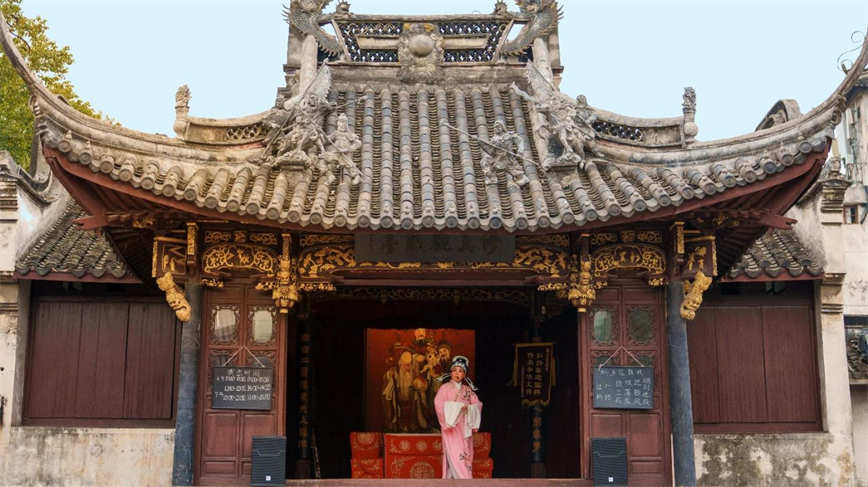
Enjoy folk acrobatics and listen to opera performances. On the water, a small boat is swaying, the blue water is winding, the small bridge is reflected, and the sound of the oars is slowly unfolding. The story performed on the stage, the reflection in the water is more hazy, and the soft sound is gentle. The soft words linger in my ears. In a trance, it seemed as if I had fallen into a dream of a water town that I had never woken up from for thousands of years.
Shadow puppet play is also a vivid portrayal of Wuzhen’s traditional folk customs, and the memories of the past are all in it. “Hands dance against each other, and the events of the past are hidden behind a curtain of lamps and shadows.” Under the light and shadow, one scene after another, one good play after another takes turns!
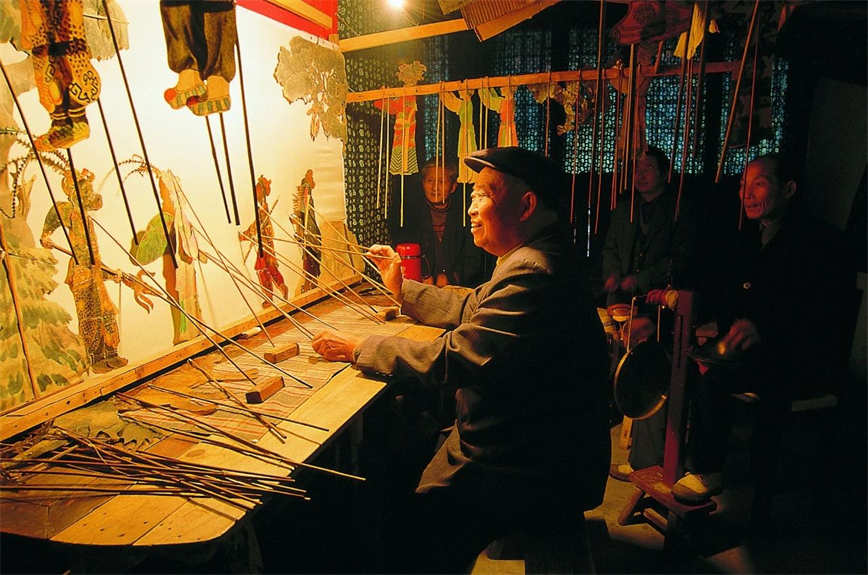
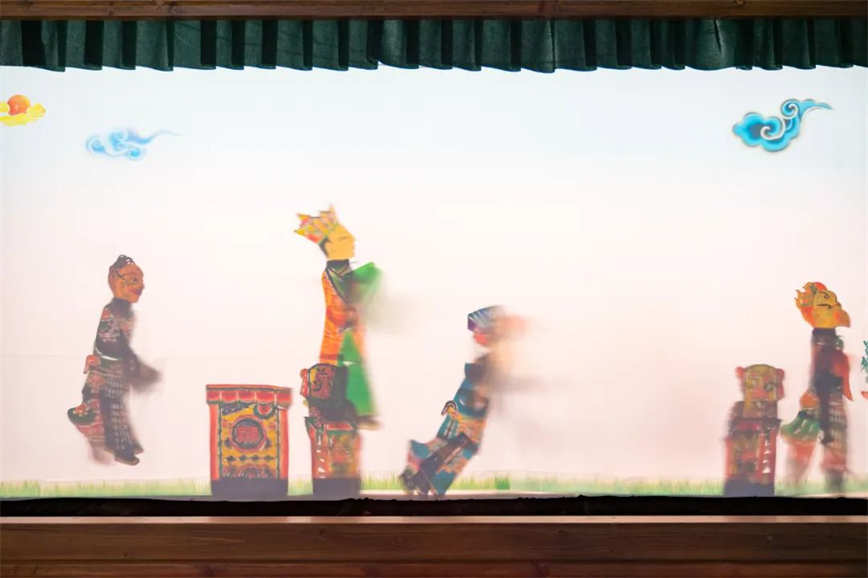
Shadow puppetry, also known as shadow puppetry and native film, originated in the north during the Northern Song Dynasty and spread to the south of the Yangtze River during the Southern Song Dynasty. With a history of more than 800 years in the south of the Yangtze River, Wuzhen shadow puppetry belongs to the southern style. The shadow puppet theatre contains the old artist’s deep love for the past and a return and desire for the original ecological life.
Chinese sericulture and silk weaving skills (Tongxiang sericulture custom) are already well-known at home and abroad as an intangible cultural heritage item. Wuzhen Scenic Area has been committed to protecting its development. It not only repaired and restored the traditional workshop “Yida Silk Hao”, but also found Visit the inheritors of the skills, hire them to produce and demonstrate in the scenic area, and actively train successors, and even open a special exhibition hall for “intangible cultural heritage”, so that the sericulture and silk weaving skills can gradually be carried forward in Wuzhen. Especially at the Wuzhen International Contemporary Art Invitational Exhibition held in 2016, the internationally renowned artist Ann Hamilton was invited to create a residency and created a large-scale installation work “Chirp Again Chirp”, which combined sericulture and silk weaving techniques with contemporary art.
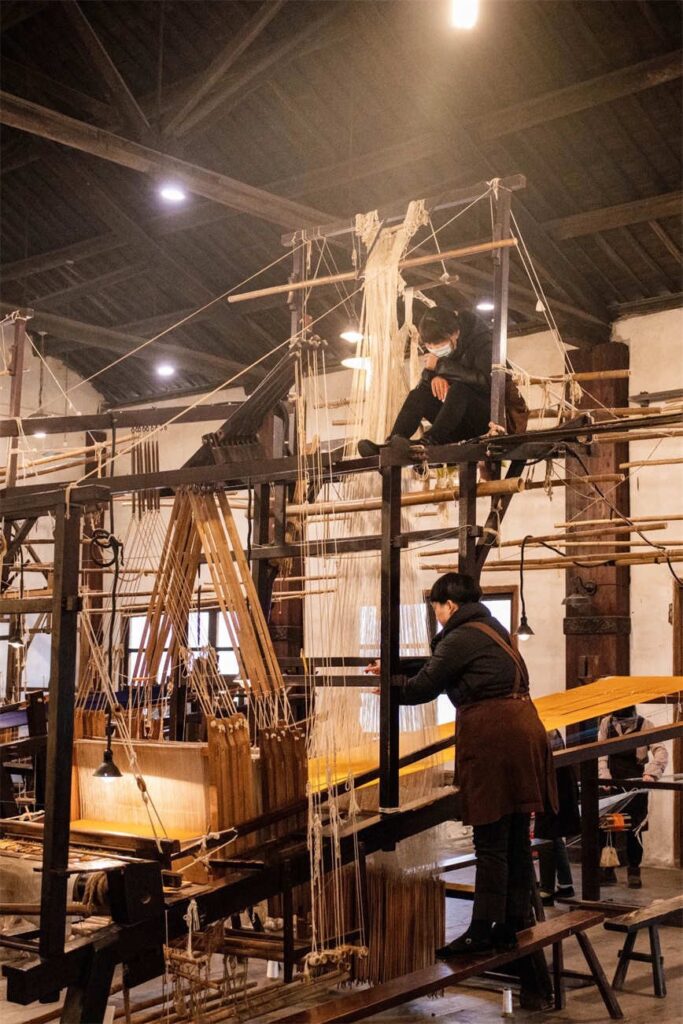
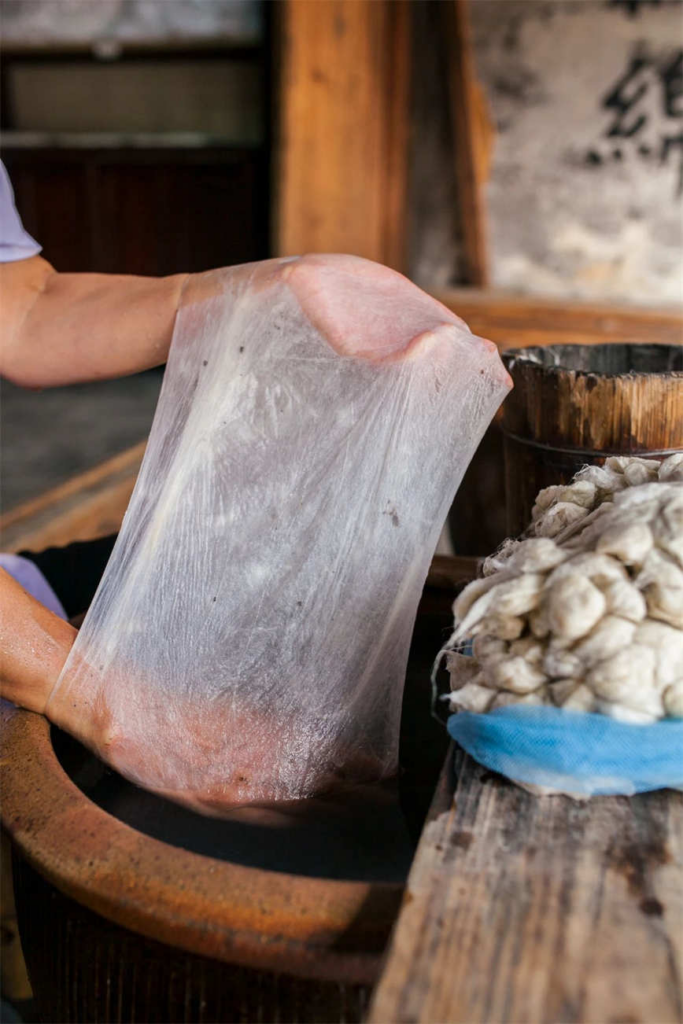
Yida Silk Hao is a large private workshop that integrates sericulture, mulberry planting, silk reeling, silk making and brocade making. It is also the epitome of the entire Jiangnan sericulture culture. Walking into Yida Silk Hall, you can see the past and present of Wuzhen silk reeling at a glance in this century-old workshop – a comprehensive display of various processes from mulberry planting, silkworm rearing, cocoon harvesting to silk reeling and brocade weaving. You can personally operate the silk reeling on the ancient silk reeling machine, or you can watch the national treasure-level black brocade weaving process, appreciate the exquisite display of black brocade treasures, and take home some souvenirs.

Wuzhen Bamboo Weaving
Bamboo weaving is a traditional folk handicraft that uses bamboo as raw material and uses pure hand-weaving techniques to make bamboo products for production, living and ornamental purposes. Wuzhen Bamboo Weaving is a bamboo weaving cluster mainly located in Chenzhuang Village and Gushanli Bamboo Weaving in Wuzhen Town. It has a history of more than 500 years. It can be traced back to the Tang Dynasty and reached its peak in the Ming and Qing Dynasties. It was mainly formed based on the “one village, one product” approach. Local characteristics are passed down in a positive manner, for example, Chenzhuang Village is characterised by the production of bamboo plaques.
The picture shows the works of Wuzhen bamboo weaving exhibited at the 6th China International Import Expo in 2023, designed by Qian Lihuai, the intangible cultural heritage inheritor of Chinese bamboo weaving. He selected images such as spiritual snakes, Taihu stones and diamonds, and weaved the abstract sculpture “Spiritual Snake in the Sky” out of yellow bamboo.
Climate Threat
The town is currently facing several significant difficulties, including rising sea levels, harsh weather, and water pollution. These climate changes are having an immediate effect on the town’s ecology, legacy, and customs.
Sea level rise
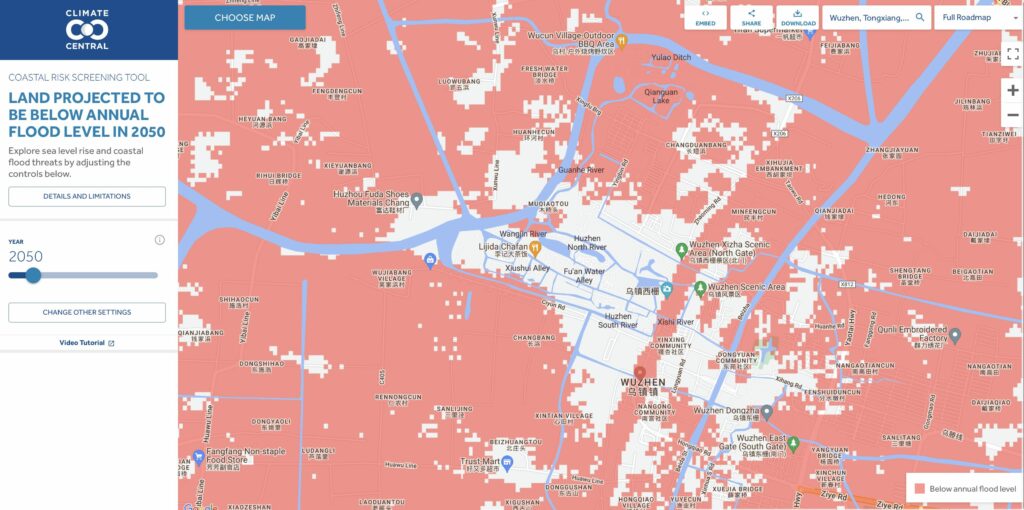
The town is especially susceptible to the effects of rising sea levels, such as flooding and erosion of river banks, because it is situated near waterways.
Left picture show the land projected to be below annual flood level in 2050 of Wuzhen, most area of Wuzhen is dangerous.
Extreme weather events
With global warming in recent years, the frequency and intensity of extreme weather events such as typhoons, storms and rains have increased.These extreme weather conditions could lead to floods, mountain slopes, etc., thus disrupting the daily life of the inhabitants of the town, as well as destroying the cultural sites of the city.
Water pollution
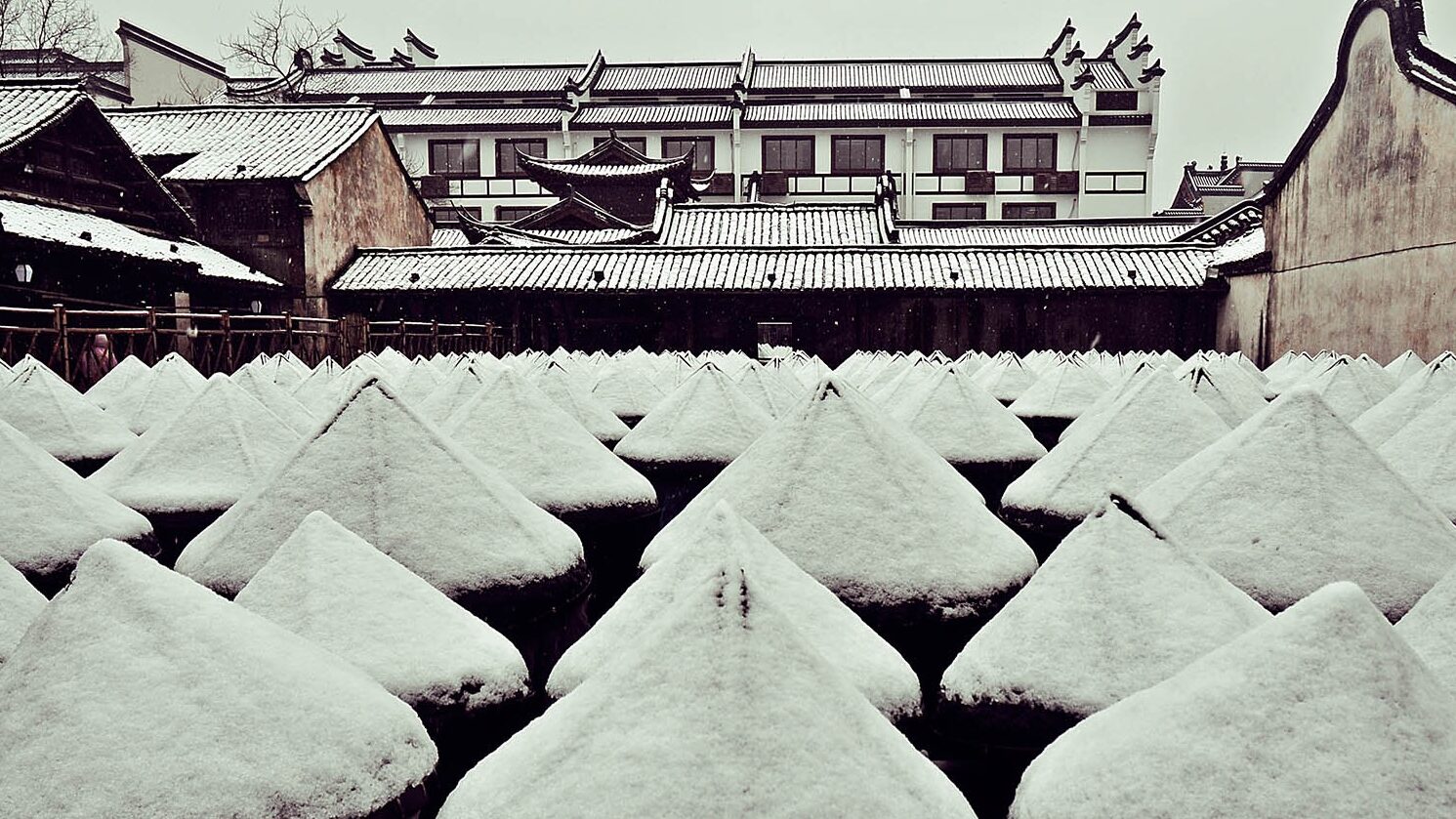
As the global temperature rises, it will cause a large number of algae to reproduce, and as the town is a famous tourist attraction in the country, as the number of visitors increases year by year, it can also aggravate water contamination.Water pollution threatens the ecological balance of the city’s natural environment and affects biodiversity, thereby affecting traditional cultural customs such as fishing and silk production.
Environment Protection
Dongzha Project
In 1999, after careful investigation of the Wuzhen Dongzha block protection and development project, the “Wuzhen Ancient Town First Phase Renovation and Protection Master Plan” and a detailed restoration and remediation plan were formulated, and the Dongzha Project for the protection and development of Wuzhen Ancient Town began, referred to as “Dongzha”. “Zha Scenic Area”. During the comprehensive implementation of the plan, Wuzhen has implemented “three major projects” including heritage protection projects, cultural protection projects, and environmental protection projects. In the protection of ancient towns and cities across the country, Wuzhen pioneered and successfully operated the “pipeline underground burial”, With conservation models such as “toilet improvement project”, “silt removal project”, “floodlighting project” and “intelligent management”, the former Jiangnan Pearl has wiped away its dust and regained its moving brilliance.
Xizha Project
Compared with the first phase of the protection and development project, the protection and development of the Xizha Scenic Area in the second phase is more complete and thorough, and people and the environment, nature and architecture are more harmonious. There are more than 300,000 square meters of exquisite Ming and Qing architecture preserved in the scenic area. Xizha Old Street, which runs from east to west of the scenic area, is 1.8 kilometers long, and the water pavilions on both sides of the river stretch for more than 1.8 kilometers. There are nearly 10,000 meters of crisscrossing rivers and 72 ancient stone bridges of various shapes. The density of rivers and the number of stone bridges are the highest among ancient towns in the country. The northern area of the scenic spot is a natural wetland of more than 50,000 square meters.
The biggest difference between the first and second phase scenic spots is that the first phase is a “sightseeing” scenic spot similar to other ancient towns, while the second phase is an unprecedented “sightseeing plus leisure experience” water town ancient town scenic spot. The ancient town is no longer just a “sightseeing” scenic spot. “Living Fossil” and “Museum”, it perfectly integrates sightseeing and vacation functions, becoming a peaceful oasis away from the hustle and bustle.
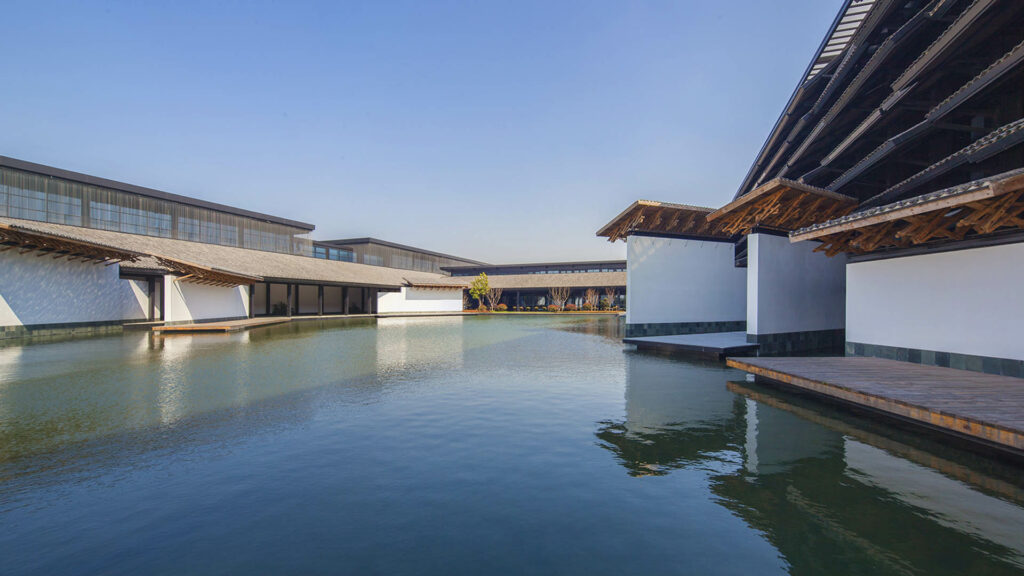
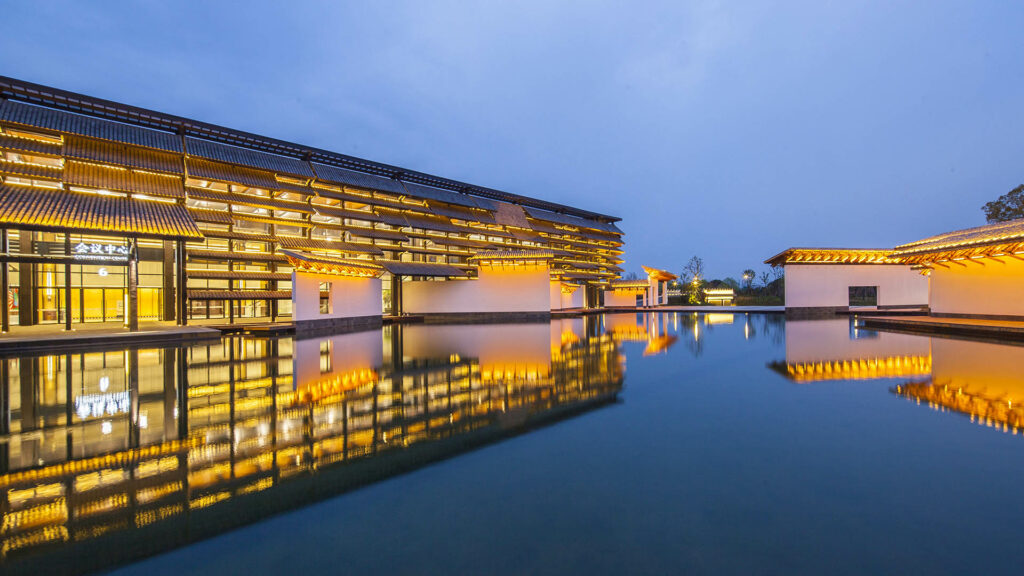
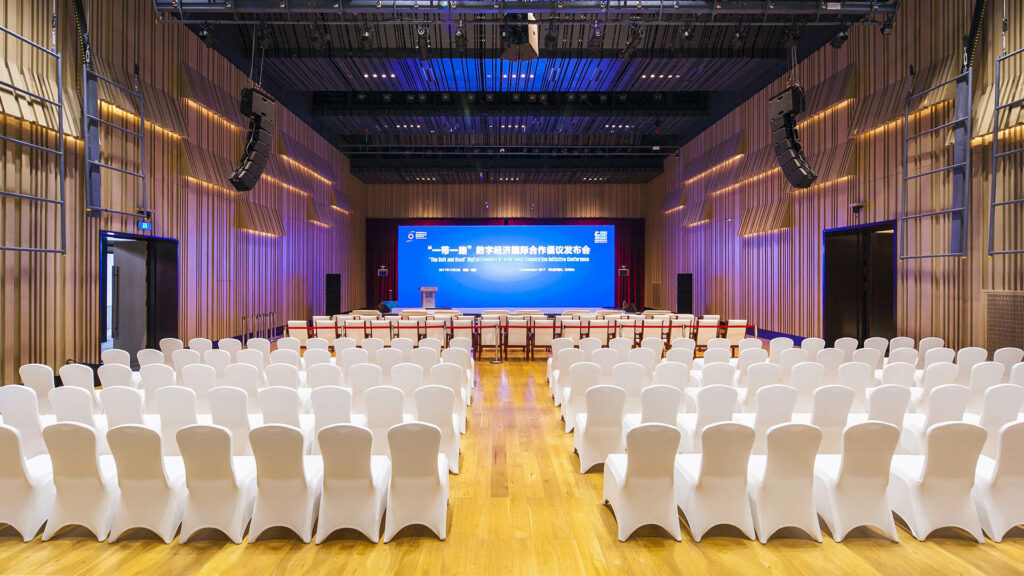
The scenic spots, handicraft workshops, classic exhibition halls, religious buildings, folk customs, and leisure places in the neighborhood make people forget to leave. The natural scenery is beautiful and the floodlight night view is majestic. In the scenic area, there are also various styles of residential guest rooms and resort hotels of various grades, a number of well-equipped conference centres and business halls; tourist service centres, tour buses, sightseeing boats, water buses, direct drinking water, natural gas, and broadband networks. , satellite TV, electronic patrol, floodlighting, star-rated toilets and intelligent tourist parking lots and other supporting facilities are available.
water purification system
The water purification system equipment is all automatically operated, which can monitor and process water quality and operating parameters in real time. Bottled water and bottled water adopt fully automatic production lines. The water supply and return system of the pipe network can realise automatic timing operation and Unattended.
River garbage clean system
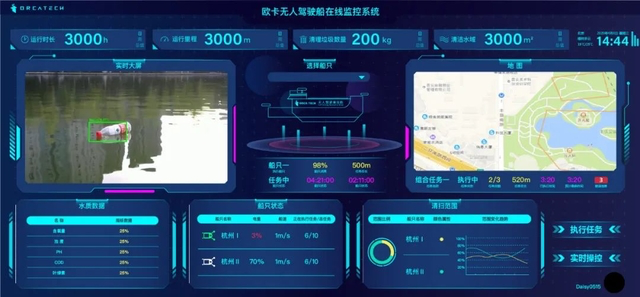
River garbage has always been difficult to clean up, and manual removal is labor-intensive and time-consuming. In order to solve this problem, Wuzhen Town specially introduced the Oka intelligent high-tech unmanned cleaning ship project.
In addition to normal water surface cleaning work, Oka Intelligent uses unmanned water vessels as a platform to gradually build a water solution system in Wuzhen that integrates water surface cleaning, water quality testing, unmanned inspection and hydrological mapping. Cooperating with Oka The unmanned cleaning ship and Oka unmanned ship online monitoring system realise technologically intelligent unmanned water surface management.
Digital Perservation
Implement Virtual Reality (VR) experiences for silk weaving, allowing users to explore the weaving process in 360-degree immersive environments. (Need to be continued after the prototype is accepted)
Host live streaming sessions for bamboo weaving workshops, where users can interact with artisans and learn hands-on techniques.
Curate a video library of shadow puppetry performances, categorised by themes or genres, with additional behind-the-scenes footage and interviews with puppeteers.
- Reference List
- Wuzhen Introduction. (n.d.). Retrieved May 7, 2024, from http://www.wuzhen.com.cn/web/introduction?id=2
- Come to Wuzhen. (n.d.). Retrieved May 7, 2024, from https://dzrb.dzng.com/articleContent/3794_1062378.html
- “Tongxiang Intangible Cultural Heritage” made a stunning appearance at the National Pavilion. (n.d.). Retrieved May 7, 2024, from http://www.tx.gov.cn/art/2023/11/7/art_1631358_59168657.html
- THE 17 GOALS | Sustainable Development. (n.d.). Retrieved May 7, 2024, from https://sdgs.un.org/goals
- (2023, June 11). Intangible Cultural Heritage Wuzhen. NetEase. Retrieved May 7, 2024, from https://www.163.com/dy/article/I6VT0H8Q0553Y2ED.html
- (2019, November 19). Wuzhen Shadow puppetry. YouTube. Retrieved May 7, 2024, from https://www.youtube.com/watch?v=myc1Kx_omC8
- Smart Wuzhen. (n.d.). Retrieved May 7, 2024, from https://m.youuvs.com/news/detail/202006/8441.html
- Sea level rise map and coastal flood tool — US and global. (n.d.). Retrieved May 7, 2024, from https://coastal.climatecentral.org