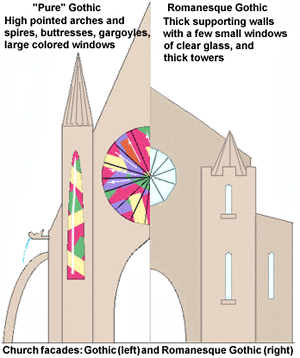
The evolution of Christian art, particularly in architecture, is a fascinating journey that reveals much about the cultural and spiritual aspirations of the era.
A pivotal moment in this evolution is the emergence of Gothic architecture from its Romanesque roots. Gothic and Romanesque styles, while distinct, are intertwined in Western Art History, making their separation a complex endeavor.
The transition from Romanesque to Gothic
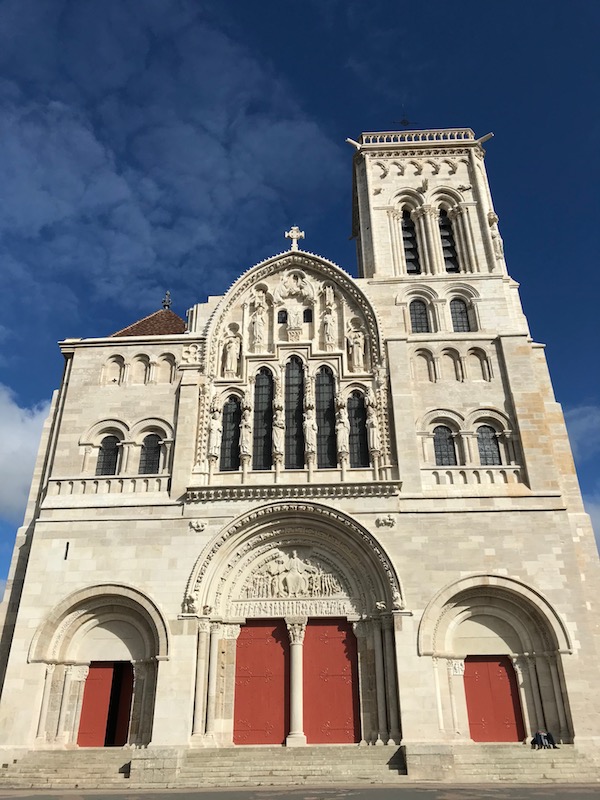
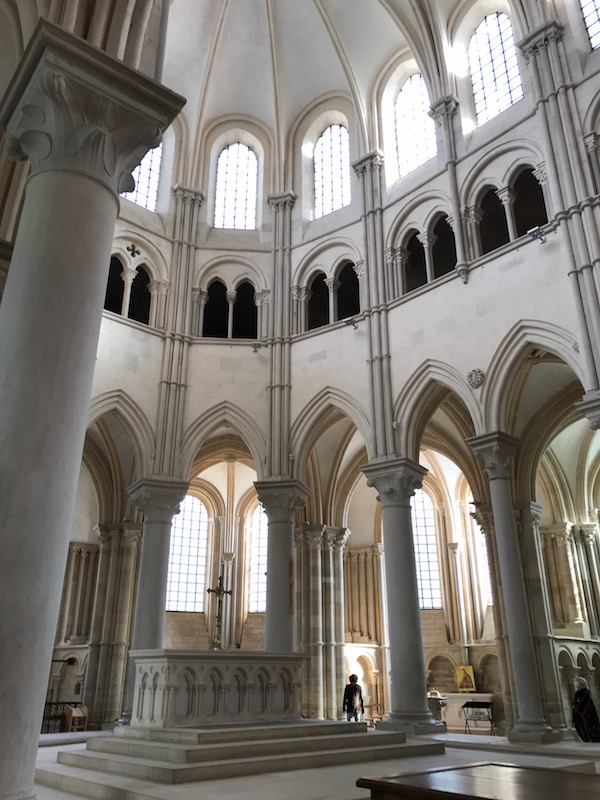
Take an example, Vezelay Basilica. At first glance, it stands as a typical example of Romanesque architecture with its solid, earthy structures. Yet, within a mere 70 years, it underwent transformations that embraced key Gothic elements such as flying buttresses, ogives, pointed arches, and stained glass windows. These additions signal a shift towards the Gothic aspiration for greater height and lightness, reflecting a continuous Western artistic endeavor to reach higher and create structures that are both spiritually and physically uplifting.
Community Spirit and Architectural Innovation
This period of architectural innovation was not merely about the aesthetics or structural advancements. It represented a communal spirit, where art became a collective endeavor transcending individualism. Artists, constructors, farmers, and businessmen alike contributed to the cathedral’s construction, embodying a unified community working towards a shared spiritual and architectural vision.
Chartres Cathedral: Three Stages of Gothic Development
Chartres Cathedral further exemplifies this transition, recognised by UNESCO for its historical and architectural significance. It stands as a testament to resilience, having been rebuilt twice, and showcases three distinct phases of Gothic development. The architectural diversity of its towers, from west to north to south, reflects the changing styles and advancements over 130 years, making it an invaluable piece of Western architectural history.
In these cathedrals, the orientation towards the west, unlike the southern orientation seen in Asian countries, was deliberate, symbolizing a spiritual journey from darkness to light, from west to east, in alignment with the path of the sun and the flow of believers into the sacred space. The presence of a plaza to the west of these cathedrals further facilitated this symbolic journey, creating a communal space for gatherings and reflection.
Walking through the towns that host these majestic cathedrals, one cannot help but be drawn to their imposing structures, which dominate the skyline and serve as a reminder of their central role not just in religion but in the politics and culture of the 13th century. They were the focal points of their communities, embodying the spiritual and social aspirations of the era.
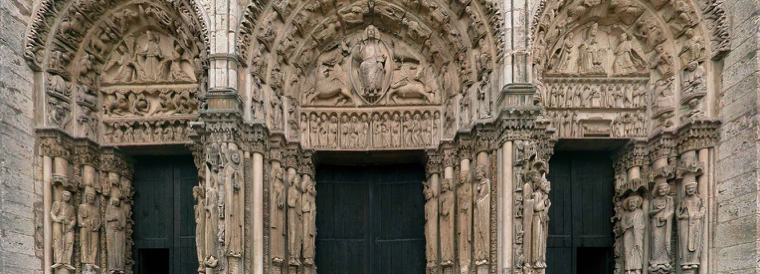


Royal ➡️
South ➡️
North
Spiritual Journey from the ground to Heaven
The pursuit of height in Gothic architecture was not merely an architectural challenge; it was a spiritual quest. Christianity, during this period, emphasized the transience of earthly life and the permanence of the afterlife. This belief is reflected in the architectural striving for greater heights, a quest that was often met with structural challenges and collapses. Yet, this did not deter the builders, who saw these setbacks as divine messages to reach even higher, a testament to their faith and determination.
The introduction of flying buttresses was a revolutionary solution to these challenges, allowing cathedrals to reach unprecedented heights and lightness. These structures, designed to distribute the force of the building’s weight and counteract the outward thrust of the vaults, symbolize the innovative spirit of Gothic architecture. They enabled the creation of more expansive and luminous interior spaces, allowing for larger stained glass windows that illuminated the interiors with spiritual light, embodying the architectural and spiritual ambitions of the time.
Flying Buttress and other Gothic elements
The introduction of flying buttresses was a revolutionary solution to these challenges, allowing cathedrals to reach unprecedented heights and lightness. These structures, designed to distribute the force of the building’s weight and counteract the outward thrust of the vaults, symbolize the innovative spirit of Gothic architecture. They enabled the creation of more expansive and luminous interior spaces, allowing for larger stained glass windows that illuminated the interiors with spiritual light, embodying the architectural and spiritual ambitions of the time
Within 130years, it underwent transformations that embraced key Gothic elements such as flying buttresses, ogives, pointed arches, and stained glass windows. These additions signal a shift towards the Gothic aspiration for greater height and lightness, reflecting a continuous Western artistic endeavor to reach higher and create structures that are both spiritually and physically uplifting.
All pictures are from: Cathédrale de Chartres. Cathédrale de Chartres. (2024, April 8). https://www.cathedrale-chartres.org/