About
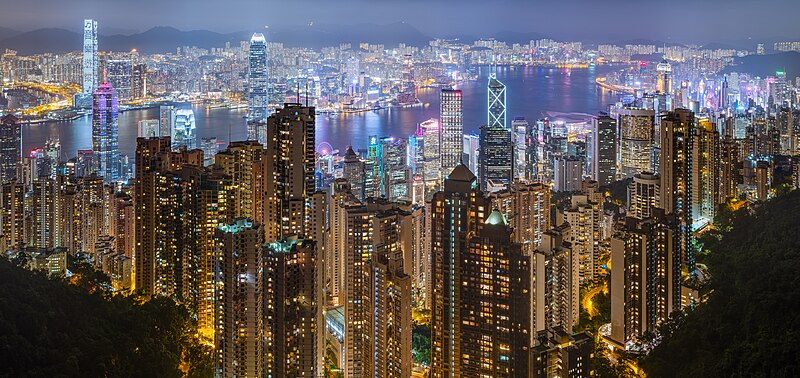
Photograph by Benh LIEU SONG. [Public domain], via Wikimedia Commons.

Welcome to the Hong Kong-style Milk Tea digital exhibit! Here, you can learn exactly what HK-style milk tea is and its cultural significance. You can also immerse yourself in online interactive experiences that teach you how to make HK-style milk tea as well as introduce you to the dishes commonly paired with the beloved beverage. The website also explores the two-way relationship between the tea sector and climate change, adaptation and mitigation strategies that can be used to address climate threats, and how this exhibit can help.
Happy exploring!
What is Hong Kong-style milk tea?
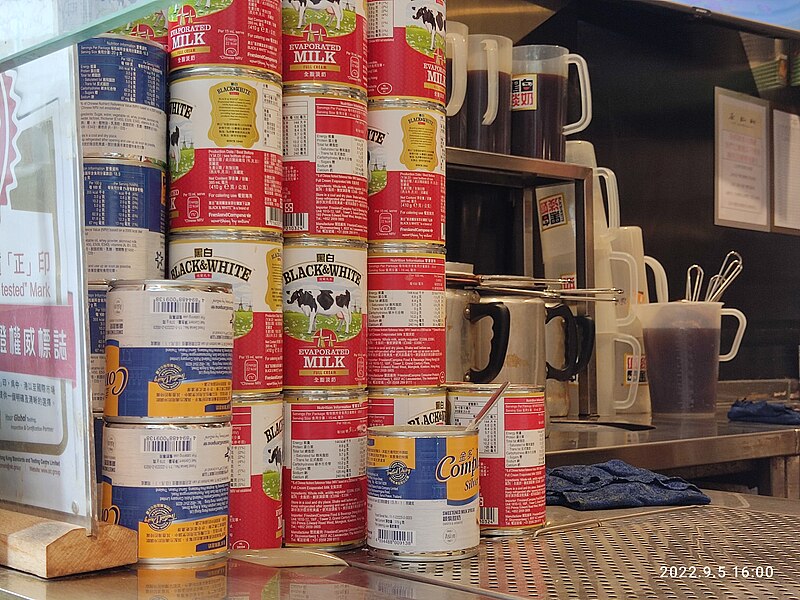
Photograph by TSCHEAN SUWHM MEIU. [Public domain], via Wikimedia Commons.

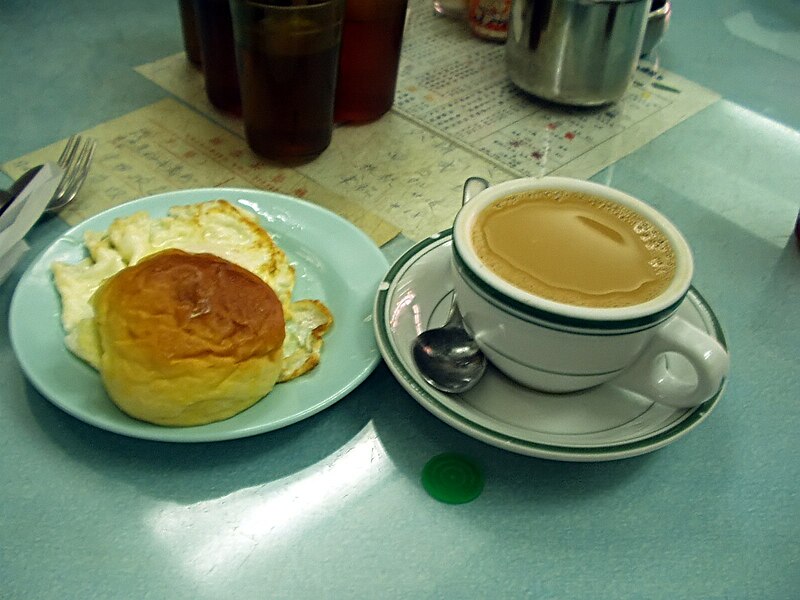
Hong Kong-style milk tea traditionally consists of a blend of Ceylon black tea, evaporated milk, and sugar (Mak, 2021). However, nowadays, several types of black tea, such as Assam and Pu’er, are also included. Likewise, some cafes utilise condensed milk instead of evaporated milk and sugar to allow for a sweeter and richer taste. Others prefer using a combination of skimmed milk and soybean oil to offer a low-fat alternative as well as increase cost-effectiveness. Similarly, whilst Hong Kong-style milk tea is often served hot, iced alternatives are offered with the drink served with ice cubes made of frozen milk tea or in a plastic cup partially submerged in an ice bath or ice cubes made of frozen milk tea to avoid dilution.
Regardless of its many varieties, what makes HK-style milk tea truly stand out is its unique preparation technique that has been adapted and refined over the years to create the perfect cuppa.
Specifically, a strong base of black tea leaves must be created – the ideal proportion is thought to be “thirty thin, seventy fat (leaves)” to ensure that the body of the beverage is full enough to complement the creamy milk but not overwhelmingly bitter (Cai, n.d.). Subsequently, the tea must be prepared in a rigid four-step process consisting of brewing, braising, colliding, and reheating. Firstly, hot water is to be added to the tea leaves – the temperature should ideally be approximately 98 degrees to allow for the tea leaves to properly bloom. Then, the brew must be kept warm for a dozen minutes or so to let the flavours deepen and combine. Subsequently, the most important step is to pour the tea from one pot to another through a sackcloth filter several times – this process is also known as “pulling” the tea. The force, speed, and drop height of the pour are crucial factors in ensuring smoothness and balance of flavours as well as adding aeration to produce a fragrant aroma. Finally, the tea must be reheated to the optimal temperature of 98 degrees before being combined with evaporated milk to a ratio of 7:3 (tea:milk) to create a rich, creamy, and subtly sweet concoction beloved throughout generations.

Hong Kong-style milk tea from Sweetheart Garden Restaurant in Causeway Bay. Photograph by YEUNAMCHGOA 20533. [Public domain], via Wikimedia Commons.
_%E8%8A%B1%E5%9C%92%E9%A4%90%E5%BB%B3_Sweetheart_Garden_Restaurant_food_April_2022_Px3_12.jpg)
It is also known affectionately by locals by its nickname of ‘silk stocking milk tea’ as the filter used to “pull” the tea is often wound in a long bag-shaped structure that turns into a deep tan shade after repeated use (Mak, 2024). The elasticity of the fabric, especially when weighed down by tea leaves, adds to this moniker.
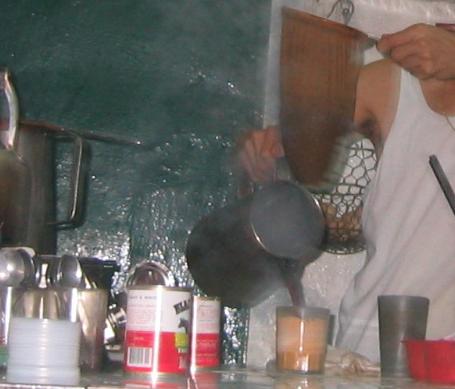
The sackcloth filter used in the preparation of Hong Kong-style milk tea is said to resemble a silk stocking. Photograph by K.C. Tang. [Public domain], via Wikimedia Commons.

A demonstration of the Hong Kong-style milk tea-making process by tea master Joe Yeung Kam-yiu of Lo Ye Dim Sum Restaurant
Master the art of making Hong Kong-style milk tea!
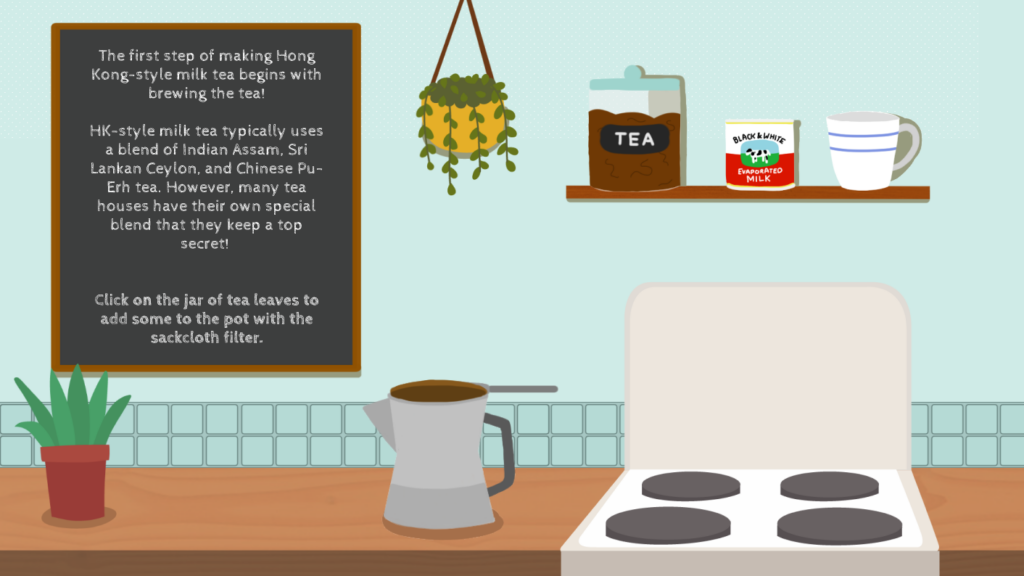
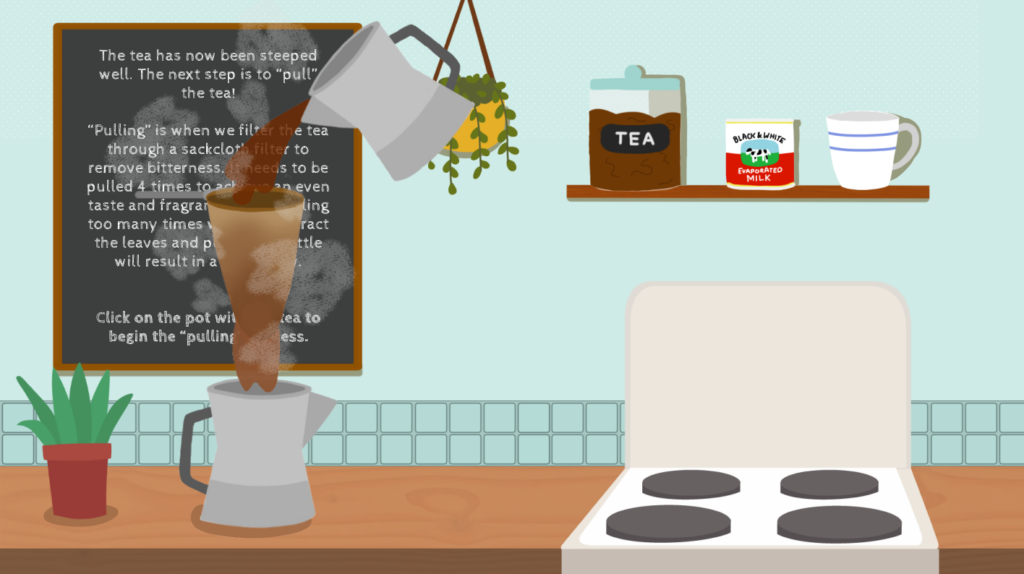
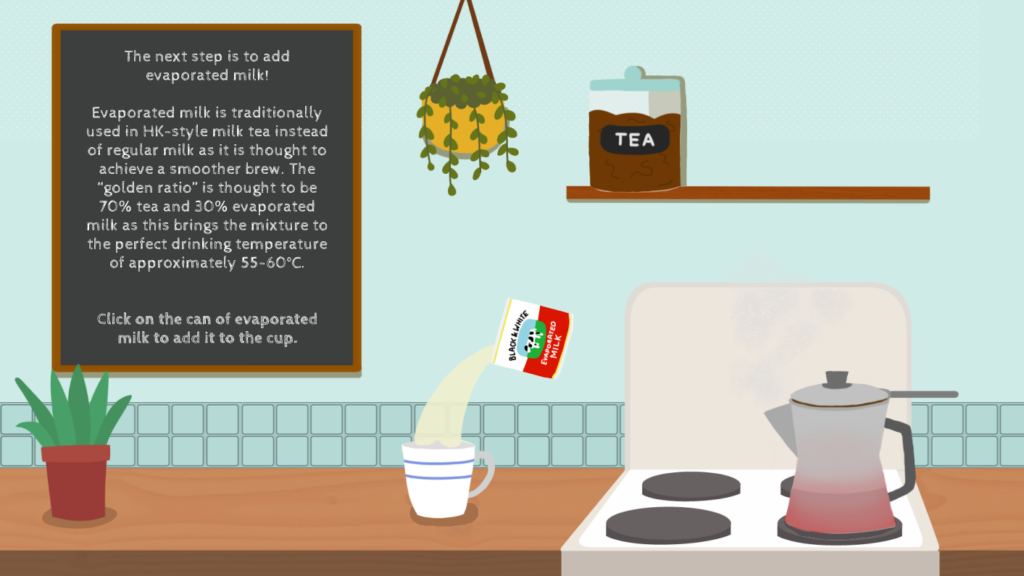
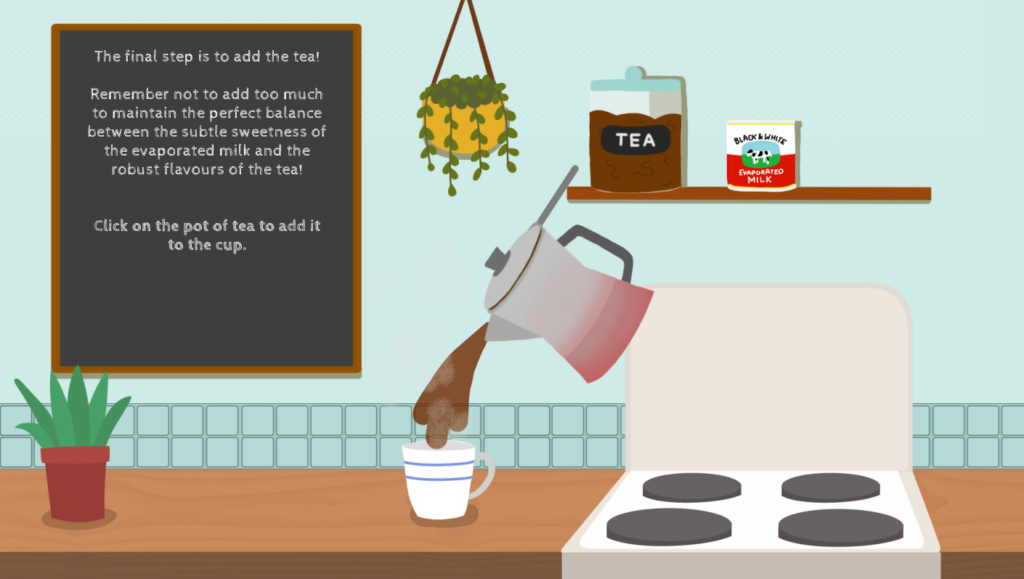
The tabletop plant, hanging plant, counter, shelf, and stove assets were created by hello erika. The tea leaves pouring sound effect was created by Free Sound Stock. The liquid pouring sound effect was created by Live Sound FX. All other assets were made by the site author.
With charming hand-drawn aesthetics and immersive sound effects, this interactive experience invites you to unlock the secrets of crafting the perfect cup of Hong Kong-style milk tea. Guided by the instructions on your trusty blackboard, take control of each step of the brewing process in this intuitive point-and-click interface to emerge as a true connoisseur of the age-old delicacy.
f
What is the cultural significance of Hong Kong-style milk tea?
Photograph by Rseric. [Public domain], via Wikimedia Commons.

The origins of Hong Kong-style milk tea stem from British rule of the region beginning in 1842 when Western-style tea made from Ceylon tea, fresh milk, and sugar was introduced by the English who moved there. This was typically served in high-class Western-style restaurants reserved for elites thus, cultivating an image of luxury (Mak, 2021). After the rapid rise in population after the Second World War, hundreds of bing sutts (cafes serving Western-style snacks with cold drinks) and dai pai dongs (street food stalls serving affordable Chinese fare) opened to cater to the consumption demands of citizens and workers, many of whom wanted to imitate the colonial lifestyle at a price they could afford. From this, Hong Kong-style milk tea was born.
Tea leaves of a lower grade were combined to strengthen the brew to better suit the tastes of locals who were used to the robust flavours of Chinese tea. The use of evaporated milk was also initially seen as a simple alternative to fresh milk as this was too expensive and elusive for ordinary people to acquire. Indeed, milk is not found in traditional Chinese cuisine (Lin, 2012), meaning it was not readily available and therefore, had to be imported from overseas. However, evaporated milk provided Hong Kong-style milk tea with its now-signature full-bodied, smooth, and creamy taste that appealed far more to local preferences than the light and diluted taste of British tea. It also better provided the calories needed by its clientele of working-class citizens and physical labourers (Hong Kong Memory, 2012).
It was in the 1950s/1960s that Hong Kong-style milk tea really skyrocketed in popularity when bing sutts were replaced with cha chaan tengs (Hong Kong-style cafes/diners) that offered a unique fusion of Cantonese and Western cuisine at affordable prices with quick no-nonsense customer service (Lam, 2022). These places were often open all day, serving a wide variety of dishes alongside Hong Kong-style milk tea which allowed it to be consumed at breakfast, lunch, and dinner. In turn, this cemented it as an irreplaceable component of any Hongkonger’s daily life. Nowadays, this beloved beverage is no longer limited to “cheap” establishments and has become a ubiquitous offering in many types of restaurants across the region (Goldthread, 2019).

The interior of a traditional cha chaan teng in Mong Kok, Hong Kong. Photograph by T1NH0. [Public domain], via Wikimedia Commons.

A short documentary on the preparation of Hong Kong-style milk tea and the new era of cha chaan tengs
Even after so many years, Hong Kong-style milk tea remains iconic on a local and worldwide level. It stands as a testament to the resourcefulness of the Hong Kong people during times of hardship, evoking feelings of nostalgia and comfort due to its central role in everyday life. Moreover, following decolonisation in the 1990s, it helped locals construct their own identity, showing that they were different from both the Chinese in mainland China and also the British. Indeed, the beverage reflects the unique cultural fusion of the two countries that the region is now so well-known for.
Its enduring significance was underscored in 2017 when the Hong Kong government formally declared it an item of ‘intangible cultural heritage’ (ICHO, 2017). This not only highlights the cultural importance of Hong Kong-style milk tea in the modern day but also emphasises the need to protect and safeguard this delicacy, and its intricate preparation process, for future generations.
Interview with tea master Yu Qingchi regarding the cultural significance of Hong Kong-style milk tea and attempts at safeguarding the intangible heritage
A short documentary on the history of Hong Kong-style milk tea, common offerings of a cha chaan teng, and an overview of the cuisine’s cultural significance at Sun Wah Cafe
Explore the culinary delights of a Hong Kong cha chaan teng from home!
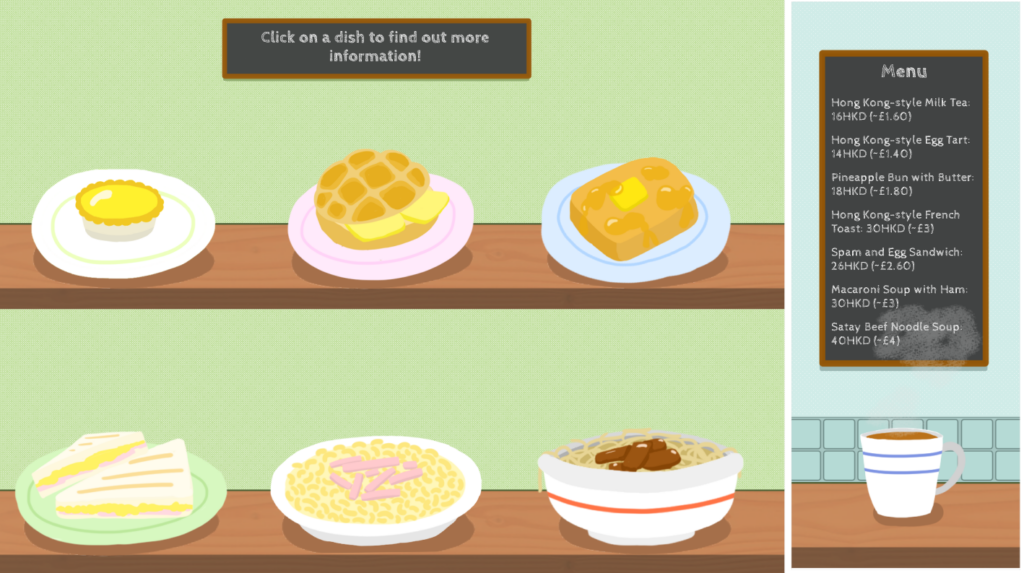
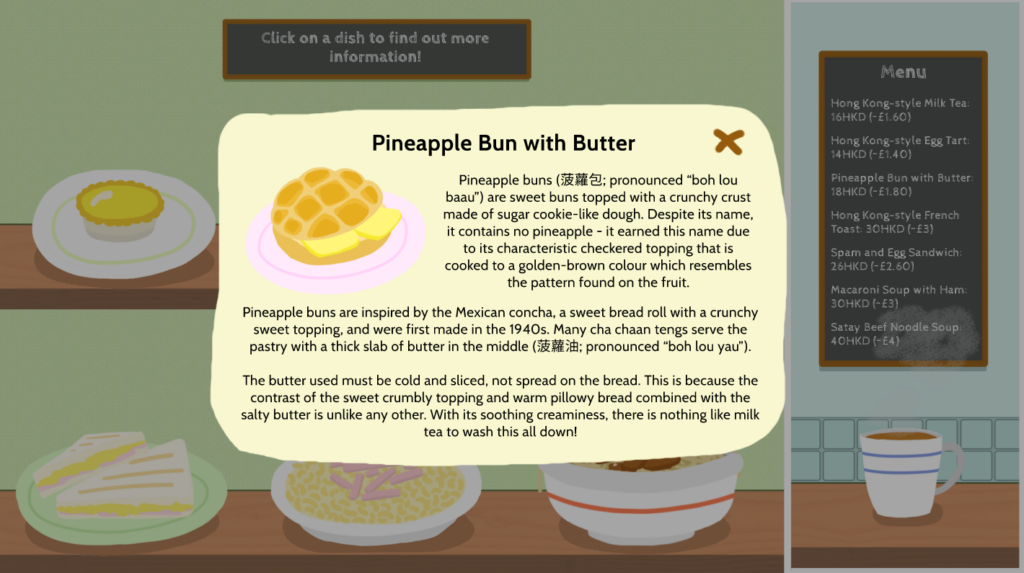
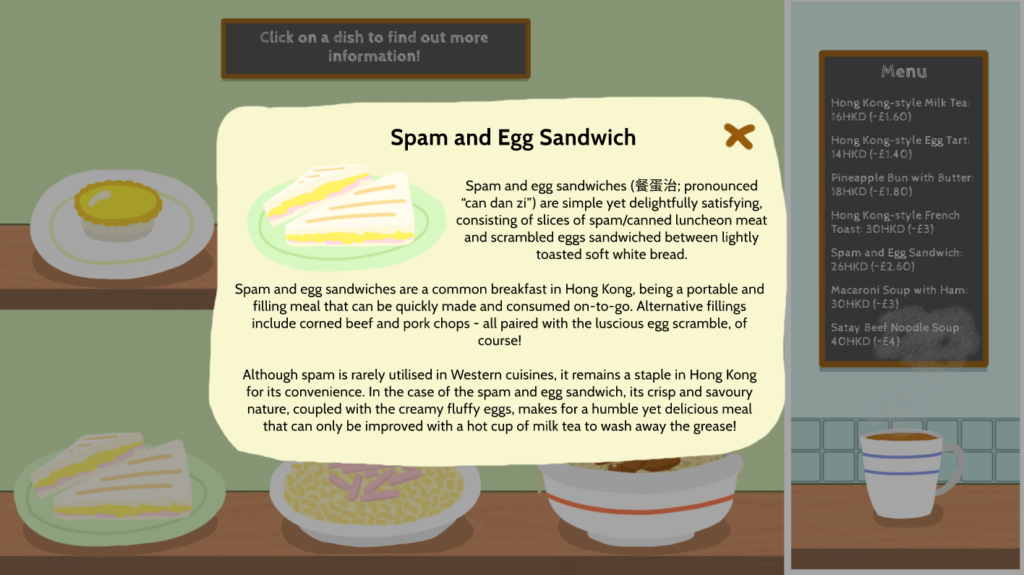
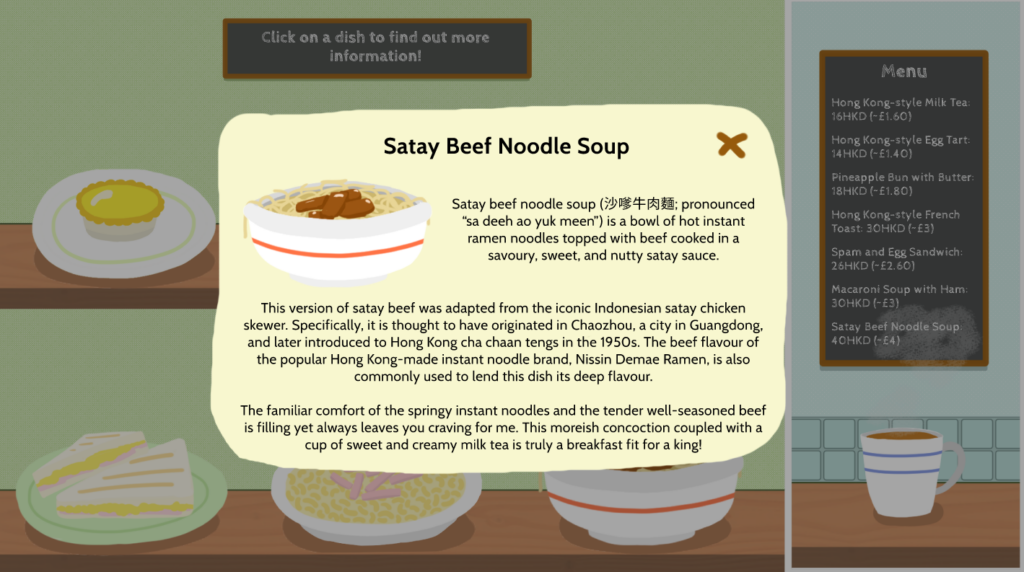
The counter asset was created by hello erika. The cha chaan teng soundscape was created by 走醬 noJAM. All other assets were made by the site author.
With charming hand-drawn graphics and an immersive soundscape, this interactive experience transports you to the heart of a traditional cha chaan teng where every dish tells a story. Explore the diverse array of dishes commonly paired with Hong Kong-style milk tea in this intuitive point-and-click interface and learn how this iconic beverage elevates every mealtime through mouth-watering and informative descriptions.
Explore the sights of a traditional Hong Kong cha chaan teng from home!

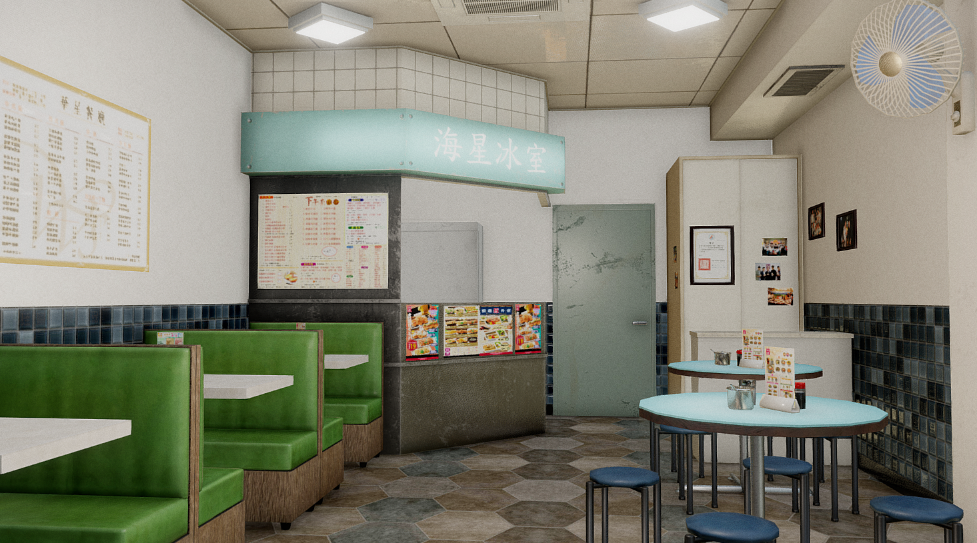
The 3D model was created by Softmind Game Factory.
This 3D model allows you to transport yourself to a traditional cha chaan teng where the iconic Hong Kong-style milk tea was born. Explore the humble but cosy interior that many Hongkongers frequent for breakfast, lunch, and dinner.
f
How does the tea sector affect the environment?
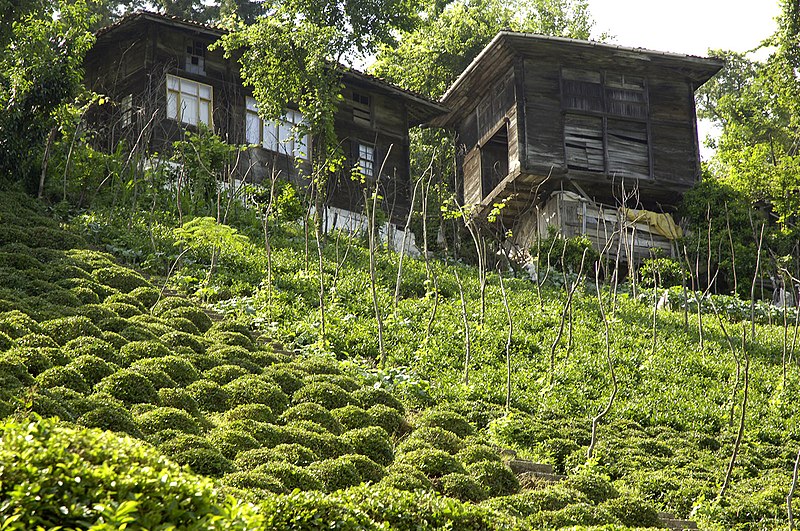
Photograph by Dosseman. [Public domain], via Wikimedia Commons.

To understand how climate change affects tea production and indirectly, Hong Kong-style milk tea, we must first acknowledge the impact of the tea sector on the environment (Ethical Tea Partnership, 2021):
Chemical Fertilisers
The use of chemical fertilisers is the main source of greenhouse gas emissions when producing tea. This is because, after application, the excess fertiliser is broken down by soil or leaks into waterways, resulting in the emission of nitrous oxide into the atmosphere. This is particularly problematic as this gas is 300 times as potent a greenhouse gas as carbon dioxide (Tian, 2020).
A study in Kenya found that fertiliser use (including its production, application, packaging, and transport) was responsible for 73% of tea’s emissions before export (Rigalsford, 2020).
Processing and Production
The processing and production of tea requires a large amount of electrical and thermal energy. The latter, which is used to dry and wither tea leaves, is usually obtained from burning fuelwood which in turn, releases greenhouse gas emissions.
Producing 1kg of tea requires approximately 3-6kWh of thermal energy from fuel wood or coal and 0.2-0.5 kWh of electrical energy from national grids and diesel generators (SNRD Africa, 2020). This is around the same amount of energy an electric car uses to travel 10-20 miles.
Boiling Water
The boiling of water for tea consumption is arguably the most significant contributor to the pastime’s environmental impact.
A study on UK consumption of Kenyan tea found that emissions from this phase are mostly caused by the water and electricity use in tea preparation, accounting for up to 85% of the total environmental impact from when the tea is grown up to its point of use (this is known as ‘cradle to grave’) (Azapagic, 2016).
How does climate change affect tea production?
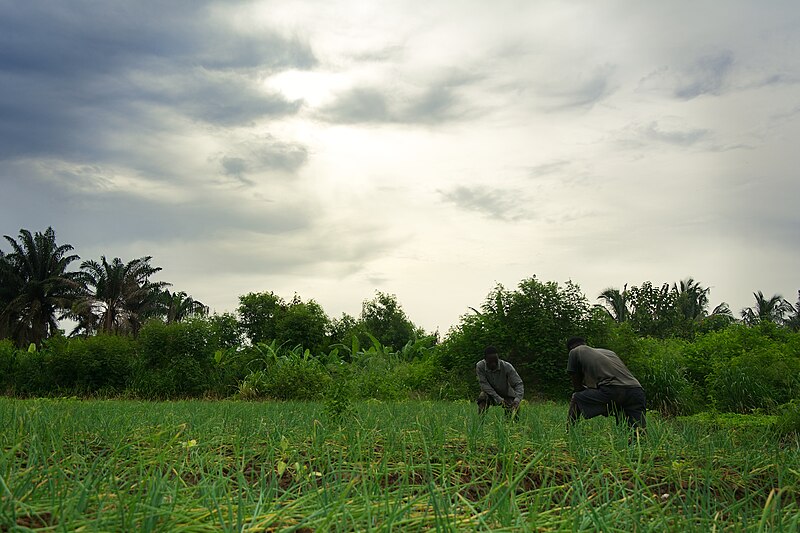
Photograph by Kwameghana(Bright Kwame Ayisi). [Public domain], via Wikimedia Commons.

Overall, climate change poses a wide-ranging set of threats to not only the consumerism of tea but also the livelihoods of millions of tea workers and farmers worldwide:
Increasing Temperatures
A greater frequency of heatwaves, longer warm seasons, and at least a 1.5°C rise in global temperatures are expected across the next 20 years (IPCC, 2018). As even a 1°C increase can reduce tea yields by 4% (Duncan, 2016), this may be particularly detrimental to tea growth and may lead to significant crop losses when accompanied by low humidity (IPCC, 2022).
It may also damage tea leaves and dry out the soil, reducing the product’s overall quality and taste and therefore, making it more difficult for farmers to sell.
A short documentary on the impact of climate change on Taiwan tea farmers
Pests and Diseases
Warmer temperatures increase local pest populations and plant diseases (Lehmann-Danzinger, 2000). For example, it has been found that 80% of tea-growing areas in India are now impacted by the “tea mosquito bug” which may cause up to a 50% reduction in annual yields (Reay, 2019).
Droughts
As rising temperatures cause evaporation and precipitation rates as a whole are decreasing, this means droughts are more frequent. This is problematic as lower soil moisture decreases the rate of photosynthesis, impeding tea growth and yield (UNIDO, 2017).
Heavier Rain
Rains in tea-growing areas are becoming heavier, meaning that they are more likely to wash away soil rich in organic matter and nutrients, destroy tea bushes, and cause landslides and flooding (Boehm, 2016). This can lead to delayed growth, affecting profits during the first and second harvests.
These conditions can also dilute the compounds in tea responsible for its quality and flavour – such concentrations can be halved during periods of heavy rain, leading to tea with poorer quality and a lower market price that threatens farmers’ income.
Hailstorms
The intensity of hailstorms is predicted to increase due to changing moisture levels in the atmosphere (Raupach, 2021). This is significant as hail can cause long-lasting damage to tea bush stems, killing bushes and making future plants more susceptible to pests and diseases.
Explore the effects of climate change worldwide!
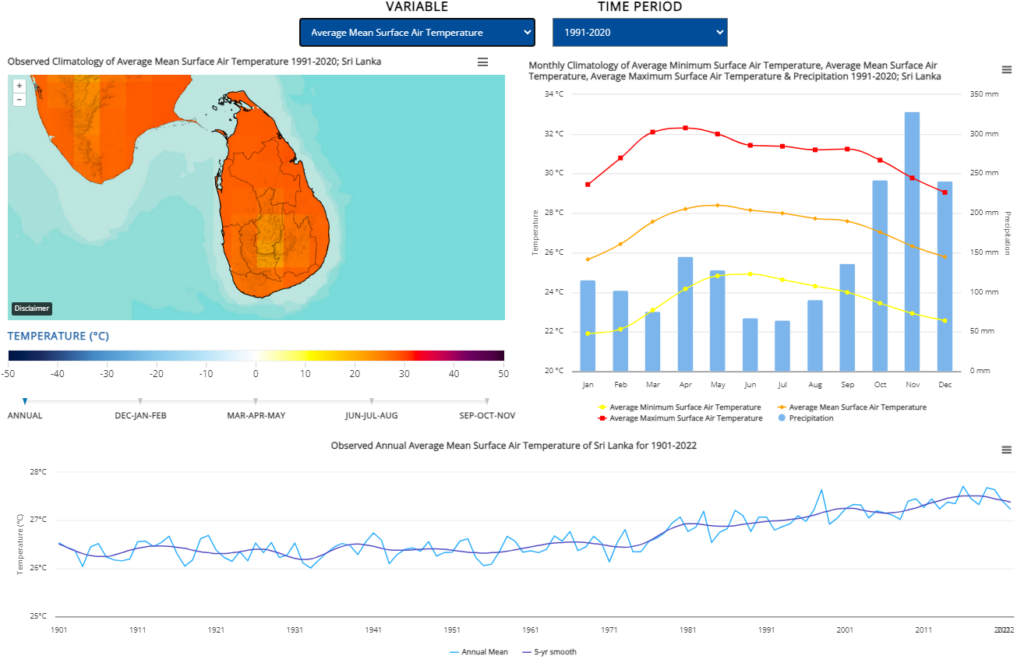
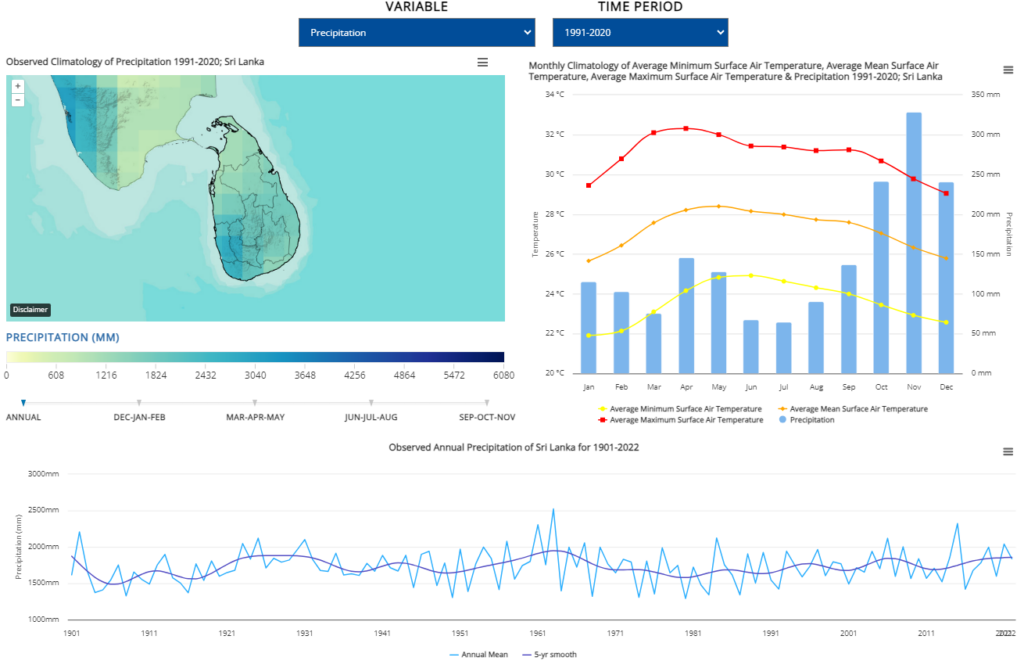
Screenshots of 1991-2020 records of temperature and precipitation in Sri Lanka from The Climate Change Knowledge Portal
These interactive dashboards visualise the recorded and predicted changes in climate for a given country to allow you to learn more about the effects of climate change in an engaging and informative way. The dashboards of the 4 biggest tea-producing countries have been provided below.
f
How can the effects of climate change be addressed?
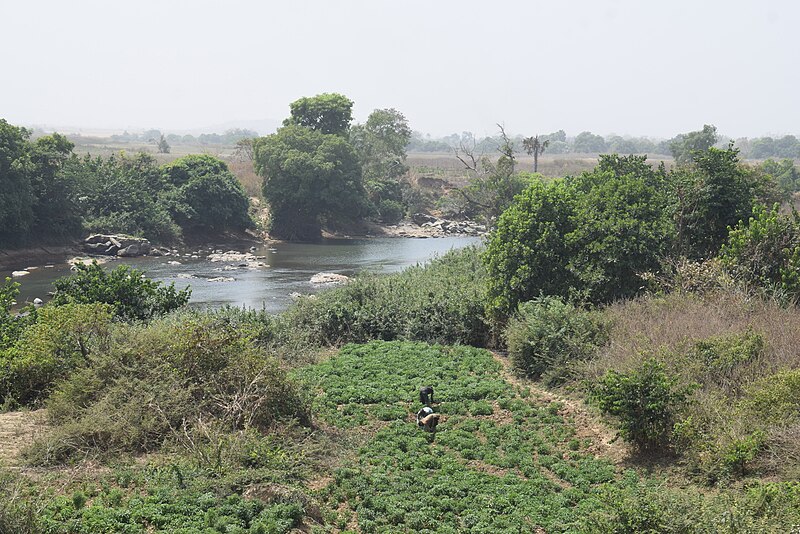
Photograph by Friday musa. [Public domain], via Wikimedia Commons.

There are two ways in which climate change can be addressed (WWF, n.d.):
- Climate change mitigation refers to activities that aim to reduce the concentration of greenhouse gases in the atmosphere.
- Climate change adaptation refers to activities that help manage the social, economic, and environmental effects of climate change.
Climate Change Mitigation
- The use of natural fertilisers should be promoted to minimise greenhouse gas emissions at the farm level (Ethical Tea Partnership, 2021). Likewise, the advantages and disadvantages of chemical fertilisers (which are currently the industry norm) should be carefully considered before use to avoid inflicting unnecessary damage on the environment.
- It is important to note that fans account for 40% of total electricity consumption in tea factories (Ethical Tea Partnership, 2021). However, this equipment is often outdated and ineffective – indeed, it is thought that energy consumption can be reduced to 10% with modern equivalents. Therefore, such tools should be regularly updated and monitored to ensure energy efficiency.
- Factories should aim to source their fuelwood from sustainably managed plantations to make use of renewable energy (Ethical Tea Partnership, 2021). Specifically, given the fact that forests remove carbon from the atmosphere during photosynthesis, there is a potential for the carbon released by combustion and deforestation to be offset by the forests themselves. This approach would require the amount of fuelwood used to be equivalent to the amount grown each year.
- Consumers should be encouraged not to boil more water than they require as well as to switch to renewable energy sources in their homes (UKTIA, 2021). Additionally, the use of energy-efficient kettles and clearer product efficiency labelling can help individuals make more sustainable decisions in the long term.
Climate Change Adaptation
- Tea-producing communities should be educated on how to best protect their soil from adverse weather. For example, this can include introducing the use of cover crops – plants that are planted to cover the soil rather than for harvest to slow erosion, improve soil health, and help control pests and diseases (Clark, 2015). Compost should also be suggested as an alternative to chemical fertilisers as it not only improves nutrient density but also improves soil structure and drainage, reducing the risk of soil erosion and increasing resilience against heavy rainfall (Ethical Tea Partnership, 2013).
- Clones are genetically identical reproductions of a particular plant propagated through cutting, grafting, or tissue culture to produce desired traits. In particular, new tea clones have been found to be highly resistant to drought, frost, pests, and diseases (Ethical Tea Partnership, 2013). Indeed, these clones can improve yields by up to 68% compared to ordinary clones. Such resources should be made widely accessible to farmers in high-risk regions to ensure that they can secure a steady source of income.
- Farmers and workers who depend on tea as their sole source of income are at increased risk of poverty as the suitability of tea-growing regions decline due to climate change. Therefore, introducing other means of food and income is essential to protecting the livelihood of these individuals (Ethical Tea Partnership, 2021). This can include encouraging farmers to plant cash crops that will better withstand the extreme weather to help diversify their income sources or crops high in nutrition that are easily grown and drought-resistant to tackle food security and disease (IISD, 2019).
r

How can this exhibit help?
Photograph by Prosperity Horizons. [Public domain], via Wikimedia Commons.
.jpg)
Select a sustainable development goal to find out more information:

Logos for UN Sustainable Development Goals 2, 4, 11, 12, and 13. [Public domain], via United Nations.
Addressing Threats Caused by Climate Change
- This exhibit can advocate for policy changes and investments that support sustainable production and agricultural practices by underlining the importance of protecting workers in developing nations through exploration of the effects of climate change. In turn, this can contribute to creating an enabling environment for achieving Target 2.3 (double the productivity and incomes of small-scale food producers) and Target 13.3 (build knowledge and capacity to meet climate change).
- This exhibit effectively introduces and explains research-backed adaptation and mitigation strategies that should be employed by tea-producing communities, government organisations, and everyday consumers to address the effects of climate change. By highlighting these sustainable practices, it can encourage the adoption of resilient agricultural practices and therefore, contribute to Target 2.4 (sustainable food production and resilient agricultural practices) and Target 12.9 (support developing countries’ scientific and technological capacity for sustainable consumption and production).
- This exhibit educates visitors about the impact of climate change on tea production and how to utilise sustainable practices to address these effects. By raising awareness about these contemporary issues, it can foster environmental literacy and support sustainability education. This encourages visitors to become informed global citizens who understand the consequences of their consumption choices and feel empowered to support environmentally-conscious initiatives which overall, address Target 4.7 and Target 13.3.
Safeguarding Cultural Heritage
- This exhibit highlights Hong Kong-style milk tea’s societal importance, historical roots, and role in shaping the culinary identity of Hong Kong. This promotes cultural understanding and appreciation in audiences worldwide which in turn, contributes to Target 4.7 (education for sustainable development and global citizenship) by fostering respect for diversity and heritage as well as inclusive education that celebrates different cultural perspectives. Likewise, as showcasing the traditions associated with production and consumption encourages the preservation and promotion of the region’s cultural heritage, Target 11.4 (protect the world’s cultural and natural heritage) can also be addressed.
- The digital nature of the exhibit enables widespread access to educational resources regarding Hong Kong-style milk tea and climate change in an organised and curated manner. Through multimedia content and interactive components, it provides diverse learning opportunities for students, educators, policymakers, and the general public irrespective of geographical location – in turn, this helps broadly address SDG 4 and Target 12.8 (promote universal understanding of sustainable lifestyles).
- This exhibit educates visitors about the threats posed by climate change to tea production and the broader cultural context of Hong Kong-style milk tea. By highlighting their vulnerability to risks such as extreme weather and changing ecosystems, it can increase awareness about the need to safeguard such regions. Similarly, the exhibit demonstrates which strategies can be employed to mitigate and adapt to these changing circumstances which in turn, emphasises how proactive measures can be taken to protect the cultural heritage before it is too late. Overall, this allows the exhibit to contribute to Target 12.8 and Target 13.3.
References
Azapagic, A., Bore, J., Cheserek, B., Kamunya, S., & Elbehri, A. (2016). The global warming potential of production and consumption of Kenyan tea. Journal of Cleaner Production, 112, 4031-4040. https://doi.org/10.1016/j.jclepro.2015.07.029
Boehm, R., Cash, S. B., Anderson, B. T., Ahmed, S., Griffin, T. S., Robbat Jr, A., … & Orians, C. M. (2016). Association between empirically estimated monsoon dynamics and other weather factors and historical tea yields in China: results from a yield response model. Climate, 4(2), 20. https://doi.org/10.3390/cli4020020
Cai, Y. (n.d.). HONG KONG-STYLED MILK TEA or 丝(Sī)袜(Wà)奶(Nǎi)茶(Chá). Chinese Street Market. https://www.chinesestreetmarket.com/foodculture/hong-kong-styled-milk-tea
Clark, A. (2015). Cover Crops for Sustainable Crop Rotations. Sustainable Agriculture Research and Education. https://www.sare.org/resources/cover-crops/
Duncan, J. M., Saikia, S. D., Gupta, N., & Biggs, E. M. (2016). Observing climate impacts on tea yield in Assam, India. Applied Geography, 77, 64-71. https://doi.org/10.1016/j.apgeog.2016.10.004
Ethical Tea Partnership. (2013). Extension officer training manual: Adapting to climate change in the tea sector. https://www.ethicalteapartnership.org/wp-content/uploads/2013/03/Adapting-to-Climate-Change-Manual.pdf
Ethical Tea Partnership. (2021). Climate Change and Tea. https://www.ethicalteapartnership.org/wp-content/uploads/2021/11/Climate_report_web.pdf
Goldthread. (2019). Hong Kong’s milk tea: how it went from a beverage inherited from another culture, to a symbol of the city’s identity. South China Morning Post. https://www.scmp.com/lifestyle/food-drink/article/3030313/hong-kongs-milk-tea-how-it-went-beverage-inherited-another
Hong Kong Memory. (2012). The History of Hong Kong-style Milk Tea. https://www.hkmemory.hk/MHK/collections/ichhk_II/Hong_Kong_style_Milk_Tea_Making_Technique/History_Hong_Kong_style_Milk_Tea/index.html
ICHO. (2017). The Intangible Cultural Heritage of Hong Kong: The Representative List. https://www.icho.hk/en/web/icho/the_representative_list_of_hkich.html
ISSD. (2019). Global Market Report: Tea. https://www.iisd.org/system/files/publications/ssi-global-market-report-tea.pdf
IPCC. (2018). Global Warming of 1.5 ºC. https://www.ipcc.ch/sr15/
IPCC. (2022). Climate Change 2022: Impacts, Adaptation and Vulnerability. https://www.ipcc.ch/report/sixth-assessment-report-working-group-ii/
Lam, J. (2022). Hidden Hong Kong: A history of the cha chaan teng, the humble Hong Kong tea restaurant. localiiz. https://www.localiiz.com/post/food-drink-history-cha-chaan-teng-hong-kong
Lehmann-Danzinger, H. (2000). Diseases and pests of tea: Overview and possibilities of integrated pest and disease management. Journal of Agriculture in the Tropics and Subtropics, 101(1), 13-38. https://www.jarts.info/index.php/jats/article/view/1383/567
Lin, S. L., Tarrant, M., Hui, L. L., Kwok, M. K., Lam, T. H., Leung, G. M., & Schooling, C. M. (2012). The role of dairy products and milk in adolescent obesity: evidence from Hong Kong’s “Children of 1997” birth cohort. PloS one, 7(12), Article e52575. https://doi.org/10.1371/journal.pone.0052575
Mak, V. S. W. (2021). The heritagization of milk tea: Cultural governance and placemaking in Hong Kong. Asian Anthropology, 20(1), 30-46. https://doi.org/10.1080/1683478X.2020.1773616
Mak, V. S. W. (2024). From intangible culture heritage to political symbol: A study of milk tea, emotions, and the Pan-Asian pro-democratic movement. In G. Bozoğlu, G. Campbell, L. Smith, & C. Whitehead (Eds.), The Routledge International Handbook of Heritage and Politics (pp. 54-70). Routledge. https://doi.org/10.4324/9781003300984
Raupach, T. H., Martius, O., Allen, J. T., Kunz, M., Mohr, S., Rasmussen, K. L., Trapp, R. J., & Zhang, Q. (2021). The effects of climate change on hailstorms. Nature Reviews Earth & Environment, 2(3), 213-226. https://doi.org/10.1038/s43017-020-00133-9
Reay, D. (2019). Climate-smart tea. Climate-Smart Food, 35-47. https://doi.org/10.1007/978-3-030-18206-9_4
Rigarlsford, G., de Silva, J., Tuwei, G., Redfern, S., Kulak, M., Miah, J. H., & Sim, S. (2020). Potential management interventions to mitigate greenhouse gas emissions from tea cultivation. Carbon Management, 11(6), 631-643. https://doi.org/10.1080/17583004.2020.1840872
SNRD Africa. (2020). Improving Energy Efficiency in the Tea Sector. https://www.snrd-africa.net/improving-energy-efficiency-in-kenyas-tea-sector/
Tian, H., Xu, R., Canadell, J. G., Thompson, R. L., Winiwarter, W., Suntharalingam, P., Davidson, E. A., Ciais, P., Jackson, R. B., Prather, M. J., Regnier, P., Pan, N., Pan, S., Peters, G. P., Shi, H., Tubiello, F. N., Zaehle, S., Zhou, F., Arneth, A., . . . Yao, Y. (2020). A comprehensive quantification of global nitrous oxide sources and sinks. Nature, 586(7828), 248-256. https://doi.org/10.1038/s41586-020-2780-0
UNIDO. (2017). Adaptation and mitigation in the Kenyan tea industry. https://www.unido.org/sites/default/files/2017-03/Kenya-country-report-DIGITAL-FINAL-20170302-OnePage_0.pdf
UKTIA. (2021). JOIN THE SMART BOIL CAMPAIGN AND HELP SAVE THE PLANET. https://www.tea.co.uk/news/article/join-the-smart-boil-campaign-and-help-save-the-planet
WWF. (n.d.). What’s the difference between climate change mitigation and adaptation? https://www.worldwildlife.org/stories/what-s-the-difference-between-climate-change-mitigation-and-adaptation