Climate Change on the Camino
|
|

The Camino’s Climate
Most of the Camino de Santiago benefits from a Maritime (or Oceanic) Climate, with parts of the routes in southern Spain, France, Portugal and Italy having a Mediterranean Climate. Regions with Oceanic Climate have cold winters, rainfalls in Autumn, and warm summers. Regions with Mediterranean Climate have milder winters and hot, dry summers.
Pilgrims privilege the summer months, from June to September, to undertake their walks, to benefit from warmer and drier weather.
A Changing Climate
Climate change is a long-term shift in temperatures and weather patterns. While these shifts have occurred naturally throughout Earth’s history, human activity since the 1800s is now the main driver of climate change.
In recent years, the effects of Climate Change have significantly affected the weather of Southern Europe, with extreme temperatures, draught, and wildfires. These changes threaten all three heritages of the Camino, from the integrity of its natural heritage to the safety of its cultural heritage and the practice of pilgrimage itself.
Heat
Europe has been warming twice as much as the global average since the 1980s, and both 2022 and 2023 were record years in terms of heat and drought, with 2023 being the warmest year on record worldwide since 1850.
In 2022, drought affected over 630,000km2 in Europe, against 167,000km2 annual average between 2000 and 2022. It it was the fourth driest year in a row for the Iberian Peninsula and the third driest year in a row in the Pyrenees Mountains.
Impact on heritage
Periods of heat and drought may impact pilgrimage patterns, as the summer periods get longer and hotter. Pilgrims may choose to complete their pilgrimage earlier or later in the year to avoid the intense heat of the summer months.
Increased heat and drought also increase the risk of fire, particularly in the Iberian Peninsula. This threatens both natural and cultural heritage, and may lead to the damage and loss of sites, and increase their vulnerability to future climate-related degradation.
Water
Clean Water and Sanitation is the United-Nations Sustainable Development Goal 6, citing the aim to “ensure availability and sustainable management of water and sanitation for all“.
In 2022, Spain’s water supply had decreased 41.9% by the end of July, while in France, over 2000 communities drinking water supplies were affected. The United Nations Economic Commission for Europe (UNECE) projects that for every 1°C of temperature rise, there will be a 20% reduction in renewable water resources.
Impact on heritage
Pilgrims can walk up to 18km daily, access to water is therefore an important factor in every pilgrim’s walk, with water points accessible along the routes and in stopover cities. Alongside increased heat, the threat of water scarcity may affect pilgrim’s capacity to organise their walks efficiently and safely.
Mitigation
The European Union’s Water Framework Directive Programs of Measures plans for a shift to renewable energy production, and increase irrigation efficiency to reduce pressure on water resources. The Protocol on Water and Health may also be a tool for adaptation strategies by presenting options for water and sanitation in National Adaptation Plans under the Paris Agreement.
Coastlines
The UNESCO predicts that 19% of heritage sites worldwide will be lost to rising sea levels if global temperature increases by 3°C. In addition to rising sea levels, heritage sites in coastal regions face the risk of increased storm activities, and Wind-Driven Rain (WDR), which is the sudden entry of rain into a building from the wind.
Impact on heritage
Intense storms and rising sea levels may accelerate the natural process of erosion for natural and cultural heritage sites along the Atlantic and Mediterranean coastlines. WDR is also a particular risk for sites along the Atlantic coast, and may increase erosion and damage surfaces in cultural heritage sites.
In Southern-Europe, the increased intensity of weather events is causing rapid changes in humidity levels, which threaten the integrity of masonry and wooden structures, as well as that of photographs and paper conserved in archives and collections.
Ecosystem
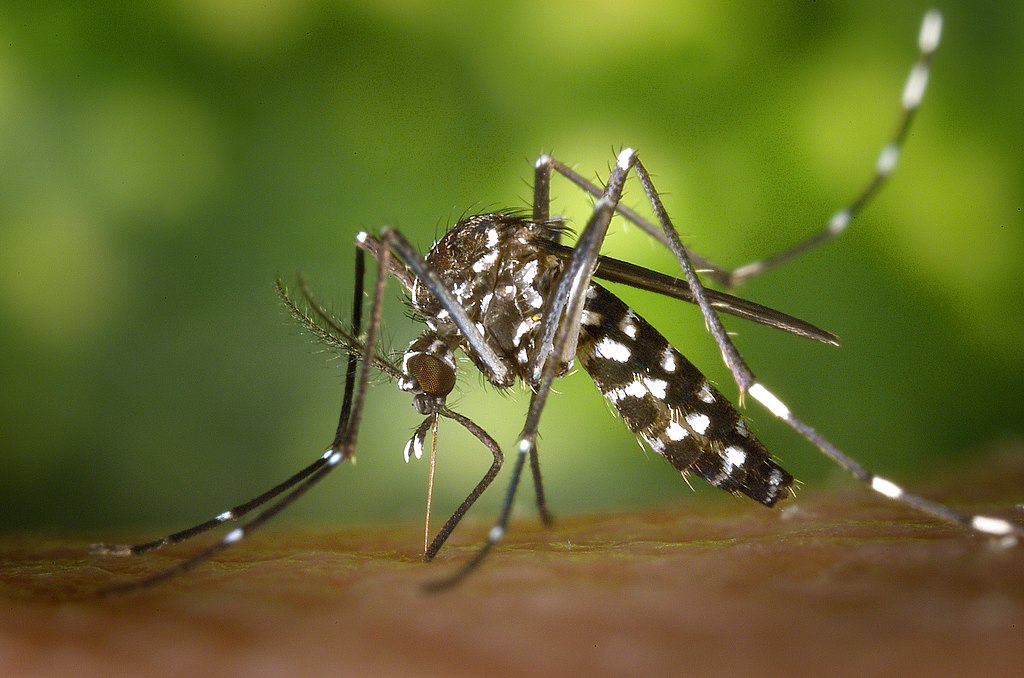
Rising temperatures and longer summers have also provided a favourable climate for invasive mosquito species to establish themselves in Europe, particularly the Aedes Albopictus mosquito, or Tiger Mosquito.
Tiger Mosquitoes is a species indigenous to Southeast Asia and can transmit viruses to humans such as dengue and chikungunya. Their sting is also more painful and takes longer to heal than that of mosquitoes indigenous to Southern Europe, which can lead to allergic reactions and infections. Their presence in Europe has increased by over 62% in the past ten years, particularly in Southern Europe.
Impact on heritage
This change may force pilgrims to take more precautions to avoid the discomfort of stings, infections and allergic reactions, and potentially life-threatening illnesses.
Image: Aedes albopictus by James Gathany for the Centers for Disease Control and Prevention CDC, 2002, CDC Public Health Image Library #2165 (see sources for full details).
Sources:
‘Koppen climate classification | Definition, System, & Map | Britannica’. Accessed: Apr. 13, 2024. [Online]. Available: https://www.britannica.com/science/Koppen-climate-classification
‘Europe – Climate, Regions, Weather | Britannica’. Accessed: Apr. 13, 2024. [Online]. Available: https://www.britannica.com/place/Europe/Climate
Claire, ‘When is the Best Time to Walk the Camino? FAQ’, CaminoWays.com. Accessed: Apr. 13, 2024. [Online]. Available: https://caminoways.com/best-time-to-walk-the-camino
United Nations, ‘What Is Climate Change?’, United Nations. Accessed: Apr. 28, 2024. [Online]. Available: https://www.un.org/en/climatechange/what-is-climate-change
E. Sesana, A. S. Gagnon, C. Ciantelli, J. Cassar, and J. J. Hughes, ‘Climate change impacts on cultural heritage: A literature review’, WIREs Clim. Change, vol. 12, no. 4, p. e710, Jul. 2021, doi: 10.1002/wcc.710.
‘Climate change impacts scar Europe, but increase in renewables signals hope for future’, World Meteorological Organization. Accessed: Apr. 13, 2024. [Online]. Available: https://wmo.int/news/media-centre/climate-change-impacts-scar-europe-increase-renewables-signals-hope-future
Copernicus, ‘The 2023 Annual Climate Summary: Global Climate Highlights 2023’, Copernicus. Accessed: Feb. 22, 2024. [Online]. Available: https://climate.copernicus.eu/global-climate-highlights-2023
World Meteorological Organization and the Copernicus Climate Change Service, ‘The State of the Climate in Europe 2022’, ArcGIS StoryMaps. Accessed: Apr. 13, 2024. [Online]. Available: https://storymaps.arcgis.com/stories/c805cf3053c747e7961d5ced93182993
‘Drought impact on ecosystems in Europe’. Accessed: Apr. 13, 2024. [Online]. Available: https://www.eea.europa.eu/en/analysis/indicators/drought-impact-on-ecosystems-in-europe
‘Acter l’Urgence: Engager les Moyens’, Haut Conseil Pour le Climat, Jun. 2023. Accessed: Feb. 22, 2024. [Online]. Available: https://www.hautconseilclimat.fr/wp-content/uploads/2023/06/HCC_RANC_2023-VF.pdf
UNECE Information Unit, ‘Climate change threatens access to water and sanitation, warn UNECE & WHO/Europe, urging reinforced measures under Protocol to boost resilience’. Accessed: Apr. 13, 2024. [Online]. Available: https://unece.org/media/press/367685
Jonathan, ‘How Many Days Does it Take to Walk the Camino de Santiago?’, CaminoWays.com. Accessed: Feb. 15, 2024. [Online]. Available: https://caminoways.com/how-many-days-does-it-take-to-walk-the-camino-de-santiago
C. Ainsworth, ‘Tropical diseases move north’, Nature, Nov. 2023, doi: 10.1038/d41586-023-03476-7.
‘Moustique tigre : ce qu’il faut savoir sur lui’. Accessed: Apr. 28, 2024. [Online]. Available: https://www.auvergne-rhone-alpes.ars.sante.fr/moustique-tigre-ce-quil-faut-savoir-sur-lui
Images:
Banner top: Camino near Castrojeriz, by MartinD, 6 August 2008. Licence: CC BY-SA 3.0 https://creativecommons.org/licenses/by-sa/3.0, via Wikimedia Commons. No Modification. URL: https://commons.wikimedia.org/wiki/File:Camino_near_Castrojeriz.jpg

Banner 1: Termometro 42 grados by Centenoyespelta, 18 July 2022. Licence: CC BY-SA 4.0 https://creativecommons.org/licenses/by-sa/4.0, via Wikimedia Commons. No Modification. URL: https://commons.wikimedia.org/wiki/File:Termometro_42_grados.jpg

Banner 2: Benasque Anciles by Basotxerri, 11 September 2017. Licence: CC BY-SA 4.0 https://creativecommons.org/licenses/by-sa/4.0, via Wikimedia Commons. No Modification. URL: https://upload.wikimedia.org/wikipedia/commons/d/d6/Benasque_-Anciles-_Grifo_01.jpg

Banner 3: Cabo Ortegal by Adbar, 19 December 2011. Licence: CC BY-SA 3.0 https://creativecommons.org/licenses/by-sa/3.0, via Wikimedia Commons. No Modification. URL: https://commons.wikimedia.org/wiki/File:Cabo_Ortegal_(Spain).jpg
.jpg)
Banner 4: Gaivota – Portosin (Larus michahellis) by Lmbuga, 18 August 2010. Licence: CC BY-SA 3.0 https://creativecommons.org/licenses/by-sa/3.0, via Wikimedia Commons. No Modification. URL: https://commons.wikimedia.org/wiki/File:Gaivota_-_Portos%C3%ADn.jpg

Image 1: Aedes albopictus by James Gathany for the Centers for Disease Control and Prevention CDC, 2002, CDC Public Health Image Library #2165. Licence: Public domain, via Wikimedia Commons. No Modification. URL: https://commons.wikimedia.org/wiki/File:CDC-Gathany-Aedes-albopictus-1.jpg
