
Dunhuang Through the Ages
Exploring Heritage, Confronting Climate Threats, and Advancing Digital Preservation
Welcome :)
Join us on a profound journey through time and innovation in our digital exhibition, where we delve into the majestic realm of the Mogao Caves in Dunhuang. Renowned for their artistic and historical significance, these caves offer a unique window into the spiritual and cultural life of ancient China. This exhibition is structured into three pivotal sections—Heritage Introduction, Climate Threats, and Digital Preservation—each designed to bring you closer to understanding the multifaceted challenges and advancements surrounding one of the world’s greatest treasures of Buddhist art.
The Mogao Caves in Dunhuang, also known as the Cave of a Thousand Buddhas, are located about 25 kilometers southeast of Dunhuang City in Gansu Province, China, and are one of the most famous places of Buddhist art in the world. The Mogao Caves were first built in 366 A.D. After nearly a thousand years of excavation and expansion from the Sixteen Kingdoms period to the Yuan Dynasty, there are a total of 492 caves, with a total area of 45,000 square meters of murals and more than 2,500 sculptures.
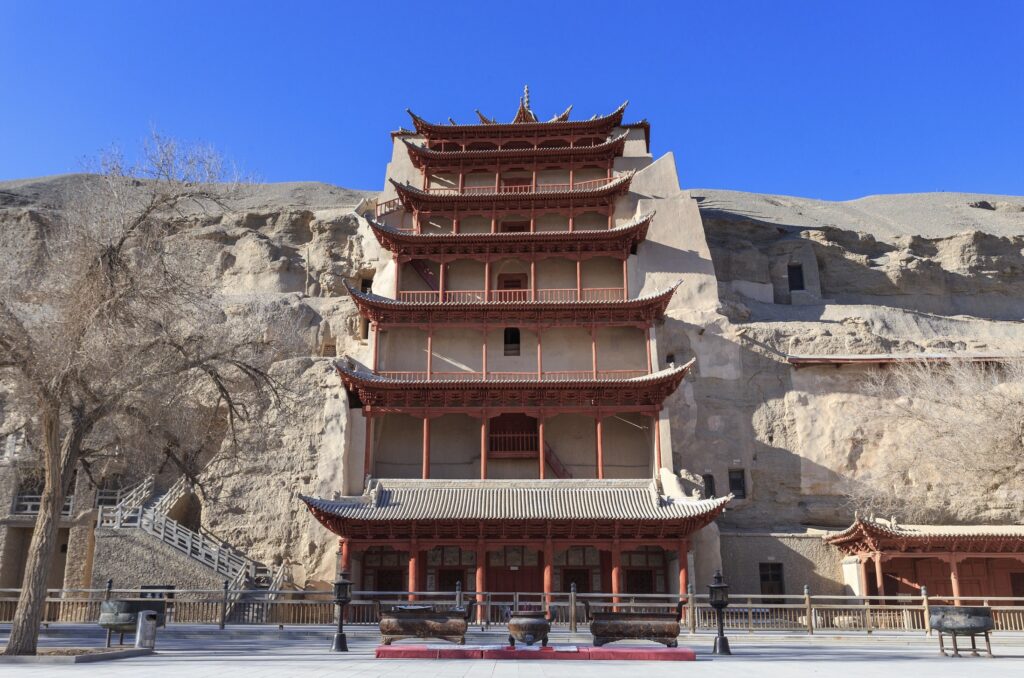
History Background
The creation and development of the Mogao Grottoes at Dunhuang was closely related to the religious culture of the time and the prosperity of the Silk Road. In the early days, small caves were built here by monks from the Central Plains, and then the prosperity of the Silk Road attracted a large number of believers and donations, making the Mogao Grottoes gradually develop into a large center of Buddhist art.
Artistic Merit
The artistic value of the Mogao Grottoes at Dunhuang is mainly reflected in their rich murals and sculptures, which are not only of great visual beauty, but also carry deep historical and cultural significance, showing the evolution of Chinese Buddhist art over the past thousand years.
Fresco art
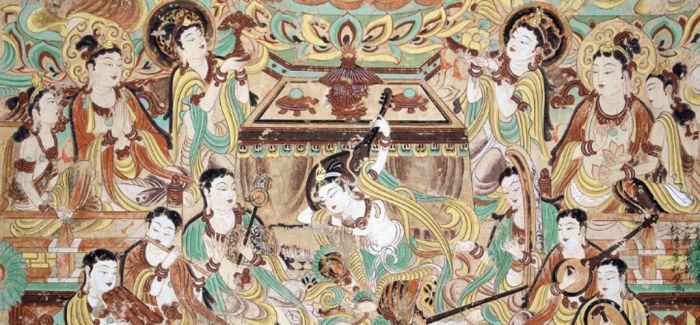
Covering an area of 45,000 square meters, the Mogao Caves are one of the world’s largest repositories of Buddhist art. These murals are known for their exquisite and detailed workmanship, rich colors and vivid expressiveness, and cover a wide range of topics, including classic Buddhist stories, myths and legends, historical events, social life, natural landscapes, and a variety of decorative motifs.
- Teachings and Stories: A large number of the life stories of the Buddha are depicted in the murals, such as the Story of the Birth of the Buddha and the Picture of Nirvana, through which the teachings and spirit of Buddhism are conveyed to the believers.
- Characters: The paintings contain lifelike characters, which not only show the style of dress and identity characteristics of the time, but also demonstrate complex emotions and personalities through the expressions and movements of the characters.
- Customs paintings: The murals also contain a large number of images depicting the social life and customs of the time, such as weddings, celebrations and daily life, which provide precious visual materials for the study of ancient society.
Sculpture
The Mogao Caves are equally rich in sculpture, including a large number of statues of the Buddha, Bodhisattvas, and beings such as the Heavenly Kings and Lohan. Most of these sculptures are set in niches in the caves, complementing the murals.
- Art of modeling: The sculptures are well modeled, from the serious and solemn Buddha statue to the kind and amiable Bodhisattva, each sculpture has its unique artistic style and cultural connotation.
- Techniques and materials: a variety of techniques are used, such as clay, stone and wood carving, and the surface is mostly painted, with rich colors and vivid images.
- Cultural fusion: In the style of the sculptures, the artistic characteristics of combining the East and the West can be seen, which not only reflects the cultural exchanges along the Silk Road, but also shows Dunhuang’s important position as a center of cultural fusion.

Find Dunhuang Here
Explore More
Continue your exhibition journey