
Welcome to Stirling Castle
Stirling Castle, with the weight of the past and the hope of the future, stands forever in the heart of Scotland, telling the story of history
Overview
Stirling Castle is one of the most iconic castles in Scottish history, located in the Highlands region of central Scotland. Built in the 12th century as a royal palace for the monarchs of Scotland, it has witnessed many important events in Scottish history, including the victory of William Wallace and the coronation of Queen Mary. Perched on a towering cliff overlooking the city of Stirling and the Stirling Bridge, the castle offers magnificent views. Today, Stirling Castle attracts thousands of visitors as a historic site and tourist attraction, showcasing Scotland’s long cultural heritage and architectural excellence.
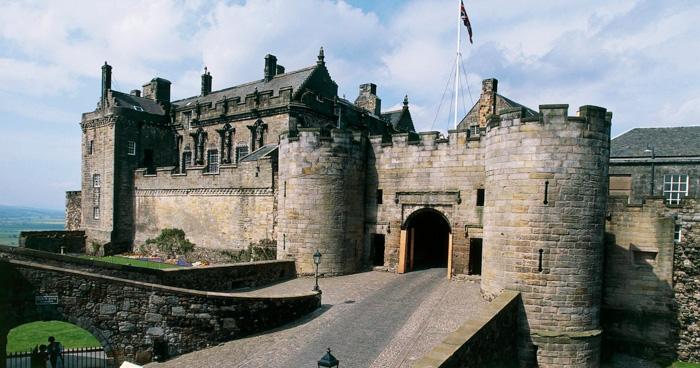
Background
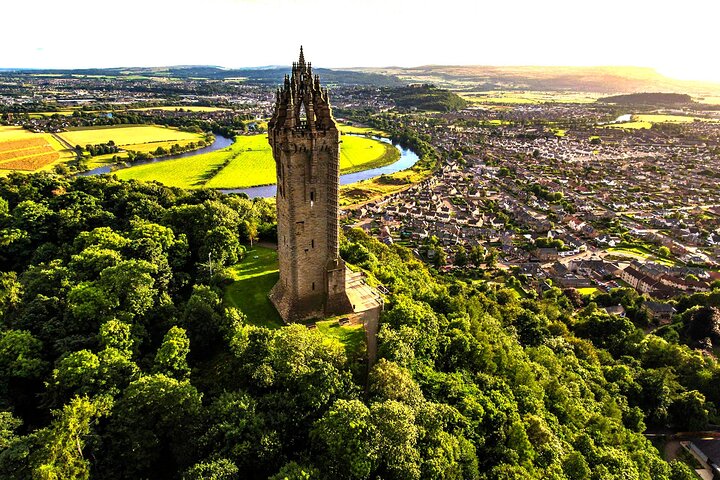
William Wallace’s Victory
In 1297, the Scottish hero William Wallace led the Scottish army to battle near Stirling Bridge against the English army. Despite being outnumbered, Wallace cleverly utilized the terrain and tactical advantages to successfully defeat the English forces. This victory inspired the Scottish people and became a crucial turning point in the Scottish independence movement.
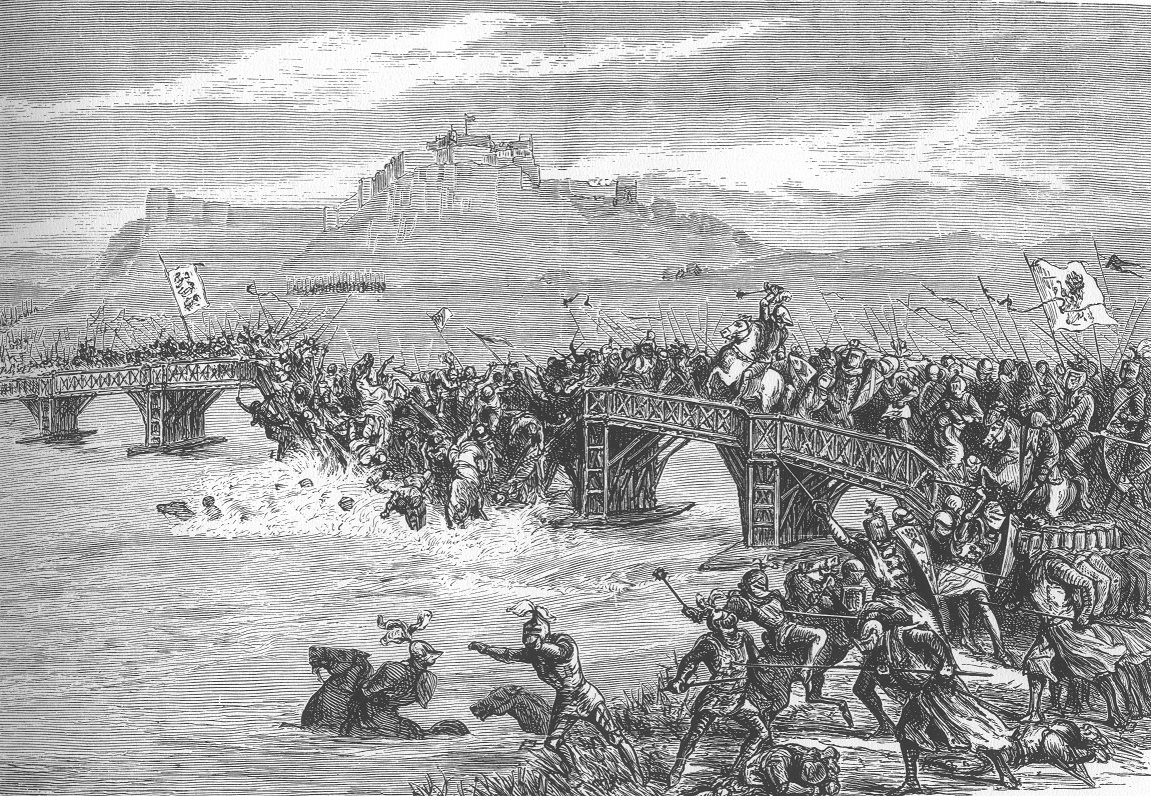
The Battle of Bannockburn
In 1314, at Bannockburn, near Stirling Castle, King Robert the Bruce of Scotland led the Scottish army in a famous battle against the English army. Although the English army outnumbered the Scots, Bruce managed to use tactical and topographical advantages to achieve a stunning victory that cemented Scotland’s independence
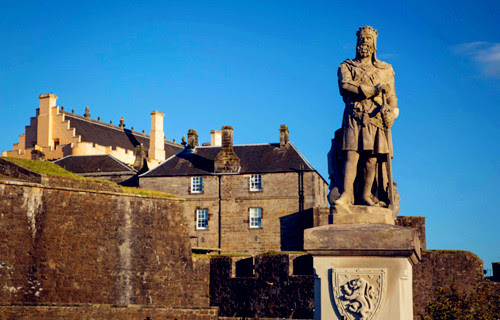
The Coronation of Queen
In 1542, Mary Stuart, known as Mary, Queen of Scots, was born at Stirling Castle. In 1543, she was crowned as the Queen of Scotland within the castle, becoming one of the most influential monarchs in Scottish history. Mary’s life was filled with political intrigues and family conflicts, and her reign had profound impacts on Scotland.
Explore Stirling Castle
Stirling Castle consists of the following main parts:
Great Hall:
This is a grand hall that was used for court feasts and banquets. It is one of the core buildings of Stirling Castle and the main venue for social and political events.
The Royal Palace:
This is the residence of the King and Queen of Scotland and includes a private sitting room, bedroom and meeting room. The royal palace is lavishly decorated to demonstrate the power and status of the royal family.
St. Michael’s Chapel:
Built in the 15th century, it is a Gothic church that was once the religious center of Stirling Castle. Many old tombstones and works of art are preserved in the church.
The Forework:
A defensive tower at the entrance to the castle, used to monitor and defend against incoming enemies. It is part of the castle’s defense system and performs important defensive tasks.
Queen Mary’s Tower:
This tower was once the residence of Mary Stuart, Queen of Scots. The tower contains several historical artifacts and personal items associated with Queen Mary.
The Royal Arsenal:
This is a military facility at Stirling Castle used for the manufacture and storage of weapons, armour and other military equipment. It plays an important role in the castle’s defense and military operations.
GET IN TOUCH
View Panoramic Image
Video
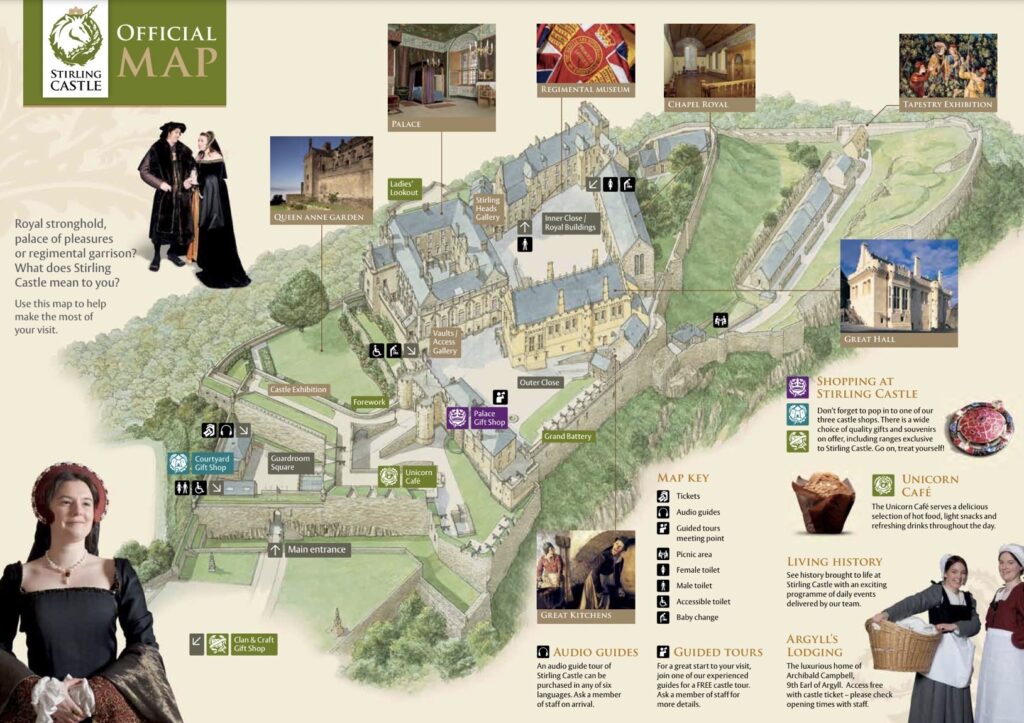

Collections In The Castle
View 3D modeling of the collections
Collections In The Castle.
Stirling Castle’s collection includes a rich heritage of Scottish history, culture and art. Among them, the most eye-catching are the treasures of the Scottish royal family, such as the crowns of the Kings and queens of Scotland, gems and jade. These royal treasures show the glory and power of the Scottish monarchy and attract countless visitors to see them.
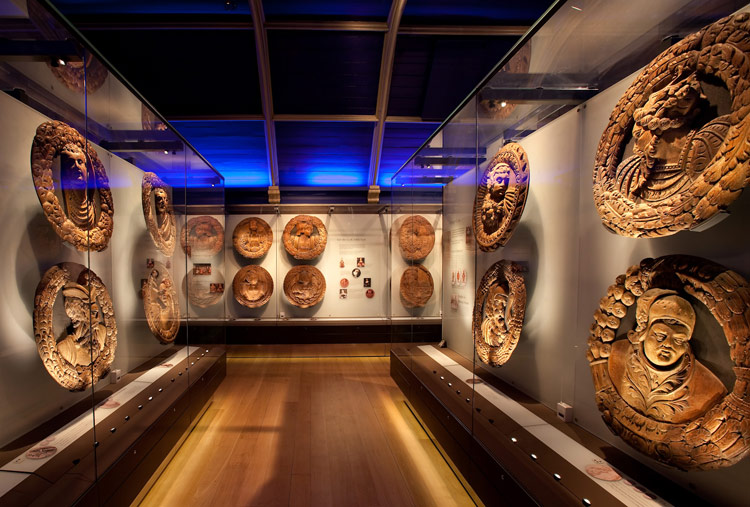
In addition, Stirling Castle has a unique art collection, including the Stirling Heads. These are a series of carved wooden heads from the 15th and 16th centuries, probably used to decorate the castle’s palace or other venues. These head statues have lifelike expressions and fine details, reflecting the characteristics and style of the Scottish royal family at the time.
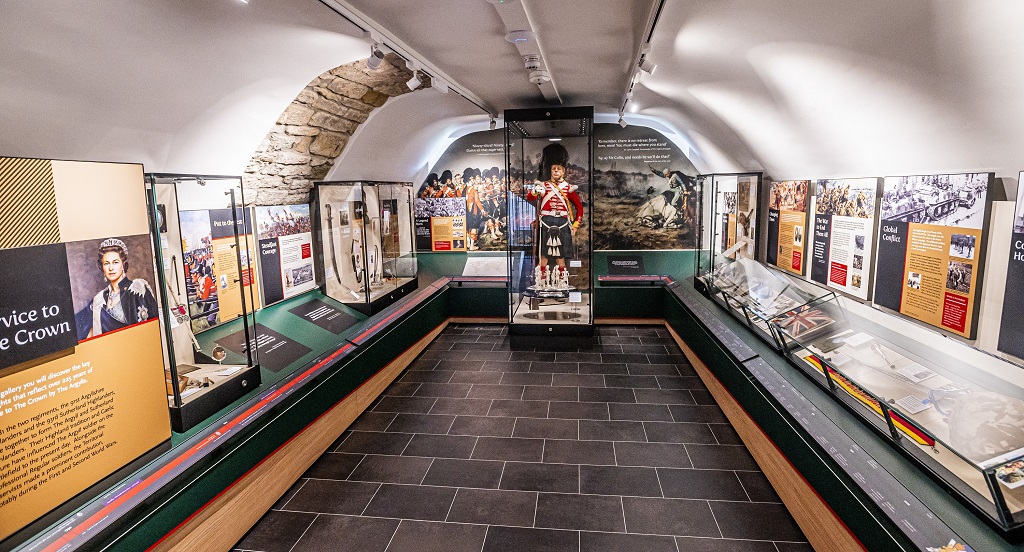
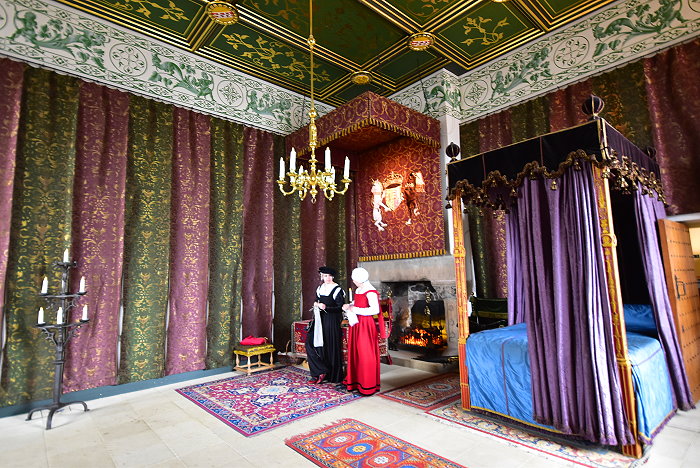
In addition to the above treasures and works of art, Stirling Castle also houses many historical artfacts and ornaments, such as ancient weapons, armor, battle supplies and knight’s equipment, as well as equipment for interacting with visitors. These artfacts and ornaments reflect important events and people in Scotland’s history, offering visitors a glimpse into Scotland’s past.
Climate Threats


The effect of temperature changes: Stirling Castle is mainly composed of stone and brick structures, which are susceptible to thermal expansion and contraction caused by temperature changes. This phenomenon causes the minerals on the surface of the building to expand or contract due to seasonal temperature changes, daily temperature changes, and direct sunlight. In addition, temperature changes can also lead to changes in humidity, which in turn affects the humidity inside the castle, and too high or too low humidity can cause damage to the castle’s architecture or internal artifacts.
The impact of precipitation:
Stirling is located in a temperate maritime climate zone with high rainfall throughout the year, which further increases the erosion of the castle. Especially since the 21st century, due to the development of industry and the increase of automobiles, the use of fossil fuels has increased significantly, resulting in the frequent formation of acid rain. Acid rain contains sulfur dioxide and nitrogen oxides, which react with water to form sulfuric and nitric acids. Their presence further lowers the PH of rainwater, causing acid rain.
Biological impact:
Microorganisms may grow on castle walls and internal artifacts, further accelerating the corrosion of artifacts. In addition, proper humidity conditions may lead to termite attacks, resulting in damage to the wooden structure inside the castle.
How should we as visitors protect
the castle
Visitors to Stirling Castle should observe the rules of access, reduce environmental impact and take an active part in the preservation of cultural heritage by supporting conservation projects and disseminating historical knowledge.
Responsible access behavior
Observe the rules and protect the heritage: Visitors should strictly follow the rules and guidelines set by Stirling Castle and its governing body, including not touching the artifacts and structures on the heritage site and following the designated visit paths. In addition, photography rules, such as the prohibition of the use of flash lights, should be observed to avoid potential damage to cultural relics.
Reduce environmental impact and waste management: Visitors should try to use public transportation to get to the castle to reduce carbon emissions and environmental footprint. During the visit, make sure that no litter is left in or around the castle, take it away and dispose of it properly in the recycling bin.
Cultural heritage support and educational promotion
Support conservation and maintenance projects: Visitors are encouraged to participate in or donate to the castle’s conservation and maintenance projects to help sustain the operation and preservation of the historic site. These programs often rely on public donations and volunteer support.
Promote knowledge and communication awareness: Visitors should educate themselves about the historical and cultural importance of Stirling Castle and spread this knowledge to others. Raising public awareness and respect for historic sites is a key part of their conservation efforts.
Braveheart
Introduction
Braveheart is a passionate historical movie in and around Stirling Castle in Scotland. The film depicts the story of the Scottish national hero William Wallace, showing the heroic course of the Scottish people’s fight for freedom and dignity
In the film, Stirling Castle became one of the symbols of the Scottish independence movement. William Wallace led the Scottish peasants and nobles against the brutality of English rule, and they showed amazing courage and determination in the battle near Stirling Castle. The grandeur and majesty of Stirling Castle provided a solid backing for the resistance of the Scottish people and became the center and symbol of their struggle.
Many scenes in the film were shot in and around Stirling Castle, including key battles and decisive scenes. The scenes create an epic atmosphere and demonstrate the emotion and determination of the Scottish people in their heroic struggle to defend their freedom. Stirling Castle, as the background of the film, presents the audience with a magnificent picture of Scotland’s history and becomes an indispensable element in the film.
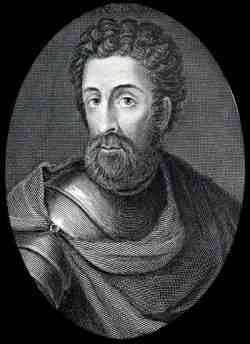
“If you make enemies with a man like me, you must be prepared to follow through to the end”.
– William Wallace

They may take our lives, but they’ll never take our freedom!
GET IN TOUCH WITH STIRLING CASTLE
Schedule a Visit
Sources
Image1:https://guantrips.com/scottish-castle/
Image2:https://www.bangli.uk/post/61246
Image3:https://cn.tripadvisor.com/AttractionProductReview-g186525-d18342195-Wallace_monument_Stirling_Castle_Linlithgow_Palace_Luxury_MPVEdinburgh_Scotland.html
Image4:https://www.kaiwind.com/n1790/c266667/content.html
Image5:http://cbntravel.com/info/106.aspx
Image6:https://www.historicenvironment.scot/visit-a-place/places/stirling-castle/
Image7:https://www.scottishfield.co.uk/uncategorized/military-treasures-are-preserved-at-stirling-castle/
Image8:https://www.clicknetherfield.com/case-studies/by-case/?case=stirling-castle
Image9:https://blog.udn.com/kocj/179644269
Image10:https://www.justwatch.com/uk/movie/braveheart
Image11:https://en.wikipedia.org/wiki/William_Wallace
Interactive Map:Google Maps Street View, Google Maps, https://www.google.com/maps/@56.1231227,-3.9465115,2a,75y,286.78h,83.41t/data=!3m6!1e1!3m4!1sNscJBgHVg3v9_Rtdm2uy9g!2e0!7i13312!8i6656
Video:YouTube video, YouTube, https://youtu.be/vkUC3lDu_Ys?si=TH0avXM8Xqv0oHa5
3D Model:Sketchfab collection, Sketchfab, https://sketchfab.com/HistoricEnvironmentScotland/collections/stirling-castle-6d8f95061efb43b4a116f3e0e081f416
Website:Historic Environment Scotland webpage, Historic Environment Scotland, https://www.historicenvironment.scot/visit-a-place/places/stirling-castle/
Reference1:William Wallace. (n.d.). In Wikipedia. Retrieved May 1, 2024, from https://en.wikipedia.org/wiki/William_Wallace
Reference2:The Castle Guy. (2024, March 14). Stirling Castle: The reason for the Battle of Bannockburn. Retrieved May 1, 2024, from https://thecastleguy.co.uk/blog-post/stirling-castle-reason-battle-bannockburn/
Reference3:Mary, Queen of Scots. (n.d.). In Wikipedia. Retrieved May 1, 2024, from
https://en.wikipedia.org/wiki/Mary,_Queen_of_Scots
Reference4:Braveheart. (n.d.). In Wikipedia. Retrieved May 1, 2024, from https://en.wikipedia.org/wiki/Braveheart
Reference5:Sesana, E., Gagnon, A.S., Ciantelli, C., Cassar, J. and Hughes, J.J., 2021. Climate change impacts on cultural heritage: A literature review. Wiley Interdisciplinary Reviews: Climate Change, 12(4), p.e710.
Reference6:Günlü, E., Pırnar, I., & Yağcı, K. (2009). Preserving cultural heritage and possible impacts on regional development: Case of Izmir. International Journal of Emerging and Transitional Societies, 1(1), 1-15. Retrieved from https://www.researchgate.net/publication/270337742