Digital Heritage Exhibition of a World Heritage Area at the Home of Long White Cloud
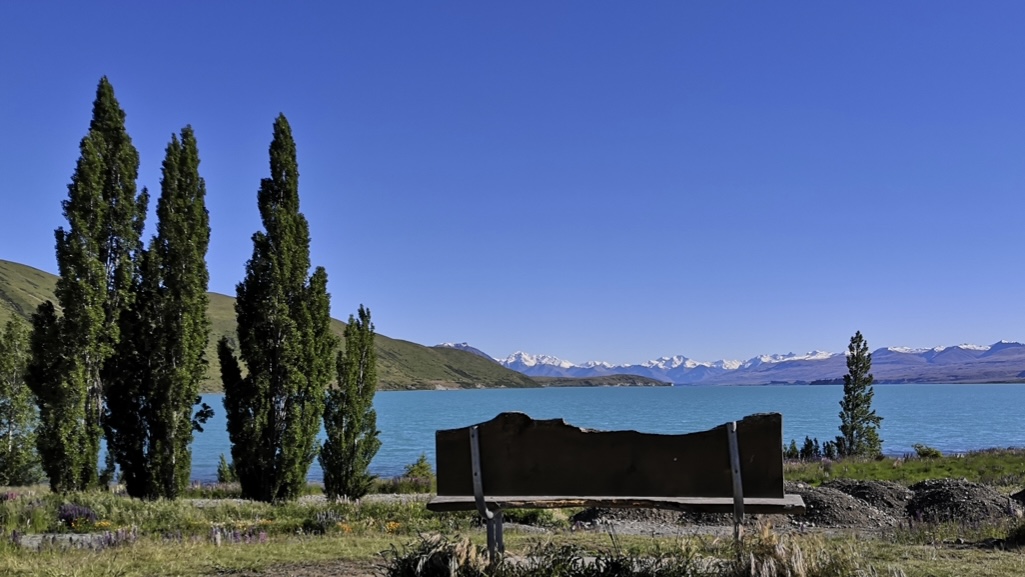
Mount Cook National Park in Te Wahipounamu seen from Lake Tekapo. Photo by yx66.
“New Zealand is a place of spectacular and diverse landscapes. You’ll see things here that you won’t see anywhere else in the world.”
By 100% Pure New Zealand
Introduction of Te Wahipounamu

Te Wahipounamu is located in the south-west of New Zealand’s South Island. It has become a World Heritage Area by UNESCO since 1990. Te Wahipounamu is an untouched large natural heritage site that covers 10% of Aotearoa/New Zealand. It has a variety of natural landscape features, such as glaciers, fjords, peaks, valleys, alpine lakes etc. These stunning landscapes are located extensively in four national parks: Westland National Park, Mount Cook National Park, Mount Aspiring National Park and Fiordland National Park.
Westland Tai Poutini National Park

The West Coast of New Zealand’s South Island is the home of glaciers and wetlands. Westland National Park includes Fox Glacier and Franz Josef Glacier are the highlights in this area, which are known for their massive size and fast movement. They are both easily accessible as their ends reach the approximate sea level. A typical way to access is taking the helicopter and walking on the glacier after landing.
Westland Tai Poutini is a center of rainfall, with approximately 5000mm rainfall every year. Rainforest and wetland are located at the feet of the mountain range. Various endangered creatures live there. New Zealand’s rarest kiwi bird, rowi, lives there. Besides, this is also the home for endangered kamana/crested grebe and kotuku/white heron.
Aoraki/Mount Cook National Park

Aoraki/Mount Cook is the highest mountain range in New Zealand’s Southern Alps. The main snowy peak has a height of 3724m and there are in total 22 peaks that are over 3000m. There are two major glaciers nearby, the Hooker Glacier and Tasman Glacier.
Unique ecological system is presented in the national park. There are trees like beech, alpine scrub, tree daisies, and celery pine. Birds have a high variety, including kea, bush hawk, pigeon, and warbler etc. Animals include the tahr and feral cat etc.
Mount Cook National Park is crucial for hill climbing field because Sir Edmund Hillary practised his climbing skills here in 1948 before challenging Mount Everest.
In the Māori myth, Aoraki is the son of the sky father Rakinui. One day his brothers and him went to explore Papatūānuku (sky and ocean) by taking their waka (canoe). In the Southern Ocean, they decided to return home, the heaven. Their waka would take off in the air. However, accident happened that their waka fell into the ocean and started sinking. Aoraki climbed onto the back of the waka to avoid drowning. They became stones in the ocean. The waka turned into the South Island, and the bodies of brothers became the Southern Alps. Aoraki is the highest one among them.
Māori legend is important for local residents to spiritually connect to the nature.
Mount Aspiring National Park

Mount Aspiring National Park is located in the Otago Region of New Zealand. It is a wild area between the Haast River and Fiordland National Park. Mount Aspiring has a height of 3027m, which is the only one reaches over 3000m outside Mount Cook National Park. The area has beautiful mountains, glacier valleys, waterfalls etc.
Local endangered animals, e.g. bats can be found in the park. Bush birds are common, such as South Island robin and yellow-crowned parakeet. Regarding trees, beech and ribbonwoods are the most common ones.
Fiordland National Park
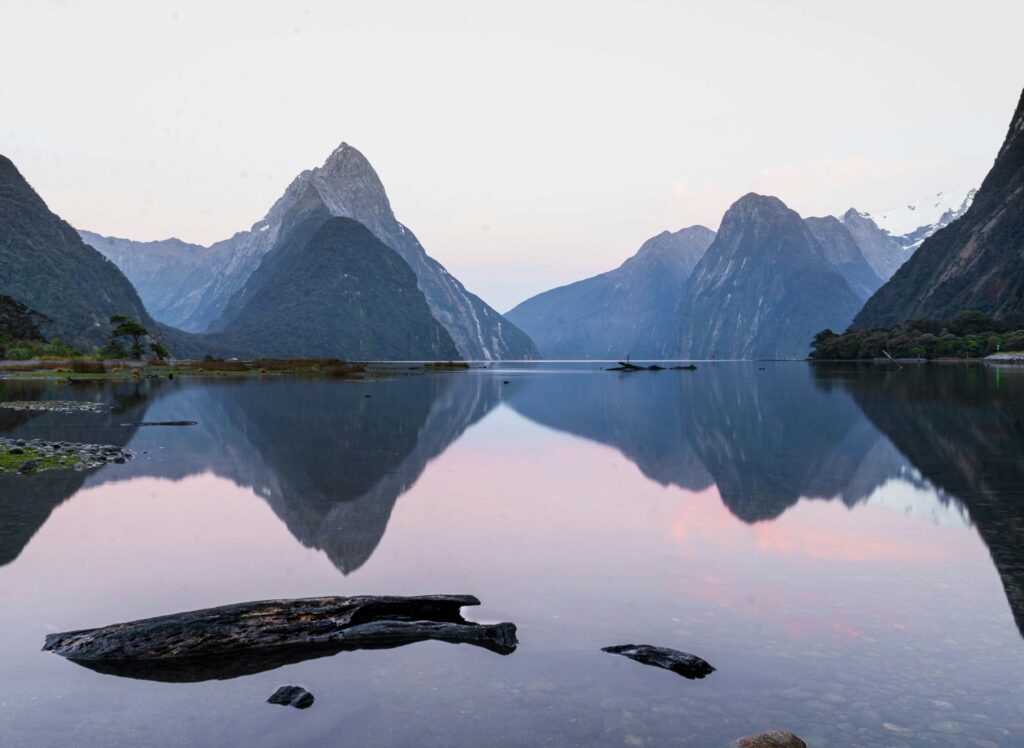
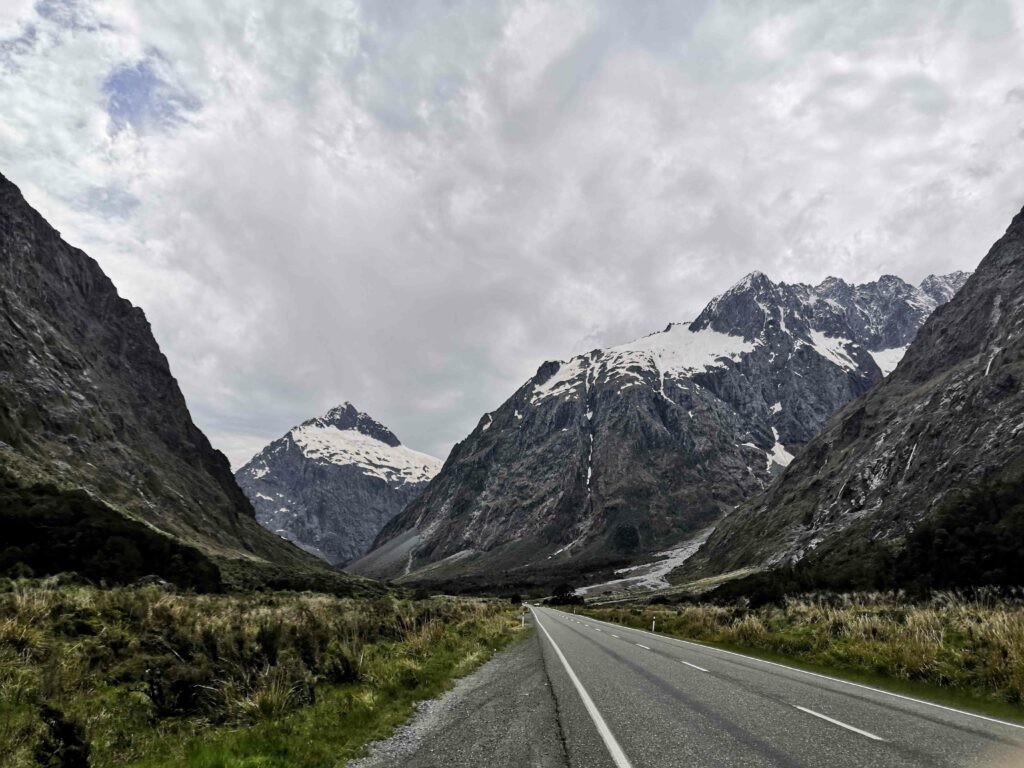
Welcome to one of the most famous icons of this country, Fiordland National Park! It locates at the most southern part of Te Wahipounamu. Fiordland has a unique landscape of fiords (“The Kiwi way of writing fjords”). These are U-shape valleys which were shaped under the enormous weight of ancient glaciers. After the disappearance of the glaciers, the sea water entered the valley and formed what we see today. There are 14 fiords in the park. The most famous one is Milford Sound. Milford Hiking Track is one of the top-tier hiking routes in New Zealand and worldwide. Doubtful Sound is another fiord that can be accessed.
“The Eighth Wonder of the World.”
By Rudyard Kipling when commenting on Milford Sound
Fiordland is also known for its waterfalls, valleys, lakes and rainfall. Along the State Highway 94, hundreds of waterfall can be seen in the valley. The Mirror Lakes is a stunning stop along the journey.
Fiordland is a heaven for hiking. Milford Track is one of the nine Great Walks in New Zealand. Starting from Lake Te Anau to Milford Sound, this 50km-long track leads visitors through the national park and explore this stunning landscapes. It is a great way to explore the landscapes and ecosystem deeply.
Supplementary Materials
Climate Threat
“New Zealand has been in a biodiversity crisis for more than 100 years – but the effects of climate change could tip our internationally important species over the edge.”
By Erica Willkinson, Acting Threatened Species Ambassador and Sam Parsons, Department of Conservation Programme Lead – Climate Change Adaptation
“The disappearance of snow and ice for some of New Zealand’s glaciers is clear and irreversible, at least within our lifetimes. Many glaciers we survey now will simply vanish in the coming decades.”
By Andrew Lorrey, Andrew Mackintosh and Brian Anderson
Climate Threats
Our glaciers are under significant risks. The annual glacier survey by NIWA shows that from 1977 to 2017, Southern Alps have lost 30% of its glaciers. At the current rate of warming, New Zealand’s glaciers will vanish in 2100.
New Zealand’s ecosystem is unique but significantly vulnerable from climate change. Climate change makes the biodiversity crisis in this country more serious.
“Our forest floors are hardening as temperatures rise and drought conditions hit. This means species such as our iconic kiwi are struggling to probe for food; the birds are having to venture out of their habitat for sustenance, leaving them vulnerable to cars, dogs or simply baking in the sun.”
“For the endemic long-tailed bat which roosts in trees, warmer winters may mean they spend less time in torpor (a state similar to hibernation). They may wake through winter more often, and either be unable to find food or be left vulnerable to the hungry rats surviving through warmer seasonal temperatures.”
“In the alpine zone, increasing temperatures are allowing predators like rats and mice to get further up the mountains, allowing them to prey on the species previously out of their reach, such as rock wren, an alpine bird. These warming conditions are also allowing invasive plant species to grow at higher altitudes, reducing available alpine habitat. As temperatures rise, the species calling the alpine region home face an uncertain future.”
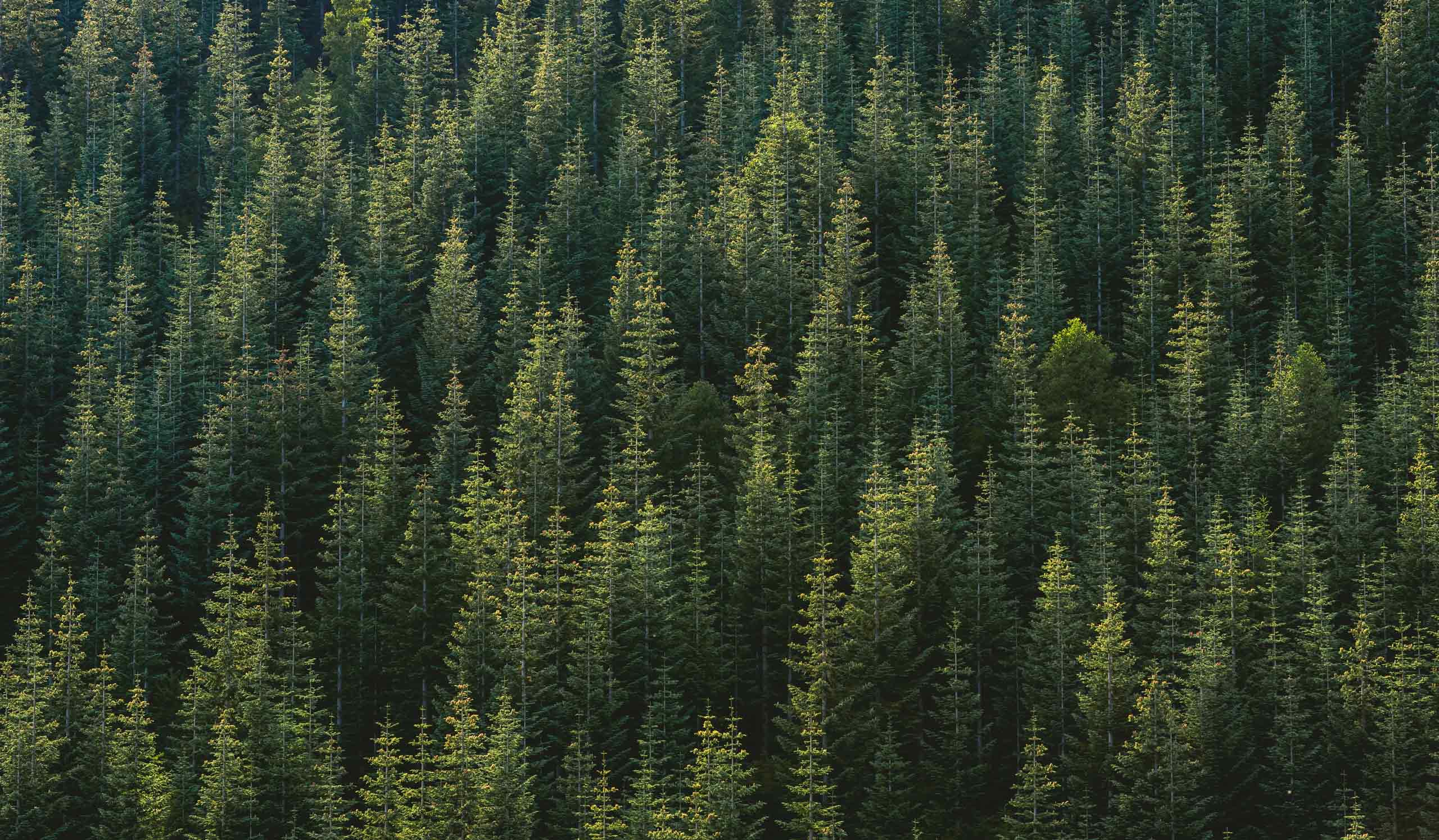
Loss has already happened.
But we should do something to protect this beautiful land and its species.
Address UN Goals 2030
https://sdgs.un.org/goals
Goal 7: Ensure access to affordable, reliable, sustainable and modern energy for all.
We should pushing the development of sustainable energy in all fields further and stronger, especially in solar, energy storage and electric transport (EV).
Goal 14: Conserve and sustainably use the oceans, seas and marine resources for sustainable development.
Ocean resources are crucial for New Zealand. We must ensure a balanced and healthy ecosystem in the ocean.
Goal 12: Ensure sustainable consumption and production patterns.
Sustainable consumption reduces the carbon footprint or maintains at a balanced level. Do not waste energy as we cannot consume energy in a unlimited way. Increase the technological efficiency of energy utilisation.
Goal 15: Protect, restore and promote sustainable use of terrestrial ecosystems, sustainably manage forests, combat desertification, and halt and reverse land degradation and halt biodiversity loss.
New Zealand is a bio-diverse country with a large variety of unique island species. Many of them have been extinct due to species invasion and under significant threat under climate change. We must do our best effort to protect them and ensure our uniqueness. Introducing laws and authority act to enforce the best effort for wildlife protection.
Goal 13: Take urgent action to combat climate change and its impacts.
Ensure all the climate related action are done effectively and efficiently.