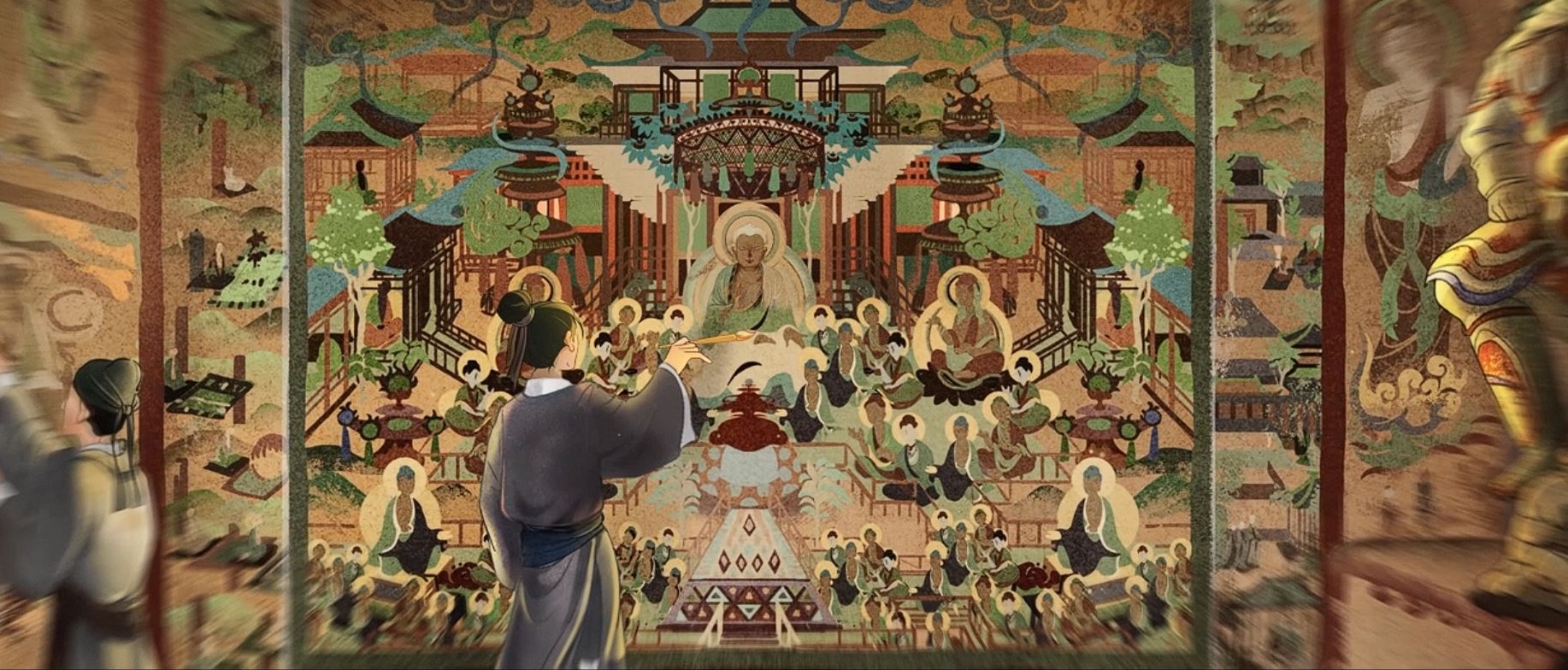
Welcome to Mogao Caves
screenshot from digital library cave
Near a desert in northwest China, there lies a cluster of caves that were relatively unknown. History picked a monk whose accidental discovery unveiled a cave with numerous valuable artefacts, amazing the world…
In this exhibit,
- You can explore the Mogao Caves, particularly the murals within the caves, from multiple perspectives.
- Be aware of the climate challenges that this heritage is facing and the current solutions.
- Meanwhile, learn from this exhibit and the Dunhuang Academy about the contributions to the Sustainable Development Goals.
Explore
Overview
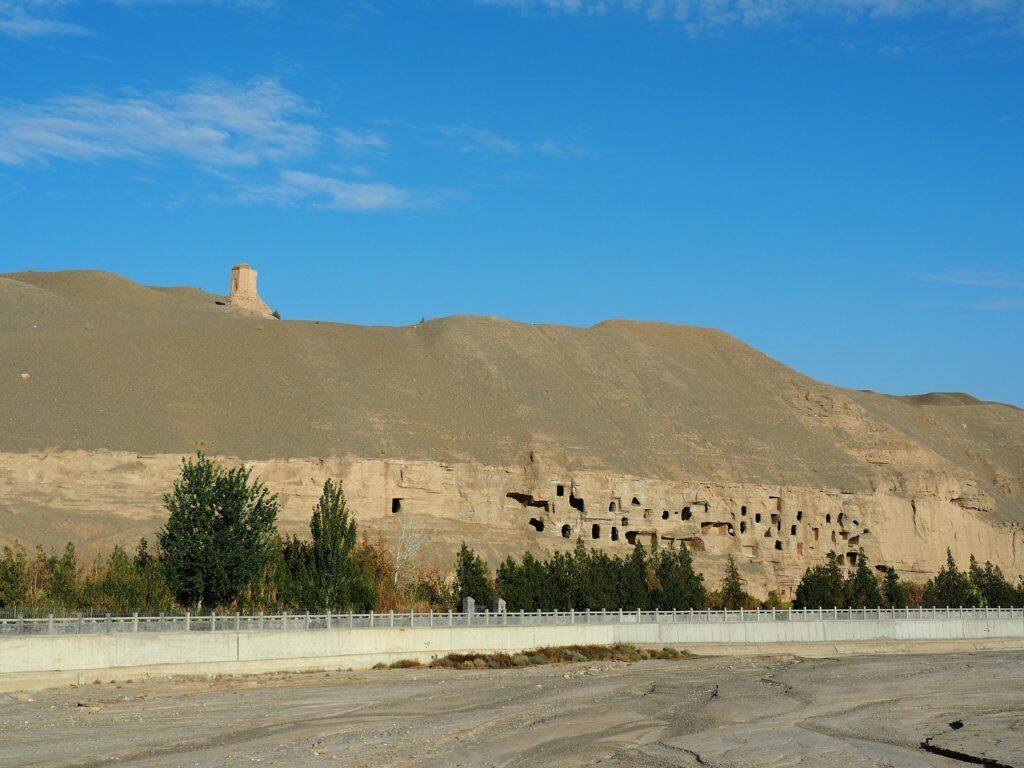
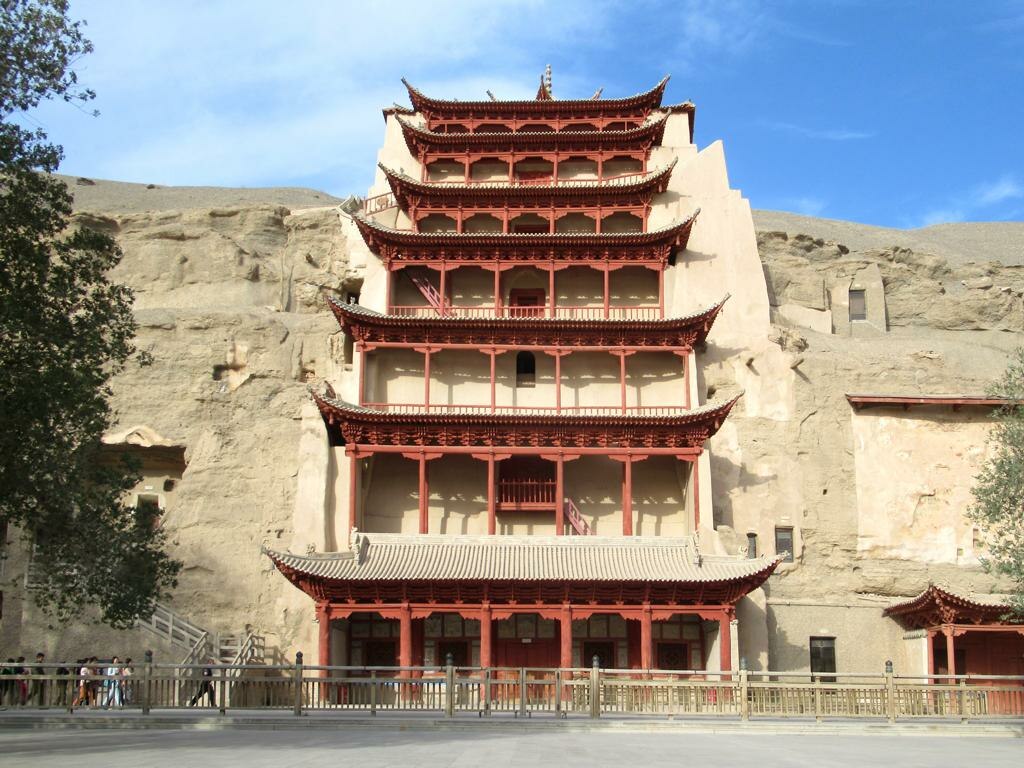
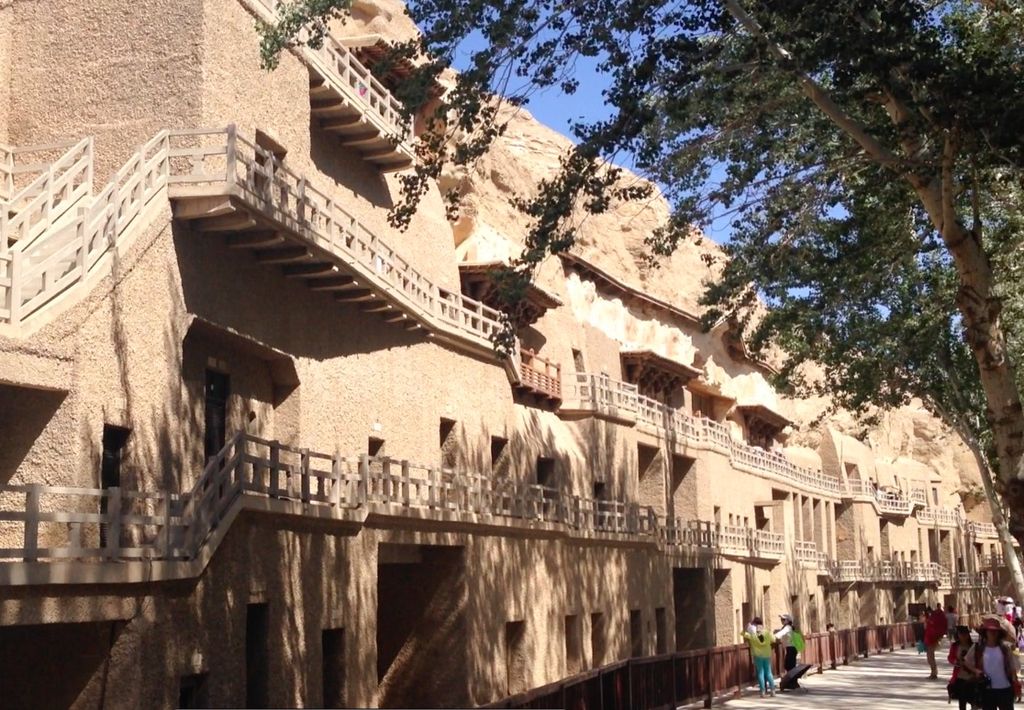
The Mogao Caves is a treasure of world cultural heritages, which has been listed in the World Heritage List of the United Nations Educational, Scientific and Cultural Organization (UNESCO).
It is located in Dunhuang, a city in the northwest of China, and is famous for the numerous exquisite murals within the caves, with a history spanning thousands of years.
Musical Instruments

image 4
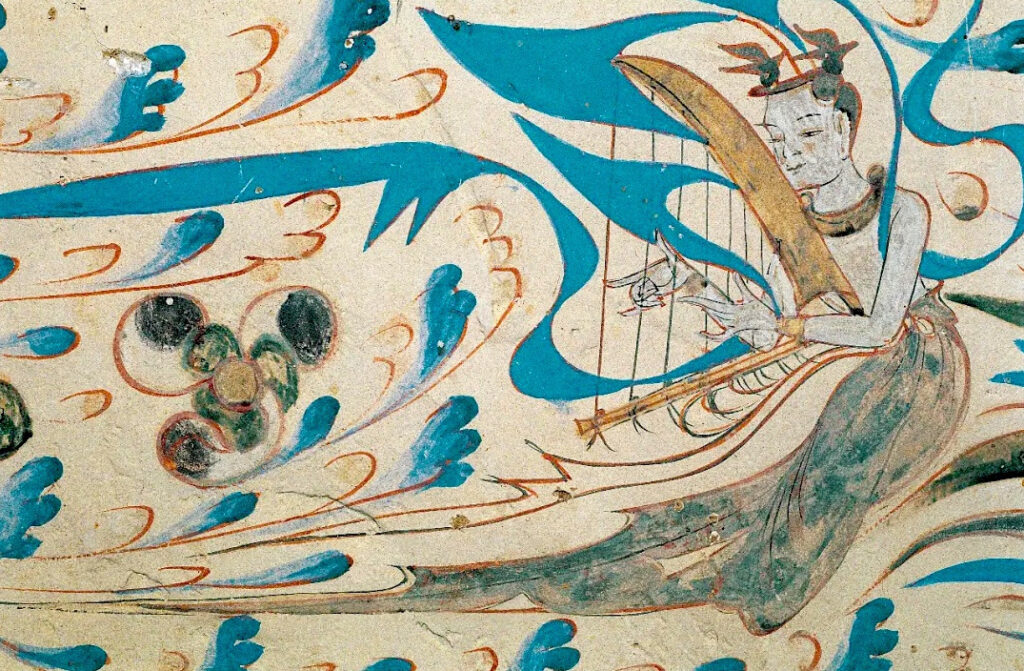
image 5
A Famous Mural Story
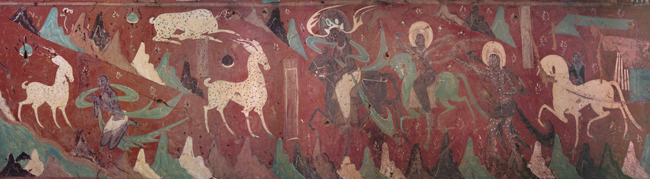
image 6
One day, a beautiful nine-colored deer heard cries for help from a river and found a drowning farmer. Despite the danger, the deer rescued the farmer. The grateful farmer wanted to repay the deer, but it only asked him not to reveal its whereabouts. Later, tempted by the emperor’s reward, the farmer broke his promise. The emperor, moved by the story of the deer, forbade further harm to it, while the farmer died for breaking his promise.
Bag Style — Similar to Today?
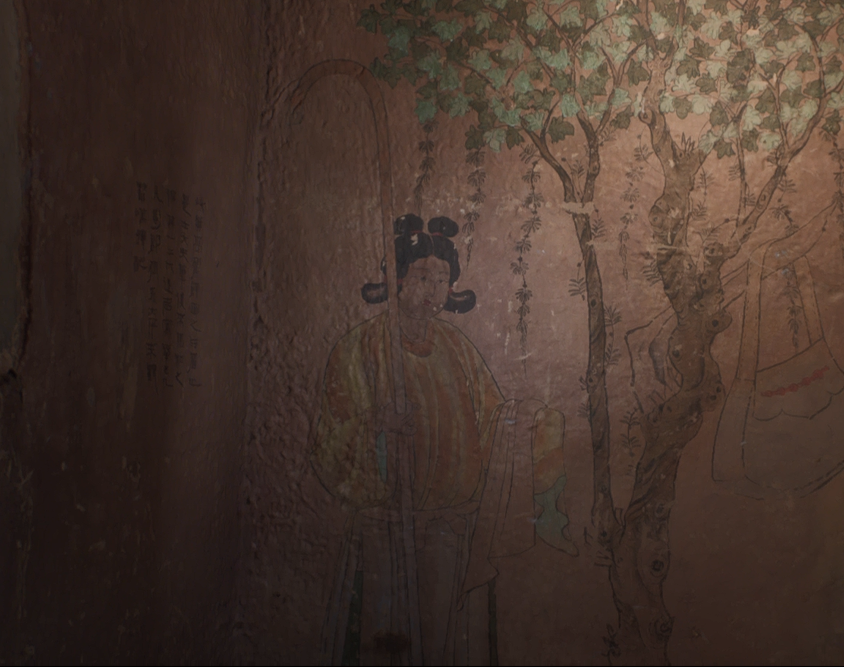
Look at the bag in the right…
Is it very similar to our current crossbody bags?
But it comes from a thousand years ago!
(screenshot from digital library cave )
Animals
Let’s see what animals are in the murals. Do they look the same as they do now?
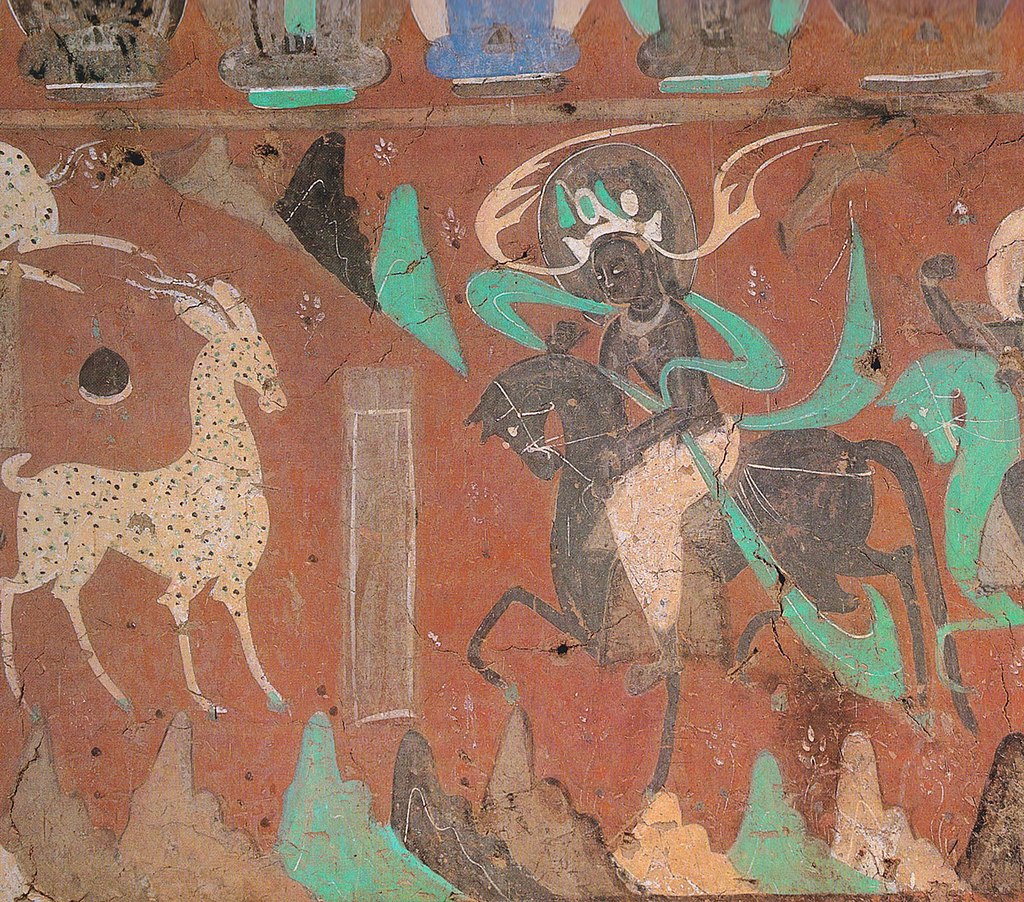
image 7
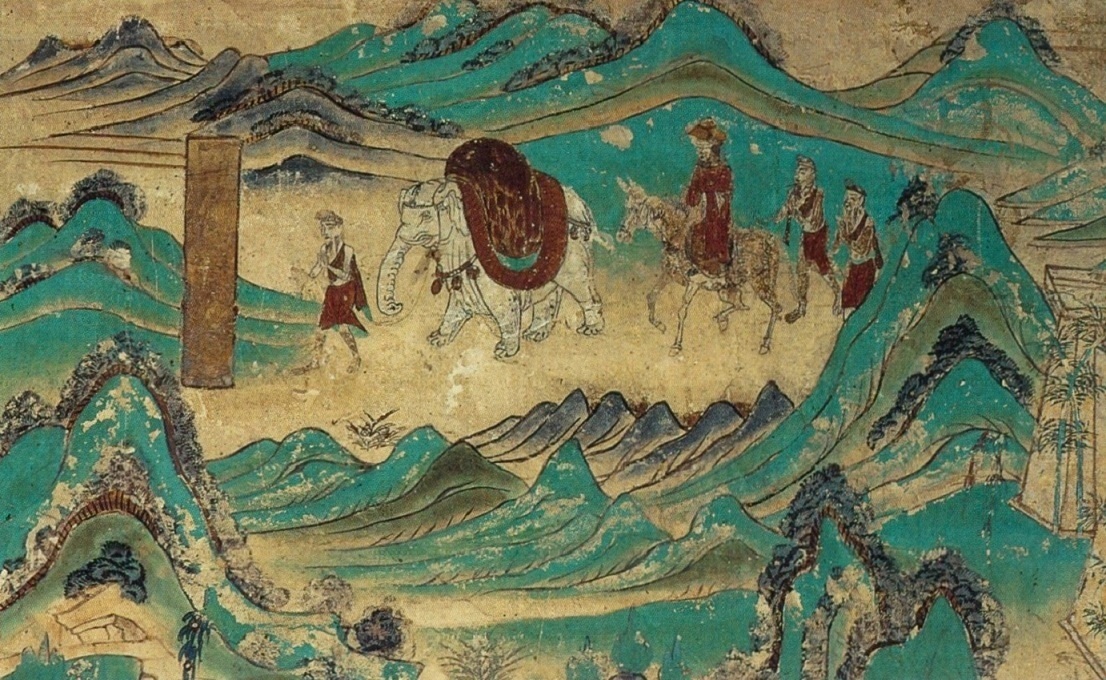
image 8
A Game 🎮!
Here is a game that serves as a gateway to ancient China.
Immerse yourself in the stories of a famous cave!
Climate Challenges
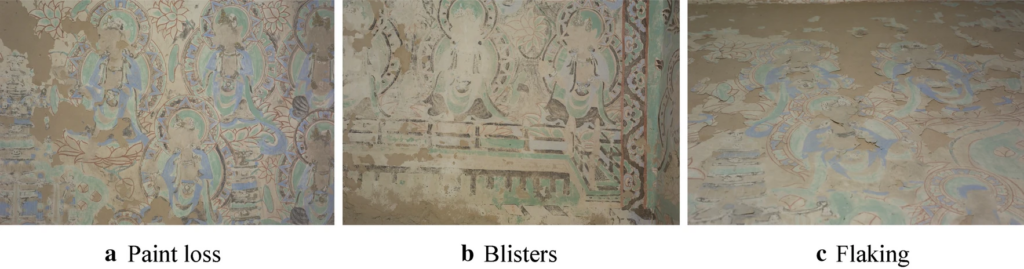
image 9
1. Rainfall
Direct Impact
- Rainwater infiltration can leave distinct signs of water in murals
Indirect Impacts
Rainfall can affect the humidity in caves, causing following issues to the murals
- Salt damages: the following short videos can demonstrate the salt damages.
- Microorganisms hazards: some bacteria can produce some pigments that affect the pigments of murals.
- Insect: rainfalls can contribute to the insect’s reproduction, and the insects may leave their excreta on murals.
2. Wind-borne sand
Due to the Mogao Caves’ location, they are susceptible to dust storms, which can pose a hazard to the murals. Murals’ pigments can peel off once the accumulation of dust particles reaches a certain degree.
3. Flooding
- Painting within the ground level cave was completely lost due to the periodic flooding historically
- Washing away the only road leading to the site
4. Earthquake
- Murals can be shaken down
- Statues can be smashed
Solutions
1. Digital Preservation
Dunhuang Academy provides a wealth of digital resources collected through digital collection technologies for the public.
- Resource Library : Enjoy a panoramic tour of the caves through interactive maps, appreciate sculptures, wall and ceiling murals in dozens of caves, and learn about the history and meaning of these artifacts. Zoom in to explore details of the murals!
- Material Pool: You can find different categories of elements in the murals such as animals, folk customs, and architecture through high-resolution images. Try to zoom in to explore details of the murals!
2. Digital Journey
Online Experience
Dunhuang Academy provides the game. This game can take you back a thousand years, enabling you to explore the ancient past of a famous cave (i.e. cave 17, the library cave) in the Mogao Caves. You will engage in conversations with ancient people and participate in a series of interesting activities such as constructing the cave, transcribing scriptures, and painting murals.
You can download these VR games on Steam.
Offline Experience
When you visit the Mogao Caves in Dunhuang, you can immerse yourself in Cave 285 through VR equipment in the digital exhibition hall.
3. Digital Technology
- Environmental monitoring
The Dunhuang Academy put some advanced and precise monitoring equipment inside caves to monitor the temperature and humidity. Outside caves, the weather station continuously monitors meteorological information.
- Algorithm
A digital technology uses a LIBS-based spectral matching algorithm in identifying unknown pigments on real Mogao cave’s mural debris surfaces. This makes important contribution to the conservation and restoration of murals.
4. Actions
Experts and Dunhuang Academy
- Sand control engineering: solutions to sand-related issues
- Daquan River flood control project: play a role in facing the flooding threat
- Chemical substances and traps: control the population of the insect that can invade caves
- Appropriate treatments: for removing soluble salts from the composition of murals and the supporting rock, mitigating salt damages
- Visit Capacity Limit: visit diversion specifies the number of visitors per batch and the maximum daily carrying capacity of the heritage site, as well as the tour process for visitors
Visitor CAN
- Follow the tour process
- Avoid littering
- Protect the murals and other artefacts: do not touch or damage them, and avoid taking photos or recording videos in caves.
- Participate in volunteer activities:such as narrating the stories of the Mogao Caves, cleaning the heritage site, and assisting with some restoration of artifacts.
Sustainable Development Goals

This exhibit designs two sections to show various climate challenges threatening the heritage and relevant solutions, aiming to raise public awareness about climate threats and relevant mitigation and adaptation strategies. This aligns with the target 13.3.
“Improve education, awareness-raising and human and institutional capacity on climate change mitigation, adaptation, impact reduction and early warning”
The exhibit presents a series of preservation efforts by the Dunhuang Academy and researchers, focusing on both digital and physical methods.
At the same time, the exhibit also lists some reasonable measures that visitors can take, which may inspire viewers to make their own efforts to protect the heritage.
“Strengthen efforts to protect and safeguard the world’s cultural and natural heritage”

Viewers can explore the Mogao Caves from multiple perspectives such as music, animals, and fashion. The online game allows viewers to immersive themselves in stories of a famous cave and learn about the history of the cave.
This can promote people to appreciate the unique culture in a more interactive and interesting way.
“By 2030, ensure that all learners acquire the knowledge and skills needed to promote sustainable development, including, among others, through education for sustainable development and sustainable lifestyles, human rights, gender equality, promotion of a culture of peace and non-violence, global citizenship and appreciation of cultural diversity and of culture’s contribution to sustainable development”

The sustainable Mogao Caves tourism industry contribute to the development of Dunhuang and to the employment of local residents.
“By 2030, devise and implement policies to promote sustainable tourism that(which) creates jobs and promotes local culture and products “
- Local residents: increased local employment and income.
- building hotels, inns, and pubs
- selling souvenirs
- Dunhuang city:
- increased international communication and cooperation
- economic growth from converting an agricultural economy to a tourism service economy
Images Sources:
image 1: Available: https://commons.wikimedia.org/wiki/File:Mogao_Caves_(23603212609).jpg Laika ac from UK, CC BY-SA 2.0 https://creativecommons.org/licenses/by-sa/2.0, via Wikimedia Commons, no modification.
.jpg)
image 2: Available: https://commons.wikimedia.org/wiki/File:Mogao_Cave_96_(28439101838).jpg David Stanley from Nanaimo, Canada, CC BY 2.0 https://creativecommons.org/licenses/by/2.0, via Wikimedia Commons, no modification.
.jpg)
image 3: Available: https://commons.wikimedia.org/wiki/File:S%C3%B6dra_grottorna_Mogaogrottorna.jpg Bairuilong, CC BY-SA 4.0 https://creativecommons.org/licenses/by-sa/4.0, via Wikimedia Commons, no modification.

image 4: Available: https://commons.wikimedia.org/wiki/File:Dunhuang_Cave_220_Pipa.jpg Public domain, via Wikimedia Commons

image 5: Available: https://commons.wikimedia.org/wiki/File:Western_Wei_Dynasty_in_Feitian,_Cave_285,_konghou_player.jpg Public domain, via Wikimedia Commons

image 6: Available: https://commons.wikimedia.org/wiki/File:Deer_King_Jataka_painting,_Mogao_Cave_257_west_wall_center.png 敦煌研究院, CC BY-SA 4.0 https://creativecommons.org/licenses/by-sa/4.0, via Wikimedia Commons, no modification.

image 7: Available: https://commons.wikimedia.org/wiki/File:Nine-colored_deer_jataka._Northern_Wei._Mogao_cave_257.jpg?uselang=en Ismoon (talk) 23:08, 1 February 2020 (UTC), CC BY-SA 4.0 https://creativecommons.org/licenses/by-sa/4.0, via Wikimedia Commons, no modification.

image 8: Available: https://commons.wikimedia.org/wiki/File:Xuanzang_returned_from_India._Dunhuang_mural,_Cave_103._High_Tang_period_(712-765)..jpg anonymus, Public domain, via Wikimedia Commons
..jpg)
image 9: Y. Zhang and Y. Wang, “Maintenance schedule optimization based on distribution characteristics of the extreme temperature and relative humidity of Cave 87 in the Mogao Grottoes,” Herit Sci, vol. 11, Aug. 2023, Art. no. 158.
SDG 8 icon: Available: https://commons.wikimedia.org/wiki/File:Sustainable_Development_Goal_08DecentWork.svg United Nations, Public domain, via Wikimedia Commons

SDG 11 icon: Available: https://commons.wikimedia.org/wiki/File:Sustainable_Development_Goal_11SustainableCities.svg United Nations, Public domain, via Wikimedia Commons

SDG 4 icon: Available: https://commons.wikimedia.org/wiki/File:Sustainable_Development_Goal_04QualityEducation.svg United Nations, Public domain, via Wikimedia Commons

SDG 13 icon: Available: https://commons.wikimedia.org/wiki/File:Sustainable_Development_Goal_13Climate.svg United Nations, Public domain, via Wikimedia Commons

References:
H. Liu, X. Wang, Q. Guo, M. Zhang, and Y. Wang, “Experimental investigation on the correlation between rainfall infiltration and the deterioration of wall paintings at Mogao Grottoes, China,” Bull Eng Geol Environ, vol. 79, pp. 1199-1207, Apr. 2020.
J. Li et al., “Investigation of the renewed diseases on murals at Mogao Grottoes,” Herit Sci, vol. 1, Oct. 2013, Art. no. 31.
W. Wang et al., “Diversity and seasonal dynamics of airborne bacteria in the Mogao Grottoes, Dunhuang, China,” Aerobiologia, vol. 28, pp. 27-38, Mar. 2012.
W. Zhang et al., “Dynamic processes of dust emission from gobi: A portable wind tunnel study atop the Mogao Grottoes, Dunhuang, China,” Aeolian Research, vol. 55, 2022, Art. no. 100784.
L. Wong, B. Su, X. Wang, A. Rava, and N. Agnew, “Salt-induced flaking of wall paintings at the Mogao Grottoes, China,” in 4th International Conference on Salt Weathering of Buildings and Stone Sculptures, 2017, pp. 285-296.
Z. Guo, W. Chen, J. Zhang, F. He, Q. Guo, and X. Wang, “Seismic responses of the densely distributed caves of the Mogao Grottoes in China,” Bull Eng Geol Environ, vol. 80, pp. 1335-1349, Feb. 2021.
Xinhua News Agency. ” ‘Fly’ and dance with the Dunhuang murals.” baidu.com. https://baijiahao.baidu.com/s?id=1789486804500944158&wfr=spider&for=pc (accessed: May 6, 2024).
Y. Li et al., “The impact of cave opening and closure on murals hygrothermal behavior in Cave 98 of Mogao Caves, China,” Building and Environment, vol. 256, 2024, Art. no. 111502.
Y. Zhang et al., “Fast identification of mural pigments at Mogao Grottoes using a LIBS-based spectral matching algorithm,” Plasma Science and Technology, vol. 24, no. 8, Jun. 2022, Art. no. 084003.
S. Pei and Y. He, “Study on the Importance of Protecting the Original Artistic Value of the Cultural Heritage of the Mogao Grottoes,” in 4th International Conference on Art Studies: Science, Experience, Education (ICASSEE 2020), 2020, pp. 264-268.
X. Wang, Y. Wang, Q. Guo, Q. Pei, and G. Zhao, “The history of rescuing reinforcement and the preliminary study of preventive protection system for the cliff of Mogao Grottoes in Dunhuang, China,” Herit Sci, vol. 9, May 2021, Art. no. 58.
Y. Li and X. Wang. “The modern technology safeguards ancient Dunhuang.” gmw.cn. https://shuhua.gmw.cn/2023-08/21/content_36786280.htm (accessed: May 6, 2024).
Q. Liu, Y. Yang, Q. Meng, S. Man, and Y. Wang, “The Multiple Cooperative Mechanism and Globalization Path of Small Inland Cities in China: A Showcase Study of Dunhuang, China,” Int. J. Environ. Res. Public Health, vol. 19, no. 18, Sep. 2022, Art. no. 11241.