History of Castle Sands
The castle, which overlooks the beach and is the beach’s most prominent feature, has substantial historical significance. The castle was built between 1160-1162 by Bishop Roger as his official residence. It suffered damage during the Wars of Independence with England (1296-1356), and had to be substantially rebuilt by Bishop Walter Trail (1385-1401). The castle underwent substantial rearmament by Archbishop James Beaton, who built new gun towers (1521-1539) as a response to growing religious tensions. Due to conflicts over Cardinal David Beaton’s opposition towards strengthening political ties with England, Protestant nobles occupied the castle and assassinated him. The following siege between the Scottish Regent forces caused substantial damage to the castle. The siege also lead to the unique creation of a mines both by the castle’s defenders and attackers, which further exemplifies the castle’s historical importance.
Bishops were abolished in 1592, and the castle was abandoned and left in ruin. The castle’s great hall collapsed in 1801 and most of it plunged into the sea, so in 1886 a sea wall was built to prevent more of the castle collapsing.
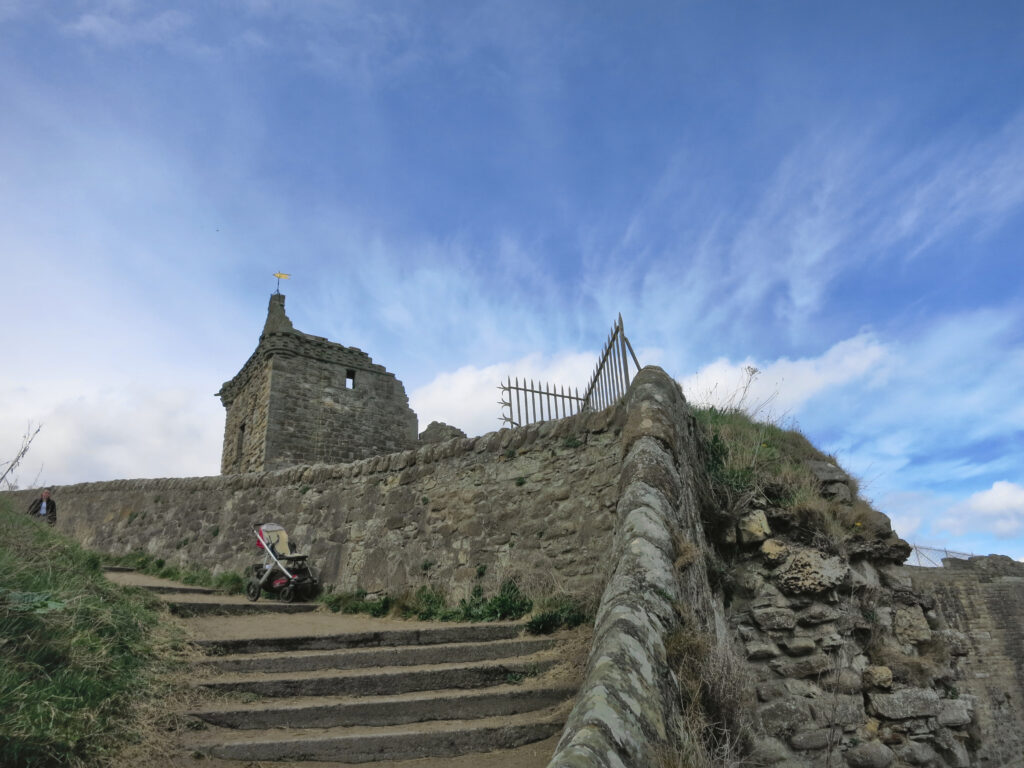
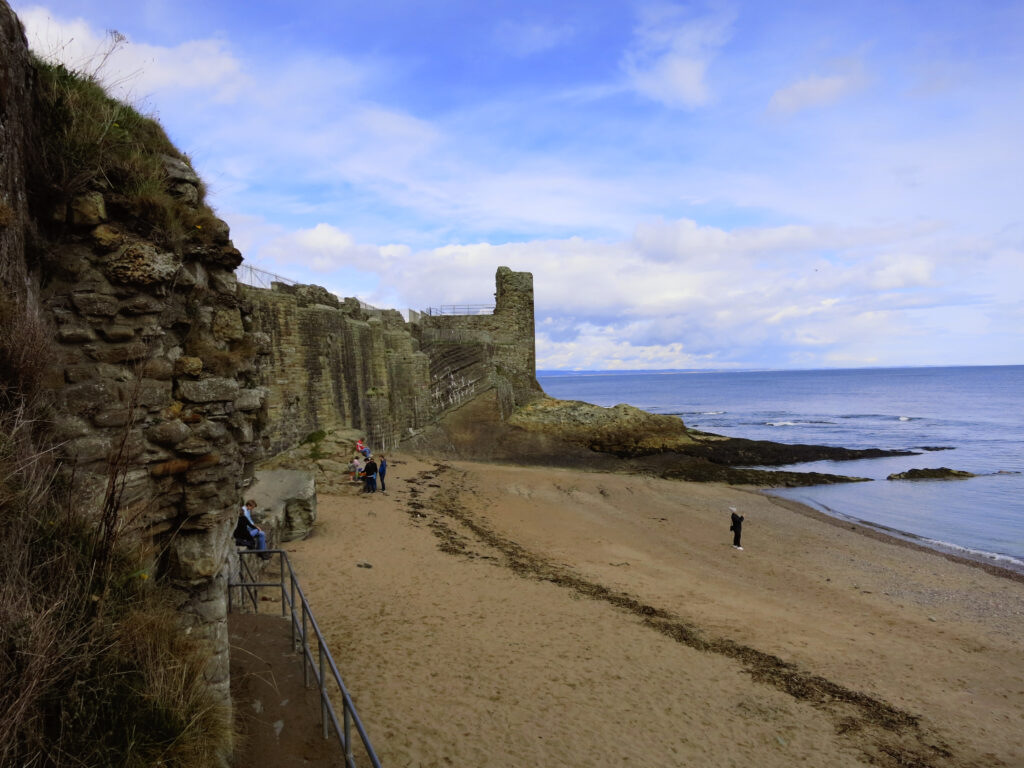
Value of Castle Sands
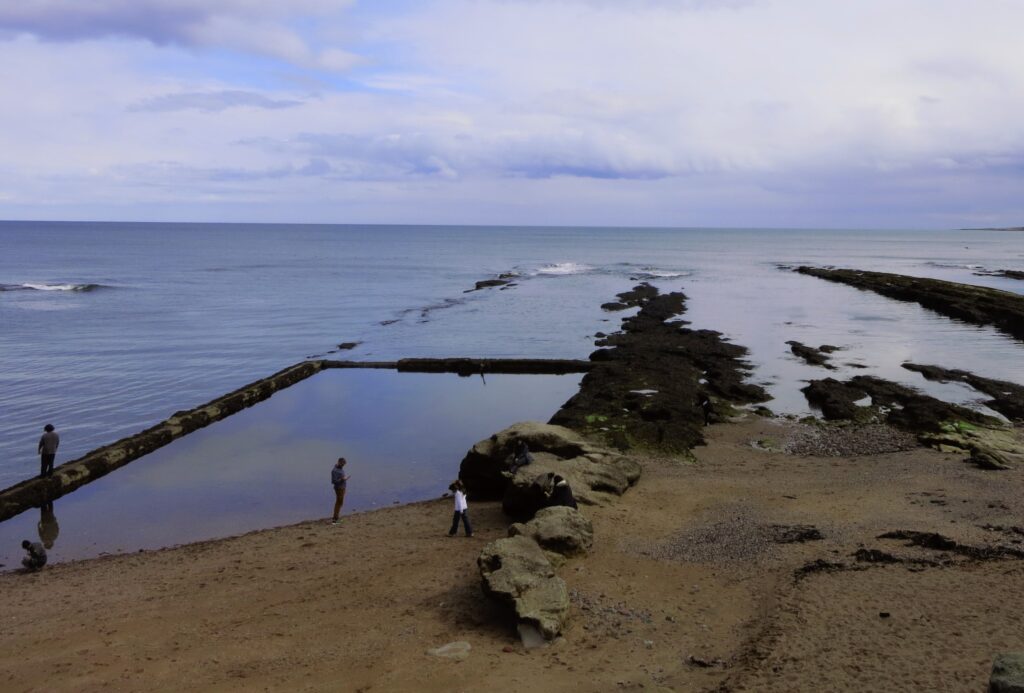
The castle has a unique and significant history, and presents an opportunity for visitors to learn more about Scottish history, especially during the Wars of Independence. An audio tour through the castle grounds and dungeon creates a learning opportunity that is accessible to all, promoting SDG4: quality education. Castle Sands, which is overlooked by the aforementioned St Andrews castle, helps attract tourists to the area and boosts the local economy. Whilst smaller in comparison to the nearby East Sands and West Sands, Castle Sand’s unique history and the tidal pools have appeal to tourists. These tide pools in particular set Castle Sands apart from the other beaches in St Andrews. These dramatic rectangular structures are a striking feature during low tide and, if rumours are to be believed, have been used during witch trials in the past.
This exhibit and the UN’s Sustainable Development Goals
SDG 8
This exhibit aims to promote awareness about how rising sea levels put our coastlines at risk. By informing visitors about sea level rise and how this will damage coastlines over the next 100 years, we hope to promote lifestyle choices and public policy decisions that will reduce our greenhouse gas emissions and mitigate sea level rise as much as possible.
SDG 4
By educating visitors on the history surrounding the castle, we can offer a lifelong learning experience for all ages to find out more about Scottish history, especially during the Wars of Independence. The exhibit’s strong focus on climate change also promotes quality education, educating exhibit visitors on the subject.

SDG 13

The end goal of this exhibit is to boost public awareness of climate change and how it puts our cultural heritage at risk. By increasing awareness, we hope to promote more eco conscious lifestyle decisions from the country at large. Additionally, public pressure may encourage politicians to adopt more environmentally friendly policies.
Effects of Climate Change on Castle Sands
Sea level rises are the main threat to Castle Sands, which is specifically mentioned by Historic Environment Scotland as a historic site at risk from climate change. By 2100, the sea level is projected to rise by 90cm in St Andrews. This will submerge the entire beach, essentially eliminating Castle Sands in its entirely. Additionally, damage to the 1886 sea wall caused by these rising sea levels could lead to more of the castle falling into the sea in the future.
Whilst the final exhibit is intended as an interactive 3D model of the entire beach and castle, with full camera controls and a timeline slider, scanning the entire beach isn’t feasible using an iPhone with the free Polycam application due to LiDAR sensor range and memory constraints, so the prototype focuses on one section on the northern side of the beach (see below) The prototype takes the form of a 3D model of a section of the beach, with a looping animation of the sea rising 90cm, as is currently predicted for the year 2100.
I have included a video made using Blender, showing a time lapse of the sea level’s simulated rise superimposed over a background image of Castle Sands, giving users of the prototype website a better understanding of what the project’s final iteration would look like.
Image Gallery
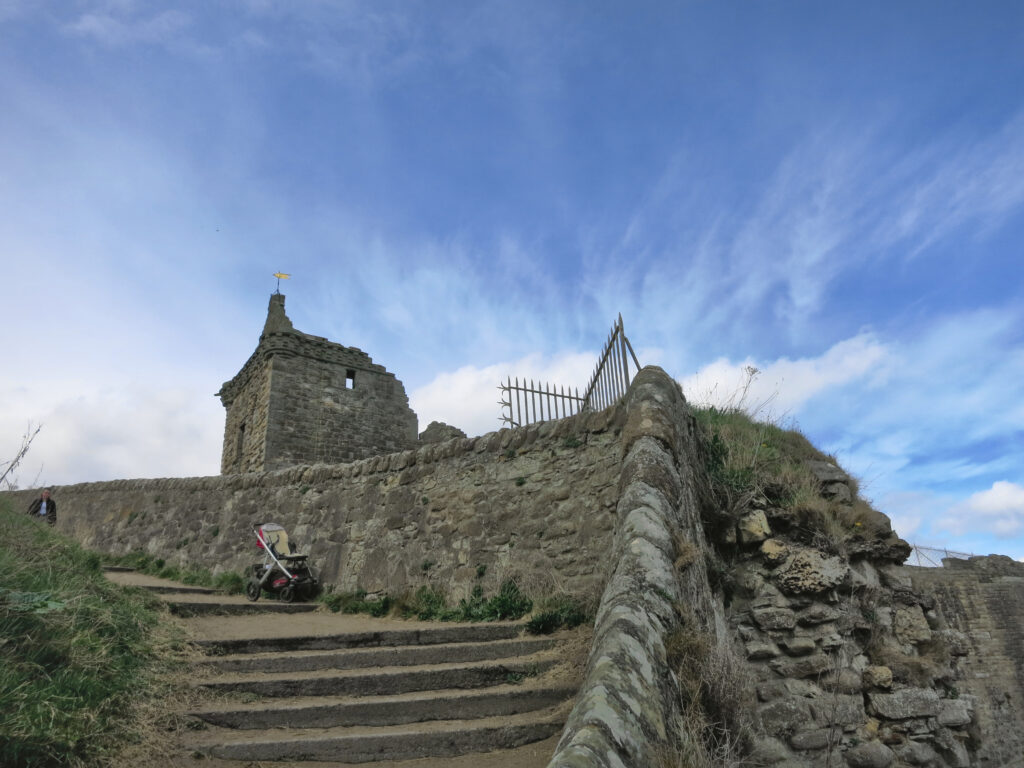
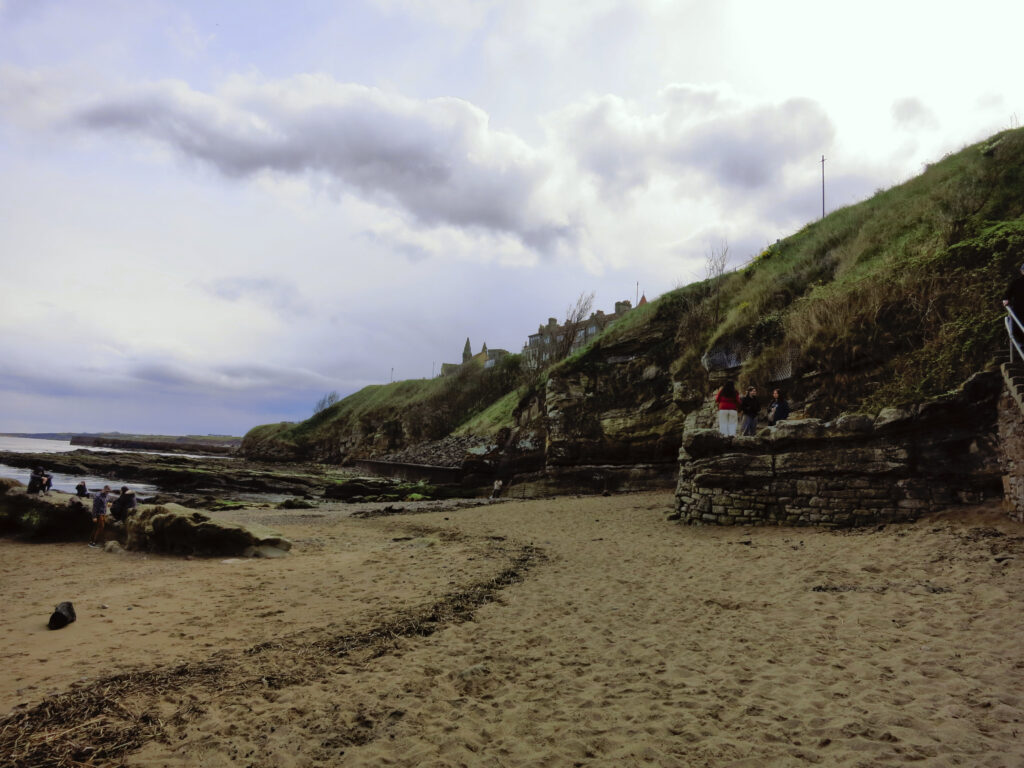
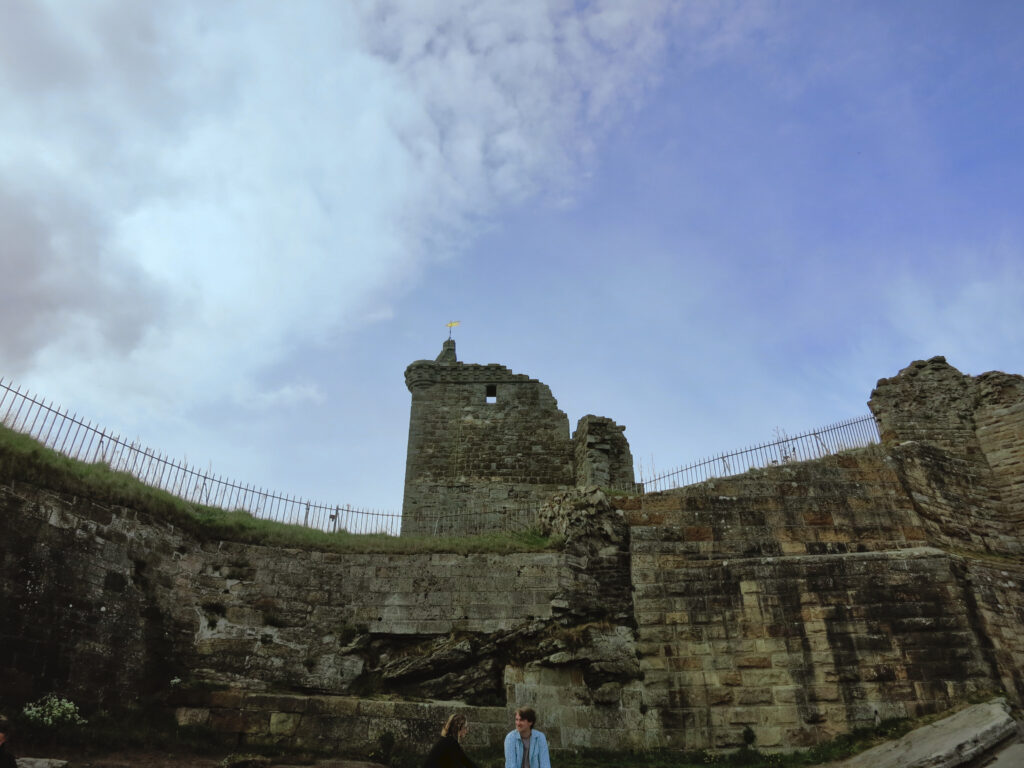
How can we protect Castle Sands from climate change
Sea level rise is a result of rising global temperatures. 42% of sea level rise is a result of ocean water warming and expanding, making it the largest contributing factor. 21% of sea level rise is from melting glaciers across the world, and 23% is a result of melting ice sheets in Greenland and Antarctica. To slow global warming, we can promote green alternatives to fossil fuel, reduce carbon emissions, and protect our forests, which absorb 16 billion tonnes of carbon dioxide per year.
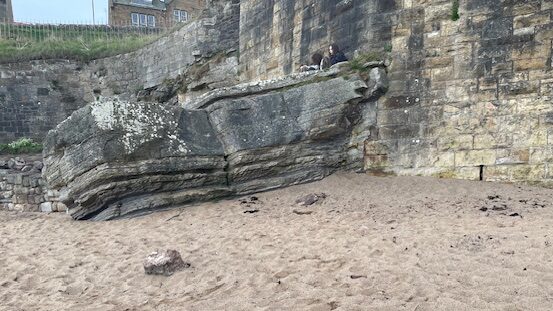
References
| Coast Radar, “Castle Sands Beach,” [Online]. Available: https://coastradar.com/places/united-kingdom/fife/castle-sands-beach/. |
| Historic Environment, “St Andrews Castle,” [Online]. Available: https://www.historicenvironment.scot/visit-a-place/places/st-andrews-castle/history/. |
| About St Andrews, “Other Hightlights in Area,” [Online]. Available: https://www.aboutstandrews.co.uk/other-highlights/. |
| SwimFinder, “Castle Sands Pool, St Andrews,” [Online]. Available: https://swimfinder.net/places/castle-sands-pool-st-andrews/. |
| CuriousEdinburgh, “Castle Pool,” [Online]. Available: http://curiousedinburgh.org/2024/06/14/castle-pool/. |
| Historic Environment Scotland, “Why COP26 matters for our climate heritage,” [Online]. Available: https://blog.historicenvironment.scot/2021/09/why-cop26-matters-for-our-climate-heritage/. |
| GolfSustainable, “Climate change: Bad prospects for the Old Course,” [Online]. Available: https://golfsustainable.com/en/cop-26-bad-prospects-for-the-old-course/. |
| M. Alexander, “How do we protect Scotland’s historic landmarks from climate change?,” The Courier, [Online]. Available: https://www.thecourier.co.uk/fp/news/scotland/2653833/feature-how-do-we-protect-scotlands-historic-landmarks-from-climate-change/. |
| J. Li, “How Do We Stop Sea Level Rise?,” Earth.org, [Online]. Available: https://earth.org/how-do-we-stop-sea-level-rise/. |
| United States Environmental Protection Agency, “Acid Rain: What is Being Done?,” [Online]. Available: https://www3.epa.gov/acidrain/education/site_students/beingdone.html. |
| NOAA, “Sea Level Rise Viewer,” [Online]. Available: https://coast.noaa.gov/digitalcoast/tools/slr.html. |
| CalculatedEarth, “calculatedearth shows what our planet looks like at differing sea levels.,” [Online]. Available: calculatedearth shows what our planet looks like at differing sea levels.. |
| Aso Hajirasouli, Saeed Banihashemi, Anoma Kumarasuriya, Saeed Talebi, Amir Tabadkani, “Virtual reality-based digitisation for endangered heritage sites: Theoretical framework and application,” Elsevier Masson, Queensland, 2020. |
| OFCOM, “Share of virtual reality (VR) headset owners in the United Kingdom in 2024, by age,” 16 July 2024. [Online]. Available: https://www.statista.com/statistics/1362661/share-of-vr-headset-owners-by-age-uk/. |