Introduction
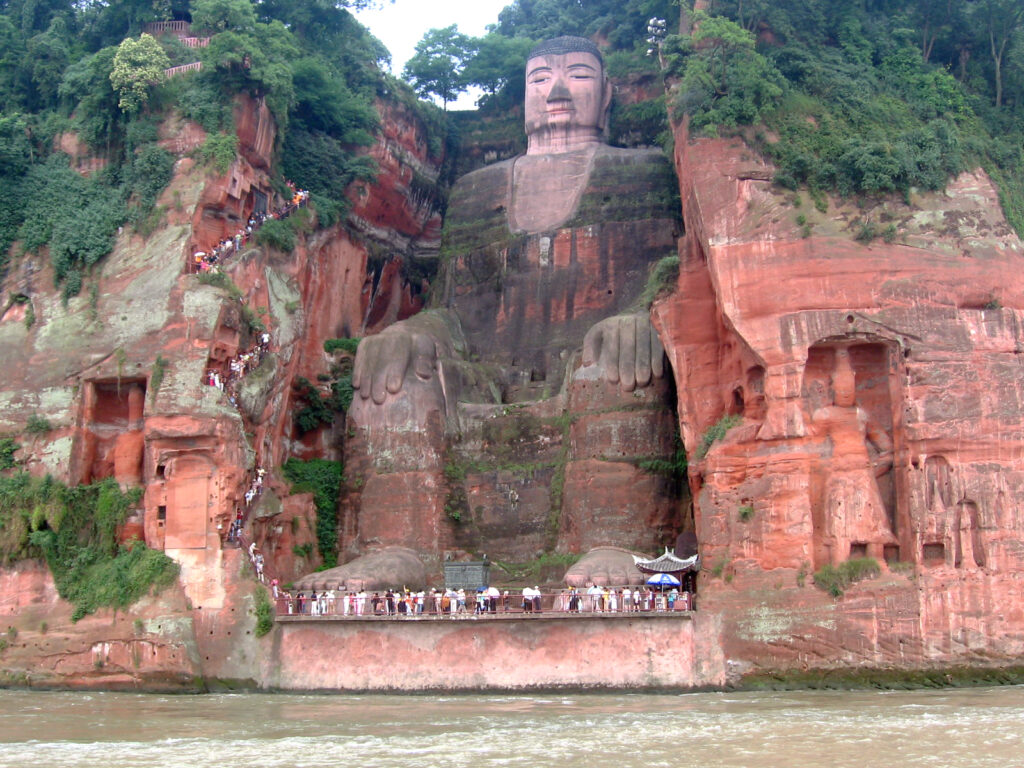
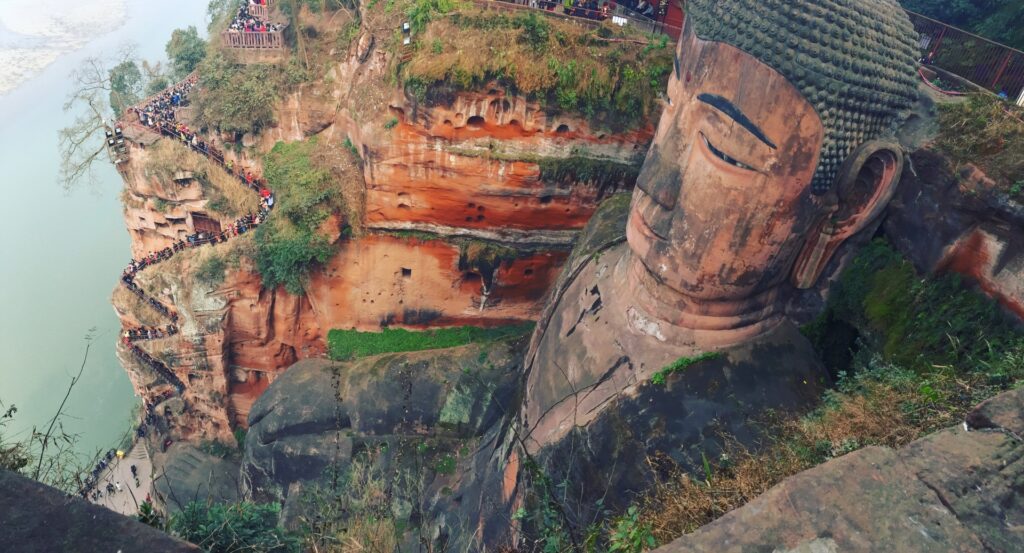
Carved over the course of the Tang dynasty from 713 to 803 AD, the Leshan Giant Buddha stands majestically on Qiluan Peak of Lingyun Mountain in Sichuan Province, gazing out over the meeting point of the Min, Dadu and Qingyi rivers. Rising 71 metres from the cliff face, it holds the title of the world’s largest stone Buddha. The statue portrays Maitreya—the future Buddha—seated in tranquil repose, with gently curling hair and a serene, soft‑featured countenance.
Quiz!
How tall is the Leshan Giant Buddha?
This world’s largest stone buddha is 71 metres tall.
Sculptural Close‑Ups
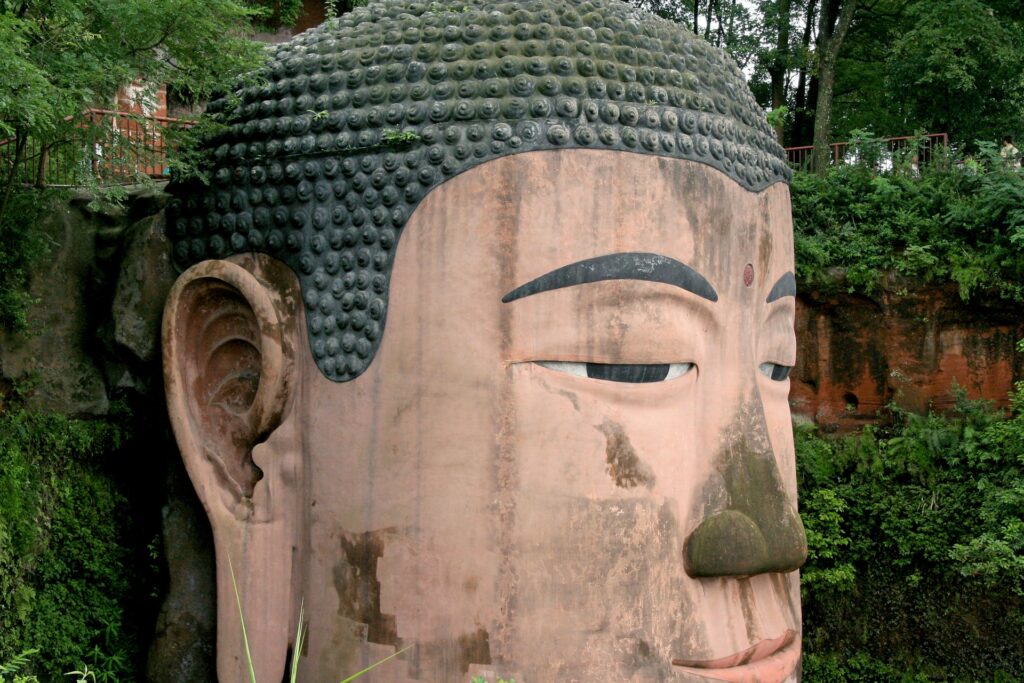
The Giant Buddha has been through several large‑scale restorations. After repair, its features look calm, serene and full of dignity.
Photo by SonSunhon. Use permission.https://photo-ac.com/photo/26900677
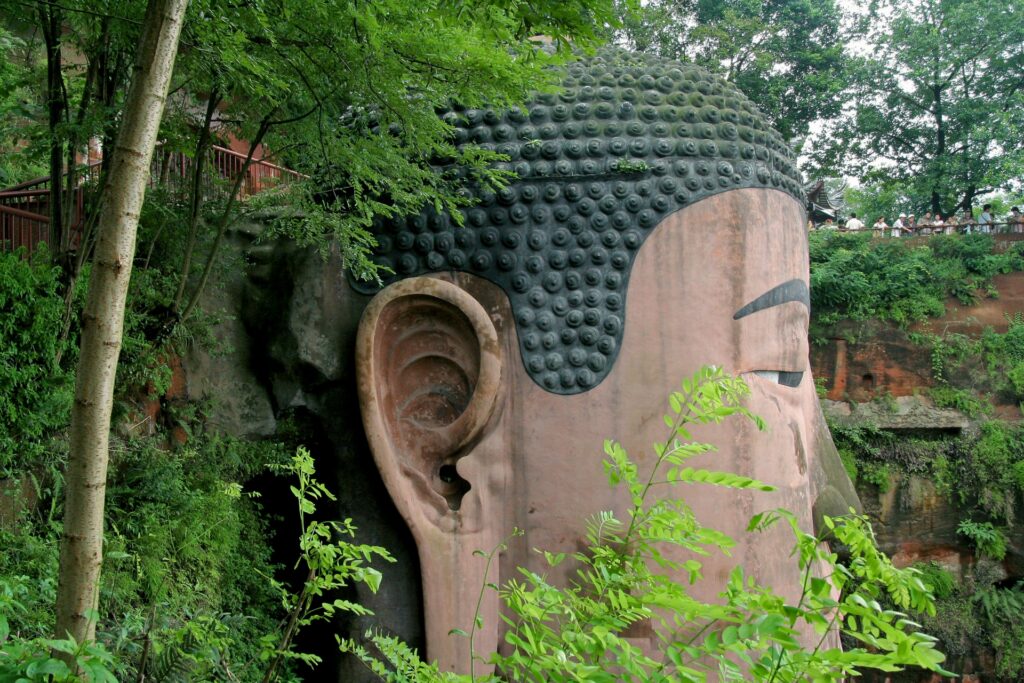
The long, drooping earlobes symbolize the Buddha’s deep wisdom and boundless compassion, showing that he hears the suffering of all beings and answers their calls for help.
Photo by SonSunhon. Use permission.https://photo-ac.com/photo/26900679
Sculpture Story
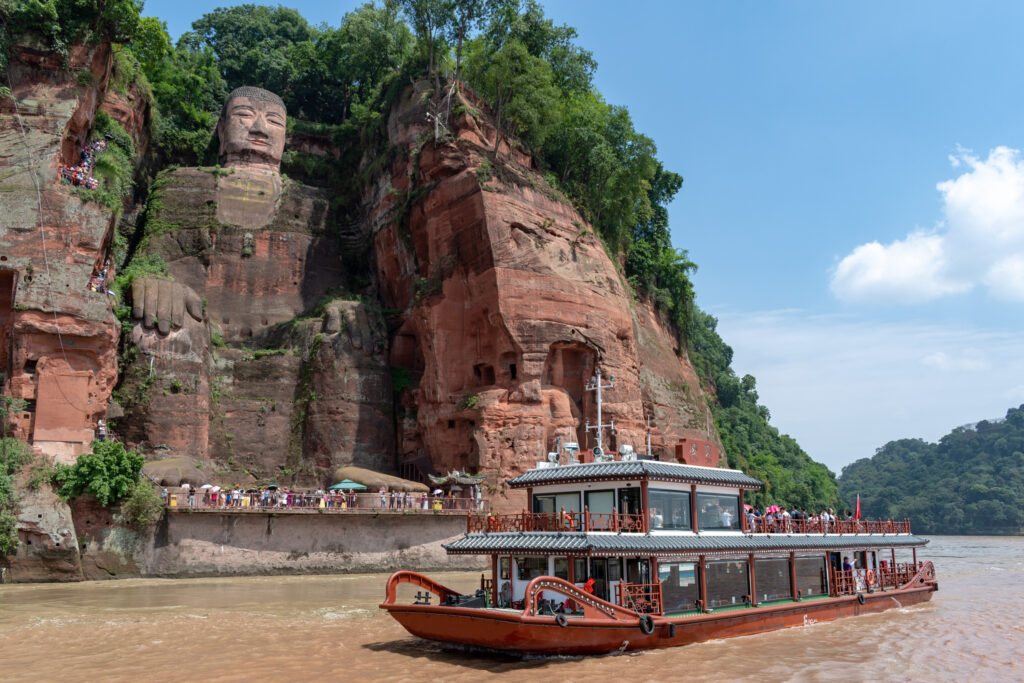
In the early Tang dynasty, the monk Hai Tong from Guizhou led the carving of the Giant Buddha to calm the fast currents at the meeting of three rivers and keep boats safe. As people donated money and materials, a local official demanded a share for himself. Hai Tong refused, saying he would rather gouge out his own eye than let the Buddha’s offerings be taken. When the official would not relent, Hai Tong indeed removed one eye, placed it on a plate, and handed it over. Shocked, the official never asked for a bribe again.
Quiz!
What was the purpose of carving the giant Buddha?
To calm the fast currents at the meeting of the three rivers and keep boats safe.
Image Gallery
Culture Value
The Leshan Giant Buddha is a treasure of China’s Tang Dynasty heritage, showcasing the era’s remarkable stone‑carving mastery and the profound imprint of Buddhism on art and culture. Together with Mount Emei, it was inscribed as a UNESCO World Heritage Site in 1996, a testament to its outstanding cultural value. This monumental statue has drawn pilgrims and sightseers alike, offering both spiritual solace and an unparalleled glimpse into ancient craftsmanship.
Address Climate Threats
Sichuan’s damp, misty climate encourages microorganisms to grow on the Buddha’s stone surface. These tiny organisms not only dull its appearance but slowly break down the rock itself. In summer, high temperatures make the stone expand and contract, speeding up natural weathering, while heavy rains and acid rains wash away surface particles and deepen erosion. Altogether, these weather conditions are accelerating the statue’s aging.
The exibition will preserve and share high‑resolution images and videos of the Leshan Giant Buddha, capturing its current appearance in digital form and safeguarding it against physical corrosion. By making these digital archives widely accessible, we ensure this cultural treasure endures in cyberspace and inspire visitors to support its real‑world protection and to act on climate change.
3D technology offers a powerful tool for digitally preserving the Leshan Giant Buddha. By creating a highly detailed 3D model, we can give online visitors an immersive viewing experience while reducing foot‑traffic pressure on the site itself. At the same time, integrating 3D scanning with deep learning enables automated detection of surface cracks and other vulnerabilities, guiding more precise and effective conservation efforts.
Sustainable Development Goals
Our exhibition aligns with the SDGs below:
SDG 4 Ensure inclusive and equitable quality education and promote lifelong learning opportunities for all
Through abundant digitally visual materials and clear contextual information, our exhibition offers accessible, high-quality learning resources that deepen understanding of Tang dynasty art and Buddhist culture for learners everywhere.
SDG 11 Make cities and human settlements inclusive, safe, resilient and sustainable
By providing detailed digital access to the Leshan Giant Buddha, our exhibition helps preserve this landmark’s cultural heritage online, reducing visitor pressure on the physical site and supporting sustainable community engagement.
SDG 13 Take urgaent action to combat climate change and its impacts
Through the exhibition, we will publicize the impact of acid rain and climate change and enhance public environmental awareness.
Reference
1.https://en.wikipedia.org/wiki/Leshan_Giant_Buddha
2. https://whc.unesco.org/en/list/779
3. https://www.nature.com/articles/s40494-024-01514-9
5. Yang, Y. et al. (2024) ‘Impact of Acid, Salt, and Wetting-Drying Cycles on Weathering Deterioration of the Red Sandstone Used for Leshan Giant Buddha China’, International Journal of Architectural Heritage, pp. 1–28. doi: 10.1080/15583058.2023.2301353.