Website of Loulan Ancient City, designed by Yilei Xiao (More content can be seen in this link, which is designed for this digital exhibition.)
Website screenshots ▼ ( All the videos, music, and images used on the website are authorized.)
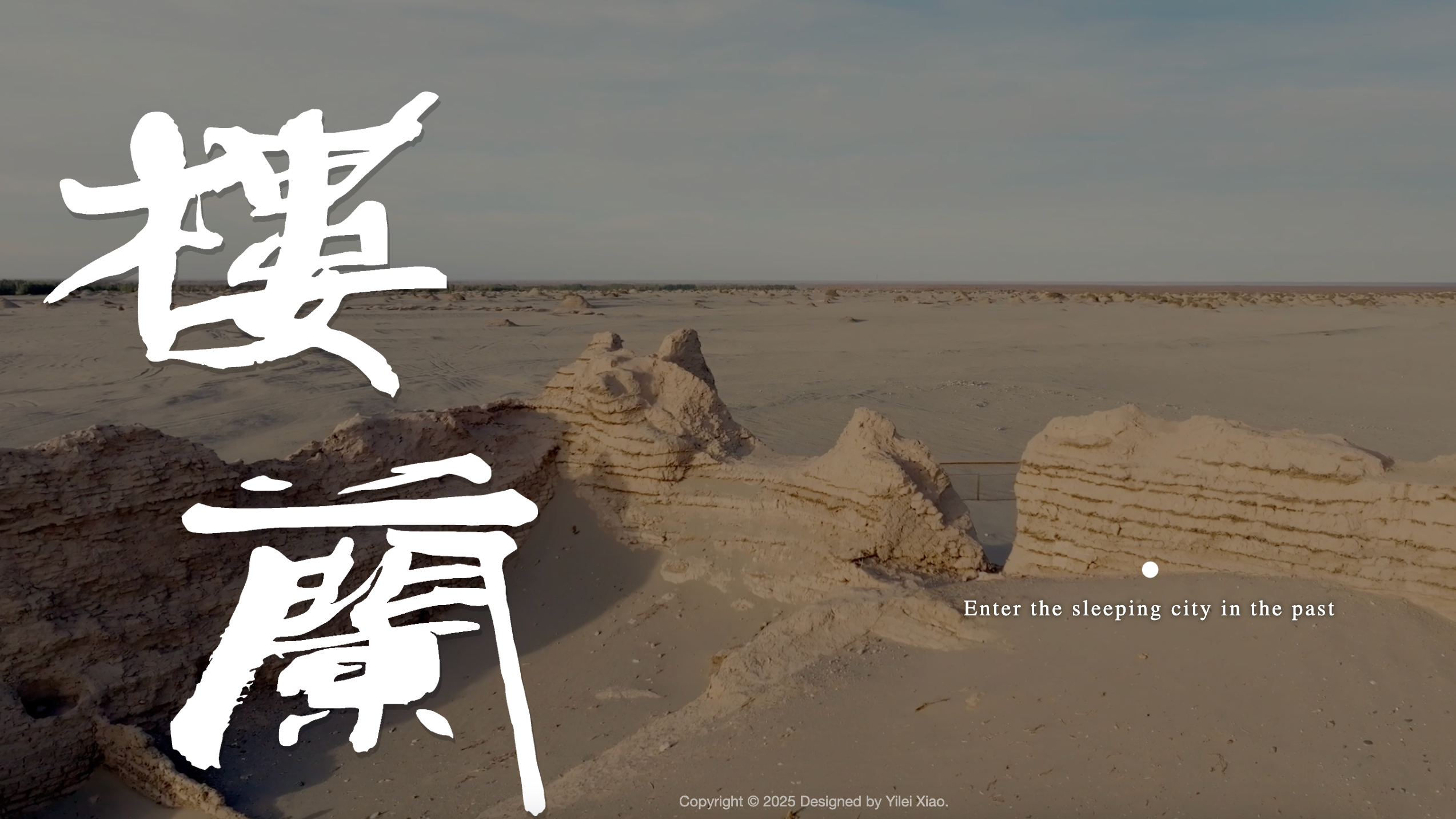
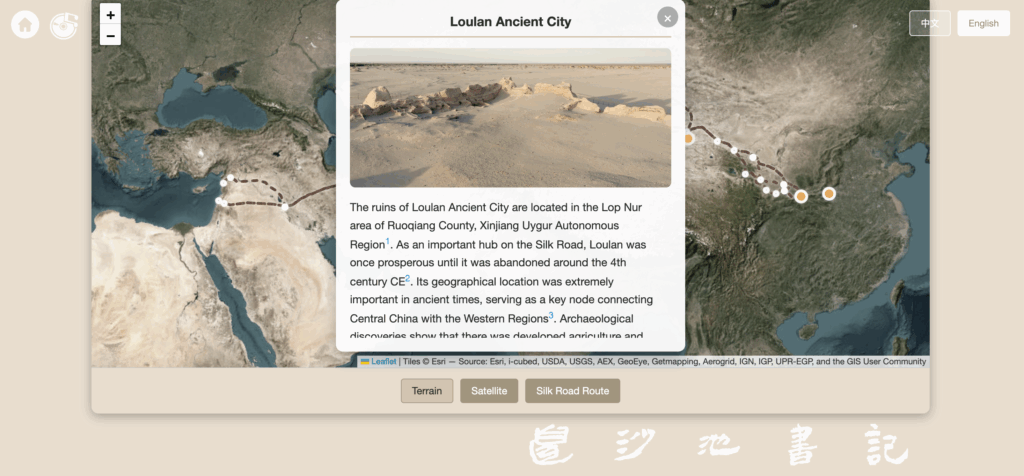
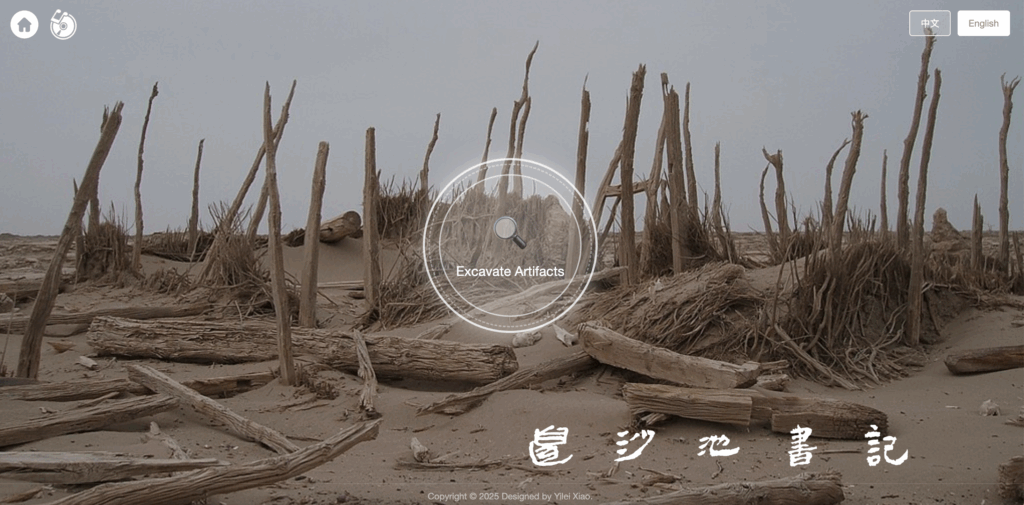
Loulan Ancient City: Overview
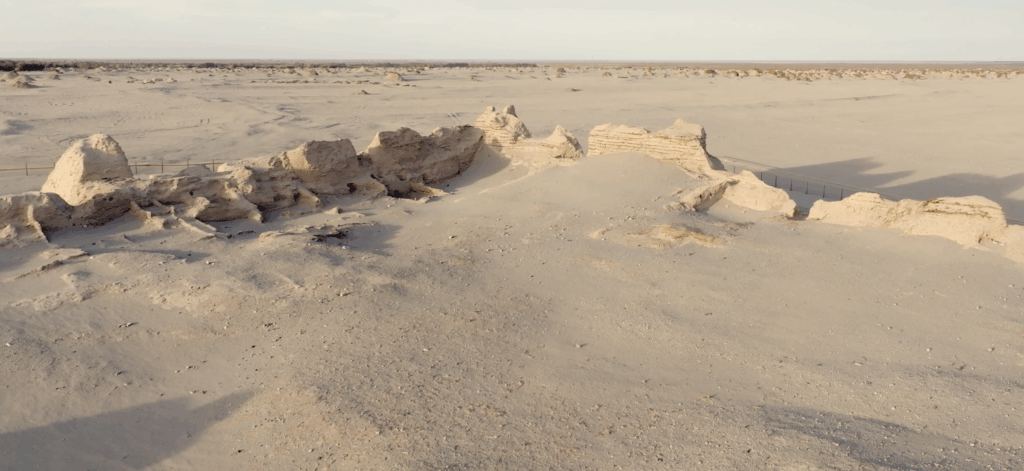
Loulan Ancient City stands at the eastern edge of the vast Taklamakan Desert and the western shore of Lop Nur in Ruoqiang County, Bayingolin Mongol Autonomous Prefecture, Xinjiang Uygur Autonomous Region of China [1][2][3]. Positioned at the crossroads of the northern and southern Silk Road routes, it flourished from the 2nd century BCE to the 4th century CE as a pivotal political, economic, and cultural hub linking East and West [4][5].
Originally a fertile oasis nourished by the Tarim and Peacock Rivers [6], Loulan’s abundance was gradually lost due to climatic shifts, diminished water resources, and human activities [7], causing it to be swallowed by the shifting sands and abandoned by the 4th century CE as a “dead city” [8].
Rediscovered in 1900 by Swedish explorer Sven Hedin, the ruins of Loulan Ancient City have since attracted international archaeological interest and are now under key cultural relics protection in China [9][10].
However, relentless wind erosion continues to threaten the site’s remaining walls and structures [11][12]. Protective measures such as windbreak installations, regular monitoring, and modern technological methods like 3D scanning and digital modeling have been implemented to mitigate degradation [5][14], yet significant challenges remain.
Despite the harsh conditions, Loulan’s arid environment has paradoxically aided in the preservation of organic artifacts. Excavations have uncovered well‑preserved wooden architectural elements, textiles, paper documents, and even mummies such as the “Loulan Beauty” [8][12][13]. Contemporary excavations and studies continue to reveal insights into ancient Silk Road culture and daily life.
References
- Wikipedia. Loulan Kingdom. 2024.
- China Daily. Exploring the mysterious Loulan Ancient City. April 22, 2024.
- State Council of the People’s Republic of China. Notice on the Publication of the Third Batch of National Key Cultural Relics Protection Units. Chinese Government Website. January 13, 1988.
- Silk Road Travel. Ancient City of Loulan. 2023.
- ResearchGate. The road to the Loulan Kingdom. 2018.
- Li X. et al. The essential role of the Tarim Basin wetland with respect to the dust problem in East Asia. Scientific Reports. 2017.
- Yao T. et al. Environmental changes in the Loulan region of the northeastern Tarim Basin. Quaternary International. 2020.
- The Washington Times. Mummies of the Ancient Silk Road. January 13, 2005.
- China Daily. Archaeological Discoveries in Loulan Ancient City. April 22, 2024.
- Travel China Guide. Loulan Ancient City Ruins. 2023.
- The British Museum. Artifacts from Loulan. 2022.
- Ancient Origins. The Beauty of Loulan and the Tattooed Mummies of the Tarim Basin. 2019.
- Wikipedia. Beauty of Loulan. 2023.
- China Knowledge. History of Loulan. 2020.