A Digital Exhibition of Yellowstone National Park
“The greatest threat to our planet is the belief that someone else will save it.” – Robert Swan

Image: Wv Yellowstone National Park banner by James St. John licensed by CC Attribution 2.0 Generic
Yellowstone National Park, located across the U.S. states of Wyoming, Montana, and Idaho, was established in 1872 as the world’s first national park. Its designation marked a groundbreaking moment in global conservation efforts. Today, Yellowstone remains a powerful symbol of environmental preservation, protecting vast biodiversity, iconic landscapes, and extraordinary geothermal and geological features. It stands not only as a natural wonder but also as a globally significant cultural and ecological heritage site—offering insights into the Earth’s history, dynamic ecosystems, and the deep interconnection between people and the planet.
However, Yellowstone is under growing threat. The accelerating impacts of climate change — including rising temperatures, prolonged droughts, invasive species, and intensifying wildfires — combined with ongoing environmental degradation and increased human activity, are placing immense pressure on its fragile ecosystems. These changes not only endanger the park’s rich biodiversity but also jeopardize the cultural narratives, scientific knowledge, and sustainable futures tied to it.
This digital exhibit invites you to explore Yellowstone through the lens of climate action and the United Nations Sustainable Development Goals. At its core is an interactive 3D representation of the park, allowing users to explore historical, current, and predicted environmental conditions in immersive detail. The experience also offers a personalized component—prompting you to reflect on how your daily lifestyle choices contribute to or mitigate climate impact over time.
By blending interactive tools, multimedia content, and global context, this exhibit aims to inform, engage, and empower. It re-frames heritage not as a static artifact of the past, but as a living force for education, climate resilience, and sustainable change.
Discover. Learn. Act.
Dive into the key areas of this digital exhibit and discover how Yellowstone’s heritage is being shaped by climate change — and how you can be part of the solution.
Click the buttons above to easily navigate to the following sections:
Interactive Maps
Use the selections on the left to customize the map to your interests!
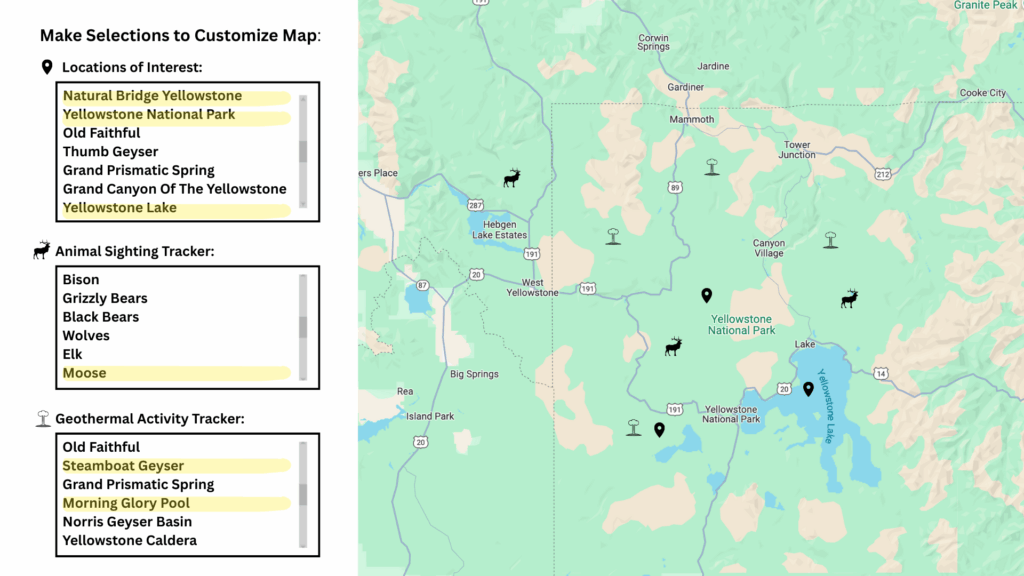
*Prototype Disclaimer: Map is for demonstration only and does not support user interaction.*
View changes within the park from 1872 to present day! A year of interest may be selected, or alternatively, you can drag the selection tool to dynamically visualize changes over time.
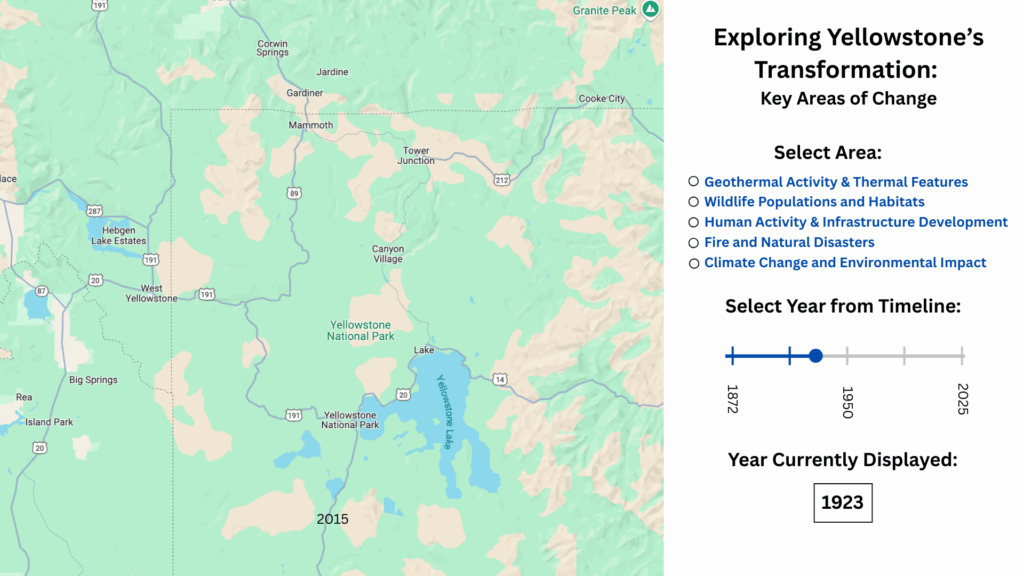
*Prototype Disclaimer: Map is for demonstration only and does not support user interaction.*
Visualize Your Impact
Use the sliders on the left to make selections based on your own lifestyle and behaviors. Toggle the timeline at the bottom to predict your impact on the climate over time. The graph will dynamically change due to filtering and timeline selection.
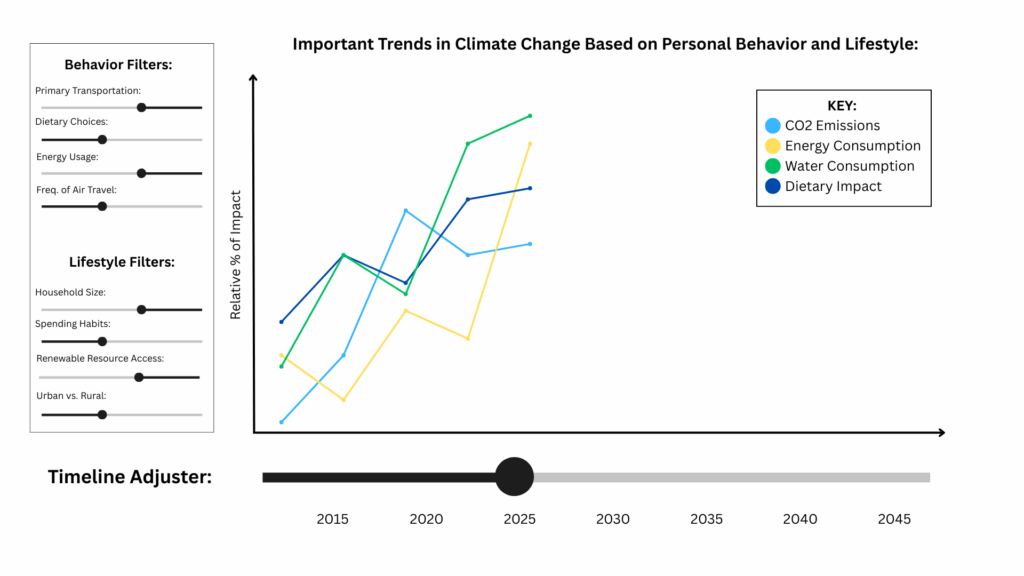
*Prototype Disclaimer: Timeline is for demonstration only and does not support user interaction.*
Current Threats
Yellowstone has long been a symbol of conservation efforts and natural beauty. Despite the many ongoing conservation and preservation efforts, the park is facing continual threats mainly due to climate change, environmental degradation and increasing human impact. These threats could ultimately undermine the park’s future stability and ecological health, and may lead to irreversible changes.
Trends in Climate Change
[ ]

Image: Percent of global area at temperature records (monthly) – Global warming by RCraig09 licensed by CC BY-SA 4.0
Climate change is one of the most significant global challenges that serves as a pervasive threat to Yellowstone’s future. Rising temperatures are threatening wildlife, shifting ecosystems and affecting natural geothermal processes. Significant changes in precipitation patterns, such as more intense and unpredictable rainfall events increase risk of flooding and soil erosion in the park. Extended periods of drought are depleting water sources that many species depend on. Similarly, shorter, warmer winters lead to changes in the timing of plant growth, the availability of water, and the overall health of the ecosystem.
As these trends worsen, it is increasingly important to monitor climate change’s impact on Yellowstone’s ecosystems. Longer-term effects of climate change, such as the potential loss of biodiversity, habitat disruption, and the strain on water resources, could drastically alter the park’s ability to sustain its unique species and natural features.
Environmental Degradation and Natural Disasters
Yellowstone is also highly vulnerable to environmental degradation, largely due to its unique geological features and natural processes. At the heart of the park lies the Yellowstone Caldera, one of the largest active volcanic systems in the world. While the likelihood of a detrimental eruption remains low, the Yellowstone Caldera represents a dynamic and volatile environment, with the potential for future geothermal events such as earthquakes, geyser eruptions, or volcanic activity.
The park is also increasingly susceptible to other natural disasters. Wildfires have become more frequent and intense as a result of rising temperatures, extended dry periods, and changes in forest management. Wildfires not only threaten the park’s habitats but can also contribute to air pollution, pose risks to wildlife populations, and destroy large swaths of vegetation.
These inherent risks are exacerbated by external environmental changes. As climate change leads to more extreme weather events and unpredictable natural occurrences, the park’s vulnerability to disasters is becoming more pronounced, requiring heightened awareness and preparedness.
Increased Human Activity
Annual Visitation of Yellowstone National Park, 1904-2012

Image: Annual visitation of Yellowstone National Park, 1904-2012 by Napa licensed by CC BY-SA 3.0
Another critical issue stems from the impact of increasing invasive human activity. Overcrowding, pollution, and resource depletion are a growing concern worldwide and specifically within Yellowstone. As one of the most popular national parks in the world, the park receives millions of visitors each year, leading to challenges such as overcrowding, pollution, and resource depletion. Increased human activity within Yellowstone introduces invasive species. Human movement of animals, plants, and materials often results in the unintended spread of non-native species into the park. These invasive species can out-compete native plants and animals, disrupt local ecosystems, and introduce new diseases, all of which undermine the ecological balance that has been sustained for centuries.
These issues combined strain the park’s ecosystems, leading to erosion, increased water pollution and wildlife disturbances. Finally, climate change and human activity are intricately linked, as many of the activities that drive global warming, such as fossil fuel consumption and deforestation, are interconnected with the pressures faced by national parks like Yellowstone.
[ ]
Sustainable Development Goal Contributions
Yellowstone inherently contributes several United Nations Sustainable Development Goals (UN-SDGs) including:
- #3 Good Health and Wellbeing as it promotes positive mental and physical health by providing a public and accessible space in nature for physical activity and ecotourism
- #13 Climate Action is highlighted by natural and physical attributes which allow for the observation and study of both short-term and long-term effects of climate change
- #15 Life on Land with National Park Services’ dedication to its designation as protected land, supporting the maintenance of rich biodiversity and conservation.
This project extend the park’s contributions by also supporting:
- #4 Quality Education through interactive learning experiences about the park’s heritage, the importance of conservation, and the science behind climate change.
- #6 Clean Water and Sanitation will be emphasized through the platform’s immersive and personal experiences, highlighting the importance of water conservation and the role that clean water plays in the park’s biodiversity.
- #9 Industry, Innovation, and Infrastructure by utilizing innovative digital technologies to enhance the way people interact with and learn about climate change within Yellowstone’s ecosystems. By leveraging technology, this project will set a precedent for using novel technology to promote environmental sustainability and conservation.
- #11 Sustainable Cities and Communities by promoting sustainable tourism practices and responsible environmental stewardship.
Through its broad alignment with many UN-SDGs, this project offers an opportunity to enhance both local and global efforts in building a more sustainable, resilient, and informed world.
Explore Gallery
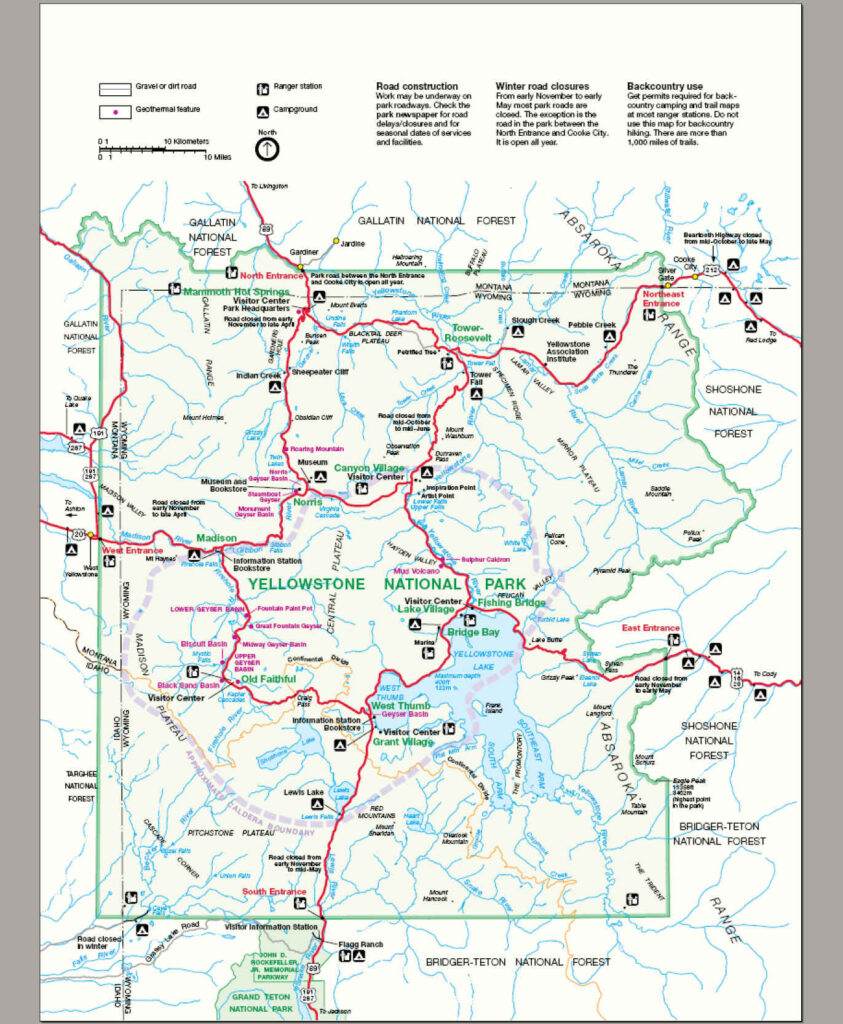
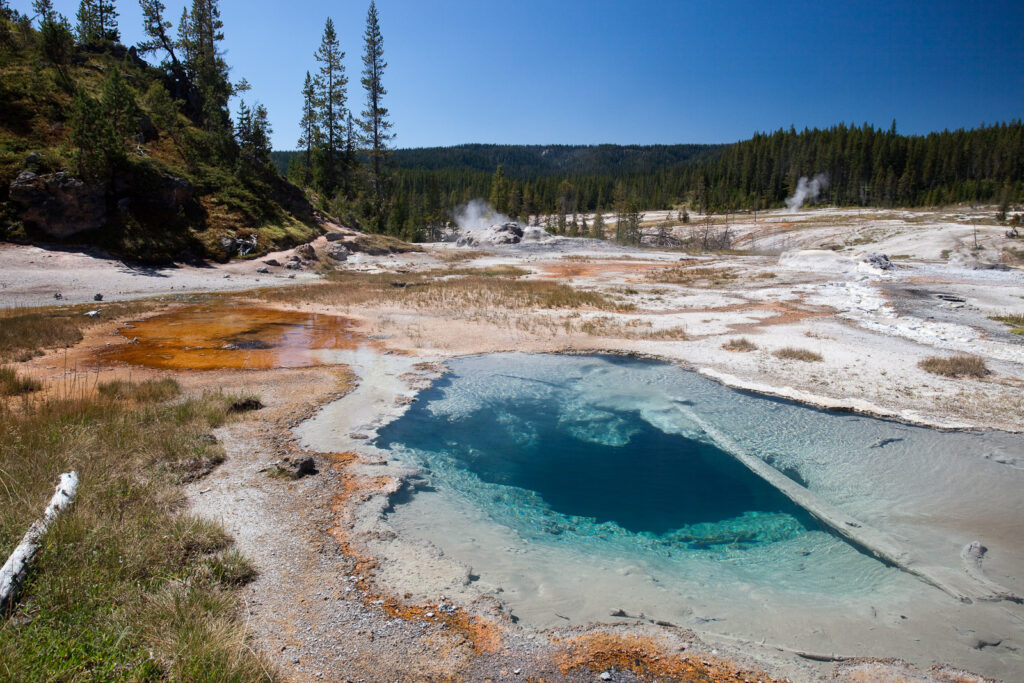

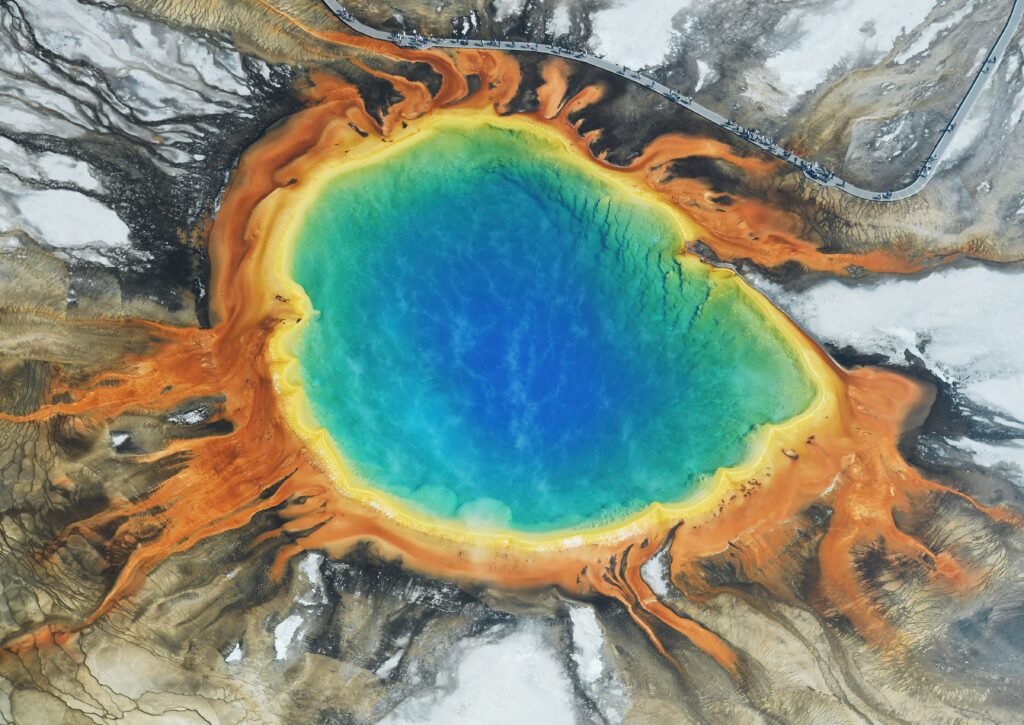
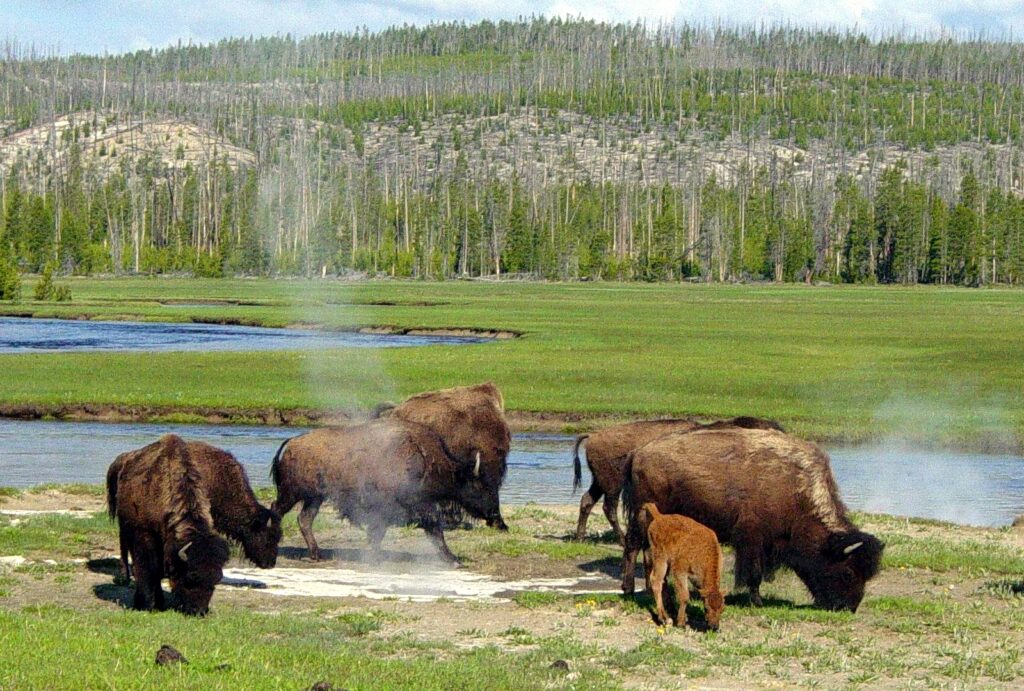
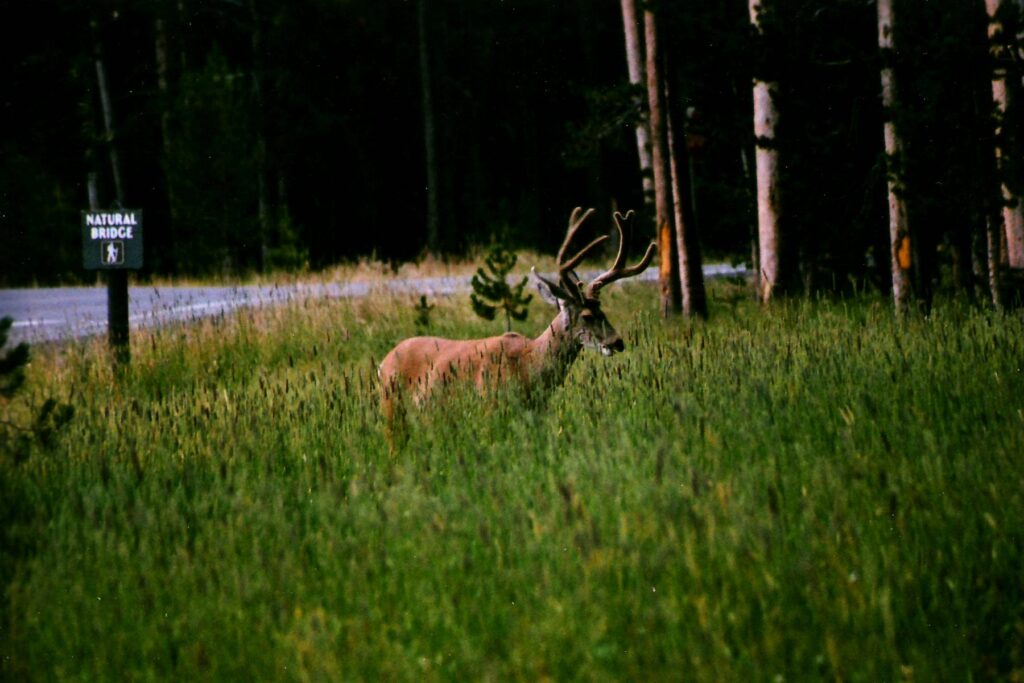

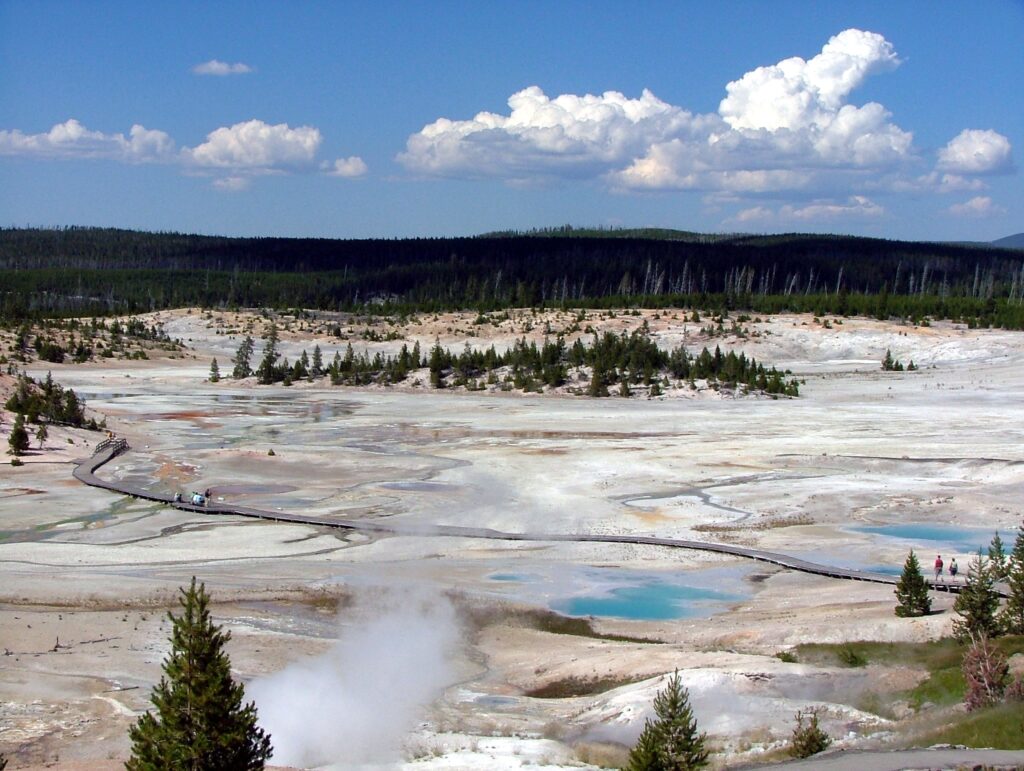
Images (from left to right): Yellowstone National Park Map by National Park Service licensed by Public Domain, Shoshone Geyser Basin by Greg Willis licensed by CC BY-SA 2.0, Black Growler and Ledge Geyser by Supercarwaar licensed by CC BY-SA 4.0, Grand Prismatic Spring by Carsten Steger licensed by CC BY-SA 4.0, Bison in Yellowstone National Park by Daniel Mayer licensed by CC BY-SA 3.0, Mule Deer by WikiBunny11 licensed by CC BY-SA 3.0, Rainbow Over Yellowstone Lake by Richard Wang licensed by CC BY-SA 3.0, Porcelain Basin by Jan Kronsell licensed by Public Domain.

Quick Watch: A Brief History of Yellowstone National Park
Video: National Park Service. (2021, March 1). A brief history of Yellowstone [Video]. YouTube. https://www.youtube.com/watch?v=RCYSEDqPv4o
Learn More…
As you can see through the interactive features of this digital exhibit, climate change is not just a distant, abstract issue — it’s already transforming Yellowstone and countless other heritage sites around the world. But the story doesn’t end here.
You, too, have the power to make meaningful changes.
Whether it’s adjusting your daily habits, supporting sustainable initiatives, or simply spreading awareness, every action contributes to a larger global effort. By engaging with this exhibit, you’ve taken the first step toward understanding how cultural and natural heritage like Yellowstone is deeply intertwined with our climate future.
Your choices matter. Your voice matters.
Together, we can preserve the irreplaceable beauty, biodiversity, and stories of Yellowstone — not just for today, but for generations to come.
Other Public Resources:
What You Can Do: Everyday Climate Solutions
Discover simple, impactful ways to reduce your carbon footprint and contribute to preserving Yellowstone and other vulnerable natural landscapes.
Yellowstone as a Living Laboratory
Discover how Yellowstone serves as a critical research site for understanding climate science, conservation, and ecosystem restoration.
Live From Yellowstone: Daily Updates
Keep up with what’s happening in Yellowstone right now — from geothermal activity and weather conditions to wildlife sightings and park alerts.
Current Conditions
For up-to-date park road info, call 307-344-2117 for a recorded message or sign up for SMS text alerts by texting 82190 to 888-777.
References:
- [1] UNESCO World Heritage Centre. “Yellowstone National Park.” UNESCO World Heritage Centre, whc.unesco.org/en/list/28/.
- [2] United Nations. “Transforming Our World: The 2030 Agenda for Sustainable Development.” United Nations, 2015, sdgs.un.org/2030agenda.
- [3] “Virtual Tours – Yellowstone National Park (U.S. National Park Service).” Www.nps.gov, www.nps.gov/yell/learn/photosmultimedia/virtualtours.htm.
- [4] “NPS App – Yellowstone National Park (U.S. National Park Service).” Nps.gov, 2024, www.nps.gov/yell/planyourvisit/app.htm. Accessed 17 Feb. 2025.
- [5] “Yellowstone National Park Facts.” Yellowstone Forever, www.yellowstone.org/experience/visitor-information/yellowstone-national-park-facts/.
- [6] “Explore the Old Faithful Area – Yellowstone National Park (U.S. National Park Service).” Nps.gov, 2016, www.nps.gov/yell/planyourvisit/exploreoldfaithful.htm.
- [7] “Grand Prismatic Spring, Yellowstone.” Earthobservatory.nasa.gov, 29 May 2004, earthobservatory.nasa.gov/images/4523/grand-prismatic-spring-yellowstone.
- [8] Richardson, Leslie, and Aaron J Enriquez. “Valuing Wildlife Sightings at the Species-Wide and Individual Animal Levels: An Approach and Application to Bear Viewing in Yellowstone National Park.” Human Dimensions of Wildlife, 3 June 2024, pp. 1–19, https://doi.org/10.1080/10871209.2024.2353250.
- [9] National Park Service. “Climate Change – Yellowstone National Park (U.S. National Park Service).” Nps.gov, 2016, www.nps.gov/yell/learn/nature/climate-change.htm.
- [10] Popescu, Adam. “Yellowstone and Warming: An Iconic Park Faces Startling Changes.” Yale E360, 23 June 2021, e360.yale.edu/features/yellowstone-and-warming-an-iconic-park-faces-major-change.
- [11] “Climate Change Connections: Wyoming (Yellowstone National Park) | US EPA.” US EPA, 19 Sept. 2024, www.epa.gov/climateimpacts/climate-change-connections-wyoming-yellowstone-national-park.
- [12] Ryan M. Yonk, Jeffrey C. Mosley, Peter O. Husby, Human Influences on the Northern Yellowstone Range, Rangelands, Volume 40, Issue 6, 2018, Pages 177-188, ISSN 0190-0528, https://doi.org/10.1016/j.rala.2018.10.004.
- [13] Patten, D. T. (1991). Human Impacts in the Greater Yellowstone Ecosystem: Evaluating Sustainability Goals and Eco-redevelopment. Conservation Biology, 5(3), 405–411. http://www.jstor.org/stable/2385912
- [14] USGS. “Is Yellowstone Overdue for an Eruption? When Will Yellowstone Erupt? | U.S. Geological Survey.” Www.usgs.gov, www.usgs.gov/faqs/yellowstone-overdue-eruption-when-will-yellowstone-erupt.
- [15] “Fire – Yellowstone National Park (U.S. National Park Service).” Nps.gov, 2016, www.nps.gov/yell/learn/nature/fire.htm.