—— Preserving Heritage in a Changing Climate
” Of majestic form and rare in the world ” —— Li Daoyuan
A World Heritage Carved into the Cliff
The Yungang Grottoes, located near Datong in Shanxi Province, China, are one of the most important examples of Buddhist rock-cut architecture in the world. Carved from the mid-5th to early 6th century AD during the Northern Wei dynasty, the site includes 252 caves and niches, more than 51,000 statues and reIiefs, and a carved area of 18,000 square metres.
WhiIe influenced by cave art from South and Central Asia, the Yungang Grottoes developed a distinctive Chinese styIe and local expression. They played an important role in the development of Buddhist cave art in China and East Asia, marking a high point in the earIy phase of Chinese sculpture and religious architecture.
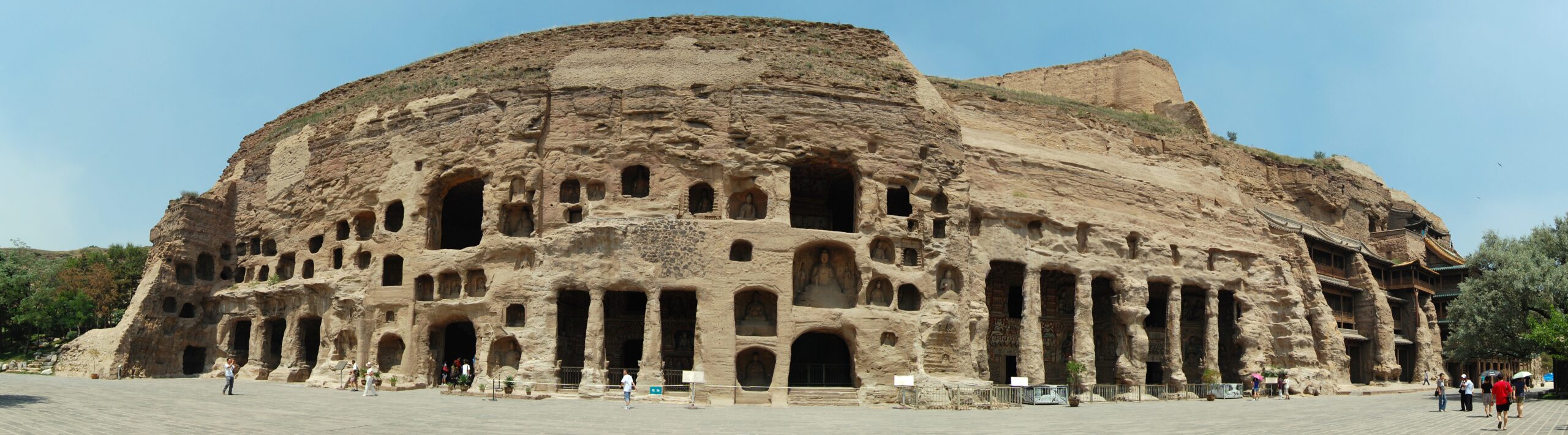
Yungang Grottoes Exterior by Marcin Białek, CC BY-SA 4.0, via Wikimedia Commons
Yungang: A Continuous Historical Record
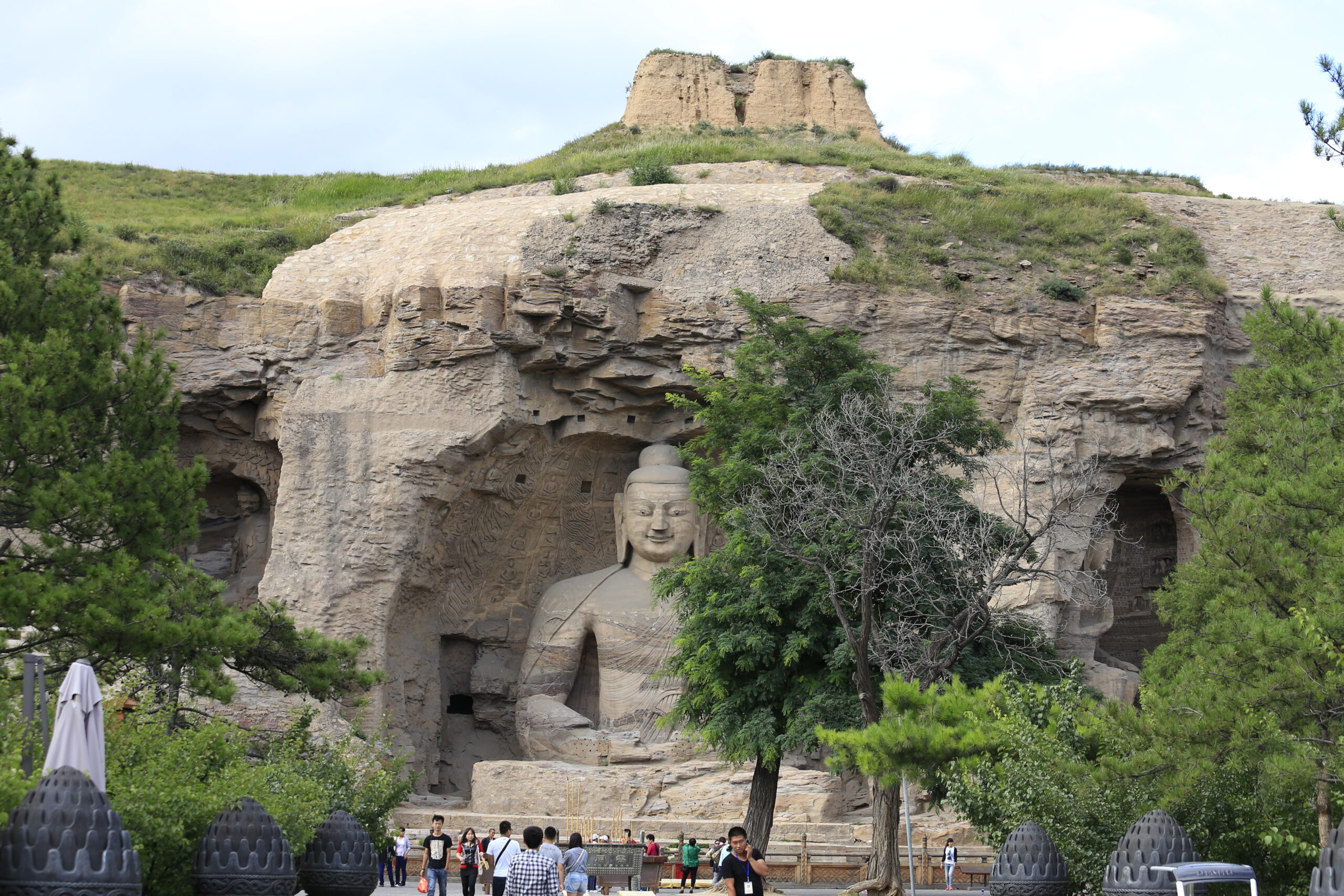
The Yungang Grottoes still hold deep historical significance today. Religiously, these caves remain a vibrant destination for Buddhist pilgrims from around the world.
Historically, these grottoes represent more than just markers of a single period; instead, they were constructed over multiple dynasties, beginning in the late Northern Wei dynasty and continuing through subsequent eras. Each generation contributed additional layers of artistry and belief, making Yungang not only a masterpiece of early Chinese Buddhist sculpture but also a continuous historical record that has lasted for centuries.
Discover the Yungang Grottoes
Image Gallery
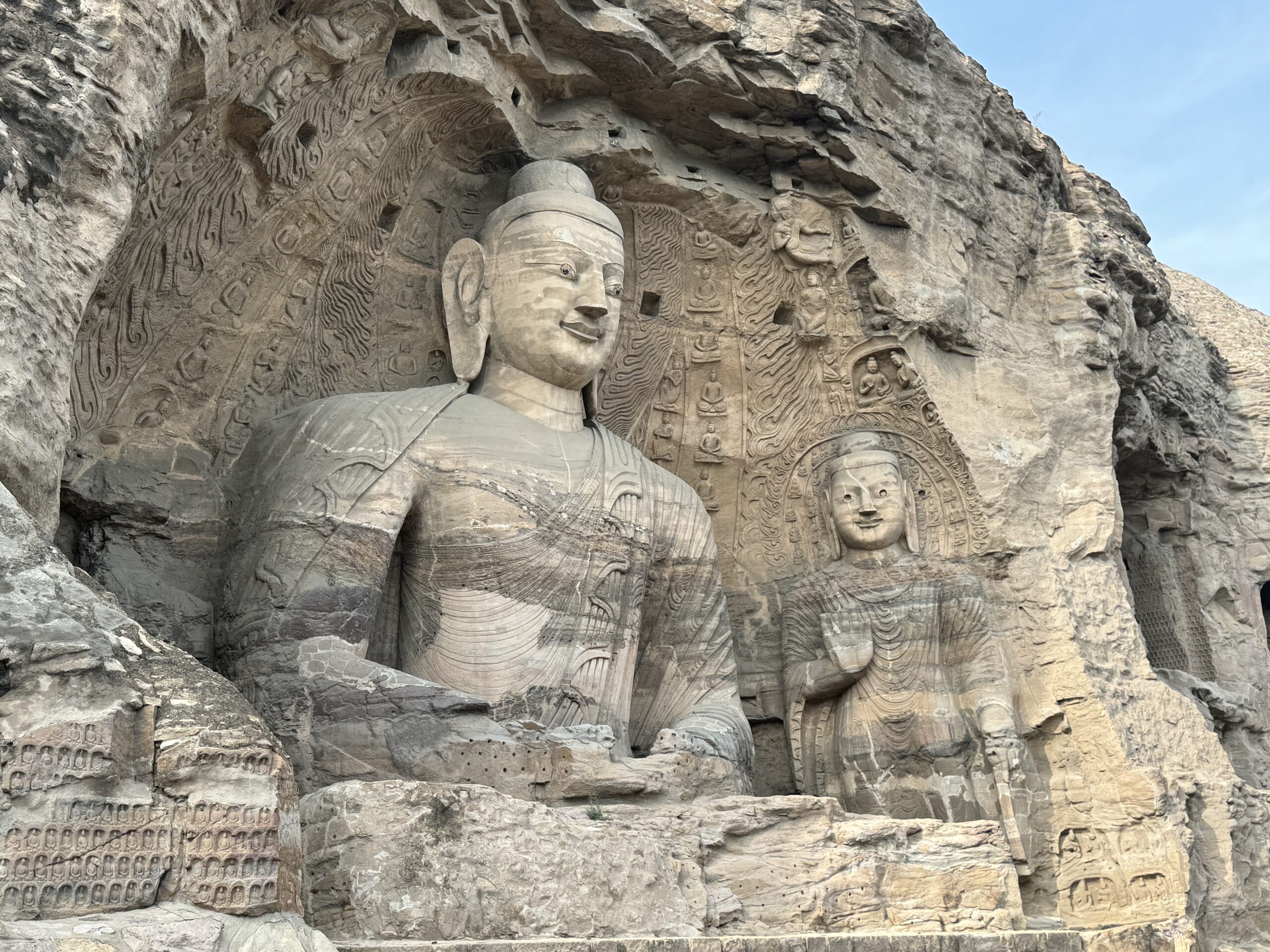
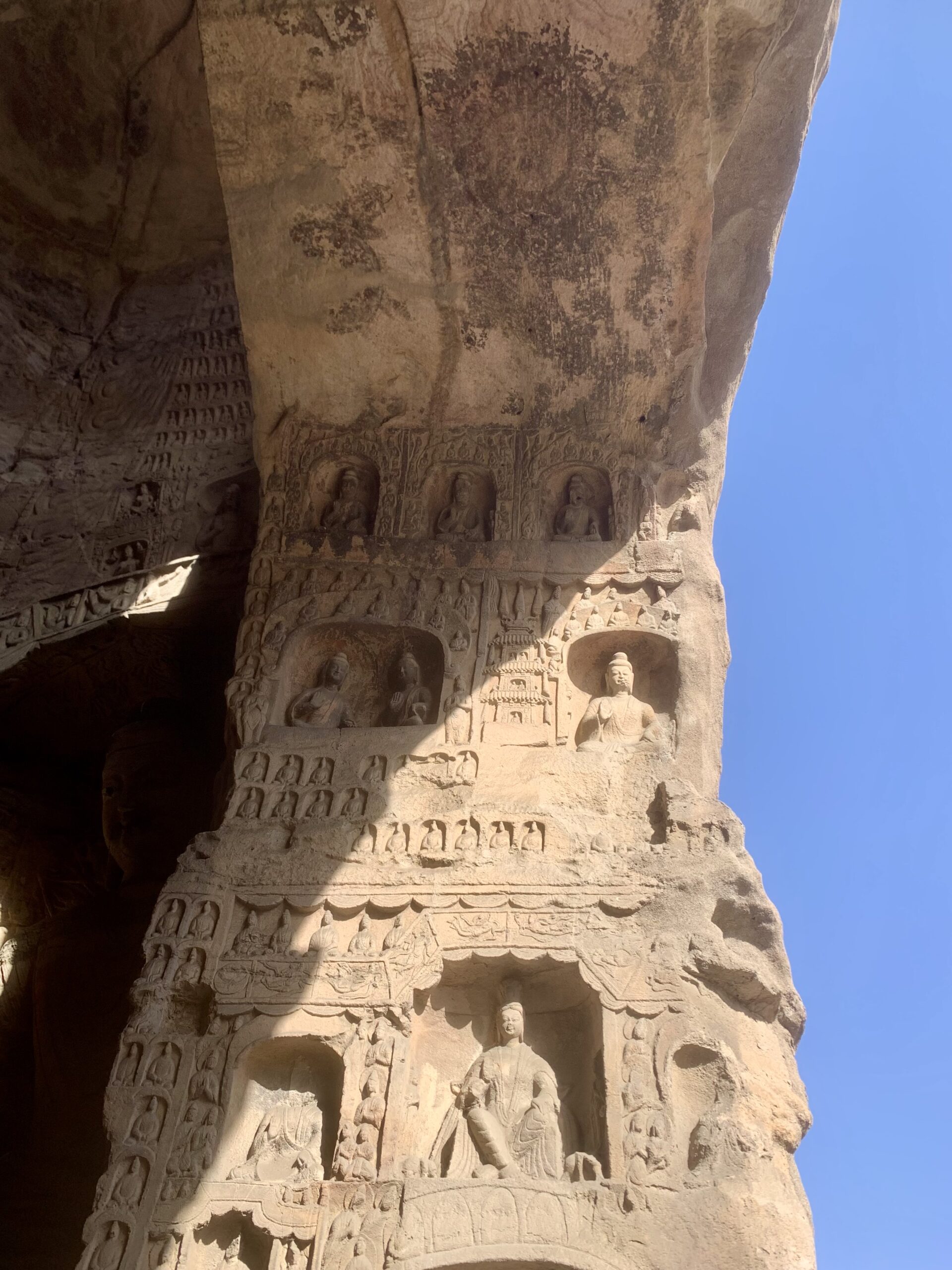
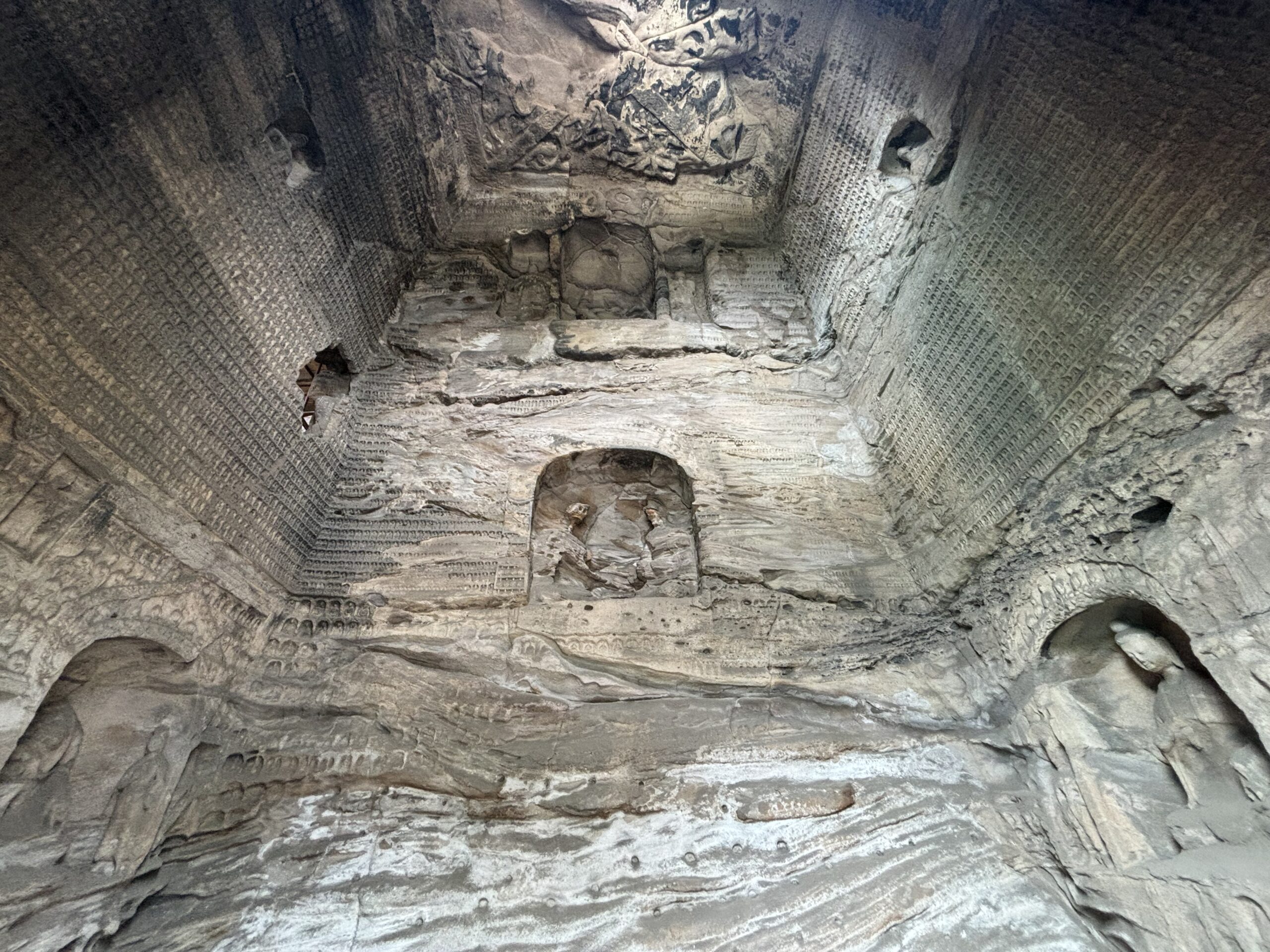
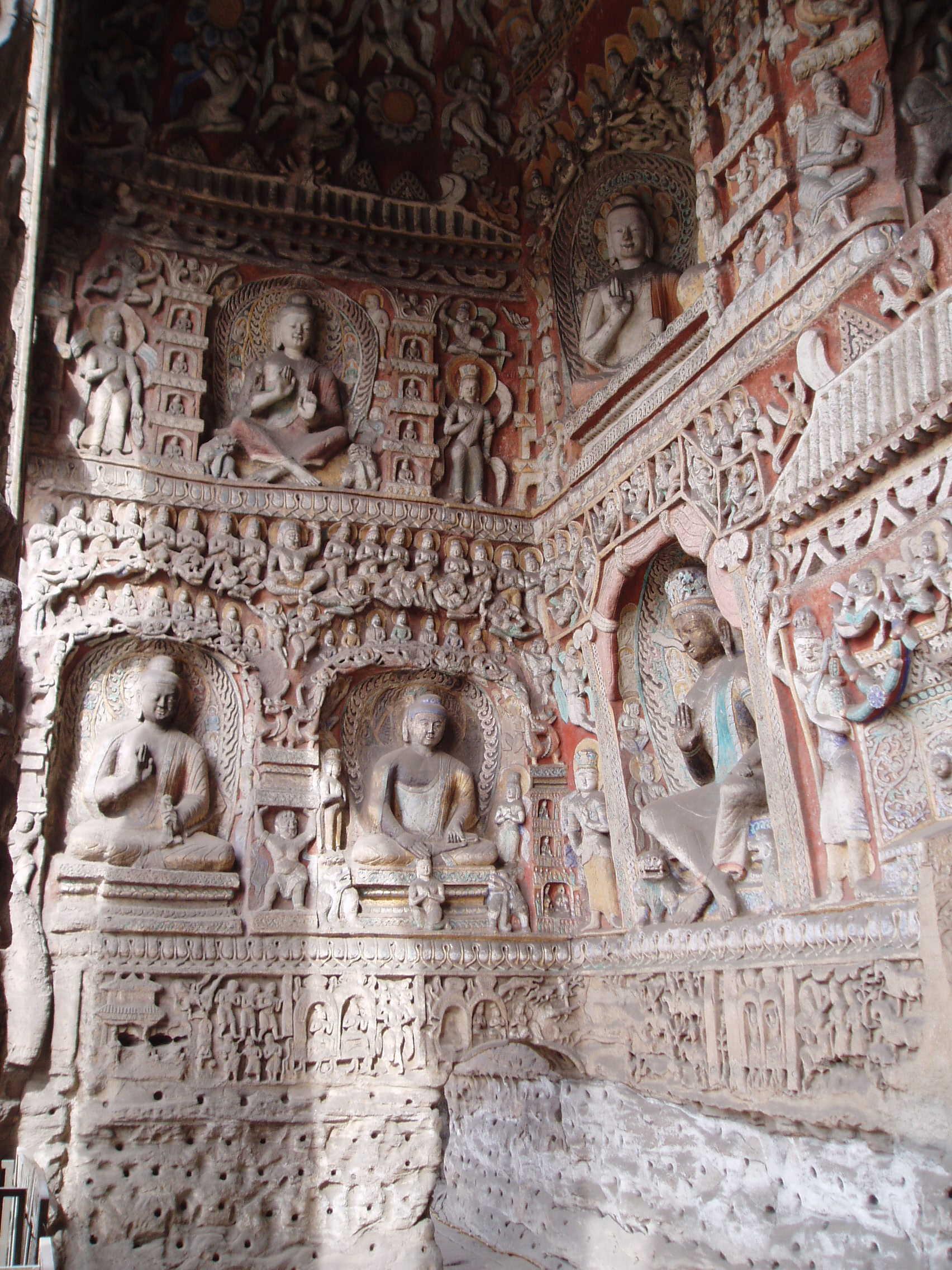
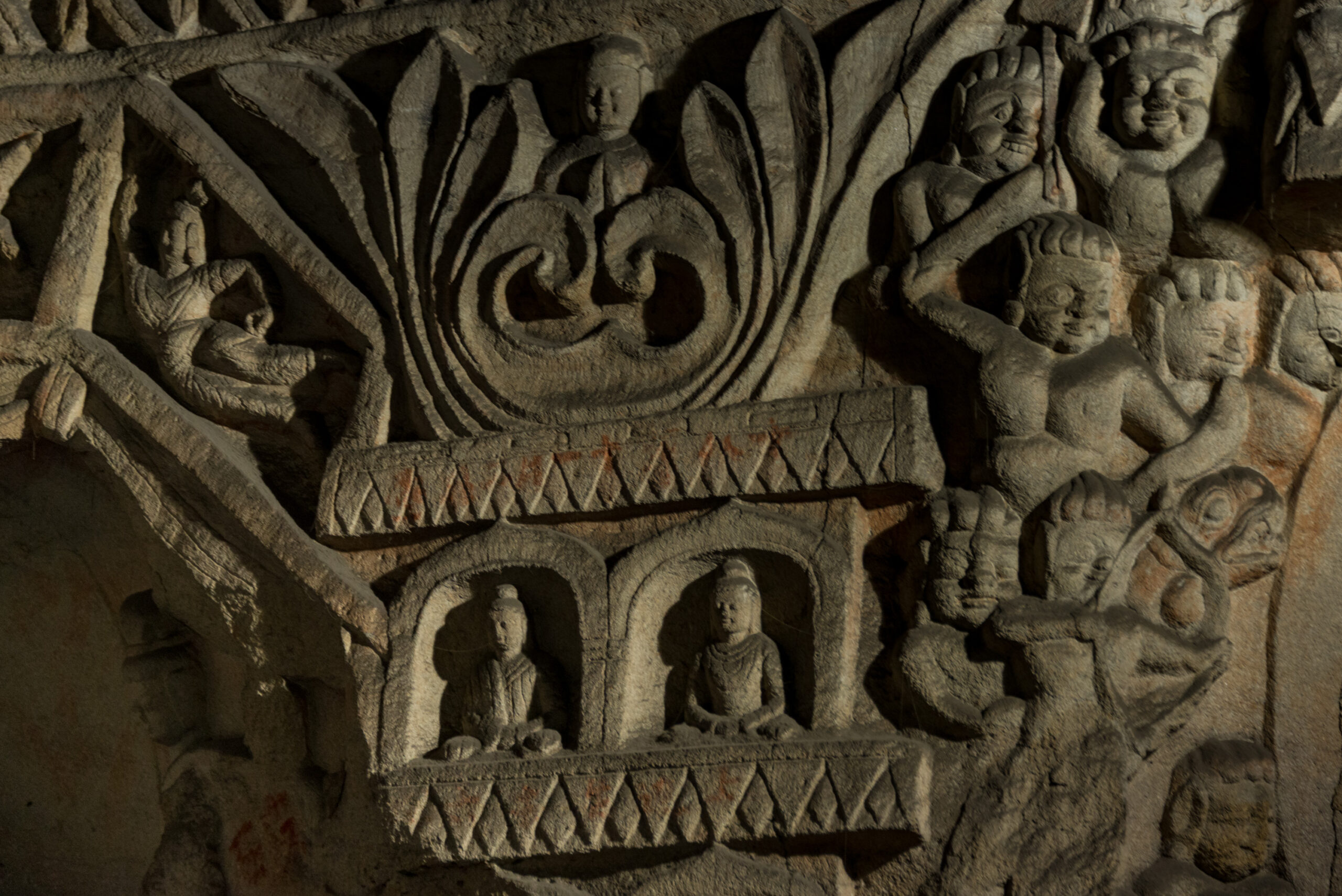
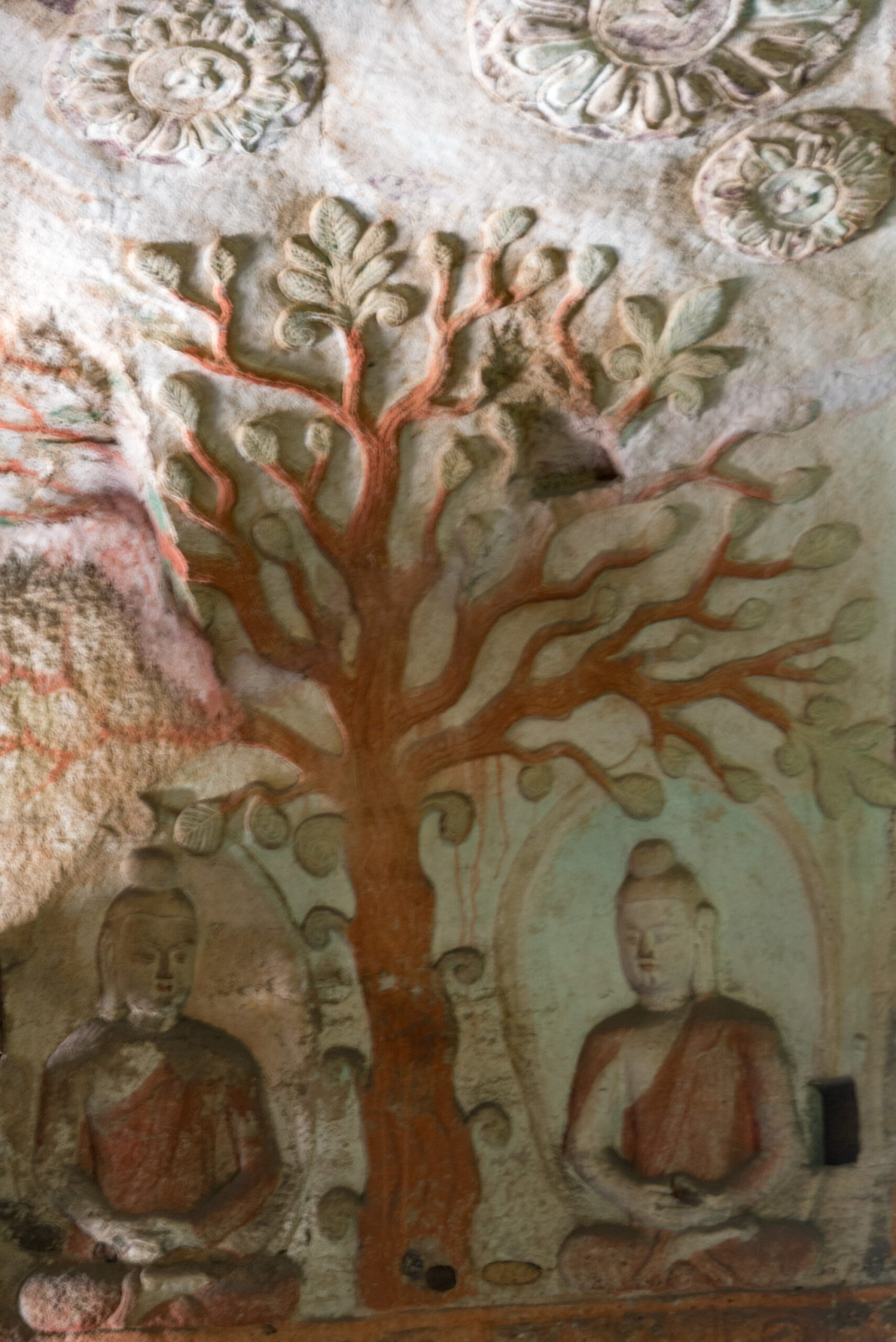
Image from left to right: Buddha Statues by Marcin Białek, CC BY-SA 4.0, Wikimedia Commons. Buddhist Tower Carvings by Dudva, CC0, Wikimedia Commons. Cave 15 interior Buddha Wall by Thebrainchamber1, CC BY-SA 4.0, Wikimedia Commons. Colorful Buddhist Sculptures by Steve Cadman, CC BY-SA 2.0, Wikimedia Commons. Relief Carvings by xiquinhosilva, CC BY 2.0, Wikimedia Commons. Tree of Life Mural by xiquinhosilva, CC BY 2.0, Wikimedia Commons.
Panoramic VR
720-degree panoramic virtual tours have been developed, allowing remote visitors to explore each grotto in full 3D, zoom into intricate sculptures, switch between languages, and navigate freely across different caves for a personalised experience.
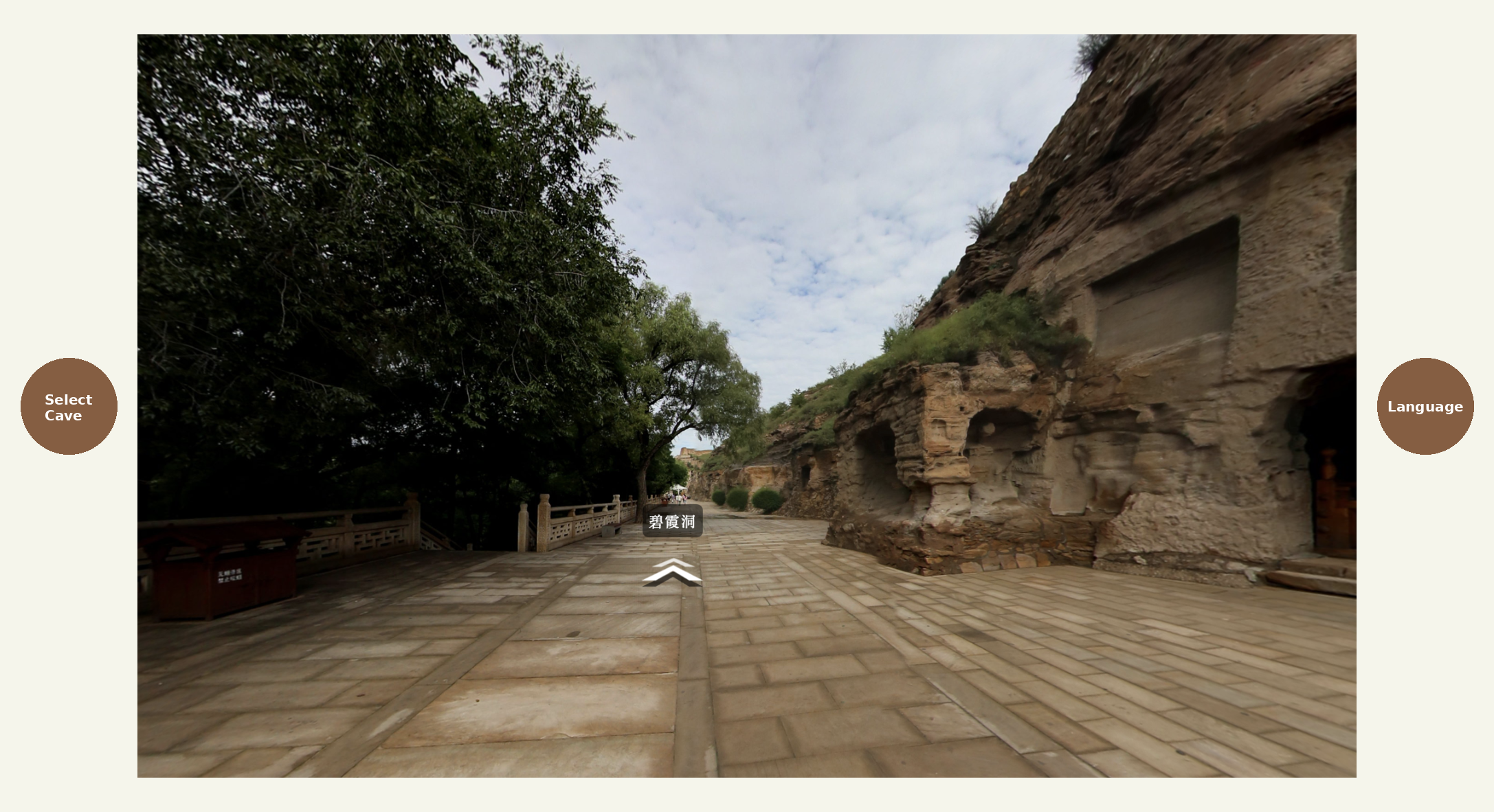
*This image is used to represent the concept of the proposed VR experience. It serves as a prototype illustration only.
Video Center
Explore a selection of videos showcasing the history, culture, and significance of the Yungang Grottoes.
Video: History Piece (2024, May 12). The History of Yungang Grottoes and it’s Giant Buddha Statues . Youtube.https://www.youtube.com/results?search_query=yungang+grottoes
Video: Virtual Reality China (2024, November 14). Travel China: Yungang Grottoes 云冈石窟 . Youtube.https://www.youtube.com/watch?v=hbibz955MZc&t=9s
Climate Change Threats
Like many heritage sites around the world, the Yungang Grottoes are increasingly vulnerable to the effects of climate change. Wind erosion gradually wears down the intricate surface details of the sculptures, while air pollution from coal mining and burning contributes to chemical weathering that weakens the rock structure. Rising humidity and increased rainfall further degrade murals and encourage biological growth. Together, these environmental changes accelerate the deterioration of the ancient carvings and pose significant challenges to ongoing conservation efforts.
In response to increasing environmental threats, a variety of protective measures have been implemented at the Yungang Grottoes to help preserve the site for the future. Physical conservation has focused on stabilising the caves and reinforcing weakened structures. At the same time, digital technologies have played a key role in adaptation. High-resolution 3D laser scanning has been used to document the current condition of sculptures and architectural features. These digital records not only assist in restoration planning but also act as long-term archives in case of irreversible damage.
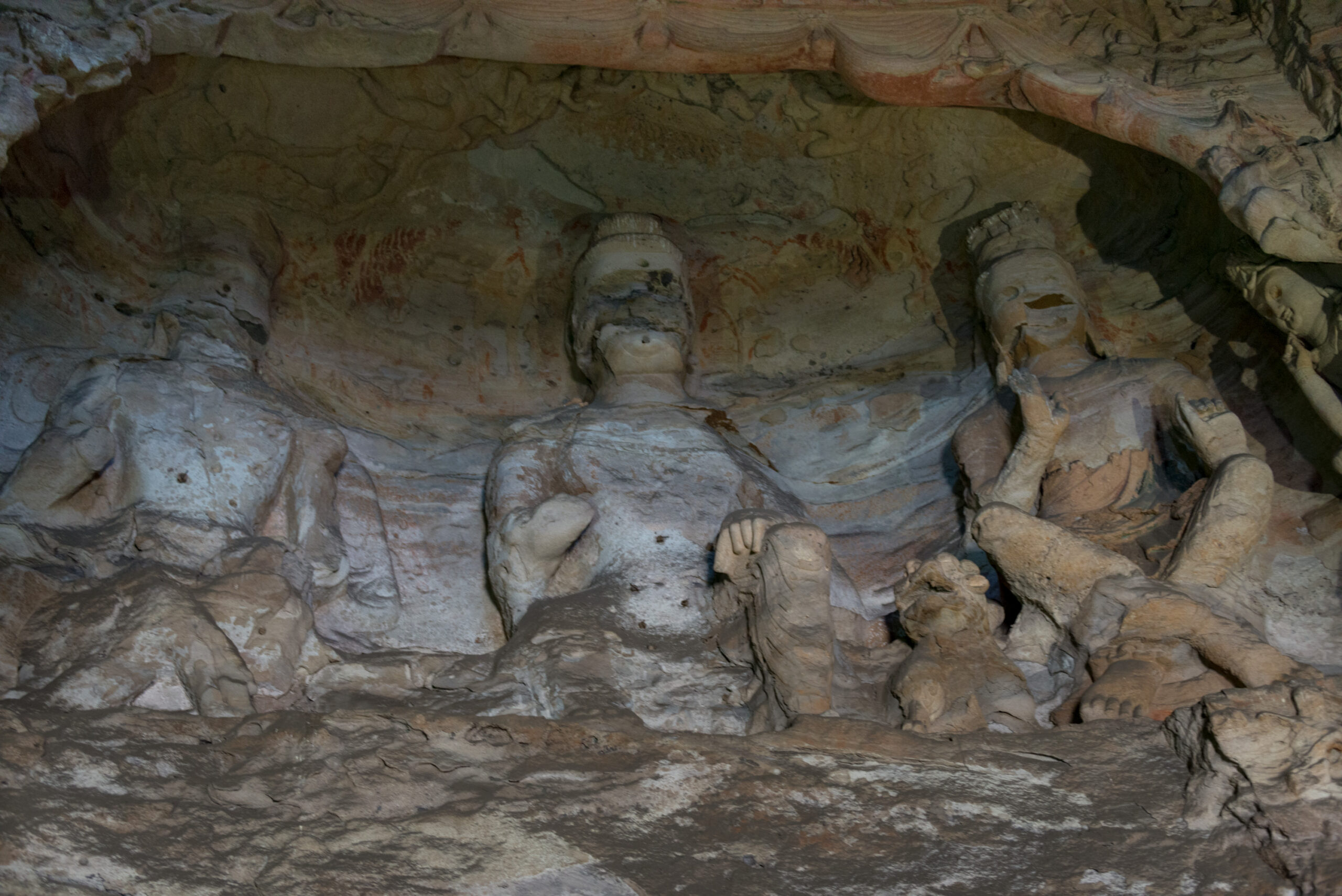
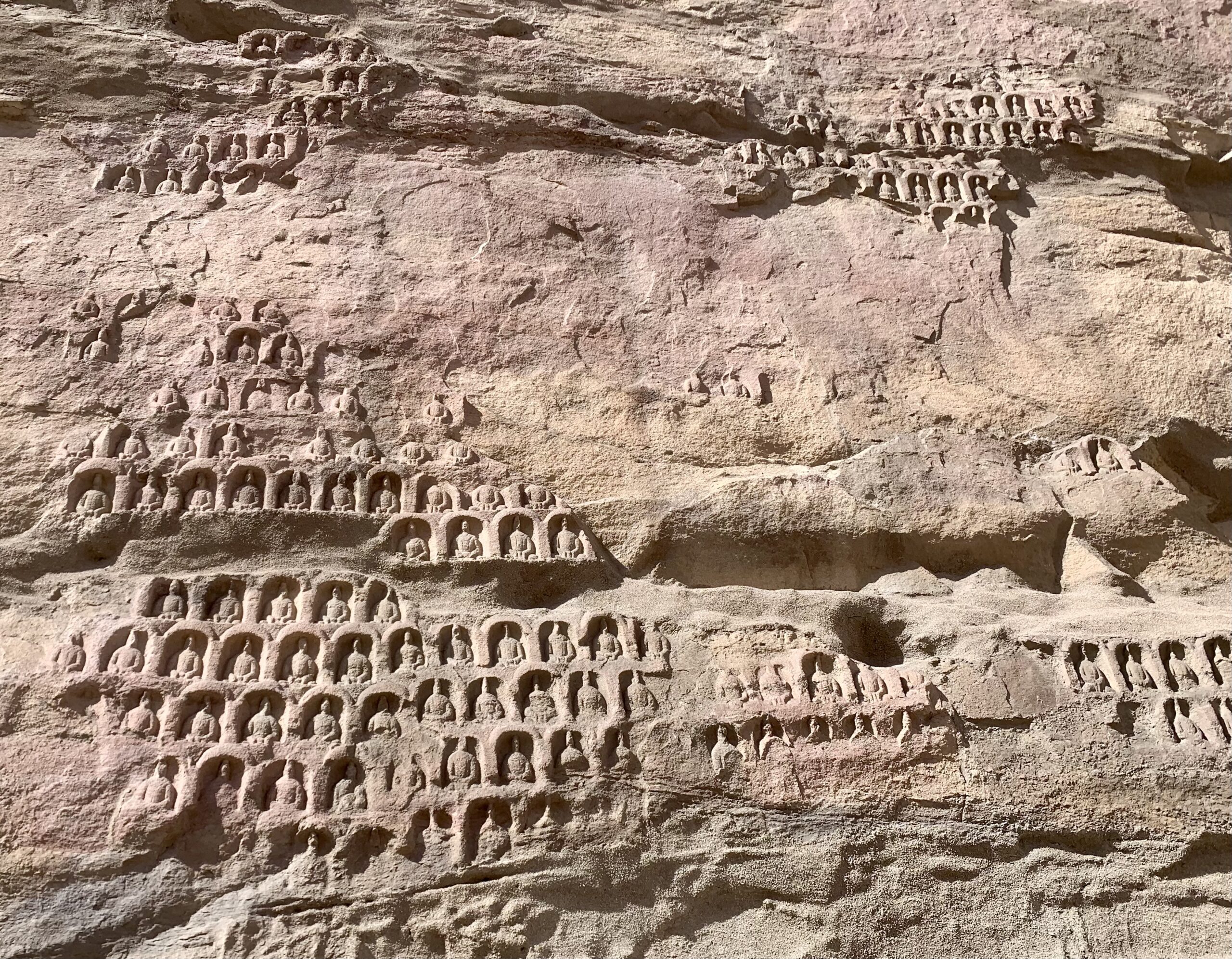
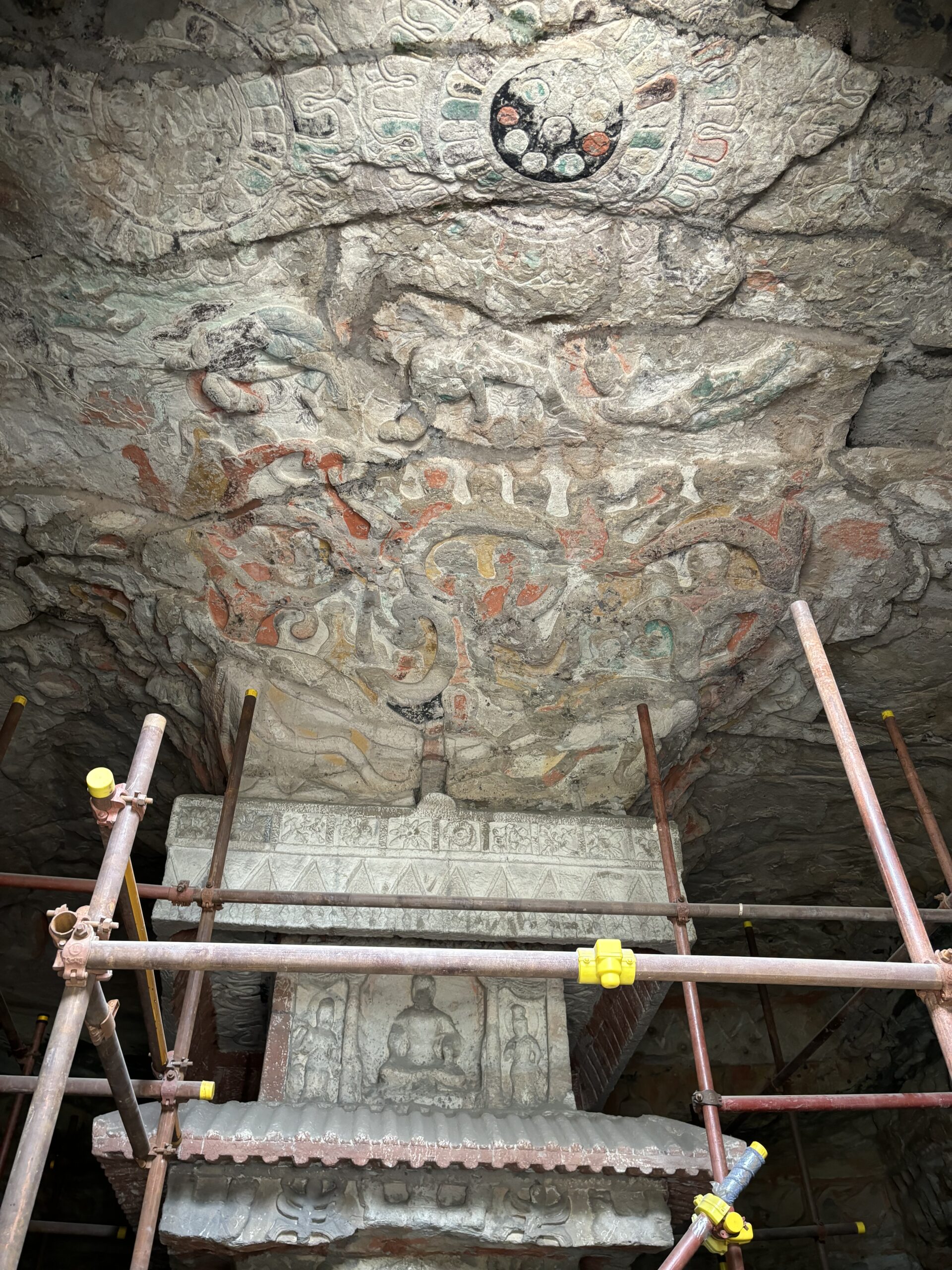
Image from left to right: Weathered Buddha Statues by xiquinhosilva, CC BY 2.0, Wikimedia Commons. Miniature Buddha Relief Wall by Dudva, CC0, Wikimedia Commons. Ceiling Paintings and Pagoda Restoration by Thebrainchamber1, CC BY-SA 4.0, Wikimedia Commons.
Sustainable Development Goals (SDGs)
Our exhibition aligns with several of the United Nations Sustainable Development Goals (SDGs):
SDG 4 Ensure inclusive and equitable quality education and promote lifelong learning opportunities for all
The exhibition fosters cultural awareness and climate consciousness, promoting lifelong learning about heritage preservation.
SDG 11 Make cities and human settlements inclusive, safe, resilient and sustainable
The exhibition supports sustainable communities by highlighting the historical significance and cultural value of the Yungang Grottoes.
SDG 13 Take urgent action to combat climate change and its impacts
The exhibition raises awareness of the impacts of climate change on cultural heritage, encouraging action to protect vulnerable sites like the Grottoes.
SDG icons © United Nations. Used with reference to https://www.un.org/sustainabledevelopment
Your Actions Matter: Get Involved
As this exhibition has shown, the Yungang Grottoes are more than just an ancient Buddhist site. They are a living record of cultural exchange and creative devotion that has lasted for over 1,500 years. Today, this extraordinary heritage is under threat — not from war or neglect, but from the growing impacts of climate change. Erosion, pollution, and environmental instability are accelerating the deterioration of the site and many others like it around the world.
Protecting places like this isn’t just a job for professionals. It depends on a wider effort from people who care. Whether that means spreading awareness, supporting sustainable choices, or just sharing what you’ve learned here, every action matters. In working together, we have the chance to protect not only the Yungang Grottoes, but cultural heritage sites around the world — not just for today, but for the generations that follow.
Learn more
Here are a few resources to explore further:
- UN Sustainable Development Goals Discover the 17 Sustainable Development Goals — from ending poverty and achieving quality education, to ensuring clean energy, sustainable cities, and urgent climate action — all working together to build a better future for people and the planet, including efforts to safeguard cultural heritage.
- Climate Heritage Network An international network helping cultural organisations and communities integrate heritage, creativity, and cultural expression into global climate solutions.
- Yungang Grottoes Official Site Explore the grottoes through 720-degree immersive VR, with detailed introductions to individual caves, their artistic features, and the historical changes across centuries.
References
[1] U. W. H. Centre, “Yungang Grottoes,” UNESCO World Heritage Centre. https://whc.unesco.org/en/list/1039/
[2] M. Hogan, “Silk Road, North China,” The Megalithic Portal, 2019. https://www.megalithic.co.uk/article.php?sid=18006
[3] L. G. Salmon, C. S. Christoforou, and G. R. Cass, “Airborne Pollutants in the Buddhist Cave Temples at the Yungang Grottoes, China,” Environmental Science & Technology, vol. 28, no. 5, pp. 805–811, May 1994, doi: https://doi.org/10.1021/es00054a010.
This website respects the copyright of all images used. If you are the owner of any image or video on this page and believe your rights have been violated, please contact: wc54@st-andrews.ac.uk