Ancient Heritage Conservation Project / Digitization
Introduction
With this prototype exhibit I will lay the foundations of a digital portal which will store and offer access to digitized versions of the numerous ancient, ethnographic and cultural treasures of Plovdiv. Here users will find a collection of  various media including pictures, videos, virtual tours and 3D models plus a lot of metadata, so they can explore the many remarkable archaeological sites, buildings and other landmarks scattered across this ancient settlement, which has now become the buzzing cultural capital of Bulgaria.
I will start with a brief introduction, informing the visitor with some historical background and explaining why the place is so remarkable, unique and diverse. Then I will continue with a few sections devoted to some of the many landmarks that will be part of the virtual experience. For each landmark I will include various media, either embedded in this web page or linked.

The completed exhibition will be in the form of a virtual tour of the whole city and surrounding area. There will be a list of all available landmarks / museums / archaeological sites / architectural monuments / religious spiritual sites etc /, which will be expanded as more resources are added. For each landmark on the list there will be at least one video "walk around tour" or at least one 360 photo-sphere to allow for immersive experience, plus of course background information in textual or video form and some more media presenting the landmark in different times of day, year and during different events. Each landmark will have its own space uniquely arranged and presenting all available resources, with added musical or folklore background where appropriate.
About Plovdiv
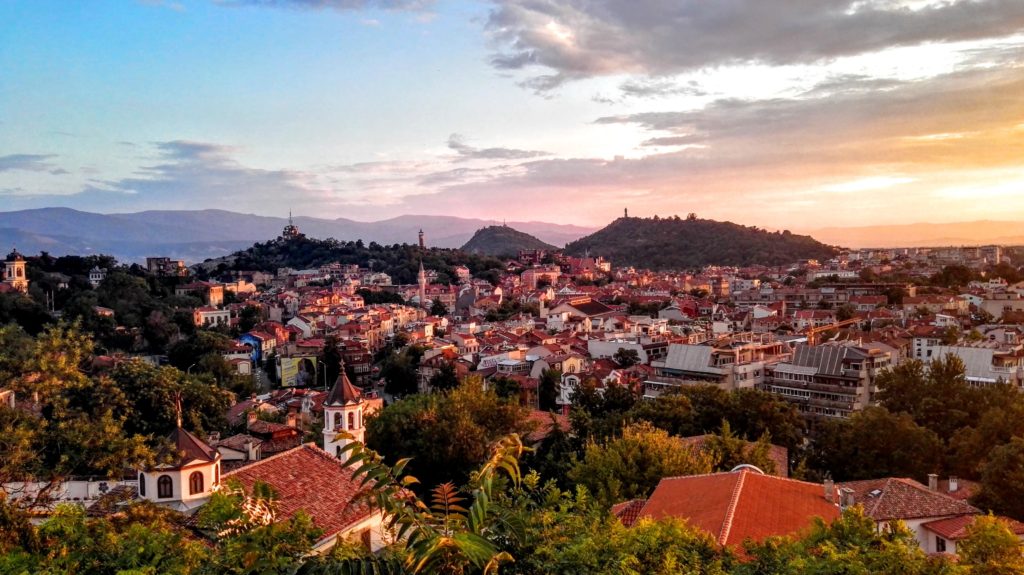
According to Lonely Planet, Plovdiv is the 7th oldest settlement in the world, dating back to 7000 B.C. when the very first Neolithic settlements came into existence. It was established upon Seven hills, which are in the central part of today’s city and are kept as architectural and natural protected sites for locals and tourists to enjoy the peace, quiet, sunrises, sunsets and the views over Plovdiv and the area. During the ages the place held various names some of which are: Kendrissos , Evmolpias , Philippopolis, Pulpudeva , Trimontsium , Ulpia , Flavia Julia , Plapdiv , Puldin Ploudin and Filibe.
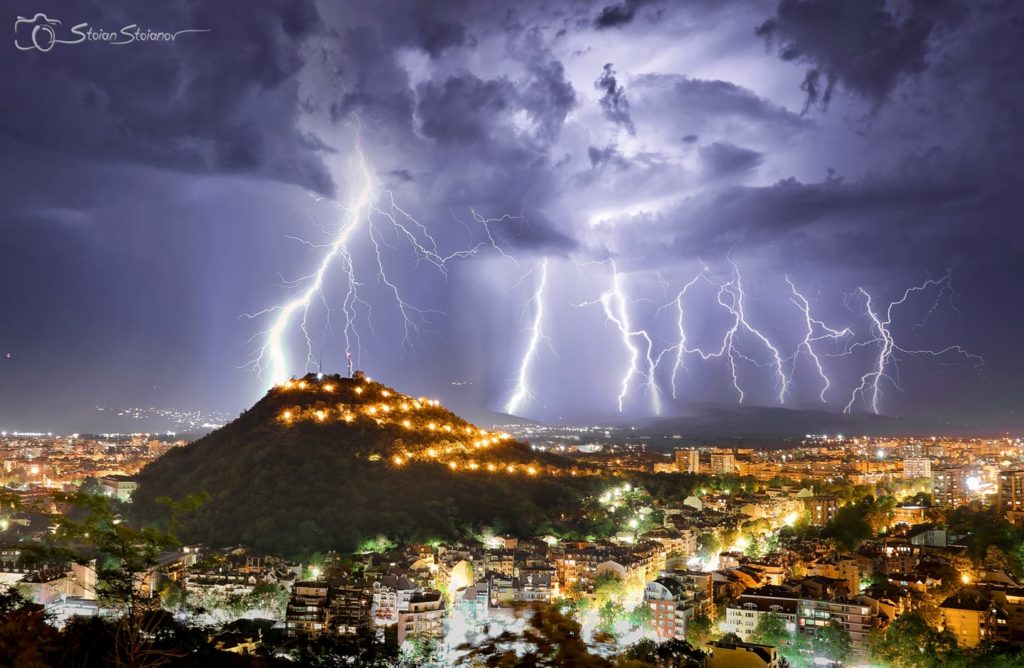
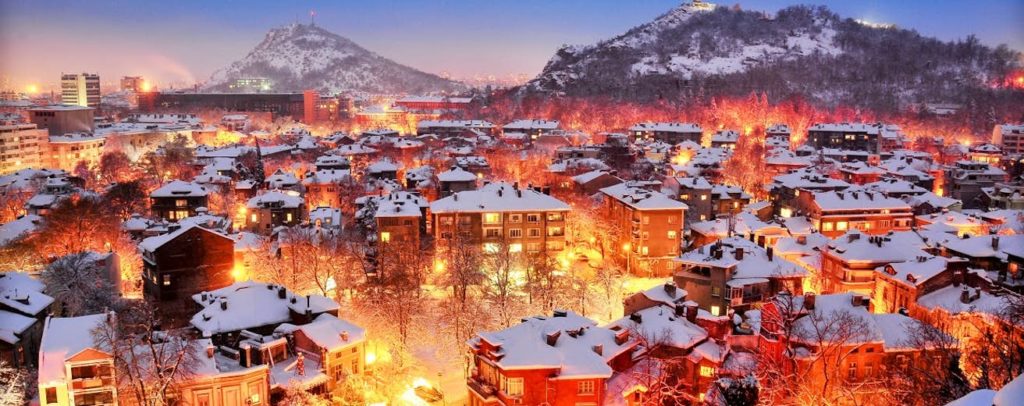

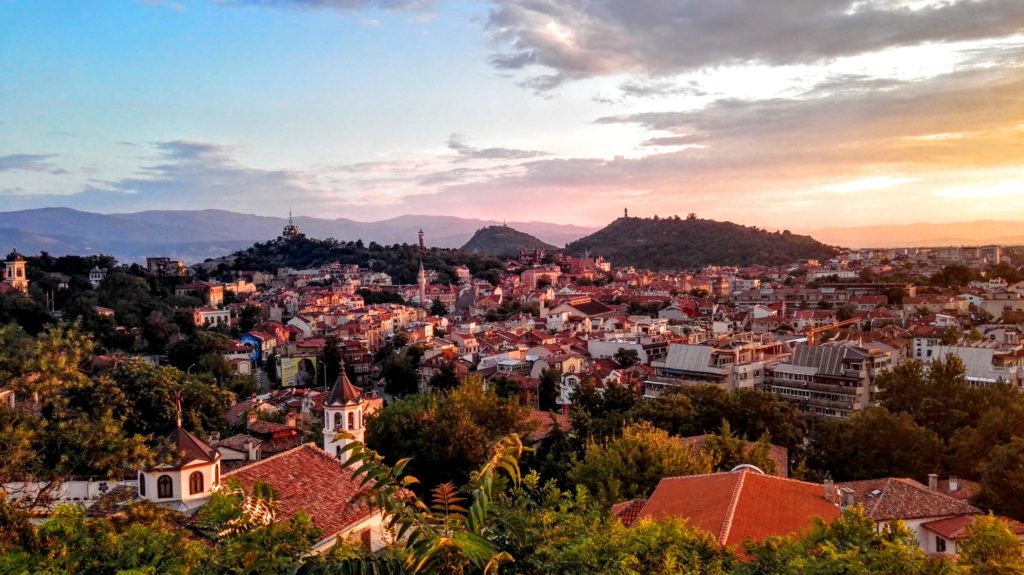
Looking around from the top of one of the hills, one contemplates a perfect plane, surrounded by distant mountains on all sides. Because of its central location and geographical landscape, it has always been a major cultural and trade centre where people from different countries, religions and status mingle. Many famous public persons were born and raised here, including a Bulgarian president, several prime ministers, famous sports people (some of which Olympic champions), artists, writers, and scholars. After the Neolithic Age, Plovdiv was a Thracian settlement and then during the centuries it was ruled by Persians, Greeks, Celts, Romans, Goths, Huns, Bulgars, Slavs, the Rus’, Crusaders, and Turks. All these civilizations have left something in Plovdiv, making it unique, extremely diverse, colourful, rich in culture and spiritually vibrant.
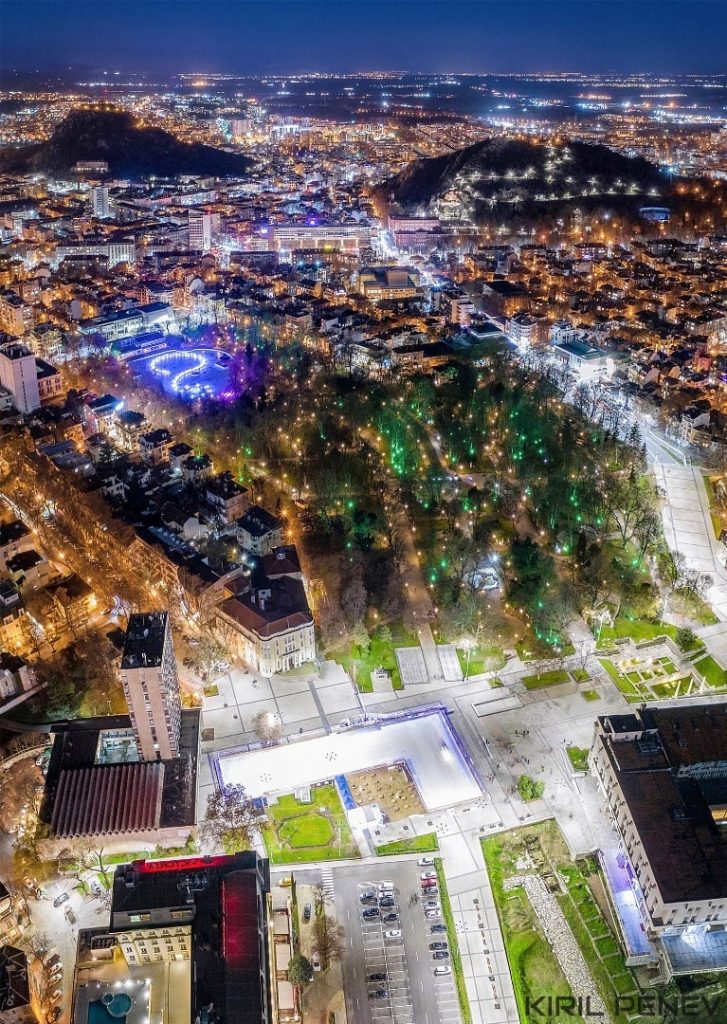
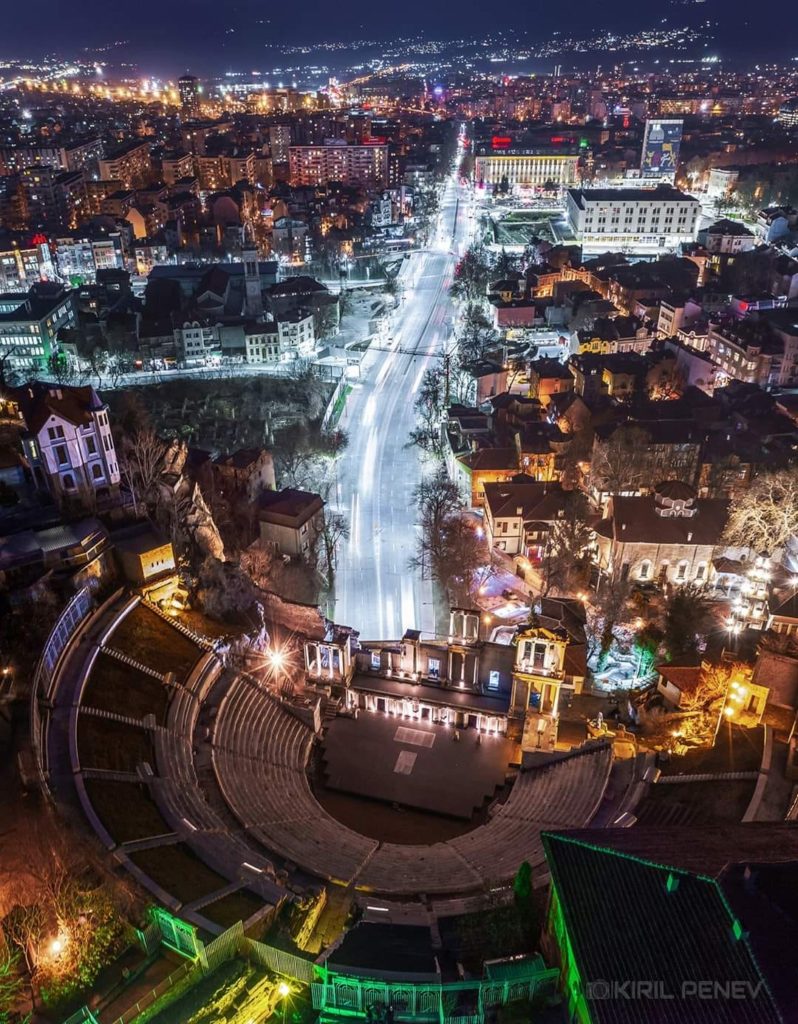
Today Plovdiv is the second largest city in Bulgaria with 675 000 metropolitan area population. It is the cultural, art and entertainment central hub of the country and was chosen for one of the European Capitals of Culture for 2019, along with the picturesque Matera in Italy.
Pick one or more of the short videos below, which will tell you more about Plovdiv, its secrets and show you around its landmarks.
Here is a 360 photo-sphere view of Plovdiv captures with a drone from the top of one of the hills.
The Roman Aqueduct of Philippopol
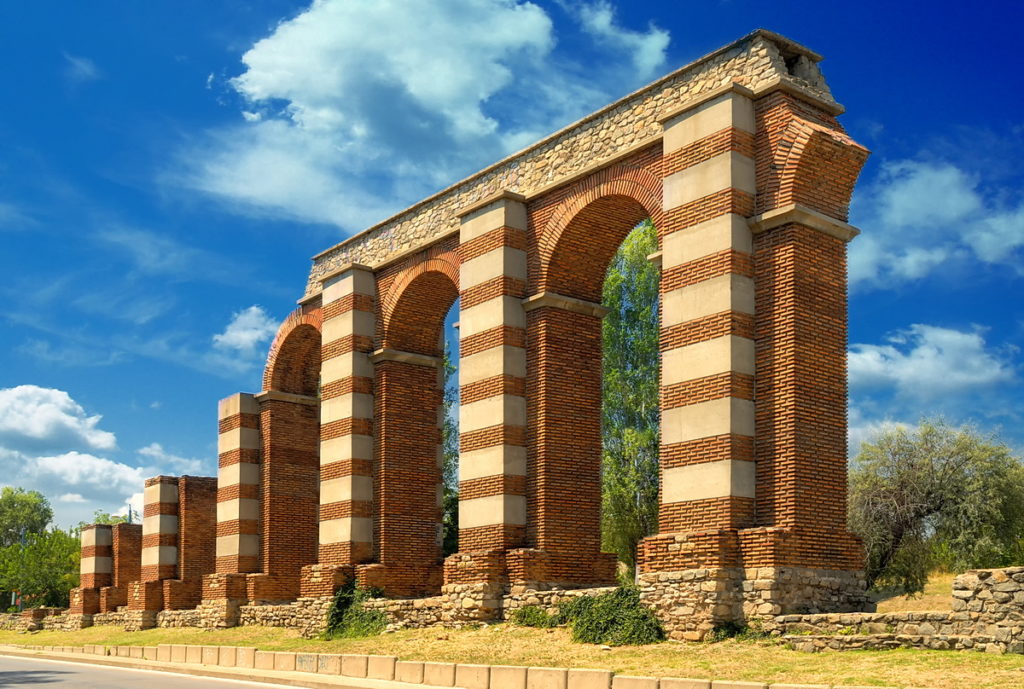
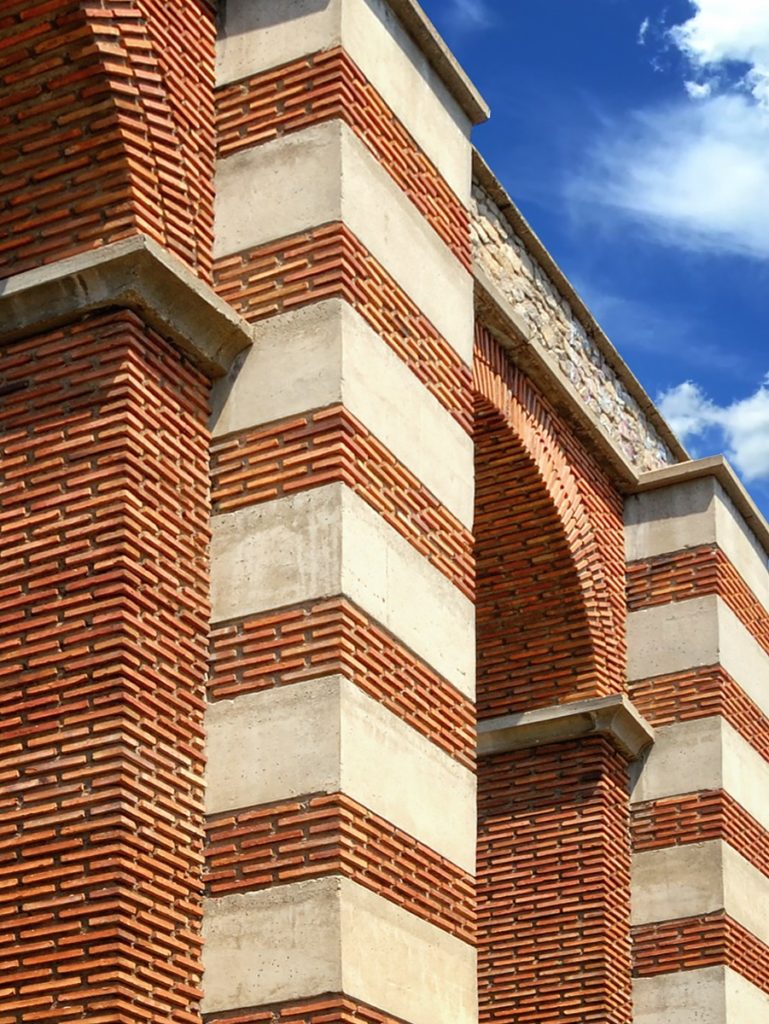
Back in this early period very few cities were equipped with such sophisticated amenities. Aqueducts required extensive planning, engineering and were very expensive to construct, this signifies the high importance and status of Philippopolis as one of the major centers in the Roman Empire, worthy of such hefty investment. In Europe remains of Roman Aqueducts can only be found in two other areas – the best preserved is near Nimes in France and of course there are several sites in Rome, Italy.
The aqueduct was built around the 2nd century and its purpose was to supply Philippopolis with fresh water sourced from the Rhodope mountain. The city had a pipeline network which distributed the water supply among the major landmarks such as the Roman Stadium, where remains of the aqueduct can also be found.
Animated 3D Model
Click the button bellow to view a 3D model of the aqueduct remains, hosted on 3D Warehouse website.
Some recent pictures of the Aqueduct below:
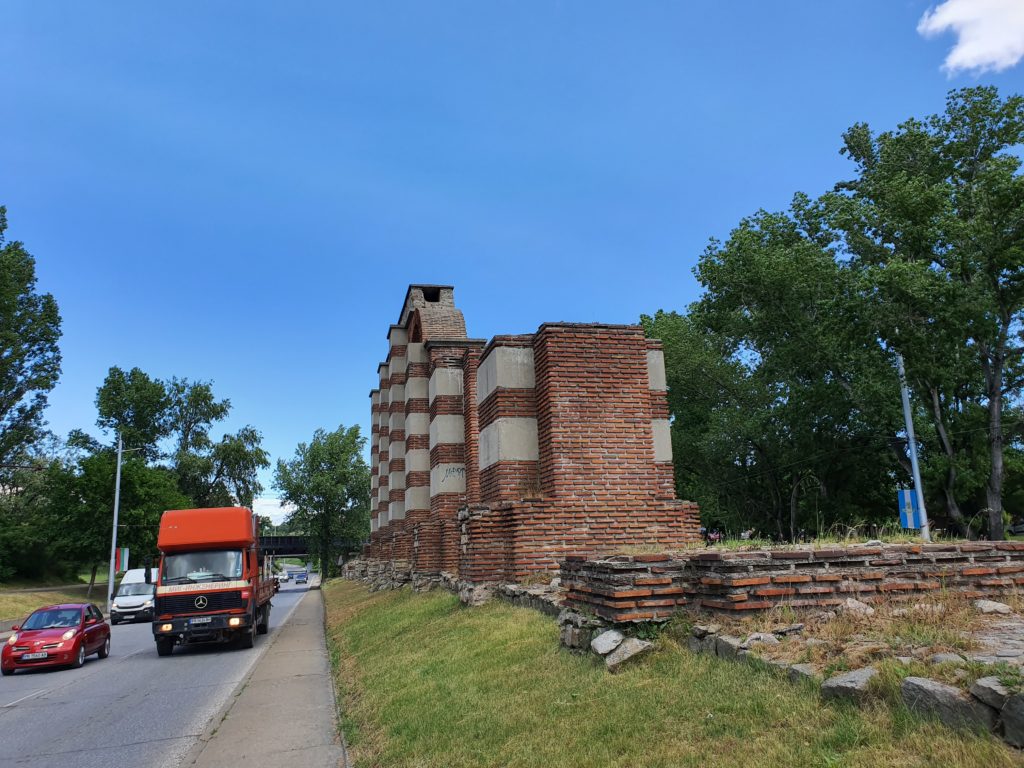
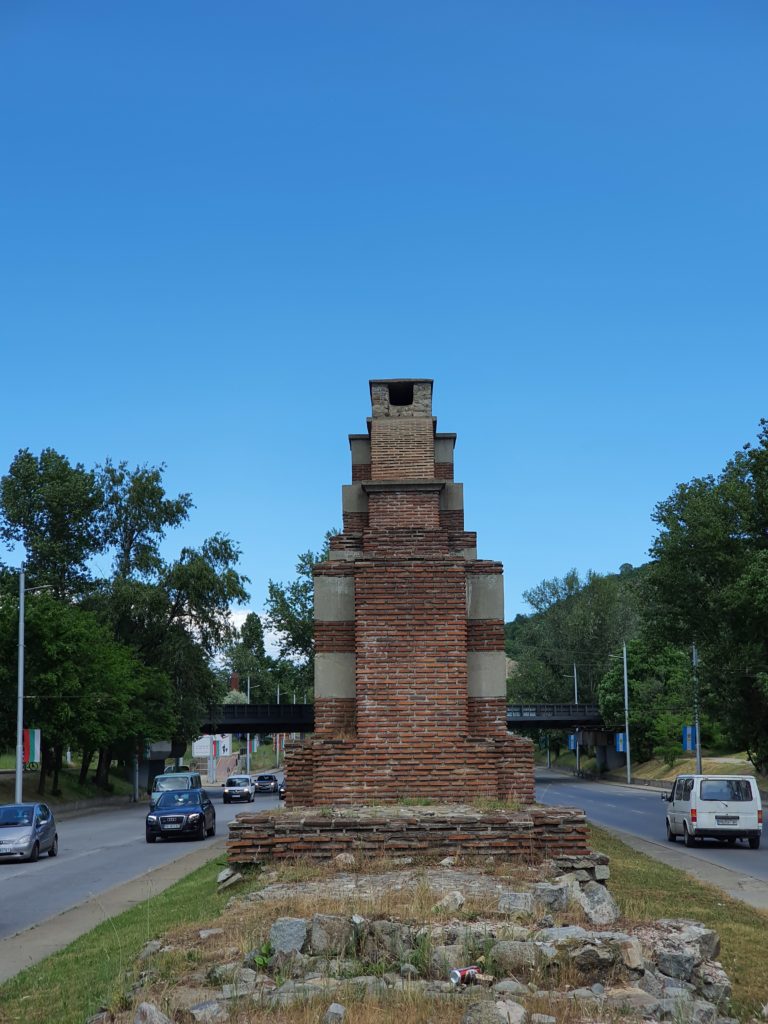
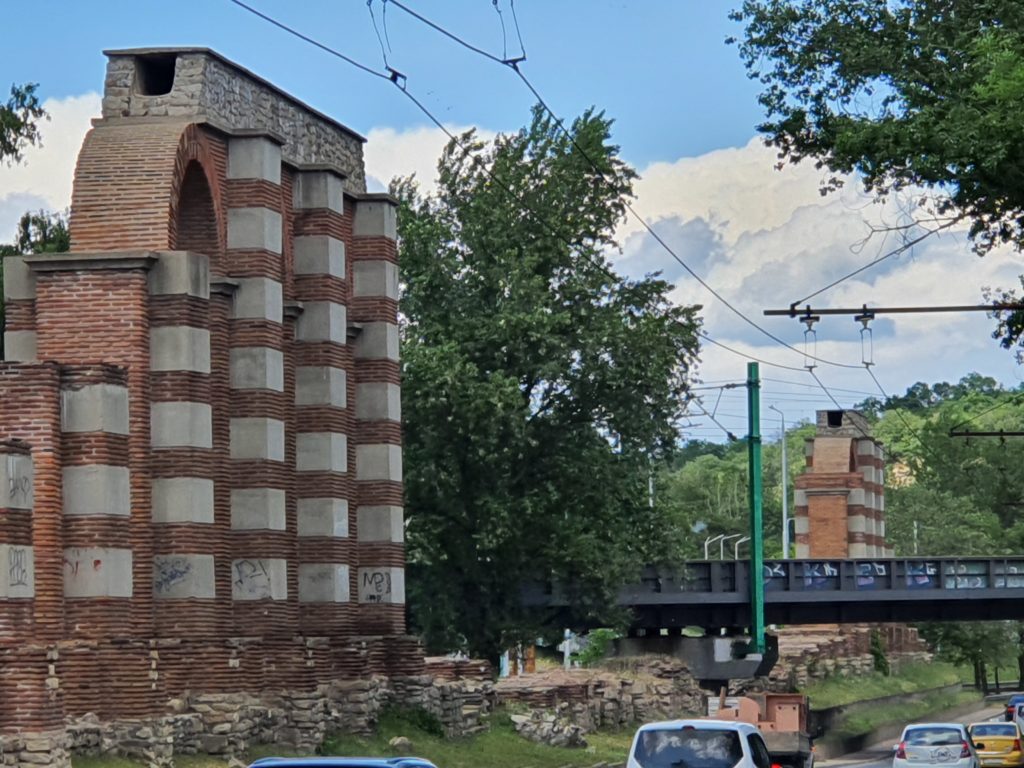
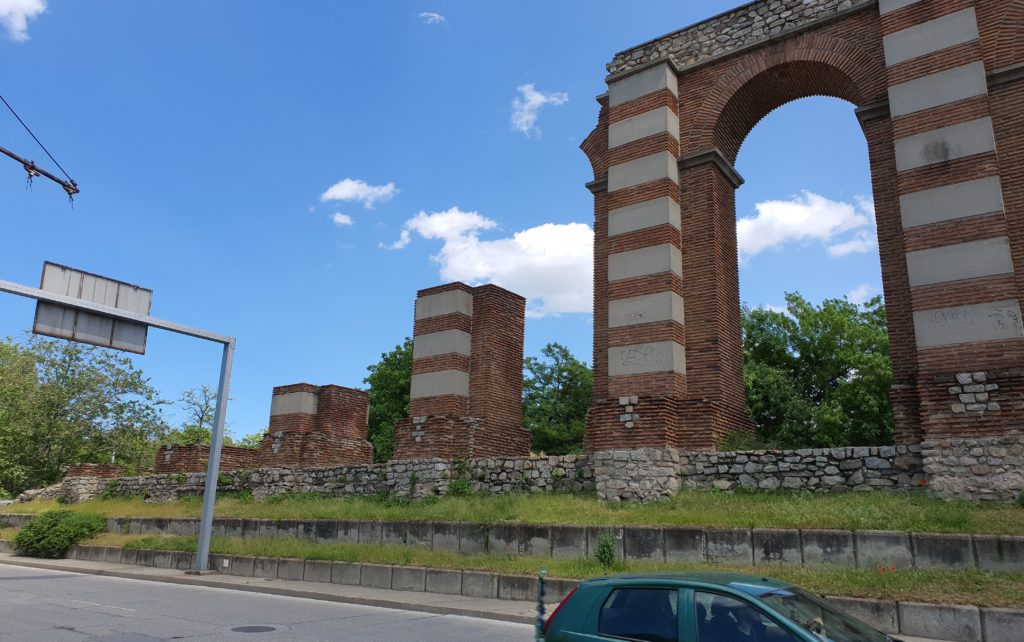
Some pictures I made
My attempt at a virtual tour on Roundme:
Another surviving part of the aqueduct network can be found on the slopes of one of the seven hills in the city center. It was recently restored via an European project and now has added fountain, which underlines the importance, beauty and purity of water and also commemorates the genius of the Romans and their ability to construct such engineering masterpieces in the early ages.
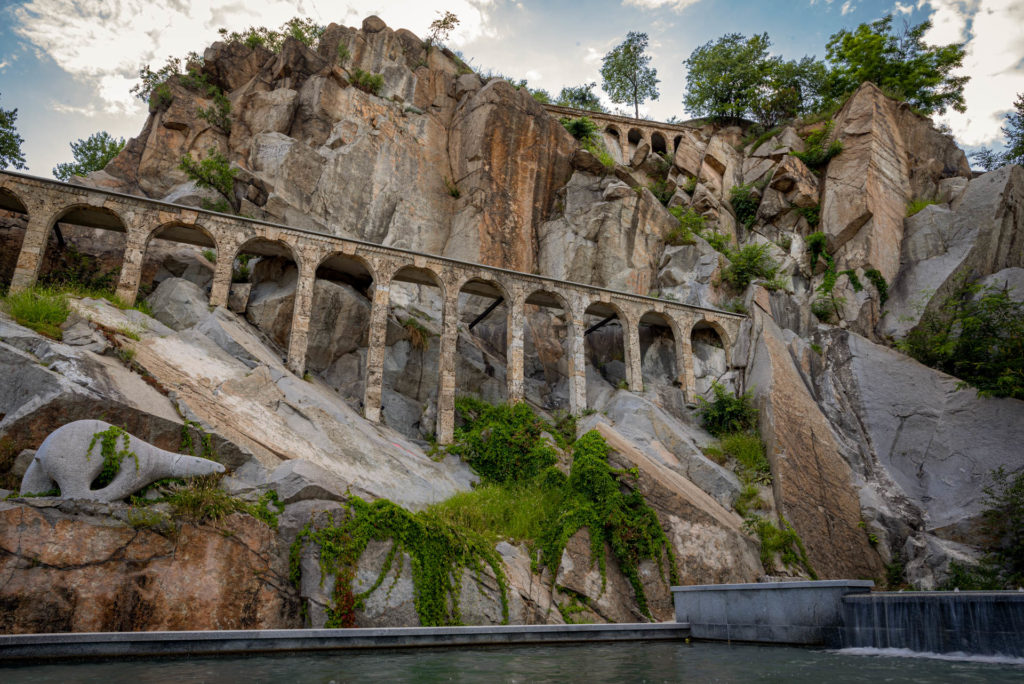
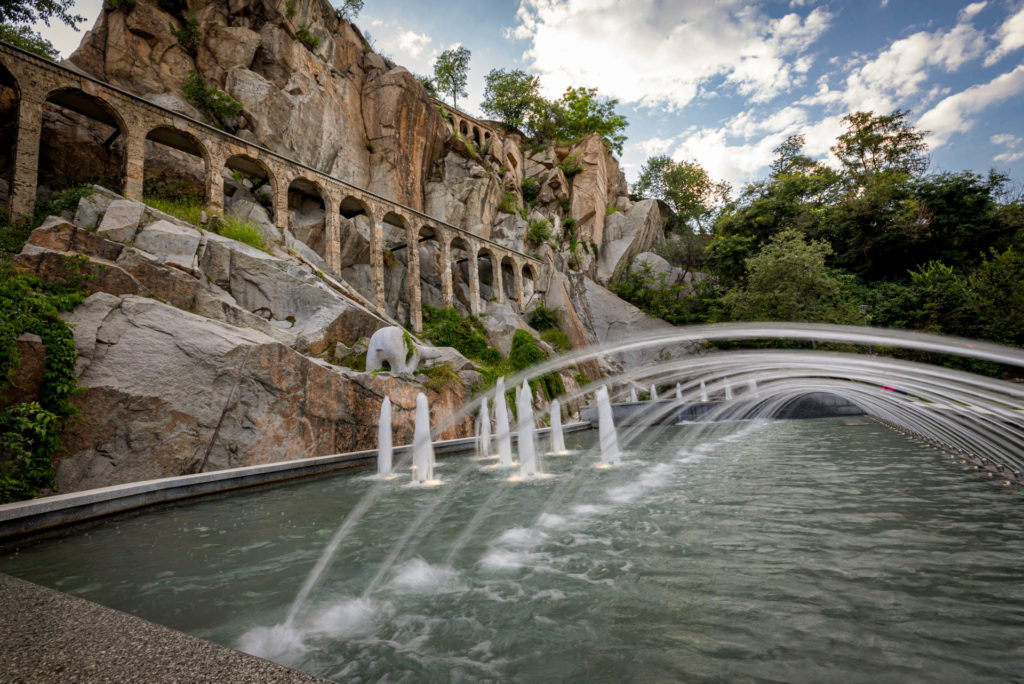
This is an evening video where you can see the colourful lights supplementing the fountain performance, and the majestic aqueduct in the background.
Regional Ethnographic Museum
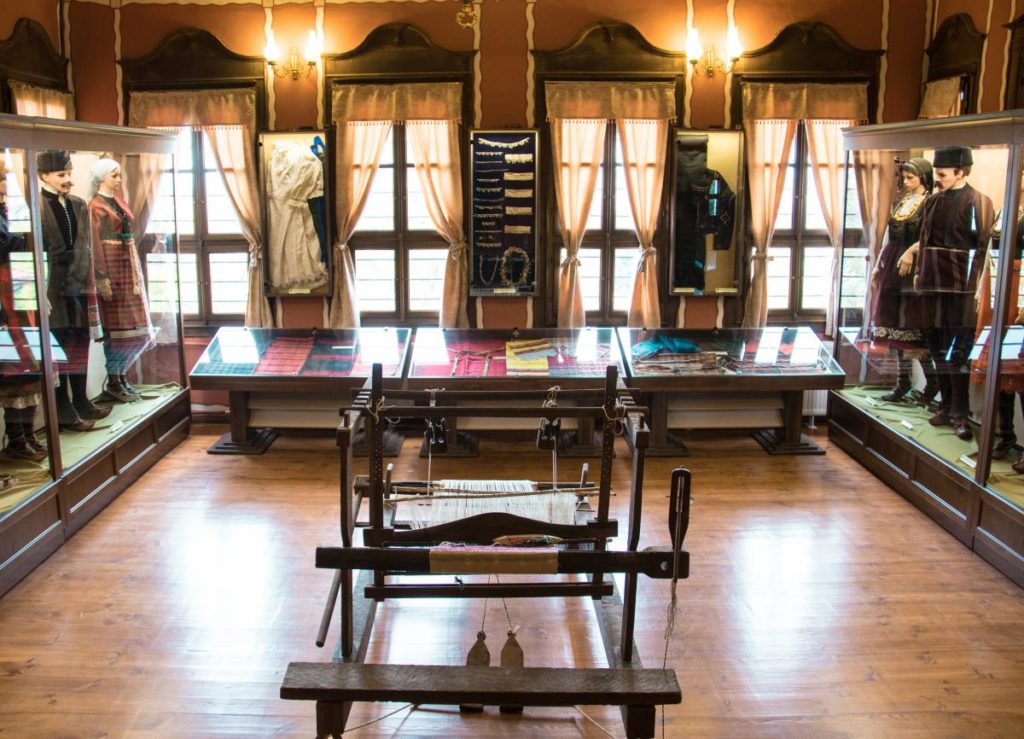
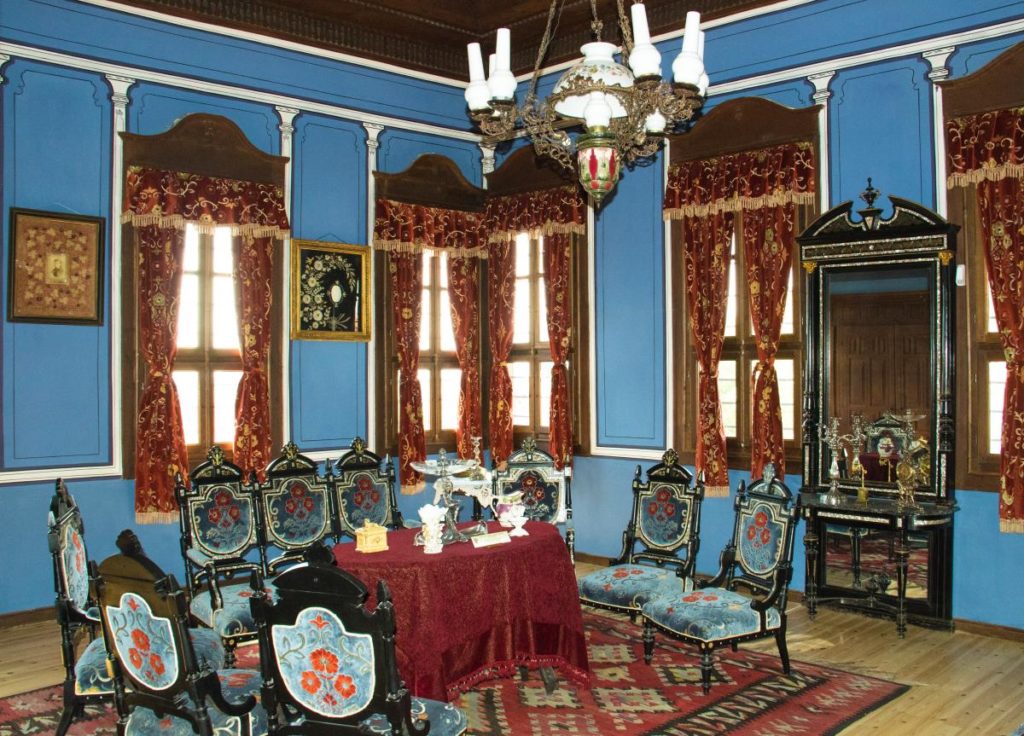
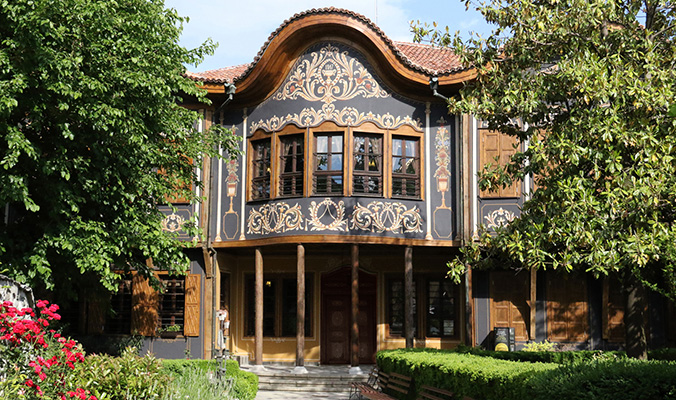
This is the second largest such museum in the country, collecting and exhibiting various artifacts and works of art with cultural value from all ages. They have created a great website, which apart from the usual image galleries offers virtual exhibitions hosted on Google and also a virtual tour of the whole building. Therefore I would like to use this as an example, upon which virtual tours and exhibitions for the other museums and archaeological sites to be created.
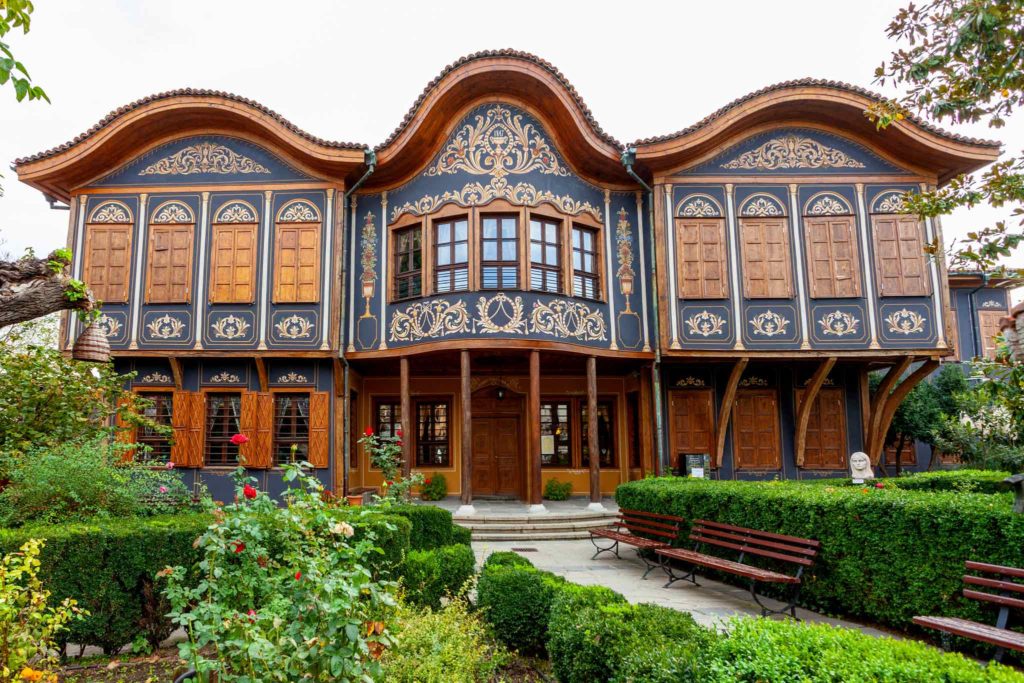

Online Exhibitions
There are several magnificent online exhibitions offered currently, which can be viewed on Google:
The Museum offers an extensive virtual tour, which is hosted on Google
Users can navigate through most of the rooms of this lavish house and enjoy high definition imaging, they can contemplate the artifacts unhindered by other visitors. On the right they can switch between the two floors 0 and 1.
Here is a couple of photo-spheres from the front garden hosted on Google.
A great addition to the virtual experience of this museum would be some 3D artifact viewing. Making all artifacts available in 3D would be time consuming and expensive at first, but initially only the most interesting, oldest and unique objects can be digitized.
There are also 3D models available on 3D Warehouse website for the museum and other interesting sites in the Old Town of Plovdiv
Below is a model of a famous spot: Hisar Kapiya, Ethnographic museum and “St. Constantin & Elena” church temple.
I also made an attempt of a photo-sphere at the entrance of St Constantin and Helena church next door:
“Nebet Tepe” Archaeological Complex
The earliest settlements on the territory of Plovdiv are dated back to the VI millennium BC. There were several Prehistoric settlements on the territory of the modern city, but the oldest and most important one was located on a hill known as Nebet tepe.
During the Hellenistic period the town began to spread towards the foot of the hills. At Nebet Hill there are found ruins of dwellings and fortifications dating from this period.
The complex of Nebet tepe continued to play an important role as a part of the fortification system of the city until the XIV century. A notable finding of that later period is a water reservoir of 350 cubic meters.
There are many photo-spheres available for this site, and this would enable a full virtual reconstruction, allowing our users to walk around using their VR headset or their computer monitor. Here are two of the many virtual tours available on Google:
Below is a birds-eye photo-sphere taken right above the landmark, but also encompassing the whole area.
Roman forum of Philippopolis
The Roman forum of Philippopolis (Bulgarian: Римски форум на Пловдив, Rimski forum na Plovdiv) is a rectangular forum (plaza) surrounded by the ruins of several ancient administrative buildings at the center of the ancient city of Philippopolis (modern Plovdiv). It was the center of public, administrative, commercial and religious life in the ancient city. Meetings, discussions, celebrations and state events were held there.
The forum covers an area of 20 hectares (49 acres), with 11 hectares (27 acres) excavated, which makes it the largest Roman forum in Bulgaria. The ancient city center was built in the 1st century AD during the reign of the emperor Vespasian, when ancient Philippopolis was laid out with a new urban plan and a forum according to the Roman model. The main streets of the city (the cardo and the decumanus maximus) intersect outside the eastern entrance of the forum. A complex of public buildings was built to the north, including the odeon, the library, and the treasury building.
The forum of the ancient city and its main street (cardo) are located at the very heart of modern Plovdiv’s city center and main pedestrian area. (text from Wikipedia)
Below is an extensive virtual tour creted by combining many photospheres on Roundme platform. (courtesy of Dimitar Voychev)
And another of Dimitar’s photo-spheres hosted on Google.
Bishop’s Basilica of Philippopolis
The Bishop’s Basilica of Philippopolis, also known as the Great Basilica, (Bulgarian: Епископска базилика на Филипопол) is a ruined church from the ancient city of Philippopolis in Plovdiv and built in the mid-4th century AD. It is the largest late antique early-Christian church discovered in Bulgaria and one of the largest from that period on the Balkans. Its architecture was remarkable. It included a central and two side naves, an apse, a narthex (anteroom), and a colonnaded atrium (inner court). A marble-decorated presbyterium (a platform for the bishop and the clergy) rose in the central nave. The Great Basilica with its magnificent floor mosaics has been excavated over many years and is now preserved in a new museum (2021). (Wikipedia)
The new museum is very popular hence all the available photo-spheres available are crowded with visitors, but still we can see the magnificent mosaics.
The Roman theater of Philippopolis
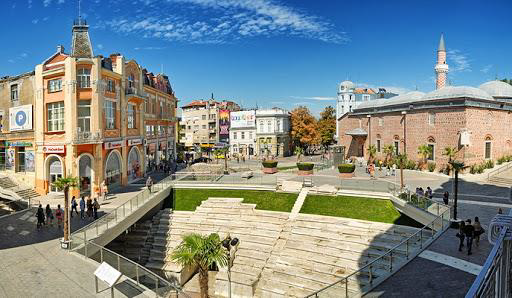
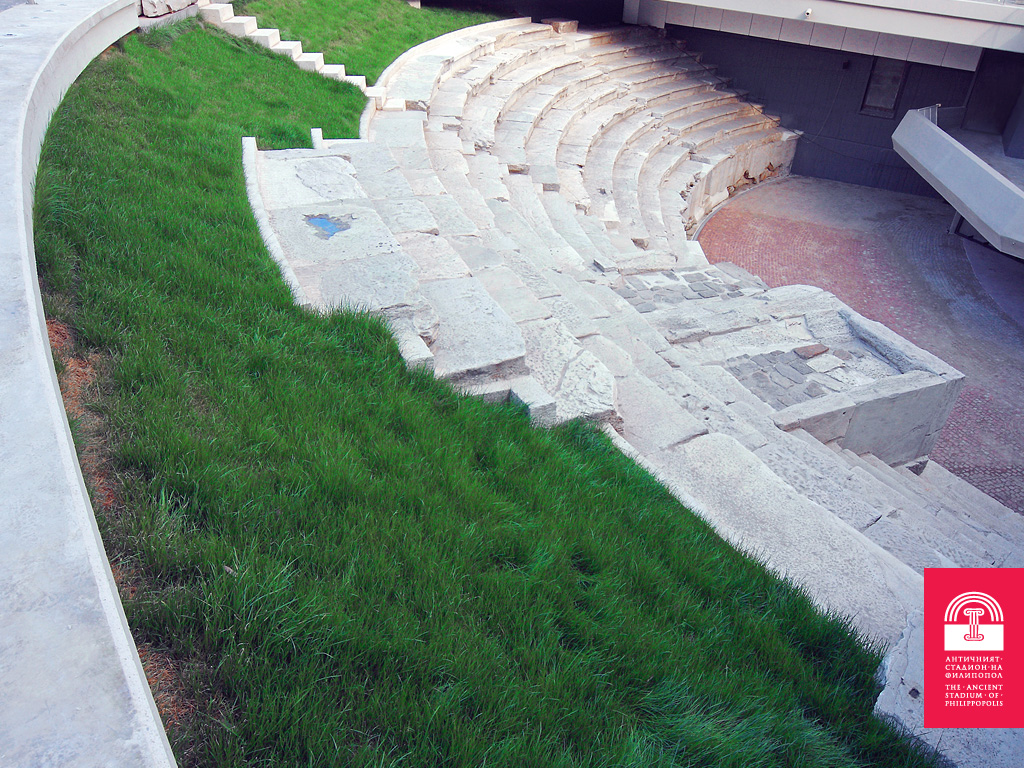
The Stadium of Philippopolis is an ancient Roman Imperial Stadium, built by Emperor Hadrian in the beginning of the 2nd century AD, at the time Philippopolis was the capital of the Thracia Roman Province. Unfortunately, today the only uncovered and preserved part is the northern curved part of the stadium (sphendone), the rest lying buried under the city centre – main shopping and cultural districts.
On this picture we can see the uncovered northern curved part of the stadium – the sphendone. The city is a mixture of different epochs and religions, we can see the ancient mosque on the right.
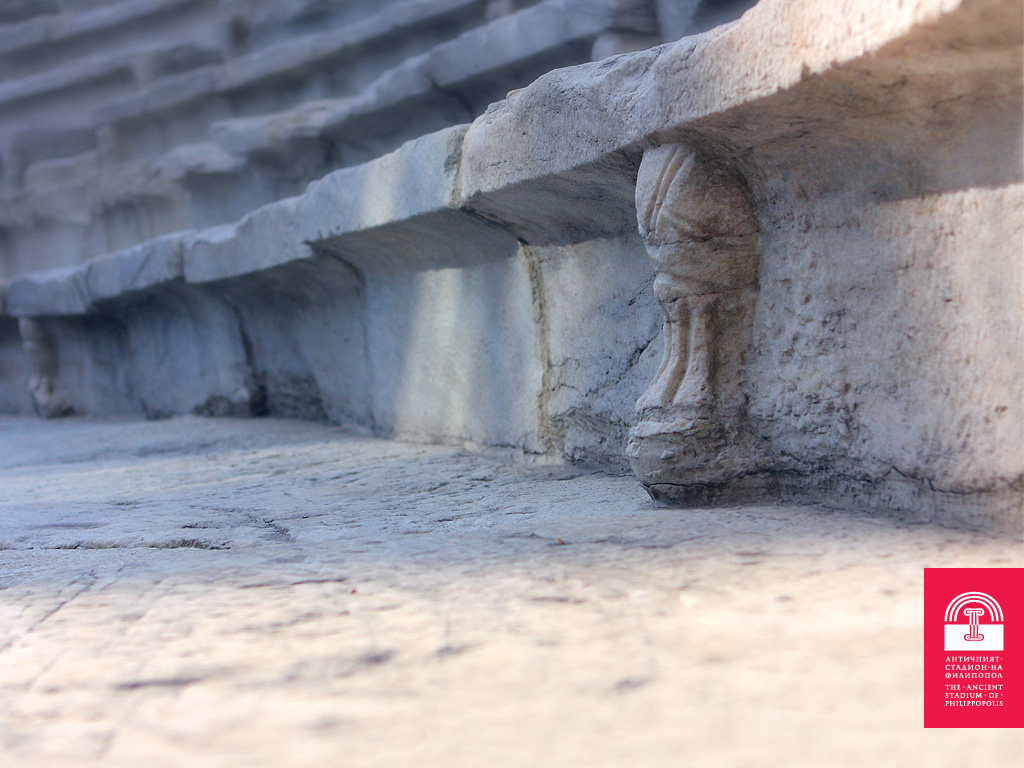
The stadium was 240m long and 50m wide and could sit approximately 30 000 spectators, the racing track was 180m long. The seats were arranged in 14 tiered rows and are made of solid marble, sized 75x40cm and decorated with lion paws some of which remain today. Similar to other imperial establishments, some seats were dedicated for special guests, their names inscribed in the marble. According to archaeological findings some honourable seats had inscriptions in Greek which indicates the stadium was visited by representatives of the highest imperial circles.
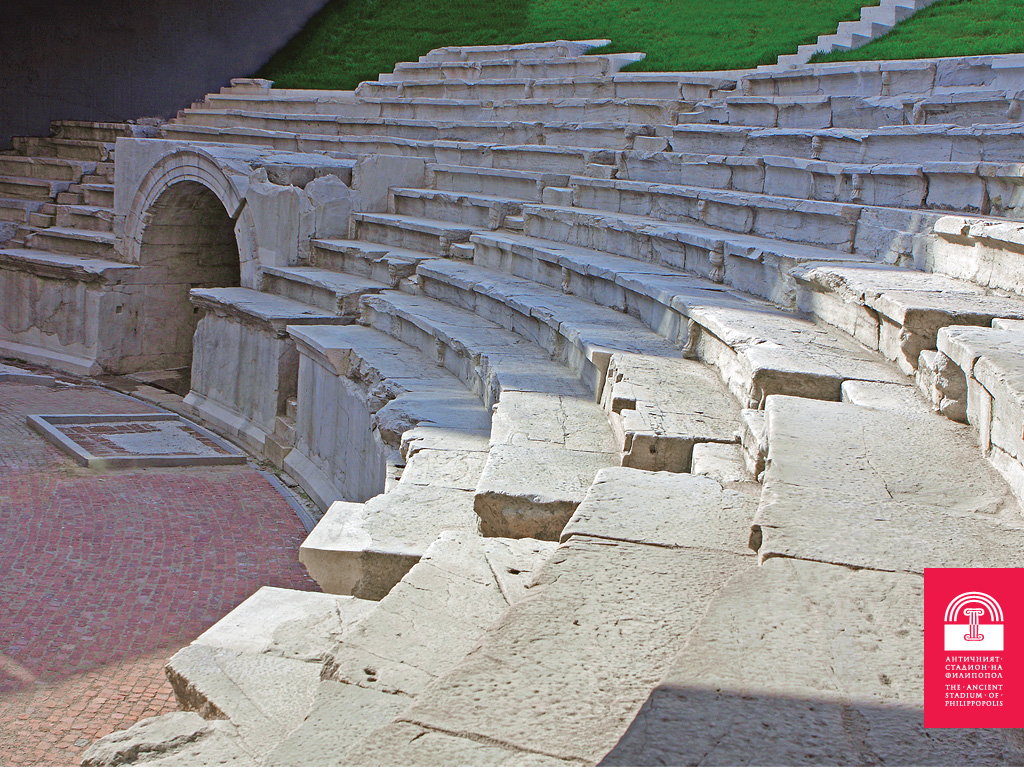
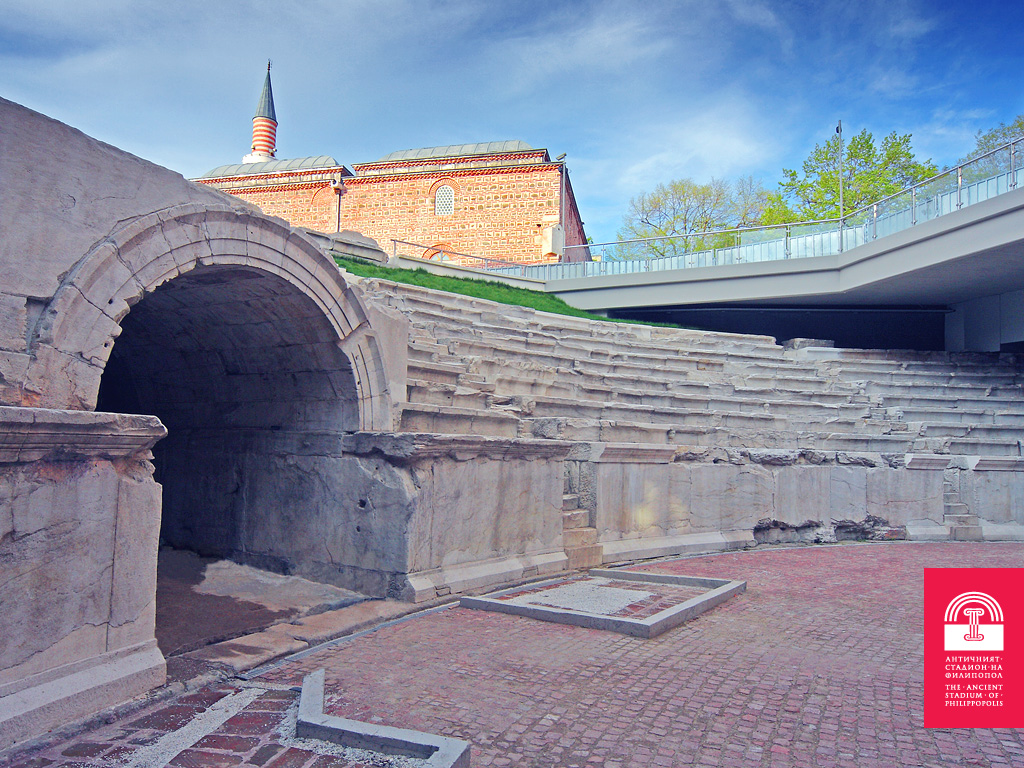

Another interesting fact is that in the 4th century AD this area was crossed by the ancient Roman aqueduct which is another landmark in our exhibition. Its arch support still remains and is partially visible on the site.
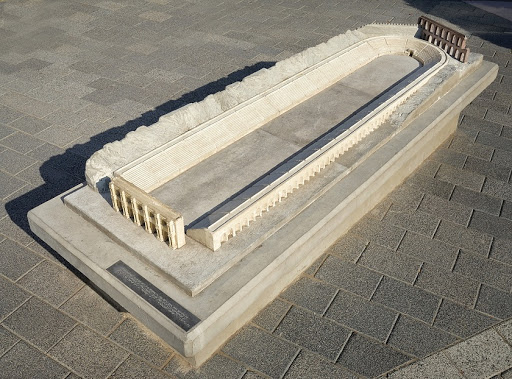
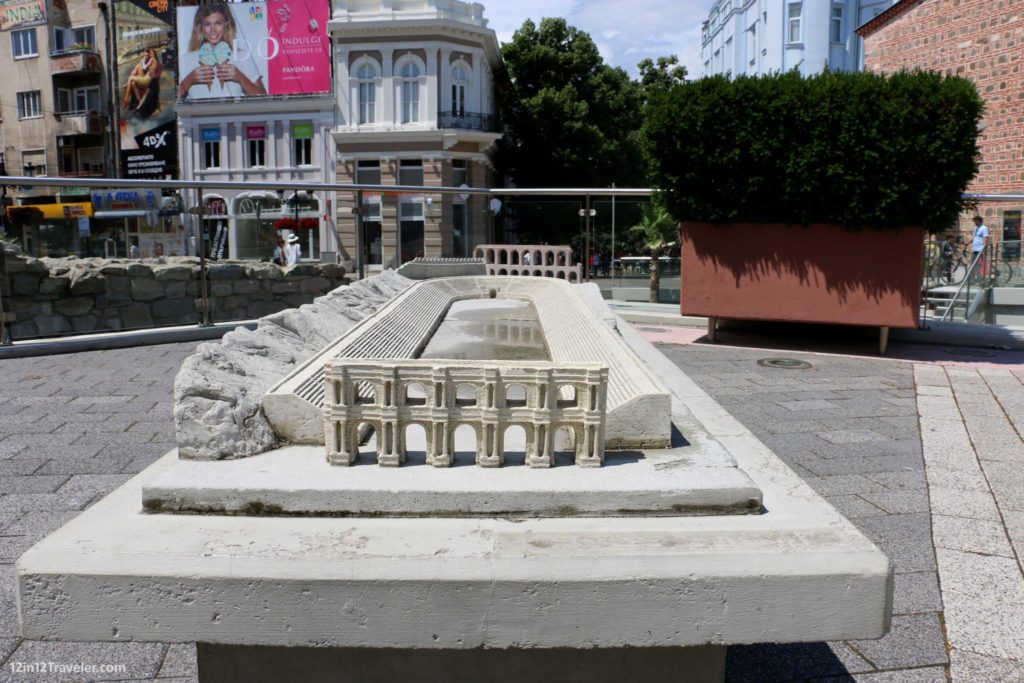
Below you can enjoy a birds-eye high definition, zoomable photo-sphere of the site, offering also a great view on part of the central district. This can also be experienced using a VR headset.
You can also try a 3D model of the uncovered part of the stadium here:
If your browser does not support the embedded tool, please click the button bellow to experience it directly on Sketchlab website.
Finally here is my own attempt at a virtual tour created also on Roundme:
I also made a short video on entering the site via the tunnel entrance used by sportsmen, gladiators, beasts and other performers, it is a rather pleasant experience and makes me feel similar to all those performers who walked through this arch back in Roman times.
The Roman theater of Philippopolis
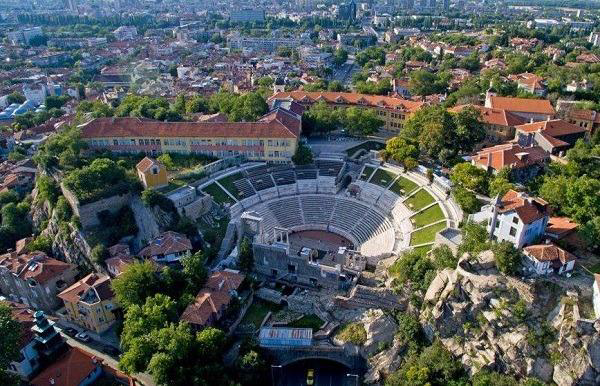
The Roman theatre of Philippopolis (Latin: Theatrum Trimontense; Bulgarian: Пловдивски античен театър) is one of the world’s best-preserved ancient Roman theatres, located in the city centre of modern Plovdiv, Bulgaria. It was constructed in the 90s of the 1st century A. D., probably during the reign of Domitian. The theatre could host up to 7,000 spectators when it was built, but it is being used to this day for classical, pop and rock concerts, theatrical plays, and various other art performances.Ttoday its seating capacity is 3500 seats.
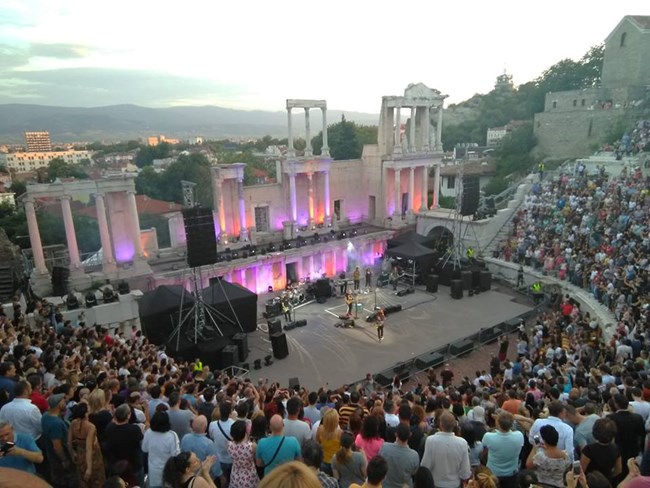
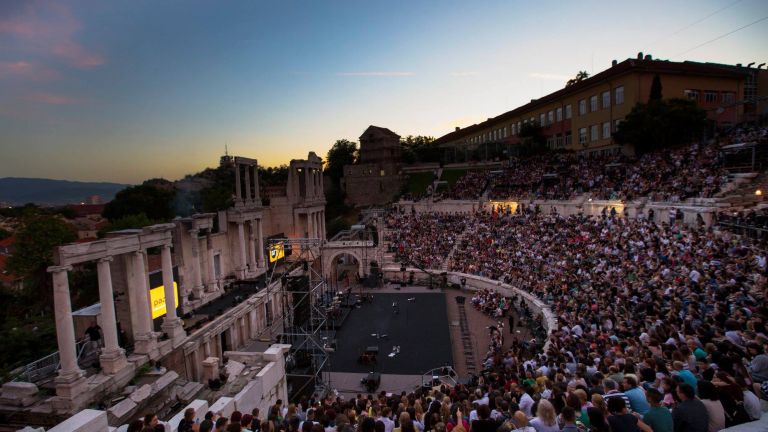
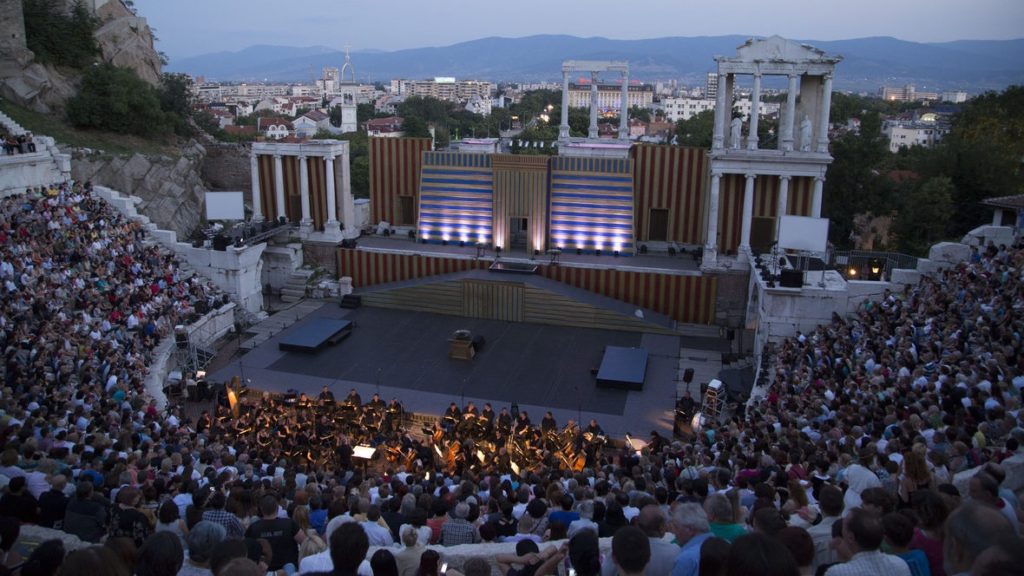
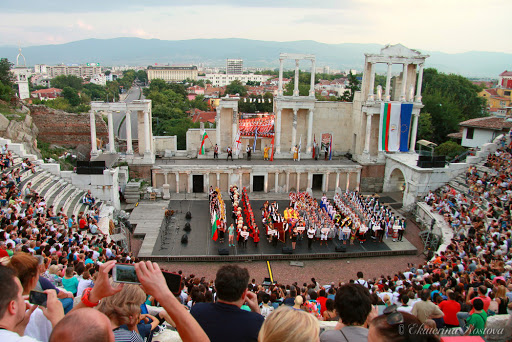
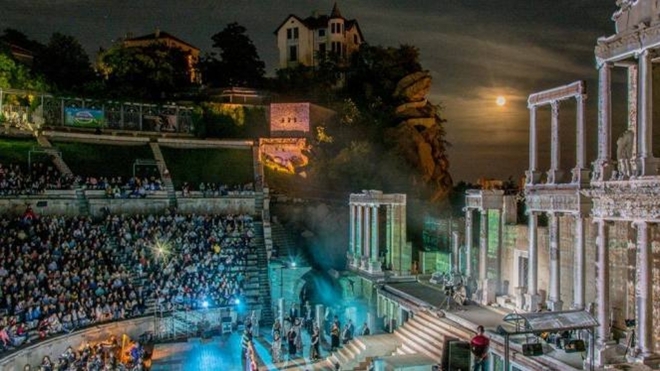
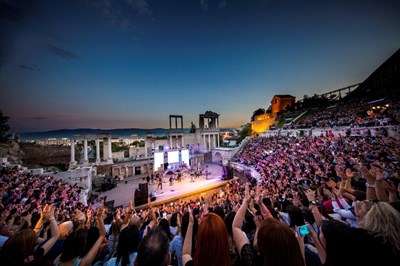
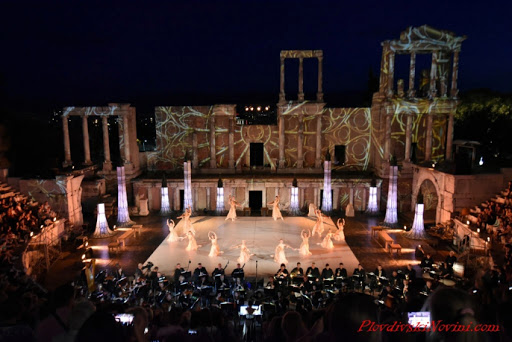
Some modern music, folklore and art performances, staged on this ancient ruin sitting on top of on of the 7 hills of Plovdiv.
The theatre consists of a semi-circle cavea (seating part) and orchestra (stage). The cavea has 28 concentric rows of marble seats, divided by an isle and oriented south, above the stage the spectators can see the city and the Rhodopa mountains in the distance. There is a building behind the orchestra also called scaenae frons. It has three floors and is fascinatingly decorated with columns, statues and two porticos – one in the Ionic Order and one in the Corinthian order of Roman Architecture. In a characteristic for the Roman Empire Theatre fashion, the honorary spectator seats for members of higher society were inscribed so everyone knew where to sit. According to archaeologists, subscriptions were found not only for local government representatives, but for high magistrates and even friends of the emperor.
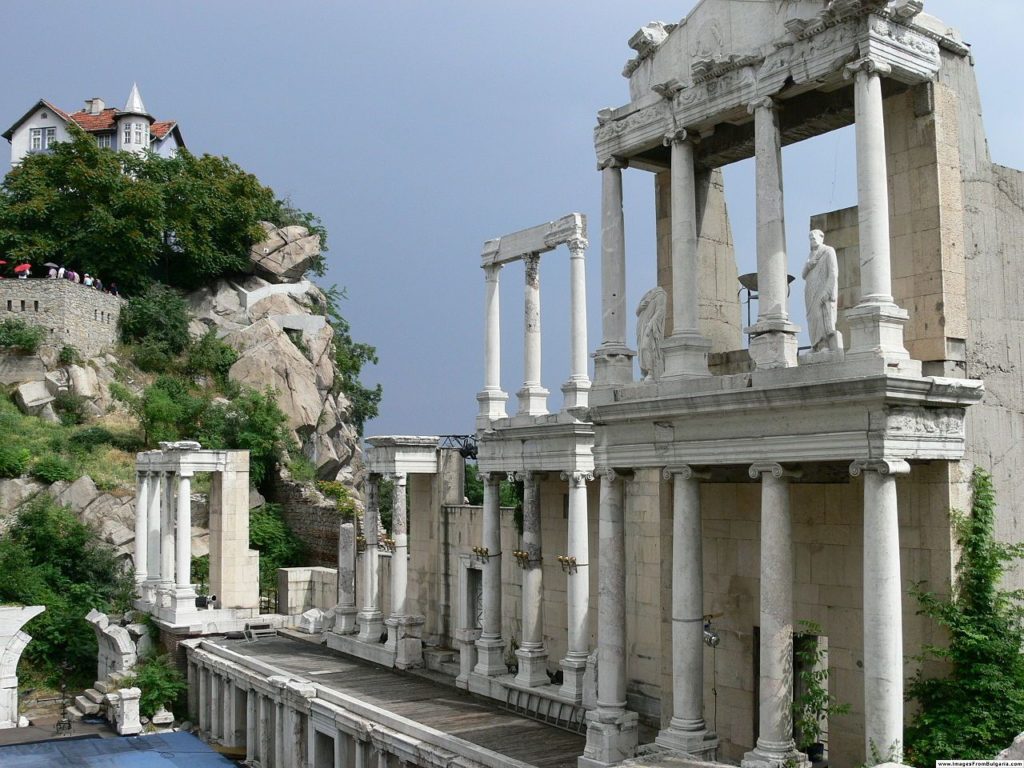


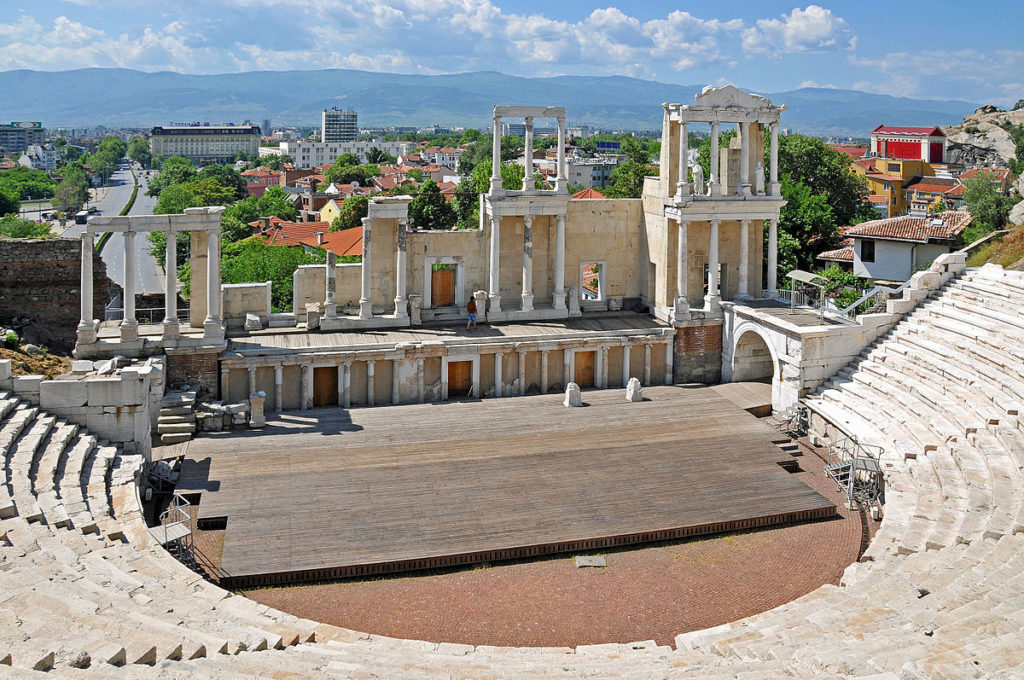
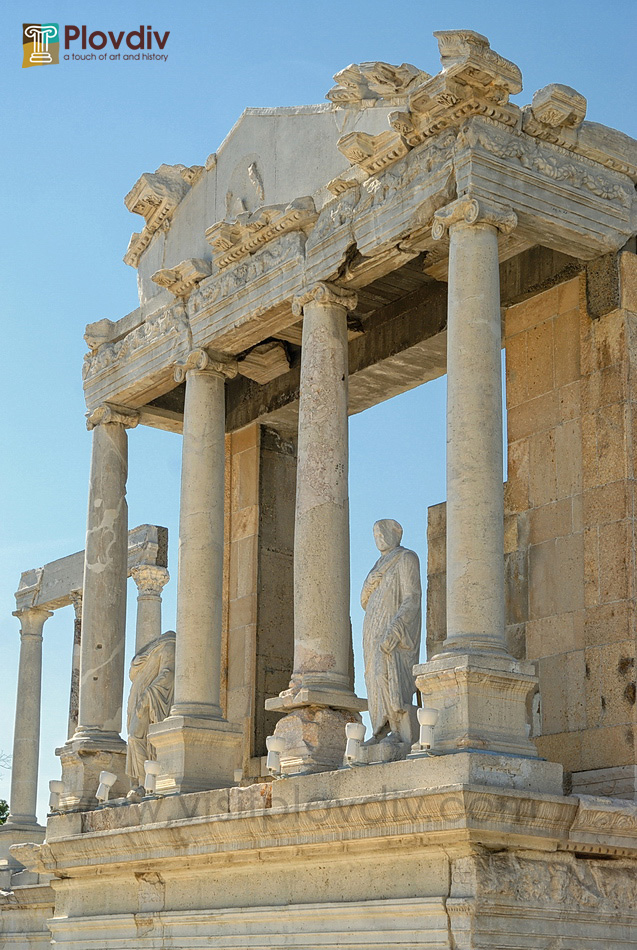

This site is a real treasure, it was found accidentally after a landslide and then systematically and carefully uncovered and partially restored where possible. It is one of the many archaeological gems such as the Roman Stadium, the Bishop’s Basilica and the Aqueduct network discovered in Plovdiv. Some of these lay hidden under the contemporary buildings of the city centre others are celebrated as invaluable historical monuments, that must be kept and cherished, because they are allowing us to glimpse at the splendor and beauty of the long-gone Roman Empire.
Below you can watch two introductory videos highlighting the most important facts about this landmark and showing you around.
Finally here is a 3D model of the site and its surroundings: