Browse Items (15 total)
The Younger Memnon is a statue of the upper body and head of Ramses II that originally adorned the entrance of the Ramesseum, Ramses Ii's mortuary…
Thebes has an area of 7,390.16 ha, it was the capital of the Middle Kingdom (c. 2055-1780 BC) and the New Kingdom (1567-1085 BC) in ancient Egypt, and…
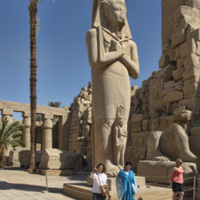 Ancient Thebes with its Necropolis
Habu Temple, Karnak Temple, Luxor Karnak Temple, etc. in Ancient Thebes with its Necropolis
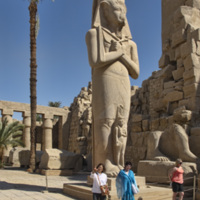 Ancient Thebes with its Necropolis01
Luxor posers at Karnak Temple, Ancient Thebes with its Necropolis "20111105_Egypt_0990 Luxor posers at Karnak Temple" by Dan Lundberg is licensed…
Papyrus manufacturing techniques were lost a long time ago. The earliest use of papyrus dates back to 3000 BC; it was widely used before 8th century.…
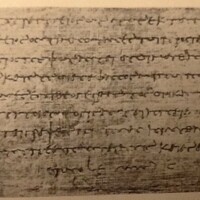 Papyrus
A piece of papyrus
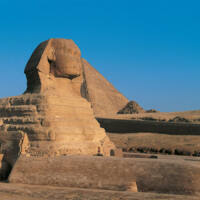 Memphis and its Necropolis – the Pyramid Fields from Giza to Dahshur
Memphis and its Necropolis - the Pyramid Fields from Giza to Dahshur is a site that contains the most iconic and recognizable monuments of ancient…
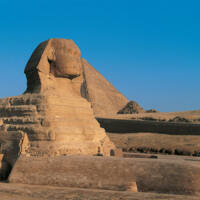 Memphis and its Necropolis – the Pyramid Fields from Giza to Dahshur
Memphis and its Necropolis - the Pyramid Fields from Giza to Dahshur comprise some of the most iconic and impressive architectural achievements of…