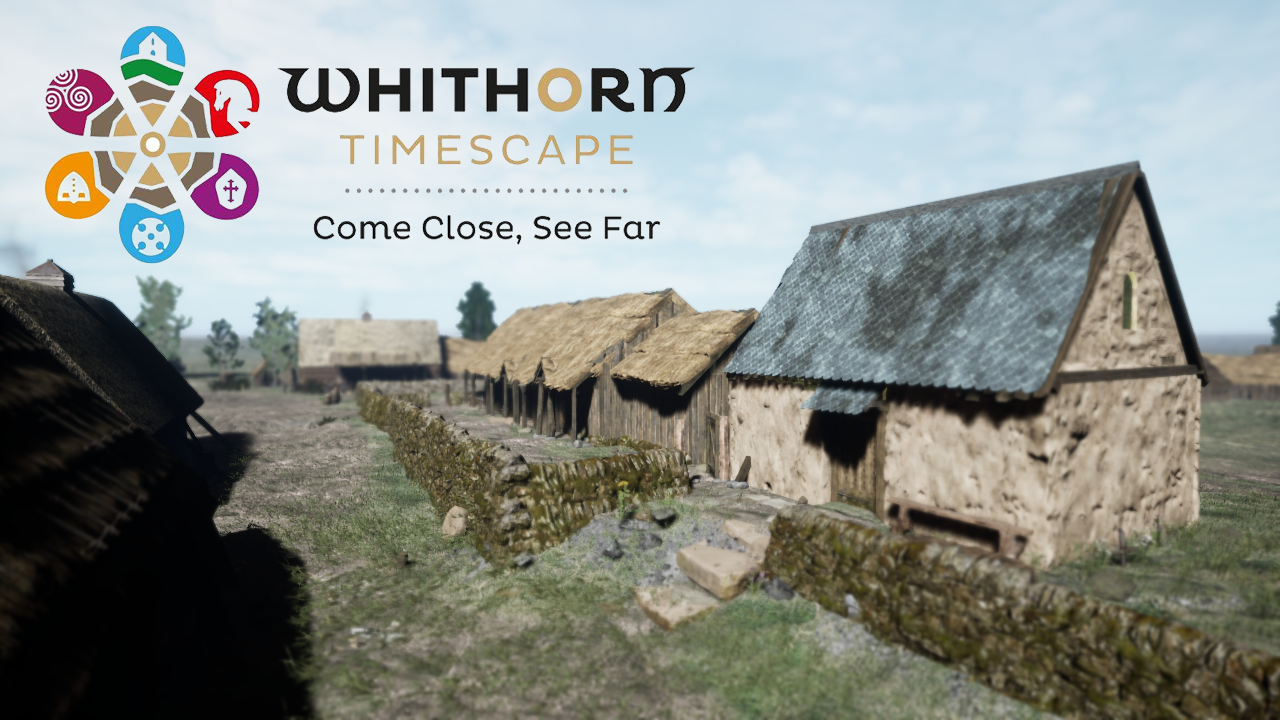
Whithorn Northumbrian Church 780AD


Dublin Core
Title
Whithorn Northumbrian Church 780AD
Subject
Culture,Intangible Heritage
Description
A collaborative project between ourselves and the Whithorn Trust. Whithorn embodies the history of Christian belief, power and practice in Scotland. A sacred place for Christians from at least the 600s, the cult of St Ninian flourished here for over a thousand years. It brought travellers, traders, pilgrims and royalty to Whithorn from home and abroad. The site’s fortunes have fluctuated with those of the Church. After rising to great heights of wealth and glory, Whithorn was suppressed during the Protestant Reformation of 1560, and afterwards became a simple parish church. Increased archaeological interest since the 1880s has brought the site back to public attention, and the creation of the Whithorn Trust has secured it for future generations.
Date
2022
Format
image/png
Type
Reconstruction
Identifier
1532
License
In Copyright (InC)
Spatial Coverage
current,54.733467083763166,-4.420591592788697;
Europeana
Object
https://player.vimeo.com/video/693535141
Europeana Rights
Smart History/Open Virtual Worlds Team University of St Andrews
Europeana Type
TEXT
Reconstruction Item Type Metadata
How
Firstly, a digital landscape was created using survey data and height maps. Following extensive historical research and collaboration with specialists, 3D models are created and imported into UNREAL Engine (a cross-platform game engine for creating virtual worlds). Models are textured, scaled, oriented and assembled. Scenes are created and populated with appropriate objects, including furniture and artefacts. Landscapes populated with flora and fauna. Weather settings and atmospheric lighting. Character clothing researched and created, imported and animated.
Evidence
The Northumbrian Church, is the earliest archaeological evidence of a church yet found at Whithorn, in 1990 as part of the Archaeological Dig lead by Peter Hill between 1984 and 1991.
The remains were dated to around 700AD, the period when the “Northumbrians” from the Anglo-Saxon kingdom of Northumbria had taken over in what is now Dumfries and Galloway. The Church appears to have stood in a monastic precinct as part of a monastery.
There in was an area front of the Burial Chapel which was a children’s graveyard.
This Northumbrian Church was excavated extensively during the 1980s excavations with the archaeologists finding evidence for an extensive floorplan. This floorplan included evidence for a two lines of posts outside the main structure north and south, which seems to have been covered porches or “arcades” on the southern and northern part of the building, suggesting this Church was quite high status.
Inside the church building, there was evidence for stone footings for the timber walls and evidence that there was once a screen, probably made of wood that separated the building into two parts. The western part was the “Nave” and the eastern part would have been the “chancel”. The Nave was the entrance where religious services would have taken place with an altar for the monk or priest on the western part of the screen. There was no evidence of dedicated seating in this area.
During the Peter Hill excavations, they found debris that may have been from the burning of the Church. Findings included 700 droplets of lead, from a possible melted roof fitting as well as three pieces of window glass, one light green, two pale blue.
Advisers
Julia Muir Watt (Whithorn Trust)
Date Represented
780AD
Citation
“Whithorn Northumbrian Church 780AD,” STAGE, accessed October 16, 2026, https://stage.openvirtualworlds.org/omeka/items/show/4113.
Embed
Copy the code below into your web page